• KGS/USD = 0.01144 0%
  • KZT/USD = 0.00215 0%
  • TJS/USD = 0.10680 0.19%
  • UZS/USD = 0.00008 0%
  • TMT/USD = 0.28530 0%
  • KGS/USD = 0.01144 0%
  • KZT/USD = 0.00215 0%
  • TJS/USD = 0.10680 0.19%
  • UZS/USD = 0.00008 0%
  • TMT/USD = 0.28530 0%
  • KGS/USD = 0.01144 0%
  • KZT/USD = 0.00215 0%
  • TJS/USD = 0.10680 0.19%
  • UZS/USD = 0.00008 0%
  • TMT/USD = 0.28530 0%
  • KGS/USD = 0.01144 0%
  • KZT/USD = 0.00215 0%
  • TJS/USD = 0.10680 0.19%
  • UZS/USD = 0.00008 0%
  • TMT/USD = 0.28530 0%
  • KGS/USD = 0.01144 0%
  • KZT/USD = 0.00215 0%
  • TJS/USD = 0.10680 0.19%
  • UZS/USD = 0.00008 0%
  • TMT/USD = 0.28530 0%
  • KGS/USD = 0.01144 0%
  • KZT/USD = 0.00215 0%
  • TJS/USD = 0.10680 0.19%
  • UZS/USD = 0.00008 0%
  • TMT/USD = 0.28530 0%
  • KGS/USD = 0.01144 0%
  • KZT/USD = 0.00215 0%
  • TJS/USD = 0.10680 0.19%
  • UZS/USD = 0.00008 0%
  • TMT/USD = 0.28530 0%
  • KGS/USD = 0.01144 0%
  • KZT/USD = 0.00215 0%
  • TJS/USD = 0.10680 0.19%
  • UZS/USD = 0.00008 0%
  • TMT/USD = 0.28530 0%

Viewing results 121 - 126 of 304

Artifacts Seized as Illegal Assets Transferred to Kazakh Museum

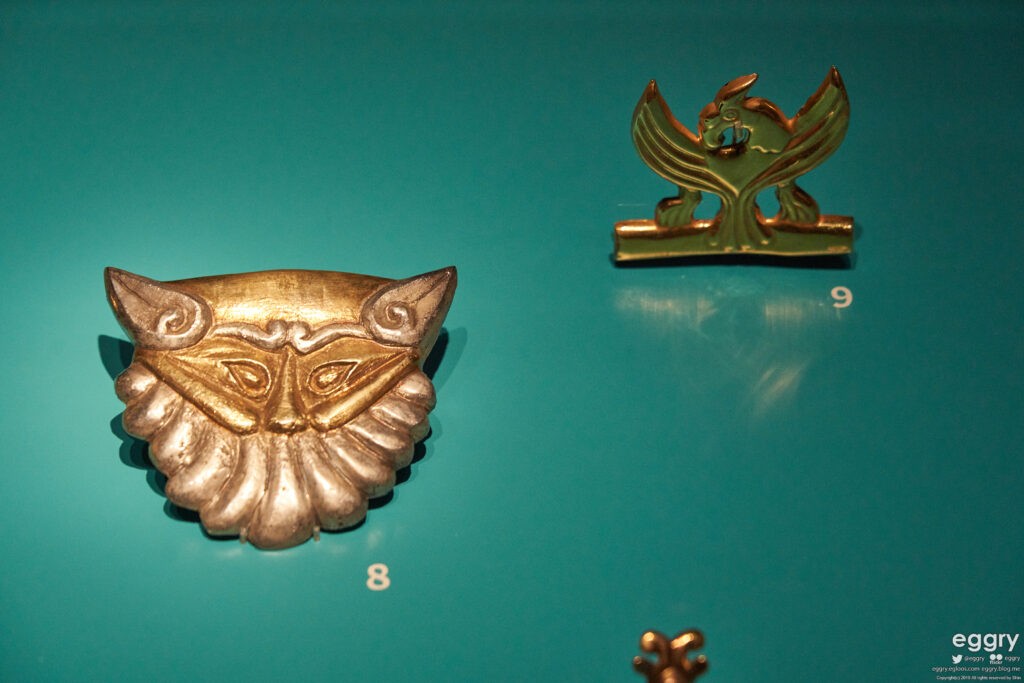
The Company for the Management of Returned Assets (CMRA) LLP has announced that ancient jewelry, reclaimed as illegal assets from individuals, will now be part of the National Museum of Kazakhstan's collection. Examinations revealed that the jewelry has significant historical value, dating back to the early Iron and medieval periods. Some of the pieces, identified as ancient artifacts, are linked to the Saka period, a pivotal era in Kazakh history. According to a letter from the National Museum, several items hold cultural importance, representing Kazakhstan's history from the Early Iron Age through the Middle Ages. These artifacts will be added to the museum's permanent collection, making them available for scientific research and accessible to a broader audience. The collection, which includes jewelry crafted in the traditional “animal style,” weighs approximately 118 grams and dates between the 7th century BC and the 3rd century AD. Notable pieces include an eagle’s head ornament, a depiction of a horned animal in a raised position, figures of a winged lion and a winged horse, a leopard in a dynamic pose, an image of a running deer, ancient coins, two interlocked spiral rings, and a ring with a lion's head. Additionally, a ring inscribed with Arabic script will undergo further study and re-evaluation. Previously, the CMRA named the five most valuable pieces of jewelry and accessories recovered and returned to the state.

Woman in Kazakhstan Sentenced for Inciting Ethnic Hatred

In Almaty, a Kazakh woman, Maral Zhalelova, was sentenced to two years in prison for inciting ethnic hatred. The court found that in her video messages in TikTok, she called on Russians to leave Kazakhstan and insulted the ancestors of Kazakh nationality who fought against Nazi Germany during the Second World War. In doing so, she used obscene language and expressed sympathy for Adolf Hitler. Even though Zhalelova did not admit guilt, she apologized for her words. The prosecutor insisted on a five-year sentence, but the court took her apology into account and handed down the minimum sentence, considering that she deserved a “more humane punishment.” The sentence has not been enforced yet. The case began in July 2024 after complaints about Zhalelova's provocative online statements. The investigation recognized that her words offended the feelings and dignity of citizens with Russian nationality, and hurt the memory of ancestors who fought against fascism. During the trial, Zhalelova explained that her reaction was triggered by the events following Russia's invasion of Ukraine. According to her, she sought to support the Kazakh language, but during the broadcasts, insults were directed at her, and she reacted to provocation. In April 2024, another resident of Almaty, Elina Liu, also received two years in prison for making disparaging remarks about the Kazakh people and language, which the court considered as incitement to discord.

Karakalpak Activists Facing Charges in Uzbekistan, Granted Asylum in the United States

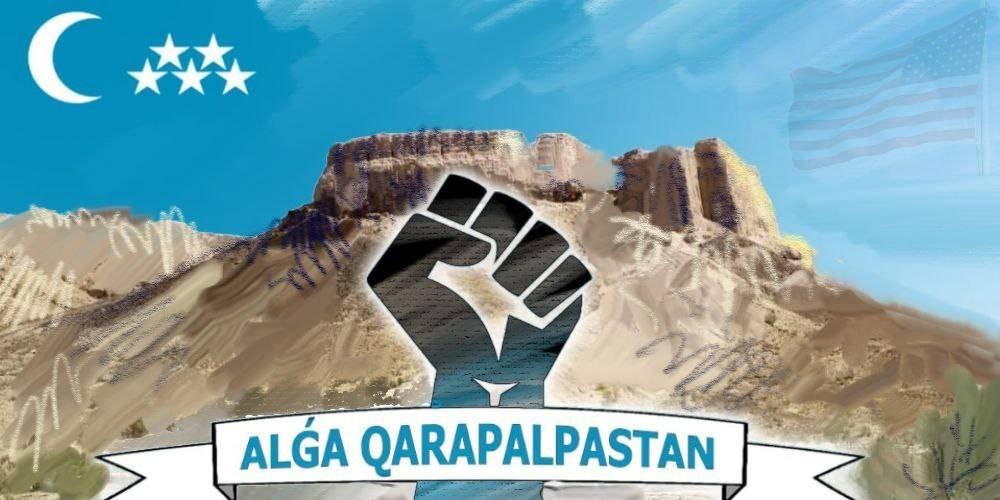
The waiting, worrying, and wondering are finally over for four Karakalpak activists who were detained in Kazakhstan some two years ago, and faced possible extradition back to Uzbekistan. Zhangeldi Zhaksimbetov, Tleubike Yuldasheva, Raisa Khudaybergenova, and Ziuar Mirmanbetova received word on October 15 that they had been granted asylum in the United States. It ended more than two years of uncertainty that started with the unrest in Karakalpakstan on July 1, 2022. Karakalpakstan is part of Uzbekistan, but has a special status as a sovereign republic with its own parliament and constitution that allows the region to hold a referendum on seceding from Uzbekistan. Those unique privileges are also enshrined in Uzbekistan’s constitution, but in spring 2022 parliament proposed making amendments to the constitution. The main reason for the amendments was to change the presidential term from five to seven years so that incumbent President Shavkat Mirziyoyev, who was serving his second and constitutionally last term at the time, could extend his stay in power. However, the commission drafting the constitutional changes also dropped the articles referring to Karakalpakstan’s sovereign status and right to secede. Those rights were nominal as there was no chance Uzbek authorities would allow Karakalpakstan to fully govern itself or secede. Karakalpakstan accounts for some 37% of Uzbekistan’s territory, and also has large oil and natural gas reserves that have just started being developed in the past ten years. The special rights Karakalpakstan had might have been nominal, particularly since ethnic Karakalpaks make up only about one-third of Karakalpakstan’s two million inhabitants. But these distinctions, albeit it only on paper, were important to the Karakalpaks, and when the proposed amendments were published at the end of June 2022, tensions started rising immediately in Karakalpakstan. On July 1, Karakalpak community leaders went to apply for permission to hold a public meeting against the planned changes affecting Karakalpakstan. The group’s leader, activist and lawyer Dauletmurat Tazhimuratov, was detained. Word spread and a large group numbering at least several thousand gathered, protesting peacefully outside the administration building in the Karakalpakstan capital, Nukus. When police and security forces attempted to disperse the crowd, violence broke out, and when it was over and order finally restored, at least 21 people were dead and 243 injured. Nearly all the casualties were Karakalpaks, and police and security forces were accused of using unnecessary and indiscriminate force against the protesters. News of the proposed amendments, and the ensuing violence spread to the Karakalpak communities in other countries, notably to neighboring Kazakhstan, where, according to various estimates, anywhere from 50,000 to 200,000 Karakalpaks live. Most have Kazakh citizenship, but some simply work in Kazakhstan and remain citizens of Uzbekistan. Karakalpak activists in Kazakhstan followed events in Karakalpakstan in late June and early July 2022 and posted about it on social networks, sometimes with words of support for the protesters. After Uzbek authorities had restored order in Kazakhstan and arrested more than 500 people, Uzbek officials requested the Kazakh government detain Karakalpaks in Kazakhstan who had been...

Murder and Arson in Talgar: Kazakhs Fear Rising Tide of Organized Crime

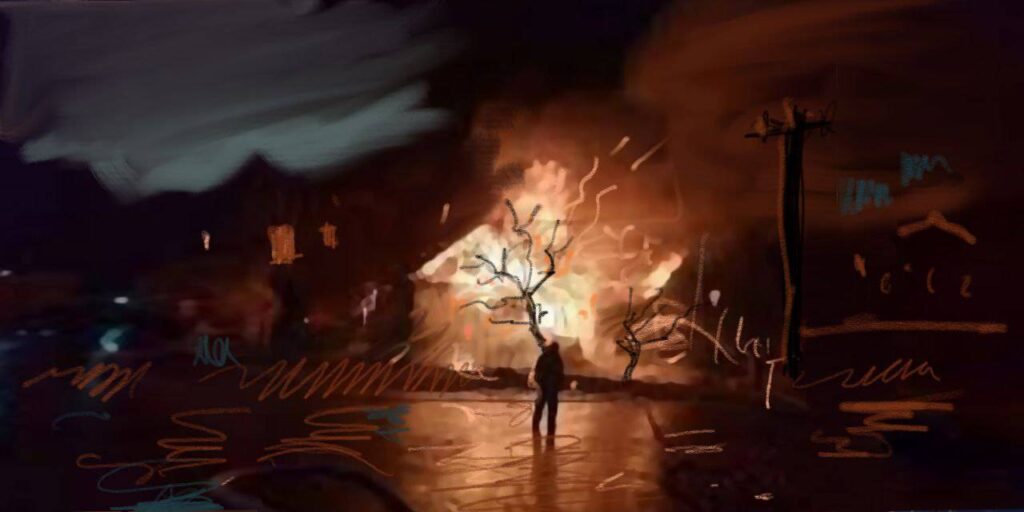
On the night of October 4, 16-year-old Sherzat Bolat was killed in the town of Talgar, located in Almaty Oblast near the city of Almaty. The father of the victim blamed the incident on a gang - allegedly operating in Talgar and the surrounding area for many years - with connections to the government and law enforcement agencies. Later, unknown people burned down the family's house, and National Guard troops were brought into Talgar. The situation brings to mind the darkest pages of recent history, when criminal groups held cities and entire neighborhoods in a state of fear. The Talgar tragedy Sherzat Bolat was murdered in front of his father and mother after an incident occurred involving young people who entered the store the Bolat family rented. As stated by the boy's father, the customers refused to pay for a can of beer, and a fight broke out. According to other relatives, the group had knives and firearms. Sherzat's uncle was also injured during the fight and is recovering in hospital. Police initially claimed that all those involved in the incident had been detained, but the parents of the deceased later said that only seven had been arrested, while there were many more attackers. Fearing that the perpetrators would not be brought to justice, on October 7 Sherzat's relatives and concerned citizens of Talgar staged a rally at which Sherzat's father, Karzhaubai Nurymov, claimed that the so-called “Khutorskie” group was responsible for the boy's death. According to multiple reports, the Khutorskie have been terrorizing Talgar and its surroundings areas for many years. Businessman Hasan Kasymbayev allegedly runs the group, whilst sources also mention his brothers, including Yerzhan Kasymbayev, who was sentenced to 14 years for the murder of customs officer Medet Zhamashev, and Aslan Kasymbayev, head of the Talgar district Akim's (mayoral) office. In addition, the Kasymbayevs are said to be related to an official who once held high positions in law enforcement agencies. According to concerned residents of Talgar, the perpetrators of the boy's murder may be able to avoid justice due to their connections. In a statement, the acting head of the regional police department denied the involvement of any organized crime groups in the murder; the investigation has now been taken over by the Ministry of the Internal Affairs, which has dispatched a team to the scene of the crime. In an interview, Hasan Kasymbayev, who posted controversial photos on social networks, categorically denied his involvement in the murder of the teenager and any participation in an organized crime group. Despite assurances from officials, on October 12, the house of Sherzat's family in the village of Azat, Yenbekshikazakh district, Almaty region, was burned down. Police opened a criminal case and took the murdered teenager's family into protective custody. The house was empty at the time of the fire. The murder and arson have caused a sharp reaction in Talgar and led to a wider reverberations throughout Kazakhstan. Former Minister of Education and Mazhilis deputy, Askhat Aimagambetov, stated...

Death in Peacetime: Navigating Challenges and Responses in Kazakhstan’s Armed Forces

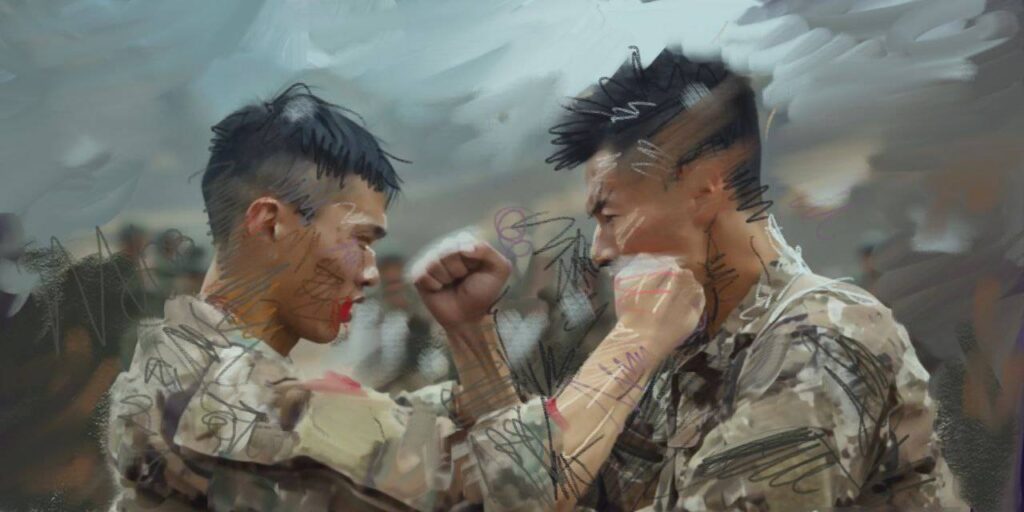
Deputies in the Mazhilis have raised the issue of violent deaths and suicides in the armed forces, whilst sections of the public have also called for the army to be converted to a contract basis and the draft age to be raised.   Alarming statistics In late September, Konstantin Avershin, a member of the Mazhilis Committee on International Affairs, Defense, and Security, spoke about the results of an investigation into suicides in law enforcement and security agencies. Over the past four years, 86 suicides have occurred in across said agencies, Avershin stated, with this data pertaining to the Ministry of Defense, the National Guard of the Interior Ministry, the Border Service of the National Security Committee, the State Protection Service, and the Ministry of Emergency Situations. “In four years, 40 suicides have been registered in the Armed Forces. In 2021 - 10, 2022 - 7, 2023 - 12, and 2024 - 11. By category these were: officers - 7, contract servicemen - 22, cadets - 4, conscript soldiers - 7. Pretrial investigations have been completed in 34 cases, and final procedural decisions have been made. In none of them were signs found of 'leading' to suicide,” according to Avershin. The proceedings in these cases were terminated due to a lack of corpus delicti. Despite this, based on the results of official investigations, disciplinary measures were taken against 180 persons: eleven were relieved of their posts, two were demoted, and 167 service personnel received various disciplinary sanctions in line with their rank. On October 8, Avershin raised another problem: the poor quality of food being provided to service personnel. According to his data, the funds allotted for rations per soldier is 2,250 tenge ($4.6) per day. By comparison, chess players, sport fishermen, ship modelers, and players of togyzumalak (a national board game) and checkers are entitled to 6,276.4 tenge ($12.9) per day, according to the Ministry of Tourism and Sport's regulations for 2024. “A soldier cannot be fed almost three times worse than a checkers player,” Avershin stated. Earlier, MP Nartai Sarsengaliyev asked Defense Minister Ruslan Zhaksylykov about the current situation in Kazakhstan's army. The deputy highlighted numerous high-profile cases, stating that over the past three years, 270 servicemen have died in Kazakhstan. “In August 2023, a commanding officer beat a recruit with a chair in a military unit. The case was closed after the parties reconciled. In June 2024, in one of the military units in the Zhambyl region, a soldier who had been in the army for only one month was admitted to intensive care in an unconscious state. The situation caused shocked society. National Guard soldier Yerbayan Mukhtar has been unconscious for five months after suffering a head injury. Those in charge say that 'Yerbayan 'fell in the bathroom and sustained a head injury.' Who would believe this? As a result of the injury, half of the soldier's skull was removed. Now, he needs constant care. Now his parents are taking Yerbayan abroad for treatment,” Sarsengaliyev stated. In...

Kazakhstan’s Youth Suicide Crisis: Unraveling the Complex Web of Societal Challenges

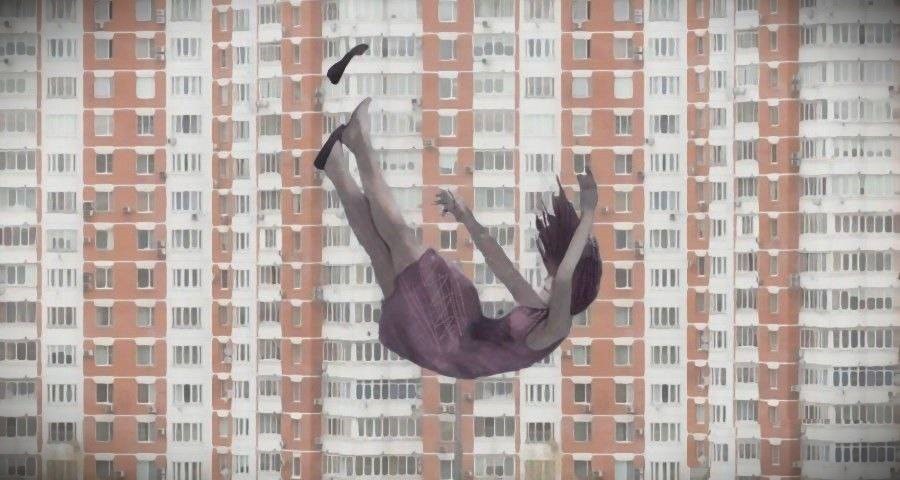
A wave of suicides among teenagers and young adults has swept across Kazakhstan. Parents and the Children's Ombudsman have said children were provoked to do dangerous things by the internet, and deputies have demanded that social networks should be blocked. The media, meanwhile, has been accused of creating a “Werther effect,” fixating on the rash of suicides and thus encouraging teenagers to repeat these acts of self-harm. However, experts believe the cause is much more nuanced and cannot be eliminated by blocking harmful content alone. Chronicle of a Fateful September On September 13, a teenager fell from an eighth-story window in Astana. The boy died of his injuries. The very next day, a schoolgirl plummeted from a fifth-floor window in Shchuchinsk. The 12-year-old girl is in hospital, and the causes of both incidents are still under investigation. On September 16 in Almaty, two seventh-grade students from school No. 25 named after the writer I.Esenberlin, left class and climbed to the attic of a neighbor's apartment complex. The girls both fell to their death from the roof. “I came, and I saw two girls lying there. They had jumped from the roof," an eyewitness stated. "The girls were about 13 years old; seventh graders. One had a backpack next to her, and the other had no shoes and was wearing black tights. She had taken her shoes off and placed them neatly. One fell on a car, and her body rolled away. The second was immediately killed on the asphalt.” Later, it became known that one of the girls was the daughter of a famous Almaty ecologist and artist. Deputy Interior Minister Igor Lepekha said that what happened "is a suicide; the case was opened based on it being suicide." On September 21, another schoolgirl fell from a high-rise in Almaty. Allegedly, the girl left the house to perform a routine task, but climbed to the 13th floor, from where she plunged. The Almaty Police Department confirmed the girl's death and has opened a criminal case. By this time, in schools, online, and on social networks, parents had started to spread panicked rumors about the impact on children of a particular computer game, similar to the semi-mythical game “Blue Whale.” In the past, Blue Whale has been decried as a malicious game which encourages teenagers to commit suicide and acts of violence, but no convincing evidence has ever been presented. The Almaty police stated that gossip regarding the involvement of dangerous internet games in the girls' deaths is not valid and reminded the public about their responsibility vis-à-vis spreading false information. On September 22, in the yard of a multi-story residential building in Almaty, the body of a 3rd-year cadet from the Border Academy of the National Security Committee (NSC) who was on regular leave was found. “The cause of death was a fall from a height,” the NSC press service reported. On September 23, also in Almaty, multiple sources reported that a young man had tumbled from a high-rise building. Police...