• KGS/USD = 0.01144 0%
  • KZT/USD = 0.00211 0%
  • TJS/USD = 0.10582 0.19%
  • UZS/USD = 0.00008 0%
  • TMT/USD = 0.28530 0%
  • KGS/USD = 0.01144 0%
  • KZT/USD = 0.00211 0%
  • TJS/USD = 0.10582 0.19%
  • UZS/USD = 0.00008 0%
  • TMT/USD = 0.28530 0%
  • KGS/USD = 0.01144 0%
  • KZT/USD = 0.00211 0%
  • TJS/USD = 0.10582 0.19%
  • UZS/USD = 0.00008 0%
  • TMT/USD = 0.28530 0%
  • KGS/USD = 0.01144 0%
  • KZT/USD = 0.00211 0%
  • TJS/USD = 0.10582 0.19%
  • UZS/USD = 0.00008 0%
  • TMT/USD = 0.28530 0%
  • KGS/USD = 0.01144 0%
  • KZT/USD = 0.00211 0%
  • TJS/USD = 0.10582 0.19%
  • UZS/USD = 0.00008 0%
  • TMT/USD = 0.28530 0%
  • KGS/USD = 0.01144 0%
  • KZT/USD = 0.00211 0%
  • TJS/USD = 0.10582 0.19%
  • UZS/USD = 0.00008 0%
  • TMT/USD = 0.28530 0%
  • KGS/USD = 0.01144 0%
  • KZT/USD = 0.00211 0%
  • TJS/USD = 0.10582 0.19%
  • UZS/USD = 0.00008 0%
  • TMT/USD = 0.28530 0%
  • KGS/USD = 0.01144 0%
  • KZT/USD = 0.00211 0%
  • TJS/USD = 0.10582 0.19%
  • UZS/USD = 0.00008 0%
  • TMT/USD = 0.28530 0%

Viewing results 103 - 108 of 1002

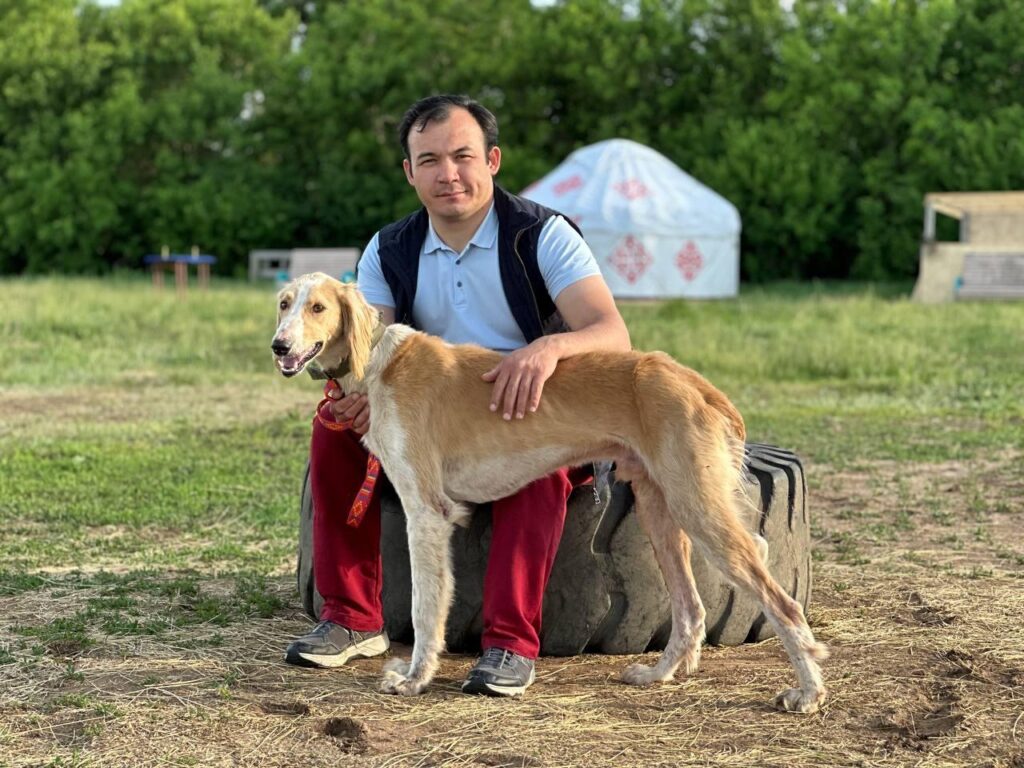
Kazakhstan’s Tazy: The Ancient Hunting Dog of the Steppe

For centuries, nomadic tribes across the steppe that now forms modern Kazakhstan absorbed outside influences and adapted them to local conditions, creating something uniquely Kazakh. This adaptability is evident in many aspects of steppe life, including the development of the Tazy, the Kazakh greyhound. Bred over generations to protect what nomads valued most, their livestock, the Tazy is now considered one of the seven national treasures of Kazakhstan. “If we look at history, we can say that the progenitor of the Kazakh breed, the Tazy, was the Arabian greyhound saluki,” said breeder Abzal Dosyman in an interview with The Times of Central Asia. “Arab missionaries brought it to our lands. The Tazy and the saluki are similar, but over time, given the needs of the nomads and the harsh climate of the steppe, the breed adapted and transformed. Here, their descendants were trained to guard livestock and protect people from wolves.” Dosyman described the unique methods traditionally used to raise Tazys for such a role. As soon as puppies were born, wolf skin was placed nearby so they would learn the predator’s scent. At four or five months, the young dogs were taken on hunts, but only after a brief starvation period. They were then fed wolf meat, which, after the fast, was considered a delicacy. “Some may see this as cruel,” he acknowledged. “But this is how hunters were raised who dared to face wolves on the steppe. For centuries, Tazys helped Kazakhs protect their herds, which were their livelihood.” Though known for their gentle nature, Tazys transform during a hunt, becoming fast, fearless, and relentless. “They are friendly toward people and non-aggressive with other animals, but they are implacable toward the grey predator,” Dosyman said. He noted that many countries have their own hunting greyhounds. Russia has the Borzoi, Kyrgyzstan the Taigan, meaning “graceful,” and Spain the Galgo. All descend, like the Tazy, from the ancient Arabian saluki. But it was in Kazakhstan that the Tazy acquired its distinct characteristics, shaped by the local way of life. In 2024, the General Committee of the Fédération Cynologique Internationale granted provisional recognition to the Kazakh Tazy as an official breed, confirming Kazakhstan as the holder of its breed standard. The FCI currently recognizes 350 breeds worldwide. Tazy Diplomacy Following independence, Kazakh enthusiasts began reviving the Tazy and promoting national traditions. In 2019, Dosyman presented a Tazy puppy to President Kassym-Jomart Tokayev, who named it Ronnie. He later received Nancy, and another dog named Nauryz was gifted by breeder Anna Zakharova. These steps helped draw state-level support for efforts to preserve and expand the Tazy population. A photograph of the grown Tazys at a reception hosted by the French president for the King of Denmark even appeared in international media, symbolizing what Dosyman calls “Tazy diplomacy.” “This is the moment the Kazakh greyhound becomes a national brand,” he said. “The French have the rooster, the Chinese the panda. Remember when China gifted a panda to another country and it later died...

Astana Student’s Horse Milk Video Makes Finals of “Breakthrough” Science Contest

Another Kazakh scientist received an accolade this month, after 17-year-old Tomiris Abylkairova from Astana was voted into the final 16 of the prestigious international Breakthrough Junior Challenge. The Breakthrough contest, an initiative of the Breakthrough Challenge Foundation in the United States, is a global science competition for young people aged 13-18. Held for the last 11 years, students are invited to create videos of up to two minutes in length that explain a particular concept or theory in the area of life sciences, physics or mathematics.  Abylkairova’s video has a Kazakh flavor, quite literally, as she uses her two minutes to discuss how fermented foods such as kymyz (horse’s milk) influence gene regulation. Her animated video was among the top 16 in a public vote, sending her to the finals after receiving a high number of “likes” on the event website. Collectively, the 30 submitted videos were viewed more than 300,000 times. Abylkairova, a student at Haileybury Astana School who also competes in national fencing championships, commented: “Representing Kazakhstan internationally is both an honor and a responsibility. For me it’s a chance to contribute to my country’s intellectual, scientific, and cultural legacy while engaging in meaningful global dialogue and research.”  She added: “I’m proud to help demonstrate that young people from Kazakhstan can make impactful, long-term contributions to the global scientific community". Isabella Leonel Lelles, also 17, from Brazil, was the overall top scorer in the popular vote, with more than 66,000 likes for her video on the protein folding problem. The videos of the 16 finalists will now be reviewed by a Selection Committee of esteemed figures in American science. It has not yet been announce when the committee will select the overall winner. The winning entry will receive $400,000, with the victorious student being awarded $250,000 in educational prizes. Past Breakthrough Junior Challenge winners have come from Canada, India, Mauritius, Peru, the Philippines, Singapore, and the United States. Alumni have gone on to attend institutions including MIT, Harvard, Princeton, and Stanford. All videos, including Abylkairova's, can be viewed on the Breakthrough Junior Challenge’s website.

Kazakhstan’s Independence Day: Plenty to Cheer, More to Consider

As Kazakhstan prepares to celebrate its Independence Day on December 16th, The Times of Central Asia (TCA) sat down with its special correspondent, Javier M. Piedra, a banker, corporate executive, writer, and seasoned international development expert whose professional ties to Kazakhstan date back to 2000. Piedra lived in Kazakhstan for 16 years. Over that time, he headed KPMG’s M&A (2007 – 2012), set up a credit bureau - the only one in the region at the time - and was a senior advisor for a private equity fund. He also taught corporate finance at Narxoz University. Back in Washington, he later managed USAID’s multibillion-dollar Asia Bureau under Donald Trump. Drawing on decades of experience in financial consulting, international development, and regional policy, Piedra offers wide-ranging insights into the nation’s evolution since 1991. In this conversation, he reflects on the mindset of Kazakhstan’s leadership – especially in recent years – that has led to, despite challenges, to its achievements - from economic reforms and institutional development to social progress and an increasingly dynamic national outlook. He highlights milestones worth celebrating, offers guidance to the next generation, and provides nuanced commentary on religious freedom and the country’s ongoing development path. The views expressed in this interview are those of the speaker and do not necessarily reflect the editorial position of The Times of Central Asia. TCA: As Kazakhstan marks Independence Day on December 16, what core achievements of the country are most worth celebrating at this moment in its history? Piedra: On December 16th, I expect – and this is good news – President Tokayev to repeat what he said last year, i.e., “I am convinced that by maintaining our unity, tranquility and stability in society, we will overcome all challenges and reach new heights on the path of progress.” Put simply, Kazakhstan can stay unified and stable despite challenges if it commits to doing so. People need to hear this message because it is positive, and the record supports his optimism. It is worth celebrating the country’s positive attitude and confidence in the future. Kazakhstan’s greatest achievement since independence, despite forces pushing in the contrary direction, has been the ability of its multiethnic and multicultural society to flourish. Kazakhstan has preserved unity, strengthened friendships with neighbors, ensured economic freedoms, and inspired its youth with hope, despite trials, corruption, and human shortcomings. Kazakhstan’s dedication to unity is strengthened by its refusal to get pulled into unnecessary geopolitical ambitions or Great Power maneuverings that tend to rob countries of their sovereignty; this mindset is worth celebrating on Independence Day. TCA: You mention “confidence in the future.” What does that mean in the context of Independence Day? Piedra: The early days of Independence were rough, very rough, not only for Kazakhstan, but for the rest of the countries of Central Asia. Since independence in 1991, Kazakhstan has worked hard to build social and institutional structures that enable people to have greater “confidence in the future,” and there were many mistakes made, but Kazakhstan came...

From Medieval Persia to Modern Kazakhstan: Decolonizing History

Iranian President Masoud Pezeshkian’s recent visit to Kazakhstan might have appeared routine amid a series of diplomatic engagements by President Kassym-Jomart Tokayev in 2025. Yet one element of the visit stood out for Tokayev, a gift of 27 ancient Persian manuscripts, which were immediately put on public display in Astana’s National Museum. Together, the two presidents opened the exhibition titled The History of the Great Steppe in Iranian Sources, highlighting long-standing historical ties between Persian states and the Kazakh steppe. Speaking at a joint briefing, Tokayev emphasized the significance of the manuscripts, which he said contain historical accounts affirming the Kazakhs as a "brave people" and detailing diplomatic relations between the Kazakh khans and Iranian shahs. “Close relations were established between Tauke Khan and Shah Sultan Hussein,” Tokayev noted. “Records show embassies met in Moscow, and the Iranian ambassador visited the Kazakh steppe. Abul Khair Khan sent an envoy to Nadir Shah to foster diplomatic ties,” he said, underlining the depth of historical relations. Tokayev also referenced the cultural and linguistic connections between the two peoples. The taikazan (large ceremonial cauldron) in the mausoleum of Khoja Ahmed Yasawi in Turkestan, he noted, was crafted by the Iranian master Abdul-Aziz Sharafuddin Tebrizi. Persian has left a linguistic imprint on the Kazakh language, with estimates suggesting Persian-origin words comprise 4% of the vocabulary, including astana (capital), paida (benefit), oraza (fast), and dәri (medicine). Tokayev further cited the Persian epic Shahnameh by Ferdowsi as culturally significant to the peoples of Turan, adding that Kazakh poet Abai was familiar with Persian literature. According to Tokayev, the newly acquired manuscripts contain historical analyses of the socio-economic and political conditions of the 18th-century Kazakh Khanate, including interactions with neighboring powers, records on Turkestan, and reports on Russian imperial activities in the region. The documents also reference resource extraction, coal, iron, copper, lead, and turquoise, on Kazakh territory. [caption id="attachment_40893" align="aligncenter" width="750"] Image: Akorda[/caption] “This is a very valuable gift. We will present this exhibition to the Kazakh public and promote it widely in the media,” Tokayev told reporters. “The documents contain previously unknown historical material. I think this will be useful for our compatriots.” The Ministry of Culture and Information, which organized the exhibition, confirmed that the manuscripts substantiate centuries-old ties between Kazakhstan and Iran, including evidence of trade and diplomatic exchanges along the Silk Road and archival references to intergovernmental negotiations and ambassadorial visits. Tokayev’s enthusiasm for the manuscripts is closely linked to Kazakhstan’s broader effort to “decolonize” its national history. The country is currently preparing a new seven-volume historical account under the editorial leadership of State Advisor Yerlan Karin. This project aims to reposition Kazakhstan not simply as a site of ancient states, but as an independent cultural and political center that influenced the broader region. “Kazakhstan is presented as a hub for civilizational development,” Karin explained. “This is our methodological innovation.” Previously, Kazakhstan’s history was largely framed within the narrative of the Russian Empire and Soviet rule. The current academic effort seeks to...

Almaty Hosts Winter Edition of Day J With JingleBendz 2025

On December 12, Almaty hosted the winter edition of Day J, a festive gathering titled JingleBendz 2025 that brought together journalists, public relations specialists, editors, bloggers, and communications professionals from across the country. This year, organizers chose a “Multiverse” theme. Guests arrived dressed as characters from Disney films, anime, and Soviet era cartoons, giving the evening a playful, informal atmosphere. Beyond the entertainment, JingleBendz 2025 served a familiar role in the communications community, a year end moment to take stock of professional milestones and recognize standout work. Informal awards were presented to individuals and teams across several categories. The event was supported by partners and sponsors including Yandex Qazaqstan (general sponsor), Oriflame, KAZ Minerals, First Brewery (Heineken), RG Brands (Salaam Premium Cola), and the VNV Club. [caption id="attachment_40875" align="aligncenter" width="2000"] @2BAgency[/caption] Awards and winners at JingleBendz 2025: Wisest Advisor: Aibar Olzhai, OSCE consultant on national communications in Kazakhstan Most Useful Media Outlet of 2025: Digital Business editorial team, led by Vitali Valianiuk (collective nomination from Yandex Qazaqstan) Most Determined Media Manager: Samal Ibrayeva, founder of Ulysmedia and National Business Most Productive Editor in Chief: Saida Suleeva, Tribune Most Responsive Journalist: Nazira Darimbet Grand Prix, Most Popular Expert: Dosym Satpayev, political scientist, publicist, and publisher Media support was provided by Times of Central Asia, Tribune, BesMedia, Kapital, Zakon.kz, Kursiv, Shishkin_like, National Business, BlueScreen, Profit, Finratings, CheckPoint, newtimes.kz, and aleminform.kz. [caption id="attachment_40876" align="aligncenter" width="2000"] @2BAgency[/caption] Day J and JingleBendz are held twice a year in Almaty, Astana, and regional centers. Now in its 11th year, the initiative has become a key platform for informal networking, partnership building, and recognition within the communications sector. It also functions as a testing ground for new ways of connecting media outlets, public relations agencies, and brands.

Özgecan Kesici-Ayoubi on How the Alash Movement Is Studied in the West

Özgecan Kesici-Ayoubi is a poet and academic whose work bridges literature and Kazakh intellectual history. Though born and raised in Europe, her writing and scholarship show a deep affinity with the Kazakh people. Her early poetry earned attention and acclaim, and during her university studies she began researching the Alash Movement, work that culminated in a PhD completed in Ireland. We recently spoke with her in a short but insightful interview. TCA: Your academic research focuses on the Alash Party. How did you come to choose this topic while studying in a Western country? Özgecan: Growing up as a Kazakh in Germany, I was always interested in the formation of my identity and cultural heritage. I studied Political Science at both undergraduate and master’s level, and for my master’s thesis, I explored the process of Kazakh nation-building after independence. I then wanted to delve deeper into the foundations of the modern Kazakh nation, which I believe were significantly shaped by the Alash movement in the early 20th century. In Sociology, there's a major subfield focused on the historical sociology of nations and nationhood, which I used as a framework to study the Alash movement. TCA: In developed countries, academic standards are typically very high. What kind of support did your supervisor provide? Özgecan: My supervisor, Professor Siniša Malešević, is a Full Professor of Comparative Historical Sociology at University College Dublin. He was extremely supportive of my research. His expertise in historical sociology and theories of nationalism gave me the academic guidance I needed. Moreover, Ireland’s own colonial past means that its universities have research profiles that aligned well with my work on the Alash movement. TCA: Conducting research on the Alash movement from abroad must have presented challenges. How did you overcome them? Özgecan: It’s important to note that my research was sociological, not purely historical. I wasn’t aiming to discover new archival materials but rather to position the Alash movement within the broader sociological field of nations and nationalism and explore its theoretical implications. That said, I did require primary sources, which I accessed during fieldwork. I connected with local Kazakh scholars who helped me find the necessary materials and books, and I’m very grateful for their support. TCA: Are Western scholars aware of the Alash intellectuals' civic ideals and national identity struggles? Has the topic been studied where you lived? Özgecan: In Ireland, where I was based, the topic hadn’t been studied. However, the Alash movement has been examined by a number of Western scholars. When I began my PhD, several articles and dissertations had already been written in English, many by Kazakh scholars themselves. TCA: You previously mentioned you're working on a book. Can you tell us more about it? Özgecan: Since completing my PhD, I’ve been writing a novel based on my grandparents’ migration from the Altay region in China during the 1930s to Turkey and later the West. The novel is written from a female perspective. TCA: I've read your poems. What inspired your shift...