• KGS/USD = 0.01144 0%
  • KZT/USD = 0.00205 0%
  • TJS/USD = 0.10771 0%
  • UZS/USD = 0.00009 0%
  • TMT/USD = 0.28571 0.28%
  • KGS/USD = 0.01144 0%
  • KZT/USD = 0.00205 0%
  • TJS/USD = 0.10771 0%
  • UZS/USD = 0.00009 0%
  • TMT/USD = 0.28571 0.28%
  • KGS/USD = 0.01144 0%
  • KZT/USD = 0.00205 0%
  • TJS/USD = 0.10771 0%
  • UZS/USD = 0.00009 0%
  • TMT/USD = 0.28571 0.28%
  • KGS/USD = 0.01144 0%
  • KZT/USD = 0.00205 0%
  • TJS/USD = 0.10771 0%
  • UZS/USD = 0.00009 0%
  • TMT/USD = 0.28571 0.28%
  • KGS/USD = 0.01144 0%
  • KZT/USD = 0.00205 0%
  • TJS/USD = 0.10771 0%
  • UZS/USD = 0.00009 0%
  • TMT/USD = 0.28571 0.28%
  • KGS/USD = 0.01144 0%
  • KZT/USD = 0.00205 0%
  • TJS/USD = 0.10771 0%
  • UZS/USD = 0.00009 0%
  • TMT/USD = 0.28571 0.28%
  • KGS/USD = 0.01144 0%
  • KZT/USD = 0.00205 0%
  • TJS/USD = 0.10771 0%
  • UZS/USD = 0.00009 0%
  • TMT/USD = 0.28571 0.28%
  • KGS/USD = 0.01144 0%
  • KZT/USD = 0.00205 0%
  • TJS/USD = 0.10771 0%
  • UZS/USD = 0.00009 0%
  • TMT/USD = 0.28571 0.28%

Viewing results 49 - 54 of 707

How Young Professionals from Central Asia Are Building Global Careers

Beyond opportunity, a new generation of Central Asians is learning how to compete, adapt, and fit into global work environments. “I felt like I would understand what real work is much faster by living in the U.S.,” Ruzana Ileuova says. Many people view building a career abroad as an opportunity. However, for Central Asian professionals, it also entails constantly adapting to new identities and expectations. While logging in to work every day from a location that feels both familiar and unfamiliar, Ruzana learns to trust her abilities and adapt to unspoken expectations. She says that pressure increases when working remotely, as it requires a high level of self-discipline. “I always feel like I have to do more to prove myself,” she says. Despite strong language skills and academic preparation, she describes an ongoing sense of self-doubt, particularly in high-performance environments. “Even the language barrier still gives me imposter syndrome,” she adds. “And I’m the youngest on my team.” Her narrative highlights a crucial aspect of this generation: success overseas requires constant negotiation of confidence, identity, and location, in addition to opportunity. Reinventing the Path For others, the path to an international career begins not with a plan, but with chance. Originally from Bishkek, Kyrgyzstan, Aman Arykbaev did not imagine a global career. His journey began when he was unexpectedly selected for the green card lottery. “I used to think the green card was not a real thing until I saw that I was selected,” he says. His early years were characterized by uncertainty, as he arrived in the United States with little money and no guidance. “I worked almost two years installing heating, ventilation, and air conditioning. At that time, my English was very weak,” Arykbaev recalls. After attending a six-month IT boot camp, he was able to enter a new field and land his first tech job in a matter of weeks. “I had several interview stages, and by the end of the week, I got an offer.” Arykbaev, who is currently a senior quality engineer, exemplifies a characteristic of this generation: the ability to change course. Careers are now rebuilt, sometimes from the ground up, rather than fixed. Breaking Into Global Systems The route was more regimented, but no less difficult, for Aldiyar Bekturganov, an Amazon software engineer. He followed a well-known path of internships, networking, and applications after relocating to the U.S. for college. However, the process was anything but easy. “I failed my first interview completely,” he says. That setback accelerated his learning curve. Even after landing a job, entering the workforce was not without its challenges. The shift from university to professional life, he explains, was immediate. “You suddenly realize the work actually matters,” he says. “If something is delayed, people are waiting on you.” Unlike academic settings, where mistakes are part of the process, professional environments demand results that affect teams and timelines. While Bekturganov represents a more traditional corporate trajectory, Dameli Bozzhanova offers a contrasting perspective shaped by entrepreneurship and flexibility. Working in...

Kazakh Violinist Dinara Bazarbayeva-Sakhaman on Sound, Identity, and the Demands of the Stage

Dinara Bazarbayeva-Sakhaman, a soloist at the Zhambyl Kazakh State Philharmonic, spends much of her time moving between countries and concert halls, performing with international orchestras and collaborating with musicians from different traditions. Behind these appearances lies not only a demanding touring schedule, but also rigorous discipline: long hours of rehearsal, complete dedication on stage, and a constant search for the right sound. Speaking to The Times of Central Asia, she reflects on the Kazakh violin school, the nature of talent, and the enduring pull of her instrument. TCA: Dinara, your career has taken you to many countries. What has that experience been like? Dinara: Not the entire world, of course, but I’ve visited many countries thanks to my profession. The only time I traveled without my violin was when I went to Thailand, and throughout the trip, I felt as if something was missing. It was unusual, waking up on the plane and thinking, “Where is my violin?” TCA: Do you usually travel with an orchestra? Dinara: It varies, but more often I travel alone. There are projects where orchestras are assembled from musicians from different countries. For example, the renowned violinist and now conductor Marat Bisengaliev does this in India. For the Symphony Orchestra of India, he invites musicians from around the world. I have been collaborating with this orchestra for quite some time; it is an excellent ensemble. Working in such groups, sharing cultures, performing for diverse audiences, and collaborating with musicians from different parts of the world is one of the most fascinating aspects of our profession. TCA: Are there any distinctive features of the Indian violin school? Dinara: I performed in Mumbai, where there are several schools. One was founded by Marat Bisengaliev at the National Centre for the Performing Arts, and another by Mehli Mehta. In Bisengaliev’s school, classical violin is taught based on our educational system while incorporating elements of Indian tradition. What surprised me most was the number of self-taught violinists. TCA: And how do they play? Dinara: Surprisingly well. Their path is very different, yet the results are impressive. In our system, if you don’t start learning the violin at the age of five or six, seven at the latest, it is believed that you will not catch up and will likely remain an amateur. However, I know someone who began playing at 33 and now performs in a professional orchestra, knowing first violin parts almost by heart. He has a beautiful tone and excellent intonation. For me, this is a unique case. TCA: At what age did you start playing? Dinara: At five. That means I’ve spent 36 years with the violin and cannot remember life without it. I often joke that it is my lifelong implant—an inseparable part of me, with only its size changing as I grew. TCA: How would you describe the Kazakh violin school? Dinara: The foundation of our school lies in the Russian-Soviet tradition. During World War II, many teachers were evacuated to Kazakhstan and remained...

Horses, Eagles, and Fire: The Steppe Awakens as the 2026 World Nomad Games Return to Kyrgyzstan

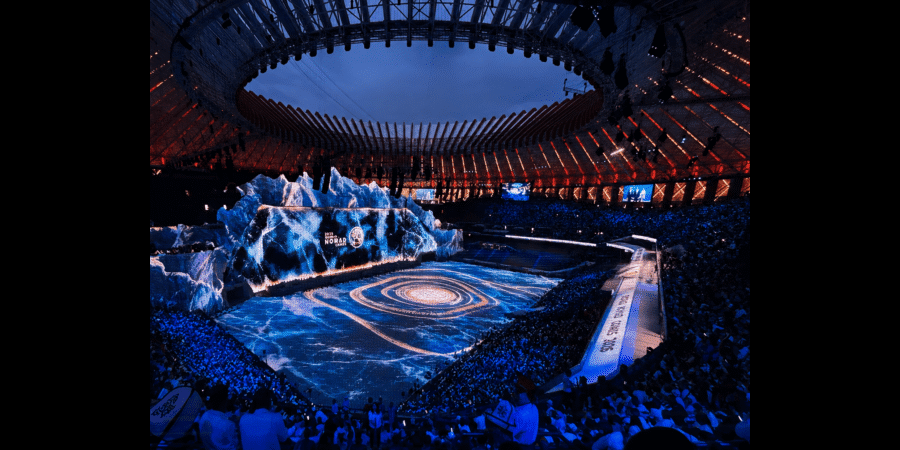
On the shores of Lake Issyk-Kul, where mountains drop sharply into the water, and horses and cars are found in almost equal measure, Kyrgyzstan will host the World Nomad Games 2026 from August 31 to September 6, with The Times of Central Asia reporting from the ground. Since their launch in 2014, the Games have grown well beyond their origins, drawing competitors and audiences from across the world. This year’s emblem, the snow leopard, captures that idea with unusual precision. It has been adopted as the national symbol of Kyrgyzstan in recent years and has long been central to the country’s conservation diplomacy, including its role in establishing October 23 as International Snow Leopard Day. Presented as a representation of strength, clarity, and endurance, it reflects both the terrain and the mindset that fortifies the event. [caption id="attachment_46882" align="aligncenter" width="1280"] Image: International Secretariat of the World Nomad Games[/caption] The Games have expanded beyond the region, but are now returning home again. Kyrgyzstan hosted the first three editions before they went to Turkey in 2022 and Kazakhstan in 2024. Their homecoming now carries greater international weight, reinforced by UNESCO’s support, recognizing their role in preserving intangible cultural heritage. This year’s experience is mostly set in the Issyk-Kul region, around three hours from Bishkek, where the mountainous landscape will form the backdrop to the lakeside venues. The opening and closing ceremonies are scheduled to take place in the capital’s Bishkek Arena. In Cholpon Ata, the hippodrome will host horse racing and Kok Boru, while the nearby sports complex stages wrestling competitions. The Rukh Ordo Cultural Center brings together strength events and traditional tournaments alongside parts of the cultural program. In Kyrchyn, the Ethno Village will become the core of the experience, where archery, falconry, crafts, performances, and food sit within a setting that reflects nomadic life. [caption id="attachment_46886" align="aligncenter" width="2560"] Kok Boru at the Bishkek Hippodrome, 2014; image: Stephen M. Bland[/caption] Forty-plus sports disciplines will be spread across competitive and demonstrative formats, with more than 100 medals at stake. Kok Boru is fast and unforgiving, played on horseback as riders grapple over what was traditionally a headless goat carcass (now a synthetic dummy or serke), surging and colliding before hurling it into the opponent’s goal. [caption id="attachment_46885" align="aligncenter" width="1280"] Image: International Secretariat of the World Nomad Games[/caption] Horseback archery demands precision under movement, with riders standing in the stirrups or twisting at full gallop to fire arrows at distant targets. Eagle hunting illustrates a partnership between human and bird refined over generations, as trained golden eagles launch from the arm to track and strike prey across open ground. [caption id="attachment_46887" align="aligncenter" width="1200"] Woman with a bird of prey, World Nomad Games, Astana, 2024; image: Stephen M. Bland[/caption] Wrestling styles such as Alysh and Kurash emphasize balance and control rather than brute force, with fighters gripping belts and using timing, leverage, and footwork to unbalance their opponent. The Times of Central Asia spoke with the International Secretariat of the World Nomad Games to...

Kazakhstan to Introduce AI in Driver’s License Exams

Kazakhstan plans to introduce artificial AI technologies into both the theoretical and practical components of driver’s license exams. At the same time, citizens will be allowed to take the exams an unlimited number of times without having to repeat training at driving schools. The initiatives were presented by Zhaslan Madiyev, Minister of Digital Development, Innovation and Aerospace Industry, together with representatives of the Ministry of Internal Affairs. According to the proposed changes, augmented reality (AR) technologies will be used in the theoretical exam, while computer vision systems will monitor practical driving tests. These measures are intended to increase transparency and prevent the use of prohibited devices. “These measures will make it possible to minimize the use of prohibited technical tools and to record violations,” the government press service said. A pilot project is set to be launched at a branch of the National Testing Center under the Ministry of Science and Higher Education in Astana. The project will test technologies aimed at ensuring academic integrity, as well as conduct psychometric analysis of exam questions to verify their reliability and alignment with safe driving standards. The new rules provide for the possibility of an unlimited number of exam attempts on a paid basis, with a mandatory interval of at least 10 calendar days between attempts. Currently, applicants are granted three free attempts, two with a one-day interval and a third after 30 days. After exhausting these attempts, retraining at a driving school is required. According to the government, the new approach will make the process more accessible and reduce corruption risks by eliminating incentives to obtain licenses illegally. Plans also include strengthening the information security of digital systems used in the licensing process by classifying them as critical information infrastructure. This would introduce stricter liability for unauthorized interference, including criminal penalties. Administrative liability will also be introduced for individuals who assist in illegally obtaining driver’s licenses. Violations such as the use of micro earpieces, hidden cameras, and other transmitting devices will be punishable by fines and disqualification from taking the theoretical exam for up to one year. The reforms will also affect driving schools. Licensing requirements are expected to be introduced, and their performance will be evaluated based on training quality and public feedback. Licenses may be revoked in cases of consistently poor standards. As previously reported by The Times of Central Asia, Senator Gennady Shipovskikh had earlier proposed restoring state oversight of private driving schools.

Kazakhstan Begins First Public-Private Partnership Sports Facility Project

Construction has begun in the Atyrau region on Kazakhstan’s first sports boarding school for athletically gifted children, to be implemented under a public-private partnership (PPP) model. According to the Ministry of Tourism and Sports, the private partner will be responsible for the full project cycle from design and construction to technical maintenance of the facility for five years after its completion, which is scheduled for May 2027. The new school will feature modern academic buildings and residential facilities. The 3.2-hectare site will include an academic block for 400 students, a 300-bed dormitory, 13 gyms, a swimming pool, a cafeteria, a library, a stadium, running tracks, and basketball and volleyball courts. The project in Atyrau is intended as a pilot, with plans to replicate similar facilities in other regions of the country. The school is expected to train 400 young athletes across 13 Olympic sports. Officials say the project will create improved conditions for developing the country’s sports reserve by integrating academic education with professional training. In recent years, the development of sports in Kazakhstan has received increased state support, contributing to stronger performances by Kazakh athletes in international competitions. In the first quarter of 2026, Kazakhstani athletes won 200 medals at international events: 79 gold, 57 silver, and 64 bronze. At the 2026 Winter Olympic Games in Milan, Italy, in February, Kazakhstan won one gold medal and finished 19th in the overall medal standings. This marks the country’s best result since 1994, when it placed 12th at the Lillehammer Olympics, where skier Vladimir Smirnov won gold. In 2026, Kazakhstan’s only medal was secured by figure skater Mikhail Shaidorov, who became the country’s first Olympic champion in figure skating. At the Paralympic Games in Italy in March 2026, Kazakhstan placed 18th out of 55 countries in the medal standings. Yerbol Khamitov won two medals, gold in the biathlon pursuit and bronze in cross-country sprint, becoming the first Kazakhstani athlete to win two medals at a Winter Paralympics.

Contemporary Theater in Kazakhstan: Between Tradition and Experiment

Contemporary theater in Kazakhstan is undergoing a period of active development, balancing the preservation of cultural heritage with the search for new forms of expression. The Times of Central Asia spoke with Abai Kazbayev, an actor at the Zhambyl Regional Russian Drama Theater who is currently studying acting and directing, about how the theater scene is evolving, the challenges faced by actors and directors, and why experimentation has become essential. TCA: Tell us about yourself. How did your journey into theater begin, and what influenced your decision to become an actor? Abai: I entered the profession through my love of cinema. At first, I took part in crowd scenes, and then I became fascinated with the filmmaking process itself. To deepen my involvement, I joined a private theater on the recommendation of friends. There, I had the opportunity to work with Saulius Varnas from Lithuania, as well as with professionals such as Marat Amirayev and Altynshash Shayakhmetova. Today, I'm studying acting and directing at university, while also working at the Zhambyl Regional Russian Drama Theater. TCA: How do you assess the current state of contemporary theater in Kazakhstan? Abai: If we distinguish contemporary theater from traditional formats, most such productions are concentrated in Almaty. In other cities, theater tends to follow a more academic style, although there are exceptions. Personally, I'm drawn to how contemporary theaters reinterpret and reimagine classical works. This approach attracts both new and more discerning audiences. TCA: What makes Kazakhstani theater distinctive compared to that of other countries? Abai: Its uniqueness lies in the combination of cultures. We have European forms, ballet and opera, alongside contemporary interpretations, including those inspired by Bulat Ayukhanov. On the one hand, there are traditional productions about khans and batyrs; on the other, there are stories such as that of a boxer in Almaty in the 1980s, a stage adaptation of Martin Scorsese’s Raging Bull. TCA: How can contemporary theater preserve national traditions while remaining engaging for younger audiences? Abai: Through experimentation. For example, last year in Taraz, a sound drama based on Alexander Grin’s novella Scarlet Sails was staged. It offered a new interpretation: some lines were delivered in Kazakh, and Captain Grey’s song was also performed in Kazakh. It was an attempt to reflect Kazakhstan’s multiculturalism. Interestingly, the production was staged by students from GITIS in Russia. I believe such experiments help attract younger audiences while preserving national traditions. TCA: How important are elements of national culture, language, music, and folklore in today’s productions? Abai: There's currently a broader trend across the arts of returning to cultural roots, and theater is no exception. Every culture seeks self-identification. In cinema, folklore characters are widely used, particularly in the horror genre. In the theater, however, folklore tends to remain within traditional productions and is often treated with a sense of reverence. At the same time, it is worth mentioning the ballet Aldar Köse at the Abai Kazakh National Theater of Opera and Ballet in Almaty. TCA: How do you view experimental...