• KGS/USD = 0.01144 0%
  • KZT/USD = 0.00215 0%
  • TJS/USD = 0.10718 0.28%
  • UZS/USD = 0.00008 0%
  • TMT/USD = 0.28530 0%
  • KGS/USD = 0.01144 0%
  • KZT/USD = 0.00215 0%
  • TJS/USD = 0.10718 0.28%
  • UZS/USD = 0.00008 0%
  • TMT/USD = 0.28530 0%
  • KGS/USD = 0.01144 0%
  • KZT/USD = 0.00215 0%
  • TJS/USD = 0.10718 0.28%
  • UZS/USD = 0.00008 0%
  • TMT/USD = 0.28530 0%
  • KGS/USD = 0.01144 0%
  • KZT/USD = 0.00215 0%
  • TJS/USD = 0.10718 0.28%
  • UZS/USD = 0.00008 0%
  • TMT/USD = 0.28530 0%
  • KGS/USD = 0.01144 0%
  • KZT/USD = 0.00215 0%
  • TJS/USD = 0.10718 0.28%
  • UZS/USD = 0.00008 0%
  • TMT/USD = 0.28530 0%
  • KGS/USD = 0.01144 0%
  • KZT/USD = 0.00215 0%
  • TJS/USD = 0.10718 0.28%
  • UZS/USD = 0.00008 0%
  • TMT/USD = 0.28530 0%
  • KGS/USD = 0.01144 0%
  • KZT/USD = 0.00215 0%
  • TJS/USD = 0.10718 0.28%
  • UZS/USD = 0.00008 0%
  • TMT/USD = 0.28530 0%
  • KGS/USD = 0.01144 0%
  • KZT/USD = 0.00215 0%
  • TJS/USD = 0.10718 0.28%
  • UZS/USD = 0.00008 0%
  • TMT/USD = 0.28530 0%

Viewing results 1177 - 1182 of 5089

EU Grants Kazakhstan Exemption to Transit Coal Through Sanctioned Russian Ports

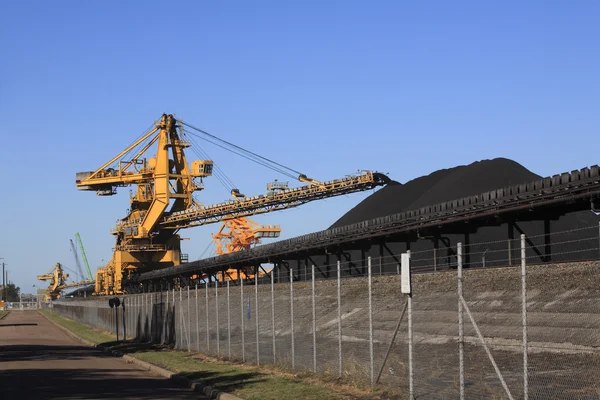
The European Union has granted Kazakhstan an exemption permitting the transit of Kazakh coal through select Russian ports previously restricted under EU sanctions. The decision, included in the EU’s 18th package of sanctions, aims to secure Kazakhstan’s coal exports to Europe. The exemption follows months of negotiations led by the Ministry of Trade and Integration, the Ministry of Foreign Affairs, and Kazakhstan’s Permanent Mission to the EU. The talks were prompted by sanctions introduced in February 2024 under the 16th EU sanctions package, which included a ban on transactions with Ust-Luga port, one of the main routes for Kazakh coal shipments to the EU. “To resolve the situation, work was carried out at various levels and an official request was sent to the European Commission asking for changes to the sanctions regime,” the ministry stated. “As a result, the 18th package of EU sanctions contains amendments allowing transactions with a number of Russian ports for the transit of coal of Kazakh origin.” Conditions of the Exemption The exemption is conditional and tightly regulated: Only coal of Kazakh origin may be transited; Ownership of the cargo must not involve entities from countries under EU sanctions, including Russia and Belarus; The designated Russian ports may be used solely for transit purposes, specifically loading and dispatch, without any procurement or production activities on site. Trade Impact Kazakhstan remains a key coal supplier to the European market. In 2022, it exported 4.4 million tons of coal to the EU, generating $419.2 million, representing 45% of total coal exports. Although volume increased to 6.1 million tons in 2023 (54.3%), falling global prices reduced revenue to $382 million. In 2024, exports declined to 5.2 million tons worth $312.5 million (51.8%). During the first five months of 2025, Kazakhstan exported 1.6 million tons to the EU, generating $82.9 million and accounting for 38.5% of total coal exports over that period. “Despite the temporary decline in indicators, the measures taken are creating conditions for the restoration of export flows and increased stability of logistics routes,” the ministry said. “Kazakhstan will continue to work to protect trade interests, support national exports, and strengthen economic ties with key partners.” As previously reported by The Times of Central Asia, domestic coal consumption in Kazakhstan is expected to decrease due to government plans to phase out pilot coal-fired power plants in favor of renewable energy and low-carbon technologies, including gas. 

ADB Raises Kazakhstan’s Economic Growth Forecast, Warns of Higher Inflation

The Asian Development Bank (ADB) has revised upward its economic growth forecast for Kazakhstan for both 2025 and 2026, while also raising its inflation projections. The updated outlook was published in the July edition of the Asian Development Outlook. Growth Outlook Strengthened According to the ADB’s latest report, Kazakhstan’s GDP is now expected to grow by 5.1% in 2025, up from the 4.9% forecast issued in April. The projection for 2026 has also been increased from 4.1% to 4.3%. Key growth sectors include: Transport: +21% Construction: +16.9% Manufacturing: +8.7% Mining: +6.1% Particular emphasis is placed on the early expansion of oil production at the Tengiz field, which launched ahead of schedule. This, combined with Kazakhstan’s increasing oil exports within the framework of OPEC+ quotas, has bolstered the growth outlook. As previously reported by The Times of Central Asia, in June, Kazakhstan raised production for the third consecutive month, contributing positively to GDP growth. "Growth in tax revenues has allowed for increased government investment in capital projects and the social sector," the ADB commented. "The early launch of the Tengiz expansion has strengthened prospects for the extractive industry. OPEC+'s May 31 decision to continue raising production supports this trend, as Kazakhstan is utilizing its full capacity." Inflation Pressures Intensify Despite the improved growth outlook, the ADB now expects inflation to reach 10.2% by the end of 2025, up from the 8.2% forecast in April. For 2026, inflation is projected at 8.4% (previously 6.5%). Data from Kazakhstan’s National Statistics Bureau indicates that annual inflation reached 11.3% in May and 11.8% in June. Paid services remain the primary inflation driver, though monthly price increases slowed modestly from 0.9% in May to 0.8% in June. The ADB notes rising inflationary pressure across the broader Caucasus and Central Asia subregion. The regional average is now expected to hit 7.8% in 2025 and 6.7% in 2026 both higher than the previous forecasts of 6.9% and 5.9%, respectively. Supporting Forecasts The Eurasian Development Bank (EDB) also anticipates robust economic expansion in Kazakhstan, projecting GDP growth of 5.5% in 2025, up from 4.8% in 2024, with sustained momentum through 2026-2027. However, the EDB likewise foresees persistent inflation, expecting it to reach 11.9% by year-end. Earlier, Deputy Prime Minister Serik Zhumangarin reported that the Kazakh economy grew by 6.2% in the first half of 2025, the country’s fastest growth rate since 2011.

Kazakhstan’s Birth Rate Continues to Fall Amid Demographic Concerns

Kazakhstan is witnessing a sustained decline in its birth rate despite government efforts to stimulate demographic growth. In their latest report, analysts at Ranking.kz have explored why more Kazakhstanis are choosing to have fewer or no children, and what factors are driving this downward trend. Sharp Decline in Newborn Numbers According to official data, 77,300 children were born in the first quarter of 2025, a 15.8% decrease compared to the same period in 2024. This continues a multi-year decline: annual births dropped from 446,500 in 2021 to 365,900 in 2024. Kazakhstan’s total fertility rate also reflects this trend. After peaking at 23.5 births per 1,000 people in 2021, the rate has steadily fallen to 18.2 in 2024 and further to 15.4 in early 2025. Regionally, Mangistau and Turkestan remain the most fertile areas, with 21.3 births per 1,000 people, followed by Shymkent (19.7). The lowest rates are in North Kazakhstan (8.5), Kostanay (9.5), and East Kazakhstan (9.6). Changing Attitudes Toward Parenthood A 2024 national survey shows a growing reluctance among citizens to expand their families. Over half (51.3%) of respondents said they already have children and do not plan to have more. Only 13% hoped to have two children, 9.1% three, and 10.5% four or more. Meanwhile, 3.9% said they do not intend to have children at all, a sentiment more common in urban areas (4.5%) than in rural regions (3%). Among urban parents, 52.4% said they would not have more children, compared to 49.5% in rural communities. UN projections suggest Kazakhstan's demographic decline will persist. The fertility rate is expected to dip to 19 in 2025, 17.6 in 2034, and continue falling to 11.4 by 2100, raising concerns about aging and the growing demographic burden. Economic and Medical Challenges According to the platform "Children of Kazakhstan", economic hardship remains a central factor. Rising costs for housing, healthcare, and education have made child-rearing increasingly unaffordable, prompting many to delay or reconsider parenthood altogether. Societal values are also shifting. More young Kazakhs are prioritizing education, careers, and personal development. Women, in particular, are pursuing higher education and professional goals before starting families. Healthcare issues have further exacerbated the trend. The number of women diagnosed with infertility rose to 29,100 in the first half of 2024, surpassing the total for all of 2023 (28,500). This figure has climbed steadily from just 10,000 in 2019. Male infertility is also rising, though the numbers are significantly lower. Reported cases increased from 36 in 2019 to 119 in 2021, before fluctuating slightly to 108 in 2023.

Kazakhstani Opera Talent Aigerim Altynbek Wins Contest in Italy

Kazakhstani soprano Aigerim Altynbek believes “greater heights” await after she came first in an international opera singing competition in Italy. Altynbek was among singers from 50 countries competing in the Concorso Lirico Internazionale di Portofino (CLIP) in the scenic harbor village of Portofino. The competition, which began in 2015, aims to support young talents and many of its winners and finalists have embarked on successful careers. “I want to share some incredibly joyful news with you!” Altynbek posted on Instagram after she was awarded first prize on Sunday. “This was a truly special experience for me – and I believe even greater heights lie ahead.” President Kassym-Jomart Tokayev congratulated Altynbek. “This achievement, which has made our country's culture known to the world and has been recognized by international experts, is of great significance,” Tokayev said. “You have made our state proud and brought our native art to the forefront of the world.” Altynbek performed a duet last month with Italian tenor Andrea Bocelli at Pompeii, days after an appearance with Spanish tenor José Carreras in Astana. She has already received a number of accolades, including first prize in the Città di Arcore - Giacomo Puccini opera singing competition in Italy last year. She has been studying in Italy after graduating from the Kazakh National University of Arts.  

Opinion: Ghosts of the Gulag: Kazakhstan’s Uneasy Dance With Memory and Moscow

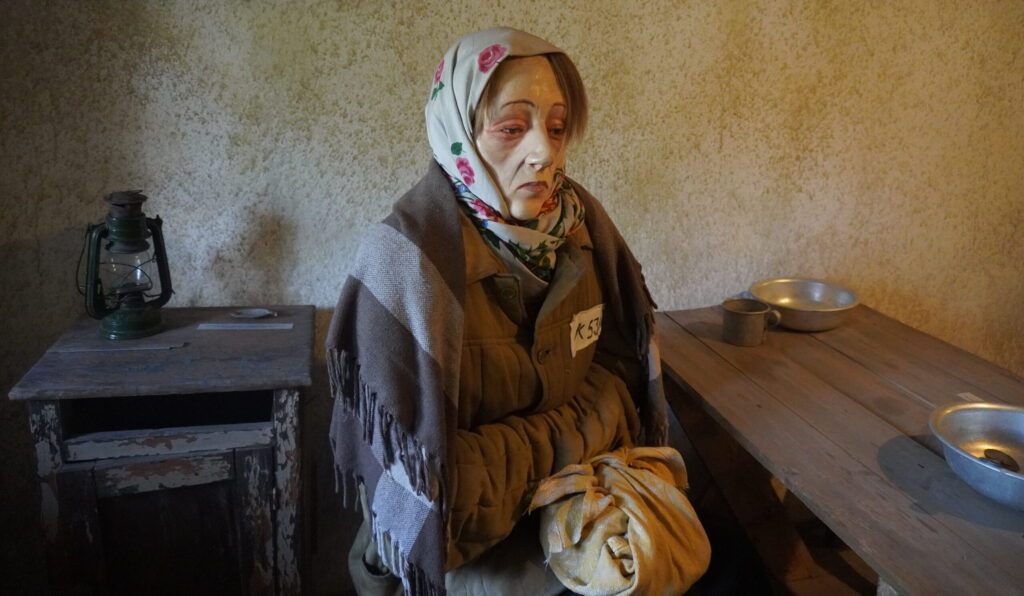
In May 2025, the authorities in Moscow unveiled a life-size bas‑relief sculpture of Josef Stalin in the Taganskaya metro station. The next month, a statue of Lenin was pulled down in Osh, Kyrgyzstan. Between these two symbolic acts lies Kazakhstan, caught in a tug-of-war over the memory of Soviet-era repression. Between 1920 and 1960, millions of prisoners were deported to more than fifty labor camps across what was later to become the Republic of Kazakhstan. Those who weren’t executed on the spot — political opponents, intellectuals, artists — were forced to work in mines, construction sites, or collective farms feeding Soviet industrial expansion. The death toll remains unknown but is believed to be in the millions. Today, this dark past draws in history buffs and thrill-seekers. But darktourism.com, the go-to website on the topic, warns them: forgotten cemeteries, ghost villages, crumbling camps — this gulag archipelago is well hidden in the steppes. No sign points the way to the Museum of Political Repression in Dolinka, housed in the former headquarters of Karlag, one of the largest camps of the Soviet Gulag system. The only other gulag transformed into a museum is ALZHIR, built on the ruins of the Akmola camp near Astana. It commemorates the 18,000 women imprisoned between 1939 and 1953 for being the wives of “traitors to the motherland.” These two museums now stand as official symbols of Soviet repression in Kazakhstan, and, more subtly, as frontline sites in a broader memory war across the former Soviet Union. Selective Memory When the museums were nationalized in the 2000s, their message became tightly controlled. Portraits and quotes from former president Nursultan Nazarbayev began to cover the walls. Guillaume Tiberghien, a specialist in dark tourism at the University of Glasgow, calls it a “selective interpretation of history.” The goal? To unify the country’s 160 ethnic groups under a shared narrative of collective suffering. At both Karlag and ALZHIR, guides emphasize acts of solidarity between Kazakh villagers and deportees — hospitality, compassion, bits of cheese tossed over barbed wire fences to feed the starving. [caption id="attachment_34338" align="aligncenter" width="2560"] Execution scene recreated at the Karlag museum; image: Manon Madec.[/caption] The past is staged. Between wax statues with sunken faces, sound effects mimicking heartbeats, and torture room reconstructions, the visitor is drawn into a visceral experience, sometimes at the cost of accuracy. “You wonder if the museum overdoes it to trigger emotion,” Tiberghien remarks. Margaret Comer, a memory studies expert at the University of Warsaw, explains: “It’s sometimes easier to mourn victims than to identify perpetrators.” [caption id="attachment_34337" align="aligncenter" width="2560"] Execution scene and fake blood, reconstructed in the Dolinka museum; image: Manon Madec.[/caption] The complicity of local Kazakhs is never addressed. Russian responsibility is blurred behind vague terms like “NKVD” or “Stalinist repression.” At ALZHIR, visitors learn only about Sergey Barinov — a Russian commandant described as cultured, discreet, and caring toward the women detained. The other two camp directors are never mentioned. In other former Soviet republics — Ukraine, the Baltics, Georgia — such...

Potential Mass Expulsion of Migrants Looms in Russia

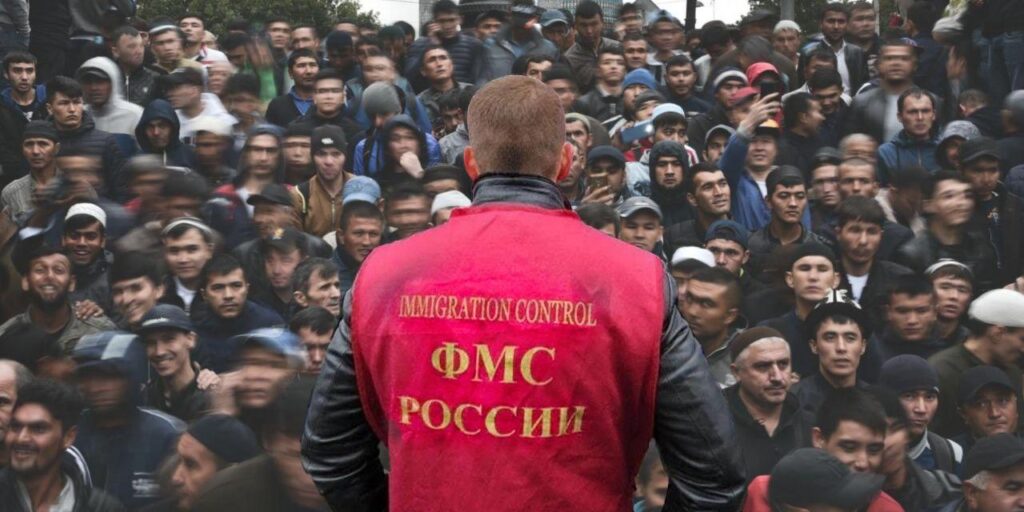
Russia introduced new regulations for foreign citizens in the country on February 5, and started keeping a list at the Interior Ministry of foreigners who are living or staying in Russia without proper documentation, the “controlled persons registry.” The rules are aimed at migrant laborers working in Russia, many of whom come from Central Asian countries. Russia has set a September 10 deadline for foreigners in the country to clear up all their paperwork with the authorities or face expulsion with a ban on re-entry. Judging by recent comments from Kyrgyzstan’s ambassador to Russia, Kubanychbek Bokontayev, many might not make that September 10 deadline. Needed but Not Desired Over the course of the last two decades, millions of citizens from Central Asian countries have worked in Russia. Most are from Kyrgyzstan, Tajikistan, and Uzbekistan. The remittances they send home have grown to the point where this money now accounts for nearly 40% of the GDP in Tajikistan, 24% in Kyrgyzstan, and 14% in Uzbekistan. Most of these remittances come from Russia. Russia badly needs the extra workers, and, until recently, the arrangement seemed to suit all parties. But the March 2024 terrorist attack on Moscow’s Crocus City Hall changed the situation. The Russian authorities detained and charged a group of Tajik nationals for the attack, and the always simmering xenophobia in Russia, particularly toward Central Asians, boiled over. New rules and restrictions have been imposed on migrant workers. Those that came into force in February this year were only the latest in a series of changes that already included mandatory fingerprinting and photographs upon entry to Russia, a reduction in the term of stay from 180 to 90 days, and an increasing list of infractions that provide grounds for deportation. In 2024, Russia expelled some 157,000 migrants who were in the country illegally, which, according to Russian Interior Minister Vladimir Kolokoltsev, was an increase of some 50% over 2023. The Clock Is Ticking At the start of February, just before the latest regulations came into effect, Russia’s Deputy Interior Minister Aleksandr Gorovoi said there were some 670,000 foreigners living illegally in Russia. Gorovoi added that more than half were women and children, “those who entered, but we do not see that they received a patent registered with the migration service… [or] that an employment agreement was concluded with them.” On July 24, Kyrgyz media outlet AKIpress published an interview with the Kyrgyz Ambassador to Russia, Bokontayev, in which he said that at the start of July, there were some 113,000 Kyrgyz citizens on the controlled persons registry, which he referred to as the “gray list.” He also said there were some 80,000 Kyrgyz citizens on the “black list” of people barred from entering Russia. In a separate interview with Radio Free Europe/Radio Liberty’s Kyrgyz Service published on July 25, Kyrgyzstan’s General Consul in Russia, Bakyt Asanaliyev, said that about 30% of the Kyrgyz citizens on the gray list are children. Ambassador Bokontayev said Kyrgyzstan’s embassy is working to make sure...