
• KGS/USD = 0.01144 0%
  • KZT/USD = 0.00215 0%
  • TJS/USD = 0.10718 0.28%
  • UZS/USD = 0.00008 0%
  • TMT/USD = 0.28530 0%
  • KGS/USD = 0.01144 0%
  • KZT/USD = 0.00215 0%
  • TJS/USD = 0.10718 0.28%
  • UZS/USD = 0.00008 0%
  • TMT/USD = 0.28530 0%
  • KGS/USD = 0.01144 0%
  • KZT/USD = 0.00215 0%
  • TJS/USD = 0.10718 0.28%
  • UZS/USD = 0.00008 0%
  • TMT/USD = 0.28530 0%
  • KGS/USD = 0.01144 0%
  • KZT/USD = 0.00215 0%
  • TJS/USD = 0.10718 0.28%
  • UZS/USD = 0.00008 0%
  • TMT/USD = 0.28530 0%
  • KGS/USD = 0.01144 0%
  • KZT/USD = 0.00215 0%
  • TJS/USD = 0.10718 0.28%
  • UZS/USD = 0.00008 0%
  • TMT/USD = 0.28530 0%
  • KGS/USD = 0.01144 0%
  • KZT/USD = 0.00215 0%
  • TJS/USD = 0.10718 0.28%
  • UZS/USD = 0.00008 0%
  • TMT/USD = 0.28530 0%
  • KGS/USD = 0.01144 0%
  • KZT/USD = 0.00215 0%
  • TJS/USD = 0.10718 0.28%
  • UZS/USD = 0.00008 0%
  • TMT/USD = 0.28530 0%
  • KGS/USD = 0.01144 0%
  • KZT/USD = 0.00215 0%
  • TJS/USD = 0.10718 0.28%
  • UZS/USD = 0.00008 0%
  • TMT/USD = 0.28530 0%

Viewing results 1183 - 1188 of 5089

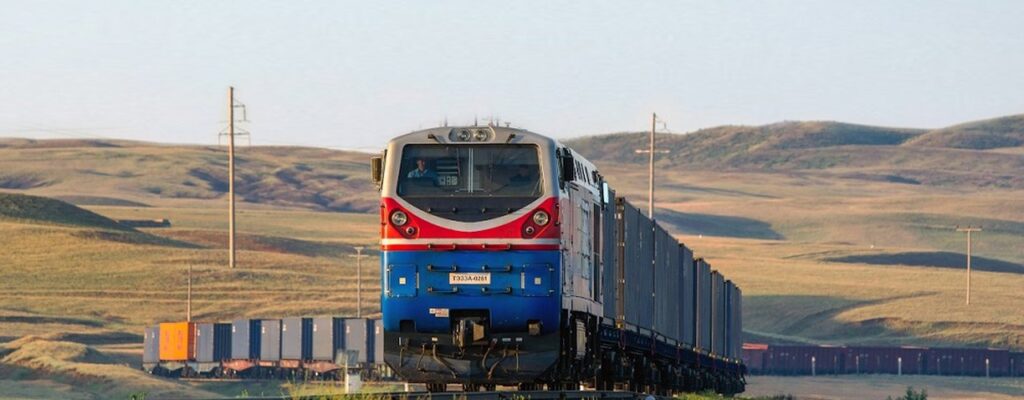
KTZ Secures $540 Million Loan to Upgrade Trans-Kazakhstan Railway Corridor

Kazakhstan Temir Zholy (KTZ), the national railway operator, has secured a syndicated loan of up to 480 million Swiss francs (approximately $540 million) for a three-year term. Arranged through Abu Dhabi Commercial Bank and Deutsche Bank, the financing will support key infrastructure projects along the Trans-Kazakhstan Railway Corridor. According to KTZ, the loan will fund construction of the Moiynty-Kyzylzhar section, upgrades to congested segments of the national rail network, and the refinancing of existing debt. The Trans-Kazakhstan Railway Corridor is central to Kazakhstan’s strategy to solidify its role as a major overland transit hub connecting China and Europe. Infrastructure improvements are expected to reduce delivery times, lower logistics costs, create jobs, and diversify international trade routes, enhancing both the resilience of Kazakhstan’s economy and the competitiveness of its transport sector. Currently, more than 80% of overland freight from China to Europe passes through Kazakhstan via the Trans-Caspian International Transport Route (TITR), also known as the Middle Corridor. This route circumvents Russia and connects China to Europe through Central Asia and the Caspian Sea. In 2024, freight volumes along the TITR surged by 60%, reaching 4.5 million tons. Kazakhstan aims to more than double that volume to 10 million tons by 2030, as part of its broader ambition to expand its footprint in global supply chains.

Kazakh Scientists Unveil Facility Capable of Preserving Agricultural Products for 50 Years

Researchers at Al-Farabi Kazakh National University have developed a mobile unit capable of processing and storing agricultural products for up to 50 years. The unit, named “Dayar 20,” utilizes freeze-drying technology and is designed to be transported directly to fields and orchards, an essential advantage for remote agricultural operations. Takeaway Food with a Half-Century Shelf Life The underlying technology is lyophilization, which involves removing water from frozen products by evaporation under low pressure. The process allows food to retain its taste, color, aroma, shape, and nutritional content. “Products dried using the Dayar 20 unit remain usable for a long time, retaining their taste, color, smell, shape, and vitamins,” said project manager Yerbol Ikhsanov, PhD in chemistry. The unit can process a variety of goods, including fruits, vegetables, meat, dairy products, and ready-to-eat meals. Shelf life ranges from three years at room temperature to 10 to 50 years when vacuum-sealed. The innovation is expected to improve the sustainability of Kazakhstan’s agricultural sector and enhance its export potential. Breakthrough in Hydrogen Production This is not the only recent scientific achievement in Kazakhstan. Researchers at the Institute of Combustion Problems have developed a reactor that decomposes hydrocarbon gases into hydrogen and carbon using low-temperature plasma, without the need for catalysts and with minimal energy input. Inside the plasma reactor, gases are heated to temperatures between 1,800 and 2,700°C, triggering pyrolysis. The result is hydrogen with a purity of up to 98.9% and technical carbon. Notably, scientists also identified giant carbon nanotubes, up to 100 nanometers in diameter, within the by-product. These nanotubes are considered a promising material for super-strong fibers and composites, far exceeding typical size expectations under normal conditions. The method offers nearly 100% efficiency in hydrocarbon recycling and significantly accelerates hydrogen production. Kazakh Anti-Cancer Drug Shows Early Promise In another separate development, Kazakh scientists have made progress on an anti-cancer drug that has yielded promising results in early clinical trials. Dos Sarbasov, Vice President of the National Academy of Sciences, reported that tumor growth had ceased in six patients and shrunk by 30% in one case. “After the first dose of the drug, the condition of fifteen cancer patients stabilized, and in six of them, the tumor stopped growing,” Sarbasov said. The drug targets cells that actively absorb glucose and has shown no signs of toxicity. Clinical testing began two years ago and has already passed two phases. The trials, conducted at the Kazakh Institute of Oncology and Radiology, are expected to conclude within the next two to three years. The drug has received international patent protection.

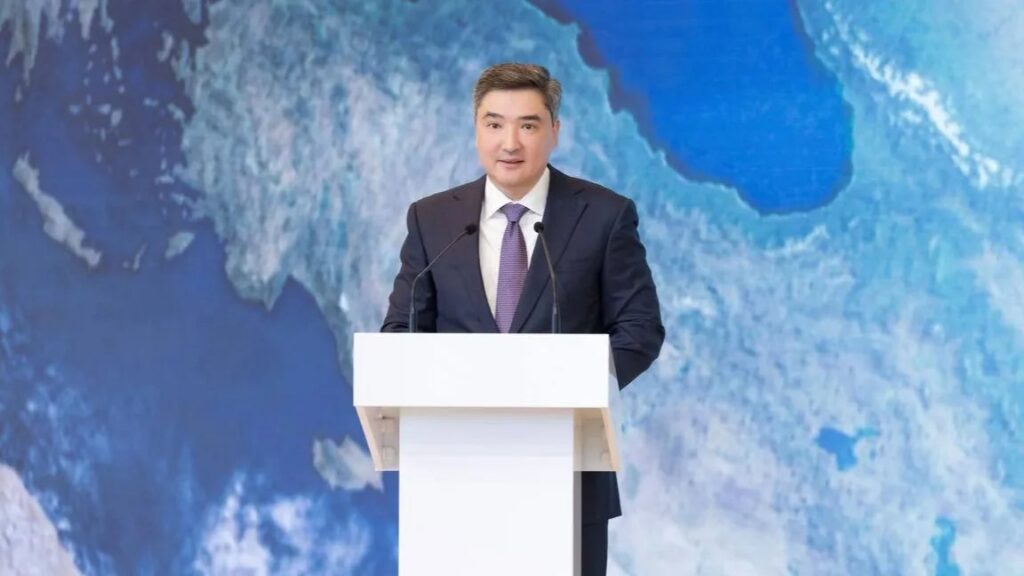
Kazakhstan PM Urges Joint Action to Save the Caspian Sea

Kazakh Prime Minister Olzhas Bektenov has urged the five Caspian littoral states to coordinate efforts in response to the steadily declining water levels of the Caspian Sea, describing it as one of the region’s most pressing environmental threats. Speaking at the inaugural International Environmental Conference in Manzherok, Russia, Bektenov emphasized the urgency of a collective response. “Since the early 2000s, the water level in the Caspian Sea has been steadily declining. To study this and other challenges, Kazakhstan has established the Caspian Sea Research Institute. Scientists’ forecasts are alarming. We need decisive joint measures,” Bektenov stated, according to his press service. The Caspian Sea is bordered by Kazakhstan, Russia, Iran, Azerbaijan, and Turkmenistan. As previously reported by The Times of Central Asia, the sea’s water level dropped to less than 29 meters below sea level by summer 2025, a historic low. The northern Caspian, which borders Kazakhstan and Russia, is experiencing the most rapid desiccation. In addition to the Caspian issue, Bektenov addressed other major environmental concerns. He highlighted Kazakhstan’s work in the Aral Sea region, where the country currently chairs the International Fund for Saving the Aral Sea. Key priorities include reinforcing the Kokaral Dam, restoring the Syr Darya delta, revitalizing the fishing industry, and reforesting the dried seabed. Kazakhstan is also establishing a saxaul nursery on the desiccated Aral seabed to produce 1.5 million seedlings annually. The goal is to cover up to 40% of Kazakhstan’s portion of the former sea with saxaul forests. Bektenov also underscored the growing threat of glacier melt. Experts warn that Central Asia’s glaciers could shrink significantly by 2100. The UNESCO Central Asian Regional Glaciological Center, based in Almaty, is already serving as a key platform for research and monitoring. Kazakhstan, he added, is ready to implement joint hydrotechnical initiatives, including reservoir regulation and the introduction of automated water accounting systems. Bektenov concluded by noting the symbolic importance of the forum’s location in the Altai region, often regarded as the cradle of Turkic civilization and a cornerstone of cultural and humanitarian cooperation.

Kazakhstan–U.S. Tariff Question Indexes a Broader Geopolitical Pattern

When the United States announced a 25% tariff on selected imports from Kazakhstan, effective August 1, it offered little explanation beyond a vague appeal to restoring the trade balance. At first glance, this seemed routine, indeed almost perfunctory. However, the timing, context, and symbolic weight of the move suggest otherwise. Kazakhstan’s exports to the U.S. are modest, and key commodities are unaffected, yet the signal was received clearly in Astana.   What the Tariff Means in the Broader Picture In the current phase of the international system's evolution, tariffs no longer function solely as instruments of commercial redress. They have become vectors of strategic pressure, deployed to influence positions in a broader geopolitical context. From this perspective, Kazakhstan appears less as a trade partner than as a node within a larger and shifting strategic-connectivity network. To interpret the tariff imposed by the United States on Kazakhstan as a bilateral irritant would be to miss its deeper significance. The target may be marginal in economic scale, but the symbolism is central. What is at stake is not merely the movement of goods, but the movement of expectations. What is at issue is how middle powers such as Kazakhstan read global cues and signal their response. The tariff is a point of entry into an evolving geoeconomic pattern. Kazakhstan's answer to the American move thus becomes an exercise in managing uncertainty under shifting rules. Astana has moved quickly by dispatching a delegation, issuing public reassurances, and subtly shifting its narrative. This is not a crisis for Kazakhstan, but it is not something that can be ignored either. What seems to have triggered the tariff is not the trade volume, but the context. Kazakhstan’s longstanding ties with both Russia and China have complicated its attempts to preserve its autonomous balance in a tightening global field. The U.S. move may be part of a wider American effort to pressure states seen as too hesitant or too exposed. Kazakhstan's early response is thus less a tactical correction than a move to preempt misunderstanding. Background: A Cascade of Tariff Announcements The tariff targeting Kazakhstan came at the end of a months-long sequence of trade announcements that began to accelerate in early 2025; it was not an isolated action. On April 2, under the now-familiar slogan of restoring reciprocity, the Trump administration unveiled a broad tariff package affecting more than 180 countries at a base level of 10%. Russia and Belarus were notably untouched, but Kazakhstan was singled out for a rate of 27%. No one could quite justify why, and Washington did not seem interested in explaining the move. On July 7, Astana received a second notice: a revised tariff, now fixed at 25%, would take effect on August 1. This replaced the earlier measure and applied to a more specific set of goods. Without mentioning Kazakhstan by name, President Trump followed with a comment on social media about restoring “balanced flows” and correcting “distortions.” More than twenty other countries — an eclectic list including Brazil,...

Kazakhstan: Aircraft Debris Found in Search for Missing Military Helicopter

Search teams in Kazakhstan have discovered an oil slick on a lake and aircraft fragments that appear to belong to a military-operated helicopter carrying three people that was reported missing. Kazakhstan’s Ministry of Emergency Situations launched an intensive search and rescue operation after contact with the EC145 helicopter was lost on Friday in the area of Otar, a village west of Almaty. Satellite detection methods spotted oily water on Lake Sorbulak, about 40 kilometers northwest of Almaty, and searchers working through the night found aircraft debris “presumably belonging to” Kazakhstan’s Air Defense Forces, the ministry said on Friday. It said echo sounders as well as aerial and underwater drones were being used in the operation. “About 200 personnel, 40 units of equipment, 15 watercraft, 4 canine units, and 2 aircraft of the Ministry of Emergency Situations are involved,” the ministry said. The Ministry of Defense said the helicopter had been on a scheduled flight and that “a special commission has been dispatched to determine the circumstances of the incident.” The Eurocopter EC145 is a twin-engine, light utility aircraft.

Kazakhstan’s Bublik Wins Back-to-Back Tennis Titles on Clay

Another week, another title. Alexander Bublik of Kazakhstan won the Generali Open in Kitzbühel, Austria on Saturday, just a week after raising the winner’s trophy in Gstaad, Switzerland. Both tennis titles were on clay, a surface he once disparaged. Bublik beat Arthur Cazaux of France, 6-4, 6-3 in Kitzbühel, pounding groundstrokes and feathering dropshots against a player he had also beaten on the way to the title in Gstaad. It’s all part of what Bublik, 28, has described as his greatest season on the tour, which includes a quarterfinals run at the French Open and the grass court title at Halle in Germany. He now has won a total of seven ATP Tour singles titles, and his No. 30 ranking is projected to climb after the victory in Austria on Saturday. He struggled earlier in the year and was ranked 82 in mid-March. The Russia-born player stumbled at Wimbledon with a loss in the first round.
