• KGS/USD = 0.01144 0%
  • KZT/USD = 0.00212 0%
  • TJS/USD = 0.10456 0.19%
  • UZS/USD = 0.00008 0%
  • TMT/USD = 0.28490 0%
  • KGS/USD = 0.01144 0%
  • KZT/USD = 0.00212 0%
  • TJS/USD = 0.10456 0.19%
  • UZS/USD = 0.00008 0%
  • TMT/USD = 0.28490 0%
  • KGS/USD = 0.01144 0%
  • KZT/USD = 0.00212 0%
  • TJS/USD = 0.10456 0.19%
  • UZS/USD = 0.00008 0%
  • TMT/USD = 0.28490 0%
  • KGS/USD = 0.01144 0%
  • KZT/USD = 0.00212 0%
  • TJS/USD = 0.10456 0.19%
  • UZS/USD = 0.00008 0%
  • TMT/USD = 0.28490 0%
  • KGS/USD = 0.01144 0%
  • KZT/USD = 0.00212 0%
  • TJS/USD = 0.10456 0.19%
  • UZS/USD = 0.00008 0%
  • TMT/USD = 0.28490 0%
  • KGS/USD = 0.01144 0%
  • KZT/USD = 0.00212 0%
  • TJS/USD = 0.10456 0.19%
  • UZS/USD = 0.00008 0%
  • TMT/USD = 0.28490 0%
  • KGS/USD = 0.01144 0%
  • KZT/USD = 0.00212 0%
  • TJS/USD = 0.10456 0.19%
  • UZS/USD = 0.00008 0%
  • TMT/USD = 0.28490 0%
  • KGS/USD = 0.01144 0%
  • KZT/USD = 0.00212 0%
  • TJS/USD = 0.10456 0.19%
  • UZS/USD = 0.00008 0%
  • TMT/USD = 0.28490 0%

Viewing results 1309 - 1314 of 4651

$15 Billion in Crypto Withdrawn from Kazakhstan Amid Calls for Tighter Controls

Approximately $15 billion worth of cryptocurrency has been withdrawn from Kazakhstan, a figure disclosed by Berik Sholpankulov, Deputy Chairman of the National Bank. The exodus highlights systemic issues in the country's digital finance regulations. Billions in the “Gray Zone” According to Sholpankulov, the primary driver of this significant capital outflow has been the absence of robust regulatory frameworks governing digital finance. "Today, the volume of crypto assets withdrawn from the country amounts to $15 billion. The fact is that there was insufficient administrative and legal regulation in place to allow citizens to invest safely,” he stated during a briefing. In response, the National Bank plans to introduce sweeping changes, including administrative and criminal penalties for the illegal circulation of cryptocurrencies and their unauthorized transfer abroad. Sholpankulov also indicated that the authorities may soon begin naming individuals involved in illicit transactions. “Perhaps we will also hold a briefing and announce by name who spent what in the ‘gray’ zone. But [there] will already be administrative and criminal prosecution,” he stated. Transparency and Licensing: Key Reforms Legislative amendments are currently under development to legitimize and open Kazakhstan’s digital asset market. The initial step will involve licensing all market participants, such as cryptocurrency exchanges and digital service providers, through the Astana International Financial Center (AIFC). Licensed entities operating through the AIFC will enable residents to legally buy and sell digital assets. All transactions will be monitored and transparent, giving the state tools to prevent illegal financial flows. A dedicated platform is also being launched under the National Bank to test emerging digital technologies and services before a broader rollout. Strategic Shift Toward a Digital Economy These reforms extend to Kazakhstan's cryptocurrency mining sector. Large-scale operators will be permitted to build independent power plants to reduce their reliance on the national power grid, thus improving operational stability and economic feasibility. Deputy Minister of Digital Development Kanysh Tuleushin emphasized that establishing a legal market for digital assets marks a pivotal phase in the country's economic transformation. The relevant authorities aim to implement a fully regulated and transparent cryptocurrency market by the end of 2025. Kazakhstan's competitive advantages, including affordable electricity, vast space, and a supportive legal infrastructure, position it well to attract investment and build a robust digital ecosystem. If fully realized, the reform package could elevate Kazakhstan to a leading position in the region for legal cryptocurrency operations, stimulating job creation, and curbing shadow capital outflows. Previously, The Times of Central Asia reported that MP Olzhas Kuspekov had proposed strengthening state controls over cryptocurrency circulation, including blocking access to unlicensed exchange platforms.


Kazakhstan’s Record Sugar Beet Harvest Exposes Processing Industry Failures

Kazakhstan’s sugar industry saw a record sugar beet harvest in 2024, but the processing sector was unprepared to handle the influx. The gap between agricultural production and industrial capacity has once again underscored systemic weaknesses in the sector. A detailed analysis by Energyprom.kz highlights these ongoing challenges. Record Harvest, Limited Processing According to the National Statistics Bureau, sugar beet cultivation reached an all-time high in 2024, with 25,000 hectares sown, a 34% increase from the previous year. Enhanced government support spurred the expansion: farmers received 25 tenge per kilogram of beets delivered for processing (up from 15 tenge), and transport subsidies were raised from 25 to 45 tenge per kilometer. These incentives encouraged investment in farm equipment and modern technologies, lifting average yields to 507 centners per hectare. This translated into a gross harvest of nearly 1.3 million tons of beets, 2.5 times more than in 2023. However, only slightly more than half of the crop was processed. Senators in Kazakhstan’s Parliament reported that just 58.3%, approximately 700,000 tons, was processed. The remainder was either left to rot or exported, primarily to Kyrgyzstan. The Ministry of Agriculture offered a slightly higher figure, reporting that 989,000 tons had been processed. Even so, this left hundreds of thousands of tons unutilized. Responding to parliamentary concerns, Prime Minister Olzhas Bektenov acknowledged the issue, citing “high credit burdens” on processing enterprises and “dumping” by neighboring countries as key obstacles. Aging Infrastructure and Unrealized Potential Kazakhstan currently has four operational sugar factories, but only three are equipped to process sugar beets. These facilities are in a state of significant disrepair: the Koksu plant is 93 years old, Merken is 91, and Taraz is 88. Although hopes had been pinned on modernizing the Taraz facility to process up to 600,000 tons annually, the planned upgrades did not materialize. As a result, sugar production dropped despite the record harvest. In 2024, Kazakhstan produced 164,400 tons of sugar, a 25% decrease from the previous year. Meanwhile, exports surged: 143,000 tons of sugar were exported, a 7.5-fold increase. Nonetheless, imports continue to dominate the domestic market, covering 74.1% of consumption. Crop Reductions and Financial Risks Facing processing bottlenecks, the Ministry of Agriculture has announced plans to scale back sugar beet cultivation. In 2025, the planted area will be reduced to 18,400 hectares, a 25% decrease. The Zhambyl region will see its sugar beet area halved, while Zhetysu will experience a 20% cut. The decision has drawn strong criticism from farmers and lawmakers. Many producers had invested heavily based on previous state projections, purchasing machinery and training personnel. “What will happen to farmers who took out loans, bought equipment, and are now faced with a revision of the state strategy? This could lead to mass bankruptcies and negate years of support for the industry,” senators warned in an appeal to the prime minister. Strategic Setback and Future Uncertainty Kazakhstan’s sugar industry development plan for 2022-2026 envisioned expanding cultivated areas to 38,000 hectares, boosting production to 1.8 million tons of beets...

Stealing Brides, Ignoring Justice: The Battle Against Forced Marriage in Central Asia

The abduction of girls for forced marriage remains a troubling and persistent practice across Central Asia. While Kazakhstan has been progressively tightening its legal framework to better protect women's rights, bride kidnapping continues to pose a serious human rights challenge throughout the region. Fighting the Middle Ages? Bride kidnapping has long been practiced in Central Asia and the Caucasus. In contemporary times, some instances are consensual, carried out as a form of cultural theatre to reduce the high cost of weddings in traditional societies. However, when carried out without the woman’s explicit permission, the ritual becomes a form of gender-based violence. Efforts to combat non-consensual bride kidnapping have been ongoing since the Soviet era, yet the practice endures. According to some Kazakhstani legislators, the current laws are no longer adequate to address the full scope of the issue. The existing criminal code’s general provisions on abduction, they argue, fall short of tackling the specific dynamics of forced marriage. Mazhilis Deputy Murat Abenov has proposed introducing explicit criminal liability for coercion into marriage. “Over the past three years, 214 complaints have been filed in Kazakhstan from people who were forced into marriage. Only ten of them reached court. Hundreds of criminal cases were simply closed,” Abenov stated. “Even though the girl proved that she had been kidnapped, that she had jumped out of the car, that force had been used against her, nothing could be done.” New legislative amendments have been drafted and are expected to be debated in the Mazhilis, Kazakhstan’s lower house of parliament. The proposed law introduces a scale of penalties based on the severity of the offense. “There is administrative liability, there will be a large fine, and in serious cases where the girl is under 18 or where force is used or by a group of people, there will be more serious liability, up to criminal liability, five to seven years in prison,” Abenov explained. This new law could be enacted by the end of 2025. Kazakhstan's Human Rights Commissioner, Artur Lastaev, addressed the issue in February 2024 in the wake of a high-profile case in Shymkent. “The practice of kidnapping girls for the purpose of marriage is still widespread in our country, especially in the southern regions. In some cases, such actions result in sexual assault, humiliation, unlawful deprivation of liberty, and even suicide,” Lastaev stated. “Saltanat’s Law” Written in Blood In June 2024, Kazakhstan implemented a sweeping new law entitled “On Amendments to Ensure the Rights of Women and the Safety of Children.” Though years in the making, the law is colloquially known as “Saltanat’s Law,” named after Saltanat Nukenova, a young woman who was brutally murdered by her common-law husband, Kuandyk Bishimbayev, a former senior government official. In November 2023, Bishimbayev beat Nukenova over the course of a night in a restaurant in Astana. After she lost consciousness, he attempted to conceal the crime instead of seeking medical help. In May 2024, following a highly publicized trial, Bishimbayev was sentenced to 24 years...

By 2050, Nearly One-Fifth of Kazakhstan’s Population Will Be Over 60

Kazakhstan is on the cusp of a significant demographic transition. A recent report by the Unified Accumulative Pension Fund (UAPF), the agency overseeing the country’s pension system, projects that by 2050, 19% of Kazakhstan’s population will be of retirement or pre-retirement age. The study, published on the UAPF website, reveals that as of January 1, 2025, Kazakhstan's population had surpassed 20.3 million. Of this total, 42.8% — approximately 8.7 million people — were under the age of 25. Another 48% (around 9.7 million) were between 25 and 65, while 9.2%, or about 1.9 million people, were over 65 and currently classified as pensioners. Overall, individuals aged 60 and older now make up 13.9% of the total population. According to UAPF forecasts, the national population is expected to grow to 26.3 million by the end of 2050. However, this growth will be accompanied by an aging trend. “This means that by 2050, on average, one in five Kazakhs will be aged 60 or older,” the report notes. This shift mirrors a broader global pattern of aging populations and declining birth rates. Life expectancy in Kazakhstan, which had declined during the COVID-19 pandemic, has rebounded significantly. It rose from 70.23 years in 2021 to 75.44 years in 2024. At the same time, the Total Fertility Rate (TFR) has decreased from 3.32 children per woman in 2021 to 2.80 in 2024, with projections indicating a further drop to 2.42 by 2050. “With the gradual decline in birth rates and increased life expectancy, fewer people are entering the labor market, and the imbalance between pensioners and the working-age population continues to grow,” UAPF analysts stated. The report also predicts a neutral migration balance by 2050, meaning the number of people emigrating will roughly equal those immigrating for permanent residence. This marks a shift from earlier decades of net inward migration. Since 1991, over 1.15 million ethnic Kazakhs born abroad have moved to Kazakhstan permanently, according to data previously reported by The Times of Central Asia. As Kazakhstan confronts these demographic realities, policymakers will need to consider long-term strategies to ensure the sustainability of its pension system and the vitality of its labor force.

Kazakhstan’s Terminal in Xi’an Drives Surge in China-Europe Freight

Kazakhstan’s logistics terminal in Xi’an, a major transportation hub in China’s Shaanxi Province, has catalyzed a dramatic surge in container traffic along the Trans-Caspian International Transport Route (TITR), boosting Kazakhstan’s position as a critical player in regional trade. According to Kazakhstan Temir Zholy (KTZ), the national railway operator, freight volume from China via this corridor increased 33-fold in 2024. Operational since February 2024, the terminal has become a linchpin in cross-continental trade, enhancing the flow of goods between China and Europe through Kazakhstan. Xi’an hosts China’s largest dry port and is a pivotal launch point for freight to Europe. Over 30% of all container trains departing China for the European Union originate from Xi’an, while about 40% of China's imports from the Commonwealth of Independent States (CIS), which includes Kazakhstan and Russia, are routed through the city. The Kazakhstan terminal in Xi’an currently has an annual handling capacity of 133,000 twenty-foot equivalent units (TEU). In 2024, it processed over 276,000 tons of cargo, equivalent to approximately 23,000 TEU. In the first four months of 2025 alone, the terminal handled 10,524 TEU (or 126,288 tons). Plans are in place to expand throughput to 83,000 TEU annually by 2030. The terminal predominantly facilitates the shipment of vehicles and auto parts from top Chinese manufacturers including BYD, Geely, Chery, and Hongqi. It also processes large volumes of electronic goods, metal products, and consolidated cargo. This development underscores Kazakhstan’s growing strategic role in the TITR, a route increasingly seen as a vital alternative to the Northern Corridor passing through Russia. As trade dynamics shift, Kazakhstan continues to assert itself as a central transit hub connecting China with Central Asia and Europe.

The Photographs of Prokudin-Gorsky: A Glimpse of a Lost World

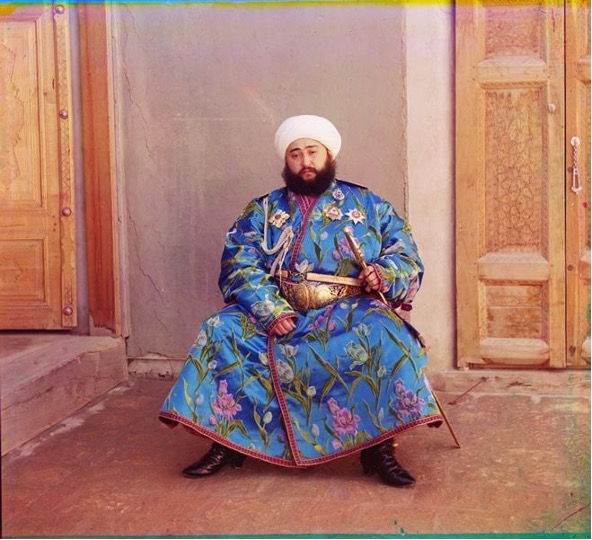
Using the emerging technology of color photography, Sergey Mikhaylovich Prokudin-Gorsky (1863–1944) undertook several photographic expeditions to capture images of the Russian Empire. Most of his work took place between 1909 and 1915, though some photographs date as early as 1905. At the time, the Russian Empire stretched roughly 7,000 miles east to west and 3,000 miles north to south. It encompassed one-sixth of the Earth’s land surface, making it the largest empire in history, spanning what are now eleven time zones. [caption id="attachment_32008" align="aligncenter" width="484"] Abutment for a dam and house belonging to the government. [Kuzminskoe] Prokudin-Gorsky, Sergey Mikhaylovich, 1912[/caption]Tsar Nicholas II supported Prokudin-Gorsky’s ambitious endeavor by granting him travel permits and access to various modes of transportation, including trains, boats, and automobiles. His journeys are preserved in photographic albums that include the original negatives. One album also features miscellaneous images, including scenes from other parts of Europe. The photographs capture a broad array of subjects: religious architecture and shrines (churches, cathedrals, mosques, and monasteries); religious and secular artifacts (such as vestments, icons, and items linked to saints, former Tsars, and the Napoleonic Wars); infrastructure and public works (railroads, bridges, dams, and roads); a variety of industries (including mining, textile production, and street vending); agricultural scenes (like tea plantations and field work); portraits, which often showed people in traditional dress, as well as cityscapes, villages, natural landscapes, and blooming plants. Besides being a photographer, Sergey Prokudin-Gorsky was a chemist who is renowned for his pioneering contributions to color photography in the early 20th century. In 1901, he traveled to Berlin to study photochemistry before returning to Russia, where he outfitted a railroad car as a mobile darkroom with the support of Tsar Nicholas II. As he traveled across the Russian Empire, he documented its people and landscapes, eventually earning recognition in Russia, Germany, and France. In 1906, he was appointed head of the photography section of Fotograf-Liubitel, Russia’s leading photography journal. One of his most famous works is a color portrait of Leo Tolstoy, taken in 1908. “By capturing the result of artistic inspiration in the full richness of its colors on the light-sensitive photographic plate, we pass the priceless document to future generations,” wrote Prokudin-Gorsky. As a nobleman, inventor, professor, and pioneer of color photography in Russia, Prokudin-Gorsky had a deep sense of national identity and heritage. Although he was unable to complete his grand project due to the outbreak of World War I and increasing social unrest across the Russian Empire, he still managed to capture photographs in regions such as the Urals, Siberia, Crimea, Dagestan, Finland, and Central Asia, as well as along the Volga and Oka rivers. Unfortunately, much of his photographic archive was lost in the aftermath of the 1917 Revolution. Prokudin-Gorsky created unique black-and-white negatives using a triple-frame method, taking three separate exposures through blue, green, and red filters. This technique allowed the images to be printed or projected in color, often for magic lantern slide presentations. The complete collection of 1,902 triple-frame glass...