• KGS/USD = 0.01144 0%
  • KZT/USD = 0.00213 0%
  • TJS/USD = 0.10456 0.19%
  • UZS/USD = 0.00008 0%
  • TMT/USD = 0.28490 0%
  • KGS/USD = 0.01144 0%
  • KZT/USD = 0.00213 0%
  • TJS/USD = 0.10456 0.19%
  • UZS/USD = 0.00008 0%
  • TMT/USD = 0.28490 0%
  • KGS/USD = 0.01144 0%
  • KZT/USD = 0.00213 0%
  • TJS/USD = 0.10456 0.19%
  • UZS/USD = 0.00008 0%
  • TMT/USD = 0.28490 0%
  • KGS/USD = 0.01144 0%
  • KZT/USD = 0.00213 0%
  • TJS/USD = 0.10456 0.19%
  • UZS/USD = 0.00008 0%
  • TMT/USD = 0.28490 0%
  • KGS/USD = 0.01144 0%
  • KZT/USD = 0.00213 0%
  • TJS/USD = 0.10456 0.19%
  • UZS/USD = 0.00008 0%
  • TMT/USD = 0.28490 0%
  • KGS/USD = 0.01144 0%
  • KZT/USD = 0.00213 0%
  • TJS/USD = 0.10456 0.19%
  • UZS/USD = 0.00008 0%
  • TMT/USD = 0.28490 0%
  • KGS/USD = 0.01144 0%
  • KZT/USD = 0.00213 0%
  • TJS/USD = 0.10456 0.19%
  • UZS/USD = 0.00008 0%
  • TMT/USD = 0.28490 0%
  • KGS/USD = 0.01144 0%
  • KZT/USD = 0.00213 0%
  • TJS/USD = 0.10456 0.19%
  • UZS/USD = 0.00008 0%
  • TMT/USD = 0.28490 0%

Viewing results 1543 - 1548 of 4636

Opinion: In Central Asia, the EU Defies Its “Geopolitical Dwarf” Label

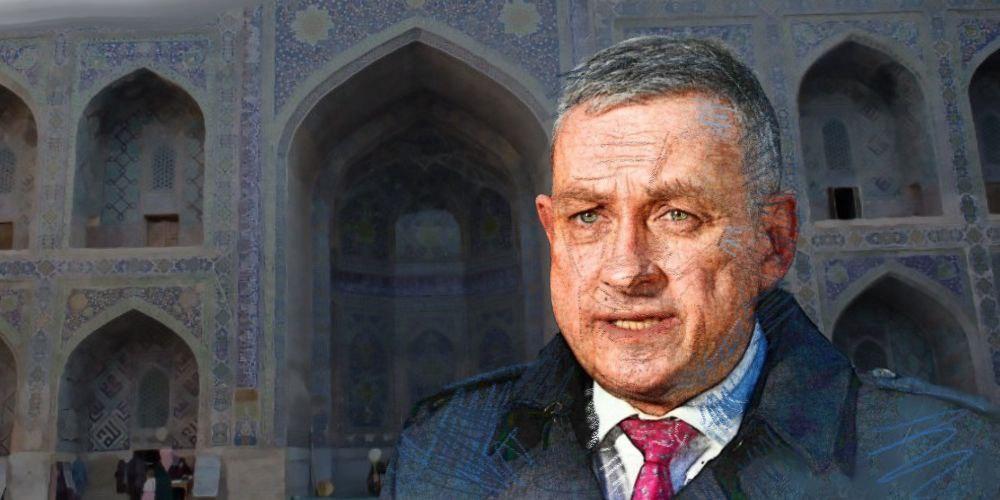
As the United States and Russia reportedly aim to create a new global security architecture, other major actors in the international arena are working to improve their positions in the redefined world order. Often underestimated in terms of its geopolitical influence, the European Union has actively focused its attention on the post-Soviet space, particularly the strategically important Central Asian region. The EU, despite Russia’s and the United States' attempts to undermine its role in the settlement of the Ukraine War and to portray it as a “geopolitical dwarf”, is seeking to increase its presence in global affairs. In Central Asia, the 27-nation bloc is often viewed as a key actor that Kazakhstan, Uzbekistan, Kyrgyzstan, Tajikistan, and Turkmenistan can rely on to balance China’s growing dominance, as well as their security and dependence on Moscow. The EU's desire to strengthen cooperation with Central Asia can be seen as Brussels’ attempt to reduce Russia's influence in the region. Indeed, bogged down in Ukraine, Moscow is slowly but surely being pushed out of Central Asia – a region that has traditionally been within the Kremlin’s geopolitical orbit. As a result, China has managed to significantly increase its economic presence in all five Central Asian nations. The EU is now attempting to do the same. The recent visit of the European Commissioner for International Partnerships Jozef Síkela to Central Asia, as well as the upcoming EU-Central Asia summit scheduled for April 3-4, 2025 in Samarkand, clearly indicates the intensifying geopolitical competition between the EU and China over the region. One of Síkela’s major goals was to expand the scope of the EU's investment strategy, Global Gateway, in Central Asia. The project, launched in 2021, is often viewed as the EU’s version of China’s Belt and Road Initiative (BRI). As part of its strategy to increase its economic presence in Central Asia, the European Union seems to have four priorities: the development of transport infrastructure (particularly the Trans-Caspian International Transport Route, also known as the Middle Corridor), cooperation in raw materials, digital connectivity, and the development of the water resources, energy, and climate sectors. The problem for Brussels is that China, due to its proximity to Central Asia and the lack of bureaucratic procedures, is ahead of the EU in most, if not all of these areas. Beijing has had 12 years to strengthen economic ties with the region through the BRI. As a result, in 2024, China’s overall turnover with Central Asia reached $94.8 billion, nearly double the EU's trade volume with the region in 2022, which stood at $47 billion. Last year, the world’s second-largest economy replaced Russia as Kazakhstan's biggest trade partner. In neighboring Uzbekistan, it remains the top trading partner, while in Tajikistan, over the past 18 years, China has become the major investor in the landlocked nation’s economy. The same applies to Tajikistan and China’s neighbor Kyrgyzstan. The European Union, however, is now intensifying its efforts to position itself as a major foreign power operating in Central Asia. According to...

Cardiff University to Open New Campus in Kazakhstan

Cardiff University in Wales has announced plans to open a new campus in Astana, Kazakhstan’s capital, later this year. The move represents a major step in the university’s global expansion and underscores its commitment to providing world-class education in Central Asia. According to Kazakhstan’s Ministry of Science and Higher Education, Cardiff University Kazakhstan will begin offering programs in STEM (Science, Technology, Engineering, and Mathematics) and Business in 2025, with undergraduate programs to follow in 2026​. The Astana campus is being developed in partnership with the not-for-profit Public Foundation “Qualified Centre of Education” (QCEF). To ensure broad access, the Kazakh government has pledged to provide up to 500 fully funded scholarships over the first three years of the campus's operation. The initiative aims to make high-quality education accessible to talented students across Kazakhstan. Once fully operational, the campus is expected to accommodate more than 2,500 students annually, contributing to the development of a skilled workforce and supporting economic growth in the region. Cardiff University’s President and Vice-Chancellor, Professor Wendy Larner, said: “We are excited about the opportunities that the Cardiff University Kazakhstan campus will create. It is clear from our extensive discussions with the Kazakh government, investors, and other stakeholders that this initiative will be truly reciprocal and mutually beneficial.”

Power Shifts in Central Asia: The Unpredictable Path of Leadership

European Union Commissioner for International Partnerships Josef Sikela has concluded his tour of Central Asia, a visit conducted against the backdrop of global geopolitical turbulence. Unlike previous engagements, where European officials often criticized the region’s leadership for a lack of democratic progress, Sikela refrained from making demands on local governments. Historically, Europe has accused Central Asian states of authoritarianism and the entrenchment of long-serving leaders. However, the idea that power is uniquely permanent in the region is increasingly questioned. Critics point to Western examples, such as Angela Merkel’s 16-year tenure as Germany’s chancellor, and alleged electoral manipulation within the EU, such as in Romania, where elections were annulled after an undesired candidate’s victory. Meanwhile, in Central Asia, even presidents once considered “eternal” have eventually left office, sometimes peacefully, sometimes under turbulent conditions. Kyrgyzstan: The Unpredictable Outlier Kyrgyzstan is often described as a "democratic exception" within Central Asia, yet its history is marked by political instability and frequent leadership changes, arguably more so than in many of the world’s most conflict-prone regions. The country’s first president, Askar Akayev, held power from 1990 to 2005. Though re-elected three times, his rule ended in March 2005 when protests erupted over parliamentary election results that heavily favored pro-government candidates. Demonstrators stormed the Government House in Bishkek, prompting Akayev to flee. Reports, though unverified, claimed he was smuggled out wrapped in a carpet. Following Akayev’s ouster, Kurmanbek Bakiyev took power, but his rule ended in 2010 after violent unrest. His downfall was allegedly facilitated by Kazakhstan’s intelligence services, and he later found political asylum in Belarus under President Alexander Lukashenko. Since Bakiyev’s departure, Kyrgyzstan has continued to experience political turbulence. Presidents Almazbek Atambayev (2010-2017) and Sooronbai Jeenbekov (2017-2020) both left office under pressure. Atambayev’s tenure saw a diplomatic fallout with Kazakhstan, while Jeenbekov resigned in 2020 amid protests over parliamentary elections. His successor, Sadyr Japarov, remains in office, but whether he will complete his term is an open question. Uzbekistan: Reform Within Limits Islam Karimov, Uzbekistan’s first post-Soviet leader, ruled for over 26 years before his death in 2016. While he maintained a strictly centralized government, his tenure was also marked by violent crackdowns, most notably the Andijan uprising in 2005, which resulted in a Western diplomatic fallout​. His successor, Shavkat Mirziyoyev, has introduced some reforms, loosening restrictions on civil liberties and the economy. However, the fundamental structure of state control remains intact, with opposition movements still tightly monitored. Kazakhstan: From Nazarbayev to Tokayev Kazakhstan’s transition from Nursultan Nazarbayev to Kassym-Jomart Tokayev is often described as managed succession rather than a genuine power shift. Nazarbayev, who led Kazakhstan for nearly three decades, officially stepped down in 2019, yet retained significant influence until the January 2022 unrest, which forced him to relinquish much of his remaining power. These protests, initially sparked by fuel price hikes, rapidly escalated into anti-government riots. While official accounts describe the unrest as an attempted coup orchestrated by figures within Nazarbayev’s inner circle, critics suggest Tokayev used the crisis to consolidate power....

China to Support Hydrogen Innovation Center in Kazakhstan

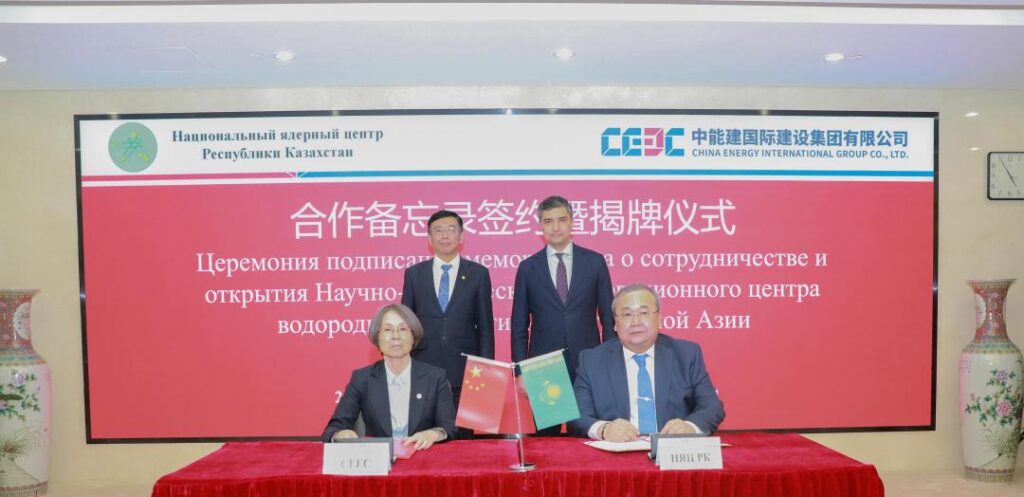
On March 20 in Beijing, Kazakhstan’s National Nuclear Center, part of the Ministry of Energy, signed a memorandum with China Energy Overseas Investment Co., Ltd. and Shanghai Jiao Tong University to establish a Scientific and Technical Innovation Center for Hydrogen Energy in Central Asia. The facility will be located in the city of Kurchatov, in Kazakhstan’s Abai Region, according to a statement from the Ministry of Energy. The future center is intended to serve as a key scientific and technological platform for research, testing, and the implementation of advanced hydrogen energy solutions. It aims to boost Kazakhstan’s competitiveness in the hydrogen sector, foster international cooperation in green energy, support innovative energy projects, and help train a new generation of highly qualified specialists. “Hydrogen energy is one of the key areas of the global energy transition,” said Deputy Minister of Energy, Bakytzhan Ilyas. “Kazakhstan has significant potential in this area, and the creation of the center in Kurchatov will open up new opportunities for the development of science, technology, and industry.” The initiative is also closely tied to Kazakhstan’s long-term climate goals. The center is expected to support the country’s strategy to achieve carbon neutrality by 2060 and to promote the adoption of environmentally friendly technologies in the energy sector. In September 2024, Kazakhstan approved its Concept for the Development of Hydrogen Energy until 2030. The policy outlines key objectives including: Fulfilling international commitments to reduce greenhouse gas emissions Advancing the national goal of carbon neutrality Expanding access to modern, sustainable energy sources While the strategy prioritizes hydrogen technologies as a cornerstone of Kazakhstan’s low-carbon transition, the global hydrogen sector remains in its early stages, and significant technical and economic hurdles must still be overcome.

Kazakhstan to Build $1.35 Billion Fertilizer Plant in Mangistau

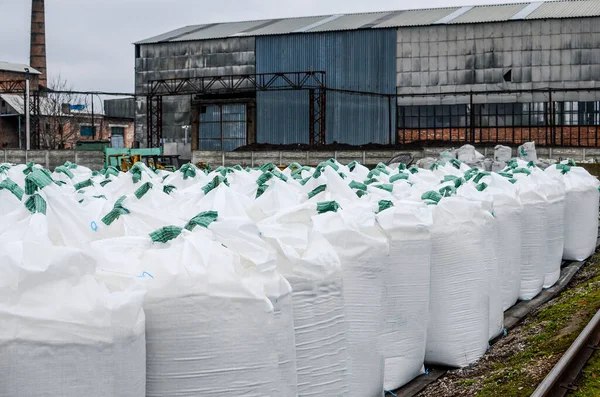
Kazakhstan will begin construction of a major fertilizer plant valued at $1.35 billion, under an investment agreement recently approved by the government. The project aims to boost domestic fertilizer production and reduce the country’s reliance on imports. Strategic Industrial Partnership The facility will be built in the Mangistau region under a joint venture between Kazakhstan’s national gas company QazaqGaz and Turkish construction firm ESTA Construction. The new company, Qazesta Fertilizers Ltd., will oversee the project, which is expected to benefit from Mangistau’s favorable logistics for export across the Caspian Sea. The plant is designed to produce up to 700,000 tonnes of urea and 42,000 tonnes of ammonia annually. Construction is scheduled to take three and a half years, creating an estimated 3,000 jobs during the building phase and 400 permanent positions upon completion. Officials say the project will support the development of Kazakhstan’s gas chemical industry and contribute to import substitution. Currently, the country produces three types of fertilizers, ammonium nitrate, ammophos, and ammonium sulfate, but domestic output meets only half of the 3.2 million tonnes required to satisfy national demand. Challenges in Fertilizer Use and Production Kazakhstan’s limited fertilizer use has drawn concern from analysts. According to Energyprom.kz, citing UN Food and Agriculture Organization (FAO) data, nitrogen fertilizer application has not exceeded 4.0 kg per hectare since 2000, and dropped to just 2.4 kg in 2022. In contrast, Uzbekistan applied 187.2 kg per hectare that year, while Russia applied 17.6 kg. Phosphate fertilizer usage in Kazakhstan was similarly low at 1.33 kg per hectare, compared to 5.91 kg in Russia. Domestic fertilizer production also declined in 2024. Total output fell by 9.3% to 367,500 tonnes. Production of nitrogen fertilizers dropped by 11.4% to 345,500 tonnes, while phosphate fertilizer output rose by 47.1% to 22,000 tonnes. Despite the gains, national supply still lags behind farmers’ needs. Import Dependency and Export Growth Kazakhstan remains dependent on foreign supplies of nitrogen fertilizers, with imports accounting for 57.8% of the market. In 2024, imports rose by 7.3% to 472,300 tonnes. Meanwhile, exports of nitrogen fertilizers nearly doubled to 214,400 tonnes. Phosphate fertilizers, however, are largely produced domestically, with imports making up just 1.2% of supply. Kazakhstan’s largest fertilizer export destinations in 2024 included Brazil (187,600 tonnes), Poland (92,500 tonnes), Ukraine (87,600 tonnes), and Russia (67,400 tonnes). However, declining global prices led to a 13.5% drop in export revenue, despite only a 1.1% decrease in volume. Global Market Dynamics Geopolitical factors continue to shape global fertilizer markets. Sanctions imposed on Russia and Belarus in 2022 initially triggered shortages and price spikes, although some restrictions were later eased to mitigate food security risks. In 2024, U.S. imports of Russian fertilizers rose by 20% to $85.5 million. At the same time, the European Union is weighing new duties on fertilizer imports from Russia and Belarus, a move that has drawn criticism from European agricultural associations concerned about rising input costs. In this shifting global context, Kazakhstan’s expanded fertilizer capacity could enhance its role as a regional...

EBRD Finances Coffee-Processing Plant at Kazakh-Chinese Border

The European Bank for Reconstruction and Development (EBRD) has announced a loan of up to $10 million to Empire Manufacturing Kazakhstan (EMK) to support the construction of a coffee-processing facility in the Khorgos Free Economic Zone, located on Kazakhstan’s border with China. EMK is a subsidiary of Food Empire Holdings, a global food and beverage group listed on the Singapore Exchange. The new plant will enhance the company’s regional production capacity and is expected to set a new standard for food-processing technology and hygiene in Kazakhstan and Central Asia. Once operational, the facility will export up to 50 percent of its coffee products to markets across Central Asia and the South Caucasus, where demand for Food Empire’s instant beverages is on the rise. The investment aligns with the EBRD’s broader strategy to support private sector growth in Kazakhstan. To date, the Bank has invested more than €11 billion in 335 projects across the country, with a strong emphasis on fostering entrepreneurship and innovation.