• KGS/USD = 0.01144 0%
  • KZT/USD = 0.00218 0%
  • TJS/USD = 0.10656 0%
  • UZS/USD = 0.00008 0%
  • TMT/USD = 0.28530 0%
  • KGS/USD = 0.01144 0%
  • KZT/USD = 0.00218 0%
  • TJS/USD = 0.10656 0%
  • UZS/USD = 0.00008 0%
  • TMT/USD = 0.28530 0%
  • KGS/USD = 0.01144 0%
  • KZT/USD = 0.00218 0%
  • TJS/USD = 0.10656 0%
  • UZS/USD = 0.00008 0%
  • TMT/USD = 0.28530 0%
  • KGS/USD = 0.01144 0%
  • KZT/USD = 0.00218 0%
  • TJS/USD = 0.10656 0%
  • UZS/USD = 0.00008 0%
  • TMT/USD = 0.28530 0%
  • KGS/USD = 0.01144 0%
  • KZT/USD = 0.00218 0%
  • TJS/USD = 0.10656 0%
  • UZS/USD = 0.00008 0%
  • TMT/USD = 0.28530 0%
  • KGS/USD = 0.01144 0%
  • KZT/USD = 0.00218 0%
  • TJS/USD = 0.10656 0%
  • UZS/USD = 0.00008 0%
  • TMT/USD = 0.28530 0%
  • KGS/USD = 0.01144 0%
  • KZT/USD = 0.00218 0%
  • TJS/USD = 0.10656 0%
  • UZS/USD = 0.00008 0%
  • TMT/USD = 0.28530 0%
  • KGS/USD = 0.01144 0%
  • KZT/USD = 0.00218 0%
  • TJS/USD = 0.10656 0%
  • UZS/USD = 0.00008 0%
  • TMT/USD = 0.28530 0%

Viewing results 2389 - 2394 of 4975

Thai Company to Build Fish-Processing Plant in Kazakhstan

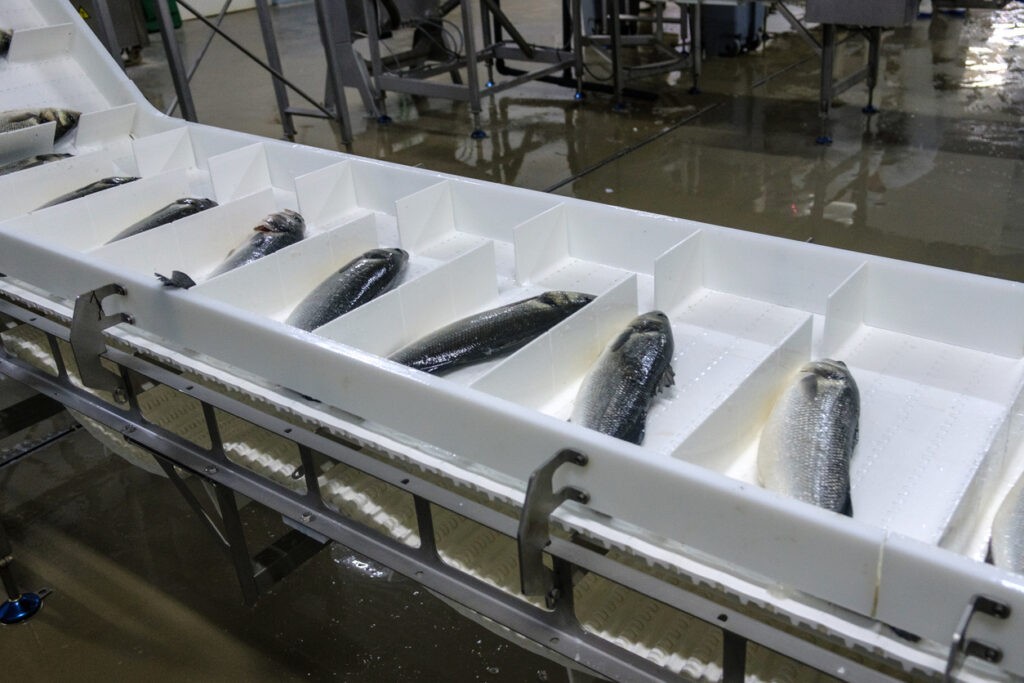
The Thai company Sea Value Plc. plans to build a plant in Kazakhstan to produce canned, processed fish, and frozen semi-finished products. The project was discussed during a meeting on August 14 in Astana between the Chairman of the Investment Committee of the Ministry of Foreign Affairs of Kazakhstan, Gabidulla Ospankulov, and the President of Sea Value, Dr. Poj Aramwattananont. As reported by the company Kazakh Invest, Sea Value is currently searching for a plot of land to start the project. Local fisheries are planned to supply fish for the new production, and the finished products will be exported to Thailand and other countries. The Thai company plans to invest $6 million in the construction of the plant, which will produce 3-5 tons of fish products per day. Sea Value is Thailand's second-largest producer of canned tuna, exporting products to 150 countries. In 2023, trade turnover between Kazakhstan and Thailand increased by almost 36%, reaching $367 million.

USAID Modernizes Kazakhstan’s Customs System

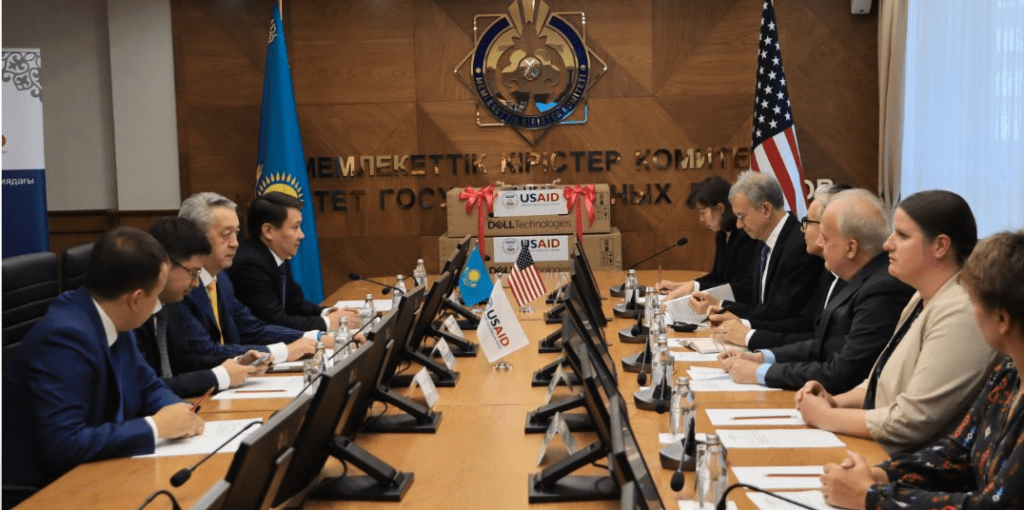
The U.S. Agency for International Development (USAID) has upgraded Kazakhstan’s customs infrastructure by providing advanced computer servers to Kazakhstan's State Revenue Committee (SRC). SRC Chairman Zhandos Duisembiyev accepted the state-of-the-art servers at a ceremony on August 14, which was attended by U.S. Ambassador to Kazakhstan Daniel Rosenblum. The new servers will replace outdated equipment that has hampered performance. Ambassador Rosenblum commented that adopting innovative technologies will streamline processes, enhance accuracy, improve transparency, and foster a business-friendly environment, attracting more investors and boosting economic growth. USAID is supplying advanced servers made by Dell Inc. to support the SRC’s new customs Keden IT system, which replaces the outdated Astana-1 system. By leveraging automation, machine learning, and artificial intelligence, the new Keden system will reduce clearance times and enhance data security. Rosenblum also emphasized the shared vision between the United States and Kazakhstan for a transparent and secure trade environment as Kazakhstan secures its position as a leading regional trade hub.

Unveiling the Magic: Behind the Scenes of “Baikonur”

Space continues to capture our imagination and inspire our stories, as we try to make sense of this vast final frontier. In the last part of our series on Baikonur, we explore its depiction within cinema. In 2011, German filmmaker, Veit Helmer released Baikonur, a story about space, scavenging and misguided love that was shot within the region. TCA spoke to him about filming in this heavily restricted landscape.   TCA: What was the inspiration behind your film, Baikonur? What drew you to this subject matter? Helmer: I was fascinated by the actual place, or what I knew about it; a hidden city with such a glorious past. Whilst researching, I found out about the scavengers who collect the pieces which fall on the steppe when the rockets are heading to space. To tell both stories at the same time intrigued me: space exploration and hunting for scrap metal. TCA: Given you also directed Absurdistan and Tuvalu, would it be fair to say you’re drawn to far-flung places? Helmer: Yes, I love to explore and find locations which haven’t been filmed before. But compared to the locations of my previous films - Tuvalu, which was shot in Bulgaria, and Absurdistan, which was shot in Azerbaijan - to travel to Baikonur was a much longer journey. [caption id="attachment_21684" align="aligncenter" width="2560"] Still from the film, "Baikonur," Alexander Asochakov as "Gagarin" leaving, villagers standing near yurt; image: Veit Helmer[/caption]   TCA: As stated in the tagline of your film, “Whatever falls from heaven, you may keep. So goes the unwritten law of the Kazakh seppe. A law avidly adhered to by the inhabitants of a small village, who collect the space debris that falls downrange from the nearby Baikonur space station.” The village scavengers portrayed in your film are based in reality; how did you find out about them, and what was your experience with them? Helmer: It was very funny reading the first review from Kazakhstan, where a young journalist wrote that the film is based on the old Kazakh law “Whatever falls from heaven, you may keep,” which in reality was an invention by my screenwriter, Sergey Ashkenazy. But as this fable seems to feel so real, I never tried to dispel that myth. When writing the screenplay, Sergey and me went to Zheskaskan and the surrounding steppe, talking to the hunters of the scrap metal. It was not an ideal moment, because Roscosmos started to collect the debris themselves and the local villagers’ activity became illegal. The new reality was not villages against each other, but villagers against Roscosmos. [caption id="attachment_21685" align="aligncenter" width="2560"] Still from the film, "Baikonur," Alexander Asochakov as "Gagarin" (center) cleaning assembly hall in Baikonur ; image: Veit Helmer[/caption]   TCA: As a Western filmmaker you were granted a unique opportunity to film within Baikonur - what did you observe of the landscape? What were the highlights of this experience? Helmer: There was a saying among the early cosmonauts that the Central Asian steppe was for them...

Kazakhstan and Turkey to Increase Agricultural Trade

During Kazakh Minister of Agriculture Aidarbek Saparov's visit to Turkey on August 12, agreements were signed for Turkish investments of $2 billion in Kazakhstan’s agro-industrial sector and trade in agricultural products Six projects have already been implemented in Kazakhstan with participation of Turkish investors.  The imminent launch of a further ten projects totaling $553 million, include the construction of greenhouse complexes, plants for deep processing of wheat and beans, and vegetable storage facilities. Armada Gıda, one of  Turkey's leading companies in producing and exporting agricultural products, is to increase the import of lentils from Kazakhstan, while Tiryaki Holding, is to import of 250 thousand tons of Kazakh wheat. According to Minister Saparov, in 2023, the volume of Kazakh-Turkish trade in agricultural products increased by 13%. Kazakhstan has long exported crop products to Turkey and following the abolishment of restrictions in June, Kazakh agricultural producers can now begin exporting livestock products. Minister Saparov stated that Kazakhstan expects a good crop harvest this year and is ready to increase the export of high-quality agricultural products to Turkey.

Balancing Regional Integration Amid Global Rivalries

Central Asia has become a focal point for world and regional powers such as China, Russia, the European Union, the United States, and Turkey. Amid geopolitical uncertainty and a shifting global order, regional cooperation seems to be a top priority for Kazakhstan, Kyrgyzstan, Uzbekistan, Turkmenistan, and Tajikistan in their foreign policy. The problem, however, is that the absence of a unified regional identity among Central Asian nations poses a major obstacle to their ambitions to strengthen regional integrations. They have different views on their regional identity due to their unique cultures, histories, politics, and economies. But in spite of that, on June 9, in the Kazakh capital of Astana, leaders of the five Central Asian countries gathered to discuss closer economic cooperation, stability and security in the region. They sought to expand ties in trade, industry, transport and logistics, energy, agriculture, as well as in the water management. As a result of the summit, regional leaders signed several key agreements, including the Roadmap for development of regional cooperation for 2025-2027, as well as the Conceptual framework of development of regional cooperation Central Asia 2040. These documents indicate that the regional integration will be a long-term process that will last for decades. In the meantime, Central Asian states will almost certainly continue strengthening bilateral ties. The Consultative Meetings of the leaders of Central Asian countries gave Kazakhstan and Uzbekistan another opportunity to deepen cooperation in various fields. The two nations, who signed an agreement on allied relations in 2022, announced their plans to adopt a strategic partnership program until 2034, and also to jointly launch several big economic and energy project. Prior to the meeting in Astana, presidents of Kazakhstan, Kyrgyzstan, Uzbekistan, Turkmenistan, and Tajikistan held talks with Azerbaijani leader Ilham Aliyev. They were also scheduled to meet with Japanese Prime Minister Kishida Fumio, but he canceled his visit to Astana after the Japan Meteorological Agency issued a warning of a potential earthquake in the Nankai Trough. Unlike him, Josep Borrell, Vice-President of the European Commission and High Representative of the European Union for Foreign Affairs and Security Policy, visited Central Asia in early August. He traveled to Kazakhstan and neighboring Kyrgyzstan– a country that signed the Enhanced Partnership and Cooperation Agreement with the European Union on June 25. Although both nations are members of the Russian-led Eurasian Economic Union (EAEU), and the Collective Security Treaty Organization (CSTO) Moscow’s preoccupation with the war in Ukraine has allowed other actors, including the European Union, to strengthen its presence in the strategically important region. While the EU’s goals in Central Asia are mainly related to energy, Japan’s plans to expand cooperation with the five regional countries serve as Tokyo’s strategic tool to counterbalance China's growing influence in the region. Azerbaijan, on the other hand, seeks to create a strategic energy bridge linking Central Asia and Europe via the South Caucasus. That is why Baku’s collaboration with Central Asian countries in the energy sector has become more crucial than ever. It is no surprise...

Kazakhstan Delivers Oil to Europe via Russia

Kazakhstan has begun supplying oil to Europe via the Druzhba oil pipeline system through Russia. The first oil shipments have already arrived in Germany, where amid current geopolitical challenges, it has become an important part of the country's energy security . Acting through its Kazakh subsidiary Agip Caspian Sea, the Italian company Eni, has shipped the first 20,000 tons of oil as part of a test delivery via the Atyrau-Samara route, with further transportation via the Druzhba pipeline. Kazakhstan now plans to deliver up to 1.2 million tons of oil to Germany via this system this year, following an agreement with the Russian side, to ensure uninterrupted supplies to Europe despite the sanctions restrictions on Russian oil. Historically, the pipeline has been one of the largest routes for Russian oil supplies to Europe, but its use has undergone significant changes in recent years due to sanctions. Faced with these changes, Kazakhstan's proposals to increase oil supplies through this route, could not only play a key role in ensuring energy stability in the region but also demonstrate the country's strategic importance as a major player in the global oil market and its ability to adapt to changes in global energy policy.