• KZT/USD = 0.00223
  • TJS/USD = 0.10800
  • UZS/USD = 0.00009
  • TMT/USD = 0.29760
  • KZT/USD = 0.00223
  • TJS/USD = 0.10800
  • UZS/USD = 0.00009
  • TMT/USD = 0.29760
  • KZT/USD = 0.00223
  • TJS/USD = 0.10800
  • UZS/USD = 0.00009
  • TMT/USD = 0.29760
  • KZT/USD = 0.00223
  • TJS/USD = 0.10800
  • UZS/USD = 0.00009
  • TMT/USD = 0.29760
  • KZT/USD = 0.00223
  • TJS/USD = 0.10800
  • UZS/USD = 0.00009
  • TMT/USD = 0.29760
  • KZT/USD = 0.00223
  • TJS/USD = 0.10800
  • UZS/USD = 0.00009
  • TMT/USD = 0.29760
  • KZT/USD = 0.00223
  • TJS/USD = 0.10800
  • UZS/USD = 0.00009
  • TMT/USD = 0.29760
  • KZT/USD = 0.00223
  • TJS/USD = 0.10800
  • UZS/USD = 0.00009
  • TMT/USD = 0.29760
20 September 2026

Viewing results 25 - 30 of 784

Kyrgyzstan’s Bilateral Development Funds Back Industry and Energy Projects

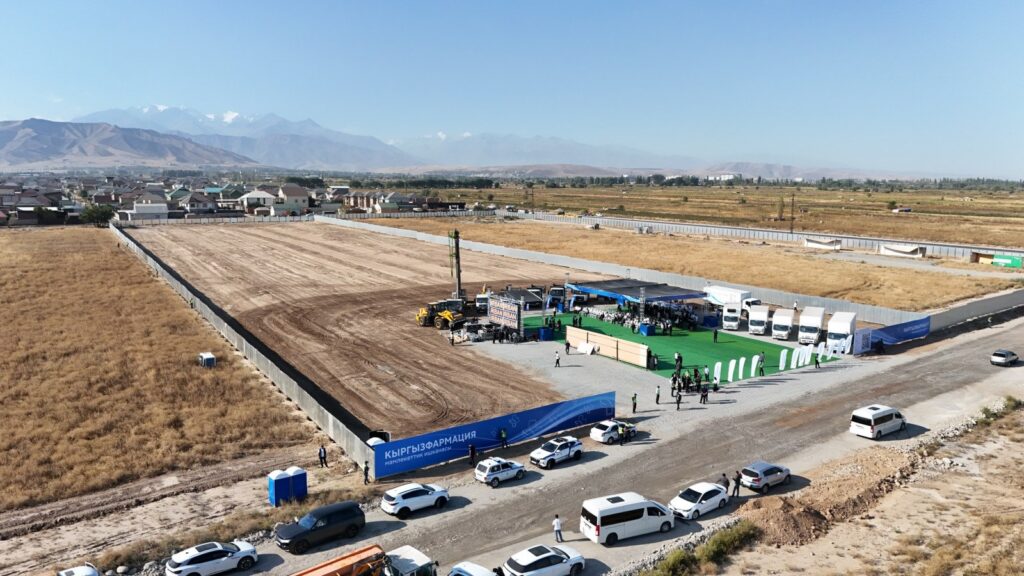
Kyrgyzstan has established bilateral development funds with Russia, Uzbekistan, Azerbaijan and Hungary that are financing manufacturing and energy projects across the country. The Russian-Kyrgyz Development Fund (RKDF) is by far the largest. In November 2025, President Sadyr Japarov said it had invested more than $1 billion in Kyrgyzstan and financed more than 3,500 projects since its creation. At the time, the fund was participating in 14 hydropower and renewable energy projects worth more than $175 million. One of them is the 25-megawatt Bala-Saruu hydropower plant in Talas Region, for which the RKDF allocated $10 million to help complete construction. The newer Azerbaijan-Kyrgyz Development Fund has also begun financing identifiable projects. By November 2025, it had allocated $14.4 million to four projects worth a combined $52.7 million. They included KG TEX, a garment factory with 300 jobs, and the 9-megawatt Tyup small hydropower plant. The Uzbek-Kyrgyz Development Fund financed the 6.7-megawatt Kogart hydropower plant. The project began in August 2022 and was ready for operation by July 2024, according to the fund. In May 2026, the Hungarian-Kyrgyz Development Fund opened a long-term credit line for NEMAN-PHARM. The first financing stage was earmarked for purchasing pharmaceutical products in Hungary. Projects financed by the fund must include a Hungarian component of at least 30%. Its published loan rates range from 1.5% to 7.25% a year, with terms of up to 10 years. These institutions are operating during a period of rapid economic expansion in Kyrgyzstan. Gross domestic product grew by 11.9% year-on-year in the first half of 2026. The International Monetary Fund has warned of emerging signs of overheating and expects re-export and trade-related activity to plateau. The number of state-backed financing options is also set to increase. The Turkic Investment Fund has begun practical operations and is expected to provide financing for joint projects across Central Asia. For Kyrgyzstan, these funds provide access to long-term capital for projects that may struggle to secure conventional financing. Their success will ultimately depend on whether the businesses and infrastructure they support remain viable and repay their loans.

Central Asia Tourism Growth Outpaces Other Regions

Central Asia emerged as one of the world's fastest-growing tourism regions in 2025, with travel and tourism contributing $20.1 billion to the regional economy. According to an analysis based on World Travel & Tourism Council (WTTC) data, the sector's economic contribution grew by 17.7% during the year, the highest rate among the regions covered. By comparison, tourism GDP grew by 8.7% in Northeast Asia and 7.6% in Southeast Asia. The number of jobs supported by tourism grew by 9.5%, while spending by international visitors increased by 26.4%. Despite this rapid expansion, tourism remains a relatively small part of Central Asia's economy. It accounted for 4.3% of regional GDP in 2025, slightly below its pre-pandemic share of 4.5% in 2019. The slight fall in its share reflects the wider growth of the region's economies. The increase is being driven primarily by travel within Central Asia and from neighboring Russia. Kazakhstan, Uzbekistan, Russia, and Kyrgyzstan together accounted for 90% of the region's recorded inbound arrivals in 2025. Uzbekistan's official statistics, for example, show that visits to relatives accounted for most foreign visits recorded for tourism purposes during the first eight months of 2025. Comparisons between countries require caution because governments use different statistical methods, including whether they count border crossings or unique visitors. Uzbekistan remains the regional leader in terms of tourism's importance to the national economy. The sector accounted for 6% of GDP in 2025 and contributed $8.3 billion. Even there, however, tourism is considerably less economically important than in established destinations such as Spain, where WTTC forecast that it would account for almost 16% of GDP in 2025. Kazakhstan has the region's largest tourism economy in absolute terms, contributing $9.3 billion in 2025. Tourism nevertheless represented only 3.2% of the country's GDP, reflecting the larger role of industry and trade. The upward trend has continued into 2026. According to the Bureau of National Statistics, Kazakhstan welcomed three million foreign travelers in the first quarter. Uzbekistan was the largest source, accounting for 1.1 million travelers. Kyrgyzstan and Russia were the next largest sources. Revenue generated by accommodation providers rose by 13.9% compared with the same period a year earlier. WTTC forecasts almost 13% growth in the sector's economic contribution in Kazakhstan in 2026. Tourism in Central Asia is expanding and generating substantially more revenue. However, visitors from neighboring countries and Russia still dominate the regional market, leaving longer-haul tourism to grow from a comparatively low base.

Kyrgyzstan Moves to Contain Rising Fuel Prices

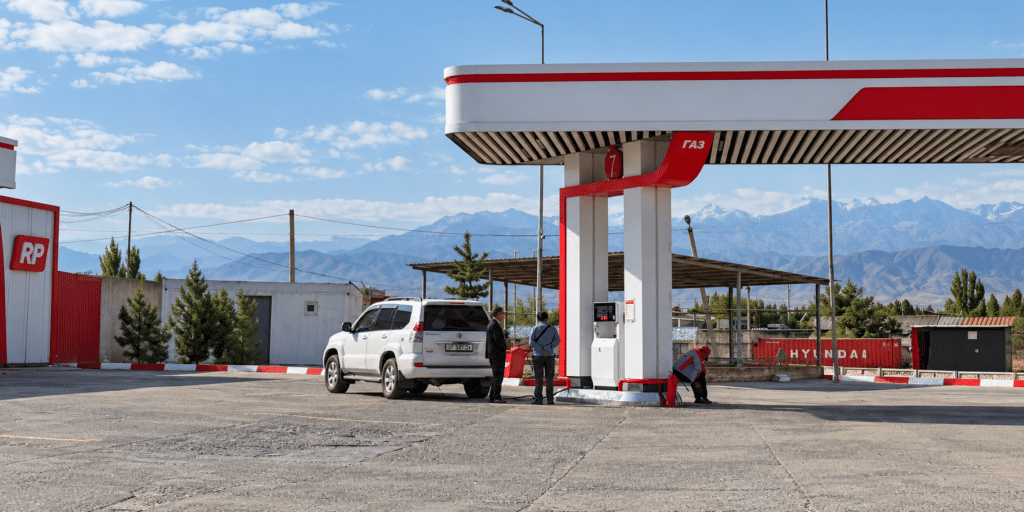
Kyrgyzstan’s fuel regulator has reached a new pricing agreement with retailers as higher import costs continue to strain the domestic market. The framework applies to AI-92 gasoline and diesel fuel. Liquefied petroleum gas is also covered. Retailers will follow an approved schedule for price adjustments and notify the Antimonopoly Regulation Service when suppliers change wholesale prices. The regulator will monitor the market and consider changes to the schedule when import costs shift significantly. The aim is to maintain supplies while limiting unjustified increases at filling stations. The measure comes as problems at Russian refineries continue to affect regional fuel markets. Kyrgyzstan obtains more than 90% of its imported petroleum products from Russia, leaving it highly exposed to changes in Russian output and export policy. Retail prices still do not include the full increase in import costs, the regulator said. A government subsidy program introduced in May compensates fuel importers and retailers for part of the difference between purchase costs and fixed benchmark prices. Without the subsidies, officials estimate that AI-92 gasoline would cost about $1.20 per liter and diesel about $1.32 per liter. As The Times of Central Asia previously reported, the government removed AI-95 gasoline from temporary price regulation and abandoned plans for maximum retail prices after supply problems emerged.

Central Asia Rethinks Energy Security After the 2026 Fuel Crisis

The summer of 2026 marked a turning point for energy security in Central Asia. In July, drone strikes temporarily halted crude oil receipts and loadings at the Caspian Pipeline Consortium’s (CPC) marine terminal in Novorossiysk. Although CPC resumed normal operations on July 27, the incident exposed the vulnerability of one of the region’s principal export routes to external security risks. Russia, which for decades has been Central Asia’s principal supplier of refined petroleum products, has also faced prolonged pressure in its domestic fuel market. Reduced utilization at some refineries and rising domestic demand have created longer-term challenges. Restrictions on gasoline and diesel exports have added to the pressure, affecting the Russian economy and neighboring states that have traditionally relied on Russian supplies. For three decades, Central Asia’s system for supplying refined fuels remained relatively stable. Russian refineries covered shortages in local markets, providing fuel that was both comparatively affordable and predictable in volume. The events of 2026, however, reaffirmed a basic principle of national security: during large-scale crises, governments tend to prioritize domestic stability over external trade commitments. For Central Asian states, this has prompted a fundamental reassessment of long-established approaches to energy security. Any strategy dependent on a single external supplier ultimately becomes vulnerable to disruptions beyond its control, regardless of their origin. The current crisis has also revealed significant differences in how well prepared the region’s governments are to protect their domestic fuel markets. Kyrgyzstan has proved the most vulnerable. The country consumes around 1.6 million metric tons of fuel annually, with 90-95% of supplies imported from Russia. Faced with a sharp reduction in available supplies during May and June 2026, the Kyrgyz authorities were forced to begin urgent negotiations with alternative suppliers, including Kazakhstan, Uzbekistan, Turkmenistan, Azerbaijan, and Belarus. Uzbekistan has been in a somewhat stronger position. Until recently, Russian companies dominated the country’s imported gasoline market. During the first five months of 2026, Uzbekistan spent more than $1 billion on imports of crude oil and petroleum products, while spending on motor gasoline imports increased by 85.1% compared with the same period a year earlier. Tashkent has responded by prioritizing strategic fuel reserves. Ahead of the coming autumn and winter season, the government has begun building a 120,000-metric-ton reserve of motor gasoline. Kazakhstan, meanwhile, enjoys a considerably higher degree of energy self-sufficiency thanks to its developed refining sector, centered on the modernized refineries in Atyrau, Pavlodar, and Shymkent. It is therefore unsurprising that Bishkek turned first to Astana when seeking emergency fuel supplies. Kazakhstan’s potential to serve as a regional supplier nevertheless has clear limits. The country’s domestic fuel market periodically comes under structural pressure during the spring and autumn agricultural seasons and when planned maintenance is carried out at its refineries. As a result, Astana must balance support for its regional partners with maintaining stability at home. Although Kazakhstan annually agrees with Russia on duty-free import quotas of up to 1.12 million metric tons of Russian petroleum products under the indicative fuel balance mechanism, the current...

Kyrgyzstan Opens New Railway as Japarov Alleges North-South Highway Embezzlement

Kyrgyzstan has opened a 63-kilometer railway between Balykchy and Kochkor, completing the first stage of a domestic route intended to reach the Kara-Keche coalfield and eventually connect the country’s divided rail network. President Sadyr Japarov travelled to the new Kochkor station by train on July 25. The line extends rail service from the western edge of Lake Issyk-Kul into Naryn Region, where difficult mountain terrain has long limited transport links. “We have revived the culture of railway construction, our engineering potential, and professional experience,” Japarov said. “This historic achievement proves that our country can independently carry out large infrastructure projects.” For the first three decades after independence, Kyrgyzstan laid no new railway track. Construction of the planned 186-kilometer Balykchy-Kochkor-Kara-Keche line began in March 2022. Japarov said crews carried out about one million cubic meters of blasting work and cleared eight kilometers through mountainous ground. The route also crosses wetland and rocky areas near the Orto-Tokoy reservoir, existing roads, and utility lines. According to Japarov, construction of the track cost $955,000 per kilometer, which he compared with offers from foreign companies ranging from $4.8 million to $6.8 million per kilometer. “We understood that this was too expensive, so we decided to take the risk and do the work ourselves,” he said. The $955,000 figure appears to cover the track itself rather than the full cost of the line. In June 2025, Kyrgyz Temir Jolu estimated the 63-kilometer project at 9.472 billion som, or about $108 million at the official exchange rate, roughly $1.72 million per kilometer. Japarov’s speech did not set out what work was included in the foreign proposals. The state railway financed the first stage from its own resources. An October 2025 cabinet decree allows Kyrgyz Temir Jolu to retain half the net profit it would otherwise pay into the state budget from 2026 through 2030, which can be used to fund the route to Makmal and the company’s wider development. Turning to the alternative North-South highway between Balykchy and Jalal-Abad, Japarov said its projected cost was $2.5 million per kilometer and alleged that “more than half” of this sum had been embezzled. He did not identify any company, official, or investigation supporting the claim. Questions over the highway’s costs predate Japarov’s accusation. A January 2023 Audit Chamber review found overstated work on the Aral-Kazarman section and said credit savings had been redirected contrary to the loan agreement. Three months later, local outlets cited security-service sources saying the GKNB had opened a case into suspected $123 million price inflation on the same section. No public outcome has been announced. Construction of the 433-kilometer highway began in 2014 and has suffered repeated delays. The route opened for seasonal traffic from June to November 2026, but the Transport Ministry expects year-round operation only in 2028 after further safety work. The new railway gives Kochkor a direct connection to Kyrgyzstan’s northern rail system. It does not yet join the country’s northern and southern lines. Before the opening, Kyrgyzstan’s railway network covered 425...

EU Sanctions Kazakhstan Kyrgyzstan Firms in Latest Russia Package

The European Union has adopted its 21st sanctions package against Russia. The measures add two companies from Kazakhstan, three from Kyrgyzstan, a Kyrgyz bank, and cryptocurrency platforms registered in several jurisdictions to separate sanctions and export-control lists. Brussels said they were designed to disrupt financial and trade channels allegedly used to circumvent existing restrictions. The package imposes asset freezes and other restrictive measures on 48 people and 170 entities. A further 51 entities were added to a list subject to tighter export controls on dual-use goods and technologies. Some are based in Kazakhstan, Kyrgyzstan, China, India, Turkey, and the United Arab Emirates. According to the EU Council, the 51 entities were listed because they supported Russia’s military-industrial complex. The Council said those based outside the EU had also helped circumvent export restrictions, including those covering microelectronics, computer numerical control machine tools, and semiconductor-processing equipment. Three Bishkek-registered companies, Nova Proekt LLC, Rama Group LLC, and Shisan Ltd, were placed under the tighter export-control regime. Their inclusion means that EU exports of sensitive goods and technologies to the companies are permitted only in narrowly defined circumstances. The listing also restricts related technical and financial services, but does not automatically freeze the companies’ assets. The Council also imposed a transaction ban on EcoIslamicBank, saying it was connected to Russia’s System for Transfer of Financial Messages, or SPFS, which Moscow developed as an alternative to SWIFT. The ban, which applies to operators under EU jurisdiction, is due to take effect on August 13. The EU also extended its transaction ban to 14 cryptocurrency platforms based in Kyrgyzstan, Georgia, Panama, the UAE, the Marshall Islands, and Belarus. The two Kazakh companies placed under tighter export controls were TauKZ LLP and KBR-Technologies LLP. Both had previously been targeted by other Western governments: the United States sanctioned KBR-Technologies in June 2024, while the United Kingdom sanctioned TauKZ in November 2024. The measures continue a policy already reflected in earlier sanctions packages. In April, the EU used its anti-circumvention mechanism against Kyrgyzstan for the first time, banning EU exports of computer numerical control machine tools and radios to the country. Brussels said trade data showed a significant rise in the re-export of high-priority goods through Kyrgyzstan to Russia. On June 9, the EU held a sanctions seminar in Bishkek for banks, logistics operators, exporters, and virtual-asset businesses. The session covered financial restrictions, export controls, penalties, and how companies could comply with the rules. It took place less than two months after the EU first applied its anti-circumvention mechanism to Kyrgyzstan. As previously reported by The Times of Central Asia, Kyrgyz authorities have also ordered 50 companies to cease operations after state agencies identified them as presenting heightened sanctions risks. The government did not disclose their names, owners, or sectors.