• KGS/USD = 0.01144 0%
  • KZT/USD = 0.00204 0%
  • TJS/USD = 0.10782 0%
  • UZS/USD = 0.00008 0%
  • TMT/USD = 0.28490 0%
  • KGS/USD = 0.01144 0%
  • KZT/USD = 0.00204 0%
  • TJS/USD = 0.10782 0%
  • UZS/USD = 0.00008 0%
  • TMT/USD = 0.28490 0%
  • KGS/USD = 0.01144 0%
  • KZT/USD = 0.00204 0%
  • TJS/USD = 0.10782 0%
  • UZS/USD = 0.00008 0%
  • TMT/USD = 0.28490 0%
  • KGS/USD = 0.01144 0%
  • KZT/USD = 0.00204 0%
  • TJS/USD = 0.10782 0%
  • UZS/USD = 0.00008 0%
  • TMT/USD = 0.28490 0%
  • KGS/USD = 0.01144 0%
  • KZT/USD = 0.00204 0%
  • TJS/USD = 0.10782 0%
  • UZS/USD = 0.00008 0%
  • TMT/USD = 0.28490 0%
  • KGS/USD = 0.01144 0%
  • KZT/USD = 0.00204 0%
  • TJS/USD = 0.10782 0%
  • UZS/USD = 0.00008 0%
  • TMT/USD = 0.28490 0%
  • KGS/USD = 0.01144 0%
  • KZT/USD = 0.00204 0%
  • TJS/USD = 0.10782 0%
  • UZS/USD = 0.00008 0%
  • TMT/USD = 0.28490 0%
  • KGS/USD = 0.01144 0%
  • KZT/USD = 0.00204 0%
  • TJS/USD = 0.10782 0%
  • UZS/USD = 0.00008 0%
  • TMT/USD = 0.28490 0%

Viewing results 31 - 36 of 723

Kazakhstan Ready to Become Key Food Hub in Eurasia

Tajikistan is hosting the 35th Session of the FAO Regional Conference for Europe from May 11 to 15, bringing together members of the Food and Agriculture Organization (FAO) of the United Nations from Europe and Central Asia for discussions on regional food security and agricultural development priorities. The conference has gathered agriculture ministers from Azerbaijan, Kazakhstan, Kyrgyzstan, Tajikistan, Turkmenistan, and Uzbekistan to address the most pressing challenges facing the sector, review FAO activities in Europe and Central Asia in 2024-2025, and outline priorities for 2026-2027. Speaking at the conference, Kazakhstan’s Minister of Agriculture Aidarbek Saparov said the country occupies a strategically important position in the global food security system and remains among the world’s leading grain producers. According to Saparov, Kazakhstan harvested around 27 million tons of grain for the second consecutive year in 2025, along with nearly 5 million tons of oilseeds and approximately 1 million tons of legumes. During the latest agricultural season, the country exported 15.3 million tons of grain. Kazakhstan currently ranks 10th globally in grain exports, second in flour exports, and eighth in sunflower oil exports, supplying agricultural products to around 50 countries. “Against the backdrop of population growth, climate change, and instability in global markets, food security is becoming a key factor in the sustainable development of states. Under these conditions, Kazakhstan is capable of occupying a strategic niche as a regional center for the production, storage, processing, and supply of grain products,” Saparov said. The minister added that Kazakhstan is implementing a comprehensive livestock development plan for 2026-2030 aimed at increasing livestock numbers and expanding the sector’s export potential. Saparov said Kazakhstan possesses the resources necessary to strengthen its position as one of Eurasia’s key food hubs and is prepared to ensure stable, rapid, and cost-effective supplies of grain and processed grain products to Central Asia, the Middle East, Europe, and other regions.

Kyrgyzstan Expands Issyk-Kul Energy Infrastructure Ahead of SCO Summit

Kyrgyzstan has launched a large-scale modernization of energy infrastructure in the Issyk-Kul region as part of preparations for the upcoming Shanghai Cooperation Organization (SCO) summit, scheduled to take place this autumn in Cholpon-Ata. According to the Energy Ministry, authorities are upgrading power grids, expanding substation capacity, and installing new transformers across the region. In several villages in the Issyk-Kul region, self-supporting insulated wires are being installed to improve reliability and safety while reducing maintenance costs. Aging power networks are also being replaced. Particular attention is being given to the village of Baktuu Dolonotu near Cholpon-Ata, where some summit-related events are expected to take place. “Under the project, the existing 10 and 16 Megavolt-Ampere (MVA) transformers will be replaced with two new 40 MVA transformers, creating a modern high-capacity substation. The equipment has already been delivered, and preparations for installation are underway,” the ministry said. The modernization drive is also linked to the development of tourism infrastructure in the region. Several major projects are underway in Issyk-Kul, including the Ala-Too Resort ski complex and tourism facilities in the Jyrgalan Valley. To supply electricity to these new facilities, authorities are constructing a 110 kV transmission line from Karakol to Jyrgalan and replacing existing 35 kV overhead lines with underground cable systems. According to the Energy Ministry, trenches extending more than 100 kilometers have already been prepared for the new transmission line. Last year, a new substation was commissioned in the region, and 12.8 kilometers of cable lines were laid. “Work on the electricity supply for the cable car at the Ala-Too Resort ski base has been completed one hundred percent. The cable car could be launched right now,” Aslan Ibraev, deputy director of the Issyk-Kul Electric Grid Enterprise, told The Times of Central Asia. According to Ibraev, the first phase of infrastructure work for the ski resort has already been completed. “In total, we installed four transformer substations in Jyrgalan and laid 60 kilometers of underground electric cables,” he added. Kyrgyz authorities say the infrastructure upgrades are intended not only to ensure the successful hosting of international events, but also to support the long-term development of the region’s tourism sector. Construction of the ski resort is expected to be completed later this year. Authorities have also begun selling land plots for new tourism facilities near the resort area.

ADB Issues Disaster Relief Bonds to Support Kyrgyzstan and Tajikistan

The Asian Development Bank (ADB) said on May 3 that it had issued its first Disaster Relief Bonds (DRBs), also known as catastrophe bonds, to help Kyrgyzstan and Tajikistan respond to earthquakes and floods. The bonds are part of ADB’s Risk-Layered Disaster Relief Finance Program, which seeks to reduce the financial impact of natural disasters and climate-related shocks. Both Kyrgyzstan and Tajikistan are highly vulnerable to such events but have limited fiscal capacity and risk transfer mechanisms to respond effectively. “With this inaugural sovereign catastrophe bond, our developing member countries in Central Asia gain rapid, committed financing when disaster hits, so they can build back faster. This bond will pave the way for future issuances, and over time deepen investor engagement in this dynamic region,” said ADB Vice-President for Finance and Risk Management Roberta Casali. The DRBs are designed to provide rapid liquidity following severe earthquake or flood events. Once a qualifying disaster occurs, funds will be disbursed through national social protection systems to support affected populations, particularly the most vulnerable. ADB issued separate three-year bonds worth $80 million each for the two countries. Both instruments carry a coupon composed of the compounded Secured Overnight Financing Rate (SOFR), plus a funding margin of 4 basis points and a risk margin of 600 basis points. The bonds were priced at par and are set to mature on May 30, 2029. The offerings attracted broad investor interest. For the Kyrgyzstan tranche, 64% of the bonds were placed in Europe and 36% in the Americas. By investor type, 37% went to specialized insurance-linked securities funds, 32% to insurance and reinsurance companies, and 31% to fund managers. For the Tajikistan tranche, 60% of the bonds were placed in Europe and 40% in the Americas. By investor type, 36% went to insurance-linked securities funds, 33% to insurance and reinsurance firms, and 31% to fund managers. “We are delighted by the strong response from the global investor community, whose support has further enabled the transfer of sovereign disaster risk from the public to the private sector,” said Jordan Brown, Managing Director for Asia Pacific at Aon Securities, which acted as dealer, initial purchaser, and sole bookrunner for the transaction. ADB approved the $56.4 million Risk-Layered Disaster Relief Finance Program in November 2025.

Chinese Company to Build Hydropower and Solar Plants in Kyrgyzstan

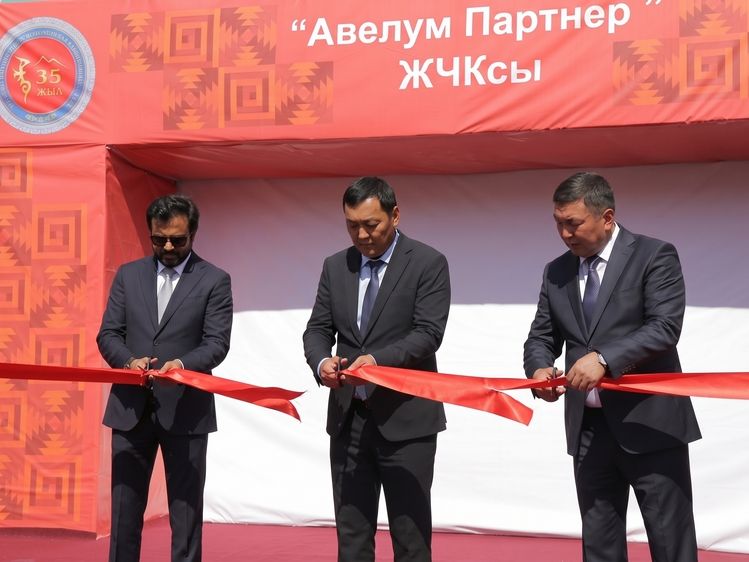
Construction of a small hydropower plant and a solar power station has begun in Kyrgyzstan’s Jalal-Abad region as part of efforts to expand domestic electricity generation and reduce reliance on energy imports. The groundbreaking ceremony took place on April 28 and was attended by the presidential envoy to the region, Tilek Tekebayev; the project’s scientific supervisor and former Prime Minister Akylbek Japarov; as well as representatives of the Chinese corporation SINOMACH. The project involves the construction of two facilities: a small hydropower plant with a capacity of 5 megawatts and an annual output of around 20 million kWh, and a solar power plant with a capacity of 1 megawatt, generating approximately 1.6 million kWh per year. The total investment, to be implemented under a public-private partnership model, is estimated at $259.8 million. Once operational, the facilities are expected to help reduce electricity shortages in the region and decrease dependence on imports. The project is also expected to create more than 100 jobs and provide irrigation for over 1,000 hectares of arid land. Kyrgyzstan is accelerating the development of small hydropower projects amid rising electricity demand and limited generation capacity. Currently, 48 small hydropower plants are operating in the country, with a combined capacity of around 180 megawatts. Another 50 facilities are under construction, which authorities say will strengthen the country’s energy independence.

Kyrgyz Jewelers to Receive Discounted Gold as Government Expands Industry Support

Kyrgyzstan’s Cabinet of Ministers has approved a package of support measures for the jewelry industry, implementing a directive from President Sadyr Japarov aimed at improving producers’ access to raw materials. Earlier, Japarov instructed the government to ensure that jewelers could obtain raw materials from the State Fund of Precious Metals and Precious Stones on more favorable terms. Under the new resolution, Kyrgyz jewelry manufacturers will be able to purchase domestically produced gold from the state at a 2% discount to the London Bullion Market Association (LBMA) fixing price. The State Fund will supply precious metals to jewelers in raw form, without the right of resale. To purchase gold, companies must either sign a direct contract with the fund or acquire the metal through a commodity exchange. Jewelers will also be granted deferred payment terms of up to 180 days. Transactions will be conducted at market prices in the national currency, the som. Access to gold scrap and refined bullion will be limited to companies operating under a special tax regime, with confirmed production capacity and compliance with requirements for accounting and the targeted use of raw materials. In addition, the government has approved a preferential lending mechanism for the jewelry sector. Authorities will subsidize interest rates on loans issued by state-owned banks, with approximately $11.5 million allocated to the program. The maximum loan amount will be $1 million, with a term of up to 60 months. The interest rate is set at 6% per annum, with a possible payment deferral of up to 180 days. Funds may be used for production modernization, equipment purchases, and the upgrading of manufacturing facilities. Eligible borrowers include legal entities and individual entrepreneurs registered with the State Tax Service. “The implementation of these initiatives will create a sustainable foundation for the development of the jewelry industry and increase its contribution to the national economy,” the Ministry of Economy and Commerce said in a statement, adding that the measures are expected to reduce costs, expand production, and create jobs. Stalbek Akmatov, head of the Kyrgyz Jewelers Association, told The Times of Central Asia that the industry had been advocating for such measures for many years. According to him, local producers were previously forced to purchase domestic gold at prices about 5% above London market levels, making imports from Russia and Turkey more common, despite higher logistics costs. “Now the situation will change, and the industry has real prospects for development,” Akmatov said.

EU Sanctions Put Kyrgyzstan’s Transit Trade Under Scrutiny

The European Union has stepped up sanctions pressure on Kyrgyzstan by restricting supplies of sensitive technologies and imposing measures on the country’s financial institutions. The decision, adopted as part of the EU’s 20th sanctions package against Russia, reflects growing concerns in Brussels that the Central Asian republic may be used as a transit hub to circumvent restrictions. The move marks a shift in the EU’s approach, from diplomatic warnings to tighter controls on trade and financial channels in third countries. A key argument for Brussels has been trade data. According to European Commission materials, imports of sensitive goods from the EU to Kyrgyzstan surged by nearly 800% in 2025 compared to pre-war levels. Meanwhile, exports of similar goods from Kyrgyzstan to Russia rose by approximately 1,200%. European officials say this dynamic indicates a systemic pattern of re-exports. As a result, the EU has added Kyrgyzstan to its list of countries posing a “systematic and persistent” risk of sanctions circumvention, a designation previously applied only selectively. The restrictions primarily target dual-use goods. These include metalworking machinery and numerically controlled equipment, as well as a wide range of telecommunications devices, from routers and modems to data, voice, and image transmission equipment. According to the EU, these categories present the highest risk of being used by Russia’s defense-industrial complex. European exporters will face tougher checks to show that sensitive goods are not likely to be re-exported to Russia. This creates an additional administrative barrier and raises risks for businesses. For many companies, the effect is a ‘presumption of guilt’ regime around trade with Kyrgyzstan. The sanctions package also affects the country’s financial system. Keremet Bank and Capital Bank have been included in the restrictions, which are set to take effect in May 2026. Particular attention has been paid to the cryptocurrency sector. The EU has sanctioned TengriCoin, a Bishkek-registered entity linked to the Meer platform, which European regulators say facilitated trading in a stablecoin affiliated with Russia’s Promsvyazbank. This move signals the EU’s expanding sanctions policy into digital financial instruments increasingly used to bypass traditional restrictions. Additional measures affect the transport sector. Several Kyrgyz logistics companies have been restricted from accessing European infrastructure, including ports and transport networks. This is likely to increase shipping costs and complicate foreign trade operations, putting additional pressure on export-oriented businesses. Analysts also warn of a potential shortage of European industrial equipment on the Kyrgyz market. The risk of secondary sanctions may lead EU suppliers to withdraw even from legitimate transactions. The tightening of sanctions comes amid intensified foreign policy engagement by Kyrgyzstan. On the day the package was approved, President Sadyr Japarov reaffirmed a strategic partnership with Vladimir Putin during a visit to Moscow. At the same time, Bishkek is strengthening cooperation within the Shanghai Cooperation Organization (SCO), preparing to host a summit and receive high-level delegations, including Chinese Defense Minister Dong Jun. Kyrgyz authorities have previously criticized EU sanctions policy. Japarov has described it as unjustified and as pressure that hampers economic development. Despite a series...