• KGS/USD = 0.01144 0%
  • KZT/USD = 0.00216 0%
  • TJS/USD = 0.10456 0%
  • UZS/USD = 0.00008 0%
  • TMT/USD = 0.28571 0%
  • KGS/USD = 0.01144 0%
  • KZT/USD = 0.00216 0%
  • TJS/USD = 0.10456 0%
  • UZS/USD = 0.00008 0%
  • TMT/USD = 0.28571 0%
  • KGS/USD = 0.01144 0%
  • KZT/USD = 0.00216 0%
  • TJS/USD = 0.10456 0%
  • UZS/USD = 0.00008 0%
  • TMT/USD = 0.28571 0%
  • KGS/USD = 0.01144 0%
  • KZT/USD = 0.00216 0%
  • TJS/USD = 0.10456 0%
  • UZS/USD = 0.00008 0%
  • TMT/USD = 0.28571 0%
  • KGS/USD = 0.01144 0%
  • KZT/USD = 0.00216 0%
  • TJS/USD = 0.10456 0%
  • UZS/USD = 0.00008 0%
  • TMT/USD = 0.28571 0%
  • KGS/USD = 0.01144 0%
  • KZT/USD = 0.00216 0%
  • TJS/USD = 0.10456 0%
  • UZS/USD = 0.00008 0%
  • TMT/USD = 0.28571 0%
  • KGS/USD = 0.01144 0%
  • KZT/USD = 0.00216 0%
  • TJS/USD = 0.10456 0%
  • UZS/USD = 0.00008 0%
  • TMT/USD = 0.28571 0%
  • KGS/USD = 0.01144 0%
  • KZT/USD = 0.00216 0%
  • TJS/USD = 0.10456 0%
  • UZS/USD = 0.00008 0%
  • TMT/USD = 0.28571 0%

Viewing results 79 - 84 of 715

Central Asia Trade with China Tops Record $100 Billion in 2025

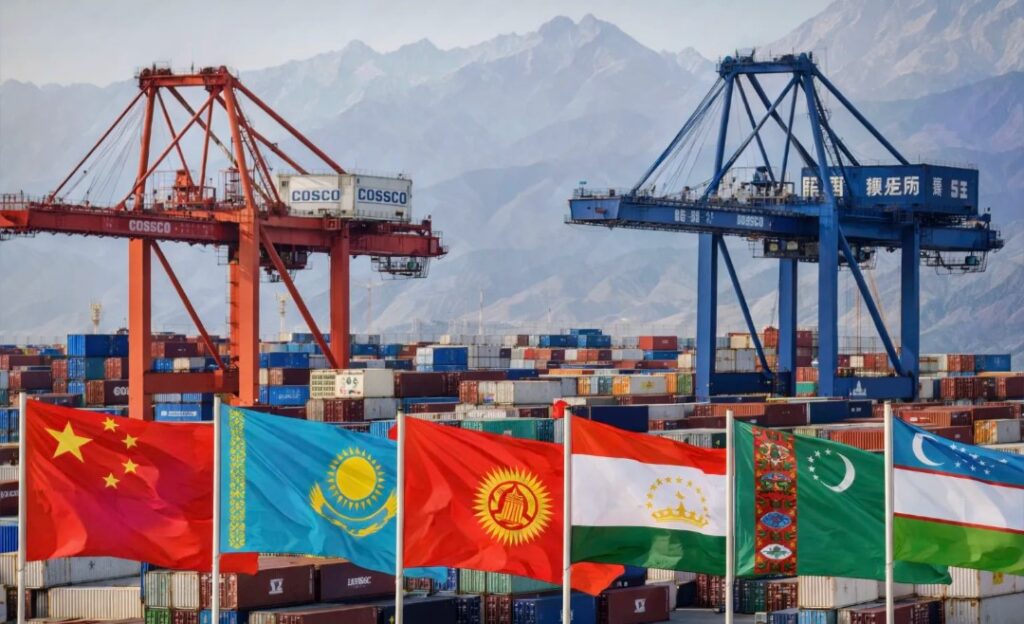
Trade between China and Central Asia increased to a record of more than $100 billion in 2025, despite challenges to global economic growth, the Chinese government said on Monday.  Citing data from China’s General Administration of Customs, Foreign Ministry spokesman Guo Jiakun said the trade structure with the Central Asian nations of Kazakhstan, Kyrgyzstan, Tajikistan, Turkmenistan and Uzbekistan had improved and that more high-end products were entering the Chinese market from the region.   “As global economic growth remains sluggish and the international trading system faces serious challenges, the economic and trade cooperation between China and Central Asian countries has withstood external headwinds, and the trade volume surpassed US$100 billion,” Guo said.  He attributed the increasing cooperation in part to a China-Central Asia summit in Astana, Kazakhstan last year that was attended by Chinese President Xi Jinping and the five Central Asian leaders.  China’s Belt and Road initiatives, which include the development of trade routes that pass through Central Asia and link up with Europe, are also making progress, according to the Chinese official.  Total trade between China and Central Asia was $106.3 billion in 2025, an increase of 12 percent over the previous year, China’s state-run Xinhua news agency reported. Chinese exports such as machinery, electronics and high-tech goods were $71.2 billion, an increase of 11 percent over the previous year. Imports from Central Asia amounted to $35.1 billion, a rise of 14 percent from 2024. China is involved in major projects in Central Asia, including the extraction of minerals used for “clean” technology, equipment manufacturing and the modernization of agriculture. China imports oil and natural gas as well as a growing number of other products from the region.  Russia was once the main trading partner of Central Asia after the fall of the Soviet Union, but China has the lead position now. The United States is also seeking to develop more trade with resource-rich Central Asia, which is diversifying its international partnerships.     
Kyrgyzstan’s Rail Freight Turnover Emerges from Years of Stagnation

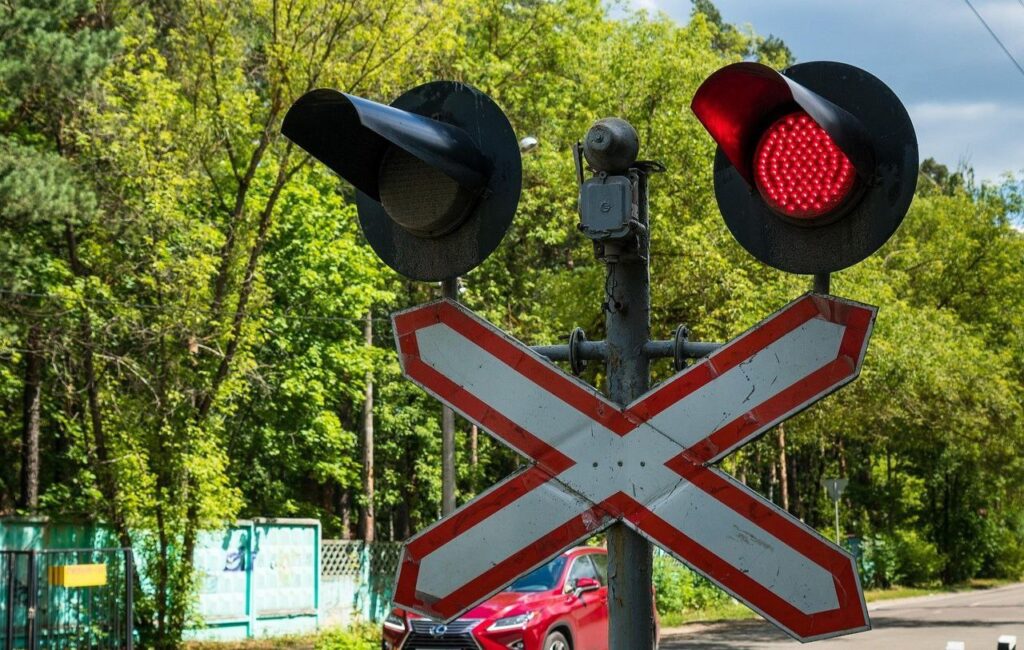
Kyrgyzstan’s rail transport sector is showing sustained growth after years of stagnation. By the end of 2025, the state-owned railway operator Kyrgyz Temir Zholu reported transporting 10 million tons of cargo, the highest volume in the company’s history. Just a few years ago, the country’s annual rail freight volume hovered around 7 million tons. The turning point came in 2022, and by 2024, the figure had already reached 9.2 million tons. Surpassing the 10 million ton milestone in 2025 has further solidified the sector’s recovery. Kyrgyz Temir Zholu acknowledged that prior to 2022, the national railway industry was largely unprofitable and in urgent need of systemic modernization. Early reforms focused not on major infrastructure projects but on managerial and institutional restructuring. “The main focus was on digitalizing processes, minimizing human error, preventing corruption, reducing costs, revising regulatory frameworks, and modernizing repair facilities and railway infrastructure,” the company stated. International partnerships have also played a key role in revitalizing the sector. Under its development strategy, Kyrgyzstan opened additional multimodal transport corridors between China and Europe, significantly enhancing the country’s transit potential. Despite its growth, Kyrgyzstan’s railway network remains one of the most compact in the region. It spans just 425 kilometers and includes 28 operational stations, divided into two geographically isolated segments: north and south. The northern section, 323.4 kilometers long, connects Rybachye station (in Balykchy) with Turksib in Kazakhstan and serves as a vital corridor for freight headed to Russia and other members of the Eurasian Economic Union. The southern section, 101 kilometers in length, links Kyrgyzstan with Uzbekistan’s rail network. “Both sections serve strategically important roles by ensuring Kyrgyzstan’s integration with regional transport systems and facilitating international trade,” Kyrgyz Temir Zholu noted. The growth in freight turnover has been accompanied by an ongoing digital transformation. A key milestone was the development and implementation of the Unified Transport Process Model software system, which consolidates every stage of freight transport, from planning to execution, into a single digital platform. Further momentum is expected from the construction of the China-Kyrgyzstan-Uzbekistan railway, which is already underway. Authorities view the project as a long-term catalyst for boosting Kyrgyzstan’s transit capacity and strengthening its role in Eurasian logistics chains.

Kyrgyzstan’s Power Consumption Rises Amid Declining Water Levels at Toktogul Reservoir

Electricity consumption in Kyrgyzstan continues to rise. In 2025, the country consumed 19.3 billion kWh, an increase of 900 million kWh compared to the previous year. Of this total, 15.4 billion kWh was generated domestically, while 3.9 billion kWh was imported from Turkmenistan, Uzbekistan, Kazakhstan, and Russia, officials reported at a government meeting on 14 January. Authorities also highlighted critically low water levels at the Toktogul Hydroelectric Power Plant, the country’s largest energy facility, which generates approximately 40% of its electricity. The Toktogul reservoir currently holds 9.102 billion cubic meters of water, a drop of 1.631 billion cubic meters compared to the same date in 2024. The reservoir is approaching the critical or “dead” level of 5.5 billion cubic meters, below which the plant would be unable to generate electricity. Officials at the meeting warned that continued low inflows could force a reduction in power generation and stressed the importance of adhering strictly to electricity consumption limits. Kyrgyzstan has long struggled with seasonal electricity shortages, particularly in winter, when many households rely on electric heating. Energy Minister Taalaibek Ibraev previously cautioned that the 2025–2026 winter season could be one of the most difficult in recent years due to the water shortfall at Toktogul. To address the electricity deficit, Kyrgyzstan is pressing ahead with both the construction of new hydropower projects and the modernization of existing facilities. In November 2025, the country completed a full modernization of Toktogul, located on the Naryn River. The upgrade increased the plant’s capacity from 1,200 MW to 1,440 MW. Kyrgyzstan is also moving forward with the construction of the Kambarata-1 hydropower plant, a strategic regional project being developed in partnership with Kazakhstan and Uzbekistan. Once completed, Kambarata-1 is expected to have a capacity of 1,860 MW and produce 5.6 billion kWh annually.

Kyrgyzstan Moves to Tighten Vehicle Emissions Rules as Air Pollution Worsens

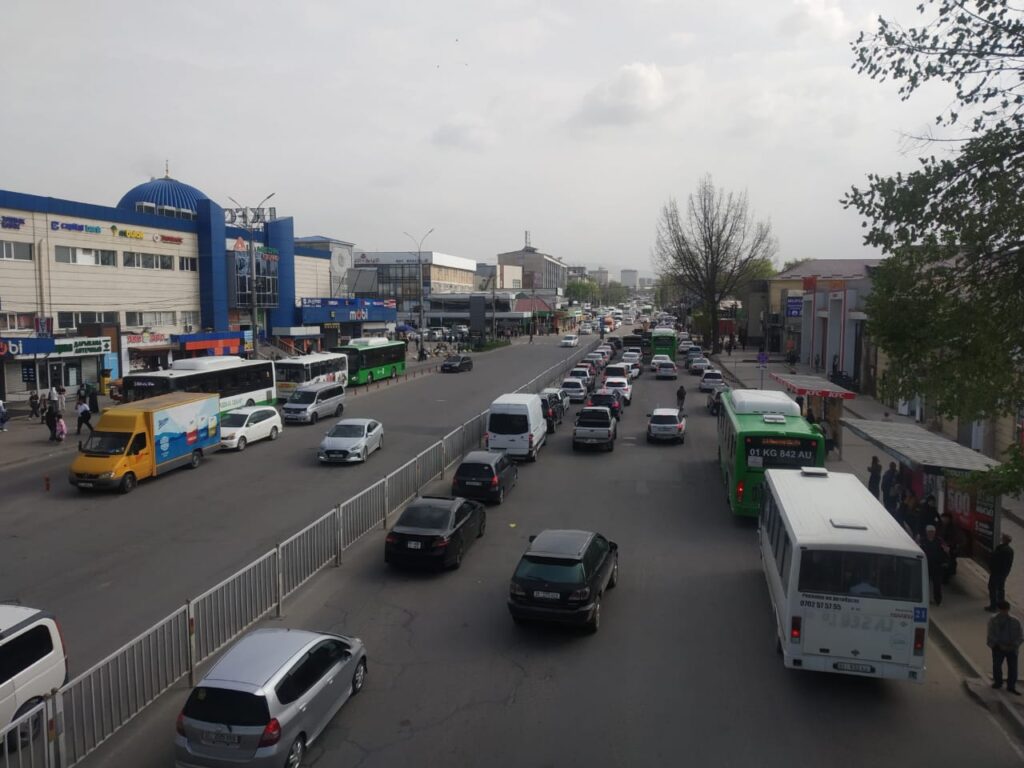
Kyrgyzstan is preparing to tighten environmental regulations on motor vehicles as part of a broader effort to combat rising air pollution in its major cities. A draft bill currently under public discussion proposes mandatory requirements for the presence and proper functioning of catalytic converters in vehicles originally manufactured with them. The initiative targets one of the most persistent sources of urban air pollution: an aging vehicle fleet in which catalytic converters are frequently removed. The absence of these devices significantly increases toxic emissions and fuel consumption, with direct consequences for public health. Under the proposed amendments, vehicles that do not meet environmental standards could be prohibited from operating. Driving a vehicle without a functioning catalytic converter would result in fines of approximately $114 for private individuals and about $400 for legal entities. According to the bill’s explanatory note, the measures aim primarily to reduce pollution in urban centers such as Bishkek and Osh. Lawmakers emphasize that the widespread removal of catalytic converters contributes to both higher emissions and increased fuel use. Data from the Ministry of Natural Resources, Ecology, and Technical Supervision show that motor vehicles, particularly older models lacking emissions control systems, account for roughly 30% of air pollution in Bishkek. Vehicle numbers in the capital have surged in recent years. Bishkek now has more than 600,000 registered vehicles, nearly double the estimated road infrastructure capacity of 350,000. Over 300,000 of these vehicles are more than 15 years old, making them a major contributor to harmful emissions. Air quality in the city of more than one million residents remains a persistent concern, especially in winter, when coal-burning for residential heating, responsible for an estimated 40% of pollution, intensifies. Seasonal spikes frequently push Bishkek into the global rankings of the most polluted cities. The draft legislation could also pave the way for a regulated system to dispose of non-functioning catalytic converters, which contain valuable materials such as platinum group metals, rhodium, and cerium. The presence of these metals has fueled a gray market, with online advertisements and repair shops offering to remove converters for resale. Lawmakers argue that formal regulation would help curb theft and establish a legal recycling sector. In September 2025, the Cabinet of Ministers imposed a six-month ban on the export of catalytic converters and other waste containing precious metals, in an effort to limit illegal outflows and stabilize domestic oversight. The bill’s authors describe catalytic converter enforcement as a concrete step toward meeting Kyrgyzstan’s commitments under the Paris Agreement and reducing transport-sector greenhouse gas emissions. However, the effectiveness of the new rules will depend on enforcement capacity. With a significant portion of the current fleet already non-compliant, and the average vehicle age remaining high, implementation may face resistance unless supported by effective inspection systems and realistic compliance pathways. Kyrgyzstan’s proposed emissions crackdown signals a shift toward more enforceable environmental policy. If properly implemented, the measures could meaningfully reduce air pollution and curtail illicit trade in precious metals. Their success, however, will hinge on the state’s ability...

U.S. to Pause Immigrant Visa Processing; Central Asia Affected

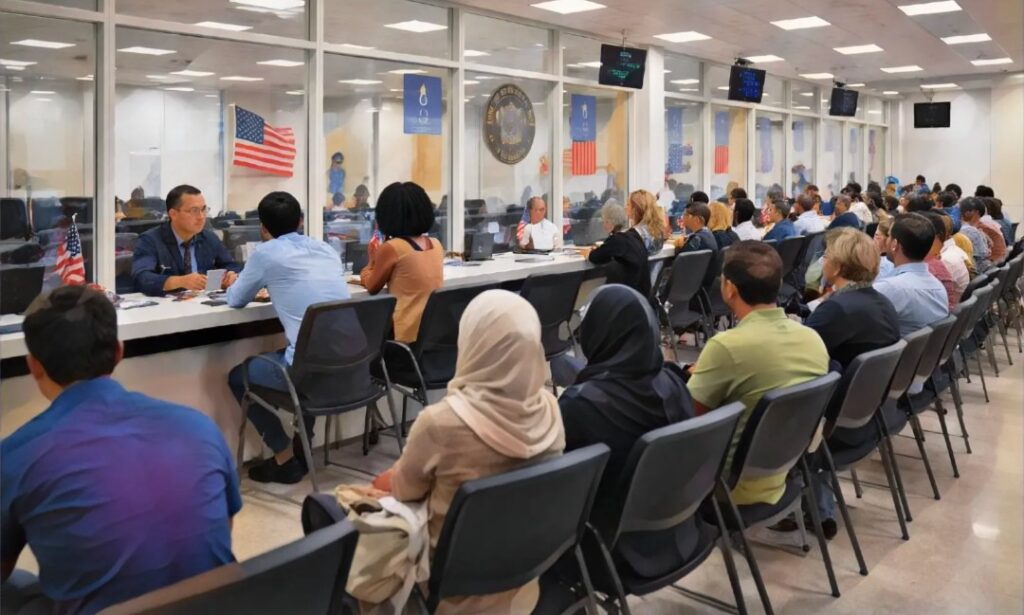
The U.S. State Department said on Wednesday that it will stop immigrant visa processing from 75 countries, and some reports said the affected nations include several in Central Asia.   The measure is part of a broad crackdown on immigration that has unfolded during the second term of U.S. President Donald Trump, who has said many people from other countries are threatening U.S. security and taking advantage of American resources. Critics say immigration raids and some other administration initiatives have gone too far, actually making U.S. cities less safe and violating basic rights.   “The State Department will pause immigrant visa processing from 75 countries whose migrants take welfare from the American people at unacceptable rates. The freeze will remain active until the U.S. can ensure that new immigrants will not extract wealth from the American people,” the U.S. agency said on X.  “The pause impacts dozens of countries – including Somalia, Haiti, Iran, and Eritrea – whose immigrants often become public charges on the United States upon arrival,” the State Department said. “We are working to ensure the generosity of the American people will no longer be abused.” The statement did not list all the countries affected by the new measure, which takes effect on January 21. Nor did it say how long the pause will last.  However, Fox News Digital, which reported that it had seen a State Department memo about the new policy, published a list of what it said were the 75 affected countries. It included Kazakhstan, Kyrgyzstan, and Uzbekistan. Tajikistan and Turkmenistan were not on the list. Some other media outlets reported the same information.  The State Department policy appeared to be partly linked to a Minnesota scandal in which dozens of people, including many Somali-Americans, were convicted of defrauding the state of welfare funds. Minneapolis, Minnesota’s biggest city, is currently a flashpoint for tension and protests over U.S. Immigration and Customs Enforcement (ICE) operations.   The new State Department measure does not apply to non-immigrant visas, which would include people traveling to the United States for tourism or business. But additional restrictions are also in place for people seeking those temporary visas.  Nationals from 38 countries, including Kyrgyzstan, Tajikistan, and Turkmenistan, are subject to U.S. visa bonds under a State Department policy. The policy took effect for citizens from Turkmenistan on January 1 and will be implemented for nationals from Kyrgyzstan and Tajikistan starting on January 21.

Mandatory Participation in Elections Proposed in Kyrgyzstan

On January 13, Marlen Mamataliev, a member of Kyrgyzstan's parliament, the Jogorku Kenesh, introduced a bill proposing mandatory participation in elections and referendums, along with penalties for non-participation and incentives to encourage voting. The draft legislation has been submitted for public discussion. According to the bill, all Kyrgyz citizens registered as eligible voters would be required to participate in elections. However, the proposal affirms that freedom of political expression remains protected: voters would retain the right to support any candidate or to vote “against all”, as currently allowed on the ballot. The bill outlines several exemptions. Citizens over 70 years old, those legally deemed incapacitated, individuals outside Kyrgyzstan on election day, and voters who fail to appear due to valid reasons, such as illness, natural disasters, military service, or other emergencies, would not be penalized. Proposed penalties for non-participation without a valid excuse include: A written warning for the first offense; An administrative fine for repeat violations; A temporary ban of up to five years on running for elected office or holding public service positions for systematic evasion (defined as three or more violations). The bill also proposes incentives to boost voter engagement, including discounts on state and municipal services, and awarding additional points for candidates seeking public sector employment. Notably, the legislation includes a provision for issuing a lottery ticket along with each ballot, with the Central Commission for Elections and Referendums tasked with organizing state-sponsored lotteries and prize drawings during election periods. The bill’s explanatory note highlights declining voter turnout as one of the most serious challenges facing Kyrgyzstan’s electoral system. Turnout statistics illustrate a steady drop over the past 15 years. In the 2011 presidential election, participation was 61.28%; it fell to 56.11% in 2017, and to 39.16% in 2021. Parliamentary election turnout followed a similar trend: 59.19% in 2010, 39.78% in 2015, 54.38% in the contested 2020 vote, 34.61% in 2021, and just 36.9% in the most recent parliamentary elections held on November 30, 2025. The bill’s authors point to international examples of compulsory voting, in countries such as Belgium, Australia, Turkey, Singapore, and several Latin American nations, where turnout regularly exceeds 80-90%. This initiative follows concerns voiced by President Sadyr Japarov about low voter participation in the 2025 parliamentary elections. The president addressed the issue at the fourth People’s Kurultai (National Assembly), a national forum for direct dialogue between citizens and the state, held in Bishkek in December 2025, one month after the election.