• KGS/USD = 0.01143 0%
  • KZT/USD = 0.00205 0%
  • TJS/USD = 0.10433 0.1%
  • UZS/USD = 0.00008 0%
  • TMT/USD = 0.28577 0%
  • KGS/USD = 0.01143 0%
  • KZT/USD = 0.00205 0%
  • TJS/USD = 0.10433 0.1%
  • UZS/USD = 0.00008 0%
  • TMT/USD = 0.28577 0%
  • KGS/USD = 0.01143 0%
  • KZT/USD = 0.00205 0%
  • TJS/USD = 0.10433 0.1%
  • UZS/USD = 0.00008 0%
  • TMT/USD = 0.28577 0%
  • KGS/USD = 0.01143 0%
  • KZT/USD = 0.00205 0%
  • TJS/USD = 0.10433 0.1%
  • UZS/USD = 0.00008 0%
  • TMT/USD = 0.28577 0%
  • KGS/USD = 0.01143 0%
  • KZT/USD = 0.00205 0%
  • TJS/USD = 0.10433 0.1%
  • UZS/USD = 0.00008 0%
  • TMT/USD = 0.28577 0%
  • KGS/USD = 0.01143 0%
  • KZT/USD = 0.00205 0%
  • TJS/USD = 0.10433 0.1%
  • UZS/USD = 0.00008 0%
  • TMT/USD = 0.28577 0%
  • KGS/USD = 0.01143 0%
  • KZT/USD = 0.00205 0%
  • TJS/USD = 0.10433 0.1%
  • UZS/USD = 0.00008 0%
  • TMT/USD = 0.28577 0%
  • KGS/USD = 0.01143 0%
  • KZT/USD = 0.00205 0%
  • TJS/USD = 0.10433 0.1%
  • UZS/USD = 0.00008 0%
  • TMT/USD = 0.28577 0%

Viewing results 223 - 228 of 482

Passenger Train Between Tashkent and Moscow Resumes

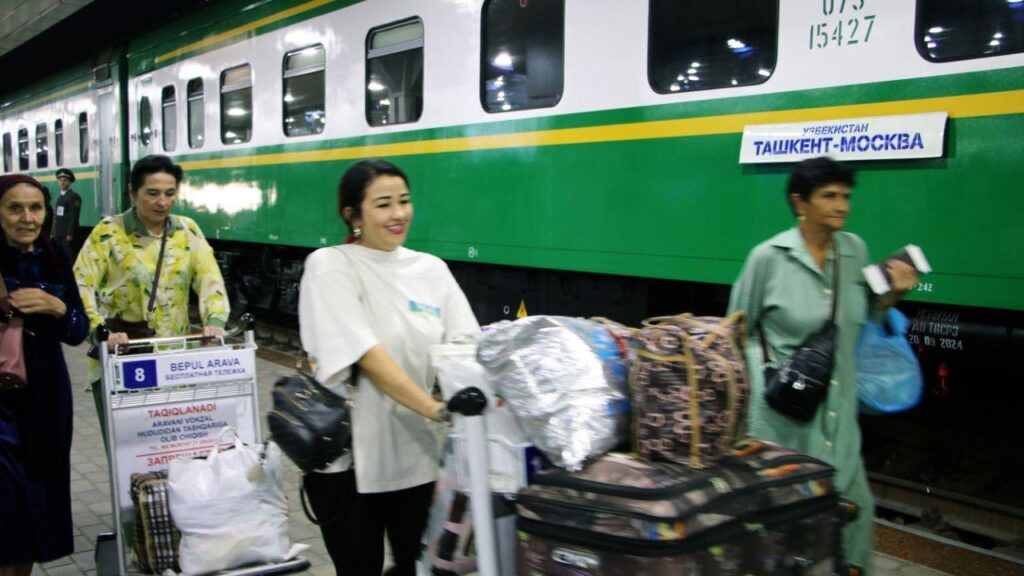
After a four-year break, the passenger train service on the Tashkent-Moscow-Tashkent route has resumed. The service reopened this week, with passenger trains now departing from Tashkent and back from Moscow once a week. The first Tashkent-Moscow train departed from Tashkent’s central railway station on September 24, and is scheduled to arrive at the Paveletsky railway station in Moscow on September 27. Passenger train service on the Bishkek-Moscow route will resume in 2025. The passenger train between Bishkek and Moscow has been out of operation since the COVID-19 pandemic. After the pandemic, trains from Bishkek and the Russian city of Samara resumed. Passenger trains to Moscow were temporarily suspended from Bishkek and other Eurasian countries due to a large-scale reconstruction of the Moscow railway junction that began after the pandemic. Relatively cheap railway service to Moscow (compared to air transport) is essential for Kyrgyzstan and Uzbekistan, as hundreds of thousands of Kyrgyz and Uzbek labor migrants work in Russia.

Kyrgyzstan Begins Development of Large Titanomagnetite Deposit

Kyrgyzstan has begun developing its largest titanomagnetite deposit, Kyzyl-Ompol, in the Issyk-Kul region. Speaking at the launch ceremony on September 25, the Chairman of the Kyrgyz Cabinet of Ministers, Akylbek Japarov, emphasized that the state will develop and finance this strategic deposit. "This is a very important event for Kyrgyzstan. The Kyzyl-Ompol deposit contains millions of tons of titanomagnetite. Titanium is valuable in various industries, including medicine, aviation, and space. The development of this deposit will allow us not only to increase exports but also to create new jobs, which will give an impetus to developing the country's economy," Japarov said. Japarov also emphasized the importance of an environmentally friendly approach to the deposit's development, saying that technologies used to extract titanomagnetite will guarantee the safe extraction of associated minerals such as uranium and thorium. Early in June, the Kyrgyz parliament approved a government bill lifting a ban on the mining of uranium and thorium that had been in place since 2019. The move caused environmental concerns in Kyrgyz society, as the country still works on the rehabilitation and conservation of radioactive uranium waste sites left over from the Soviet era. The ban was lifted to start the mining of titanomagnetite, which is accompanied by uranium and thorium. The government plans to process both elements at the Kara-Balta Mining Combine, some 100 km west of Bishkek.

UNDP Helps Entrepreneurs in Kyrgyzstan Master E-Commerce

More than 50 entrepreneurs from Kyrgyzstan are learning about e-commerce through the "Janyration Sanarip" program, an initiative aimed at supporting micro, small, and medium-sized enterprises in the country, jointly implemented by the government of Kyrgyzstan and the United Nations Development Programme (UNDP), UNDP Kyrgyzstan reports. According to Nazarbek Malayev, Kyrgyzstan’s Deputy Minister of Economy and Commerce, "E-commerce opens up unique opportunities for domestic entrepreneurs to enter international markets, expand their customer base, and improve the competitiveness of their products. The Government of the Kyrgyz Republic is trying to create a favorable ecosystem where digital technologies contribute to business development and improve citizens' quality of life." Since 2019, e-commerce in Kyrgyzstan has been experiencing rapid growth, driven by the development of internet infrastructure and an increase in mobile payment users. However, the sector faces several challenges, such as a lack of consumer trust in online shopping and limited internet access in rural areas, where 60% of the population lives. In response to these challenges, the government launched the E-Commerce Development Program for 2023-2026, aimed at enhancing the competitiveness of local products in international markets and attracting investments. Within this initiative, UNDP provides comprehensive support to entrepreneurs, helping them acquire e-commerce skills and work effectively on global marketplaces. UNDP Resident Representative in Kyrgyzstan, Alexandra Solovieva, commented: "Digitalization is a key factor in bridging the digital divide and accelerating Kyrgyzstan's economic development. E-commerce improves access to services and creates new opportunities for local entrepreneurs. We are confident that the joint efforts of the Government and UNDP will contribute to sustainable and inclusive economic growth, particularly in rural areas where internet access remains limited.” Five hundred forty-two applications were submitted for the program, and entrepreneurs were selected based on several criteria, including having an existing business in Kyrgyzstan and a personal investment of at least 80,000 KGS (almost $1,000). These entrepreneurs, representing key sectors such as garment manufacturing, tourism, honey production, light industry, services, and trade, were selected from all regions of the country. Kyrgyzstan is the world's 96th largest market for e-commerce, with a predicted revenue of more than $359 million in 2024, placing it ahead of Uzbekistan. The country’s e-commerce revenue is expected to grow at a compound annual rate of 13.5% from 2024 to 2028, resulting in a projected market volume of $595.7 million by 2028.

Pathway to Prosperity: Uzbekistan’s Ambitious Plan to Halve Poverty by 2030

A presidential decree, "On taking measures to reduce poverty and increase the population's well-being to a new level," has been adopted in Uzbekistan. Lifting half a million people out of poverty in the remainder of 2024 and a further million in 2025 was defined as the primary task of the state's socioeconomic policy and state bodies and organizations at all levels. The “From Poverty to Prosperity” program will be implemented based on the positive results of poverty reduction from past national experiences and international practices. The program will be implemented from November 1, 2024, based on the doctrine of “Seven Opportunities and Responsibilities for Poor Families.” Within the framework of this program, systematic work is carried out to achieve stable employment and higher incomes, education and vocational training, access to the use guaranteed state medical services, social services, and an overall improvement in living conditions. The “Uzbekistan – 2030” strategy also includes steps to reduce poverty in the country. It was stated that the Ministry of Poverty Reduction and Employment in Uzbekistan will work with Chinese experts and international organizations to develop a strategy for reducing poverty from 2024 to 2030. This will aim to halve poverty by 2026, raise the income of 4.5 million people at risk of falling into poverty by 2030, and lift three million young people out of poverty by utilizing their labor skills. According to data, at the end of 2020, approximately six million people in Uzbekistan lived below the poverty line. While evaluating the results of the transformation programs aimed at solving the problems of poverty, it was noted that in 2023, the poverty rate in Uzbekistan decreased from 17% to 11%, meaning such programs have already helped lift almost two million people out of poverty. It is planned that the poverty level in Uzbekistan will be reduced to 7% in the next three years. This work to reduce poverty has been lauded at the international level. Dr. Ambar Narayan, Manager of the Global Poverty and Equality practice of the World Bank in Europe and Central Asia, for example, has recognized that large-scale work on poverty reduction has been carried out in Uzbekistan since 2020. Naravan believes that prioritizing investment in economic mobility and developing opportunities for vulnerable sections of the population, including youth, women, and inexperienced workers, will help create more productive jobs and reduce hardship. Geoffrey Ijumba, acting head of the UNICEF office in Uzbekistan, has also praised Uzbekistan’s efforts to develop a nationwide action plan to end child poverty. “Prioritizing the problem of child poverty, as well as the development of appropriate measures and programs, will allow Uzbekistan to achieve its goals of reducing poverty, as stated in the ‘Uzbekistan – 2030’ strategy. It will also help achieve the MDG (Millennium Development Goal) targets of ending child extreme poverty and halving it according to the national definition,” Ijumba stated. Global Finance published a list of the poorest countries in the world in 2024 based on the International Monetary Fund's data. Kazakhstan...

ADB to Finance Upgrade of Barskoon–Karakol Section of Issyk-Kul Ring Road in Kyrgyzstan

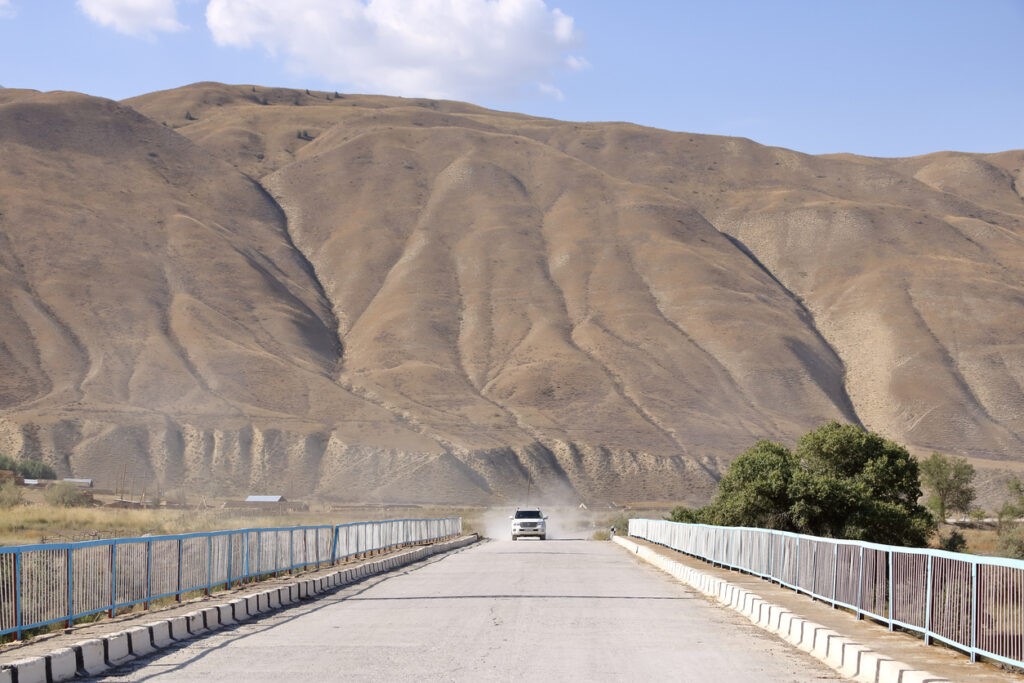
The Asian Development Bank (ADB) announced on September 19 that it had approved $109.5 million in financing to renovate the highway around Lake Issyk-Kul. The lake is one of the most popular tourist destinations in Kyrgyzstan, and a strategic location that connects to neighboring Central Asian countries. ADB’s Issyk-Kul Ring Road Improvement Project will construct 75.2 kilometers of the road traversing the Barskoon to Karakol section of the Issyk-Kul Ring Road, which connects the Central Asia Regional Economic Cooperation (CAREC) Corridor 1. The project will widen the two-lane roadway to four lanes to meet increasing traffic demand, while incorporating climate-adaptation measures into the road design and construction materials. Rest areas, bus stops, streetlights, and safer access for pedestrians will also be constructed. The ADB funding comprises an $87 million concessional loan and a $22.5 million grant from the Asian Development Fund. ADB Principal Transport Specialist Oyunchimeg Erdene commented: “The Barskoon–Karakol road section [on the southern shore of Lake Issyk-Kul] is the remaining portion of the Issyk-Kul Ring Road for improvement. Completing this will mean eliminating congestion and boosting tourism that will support the growth of businesses in the area.” Kyrgyzstan’s Deputy Minister of Transport, Beknazar Bazaraliev, earlier said that the rehabilitation of the Issyk-Kul Ring Road is to be completed in 2028. The rehabilitation of the 440 km long Issyk-Kul Ring Road was divided into several parts and is financed by the government and international financial organizations.

Kyrgyzstan Asks IAEA for $45 Million for Nuclear Waste Remediation

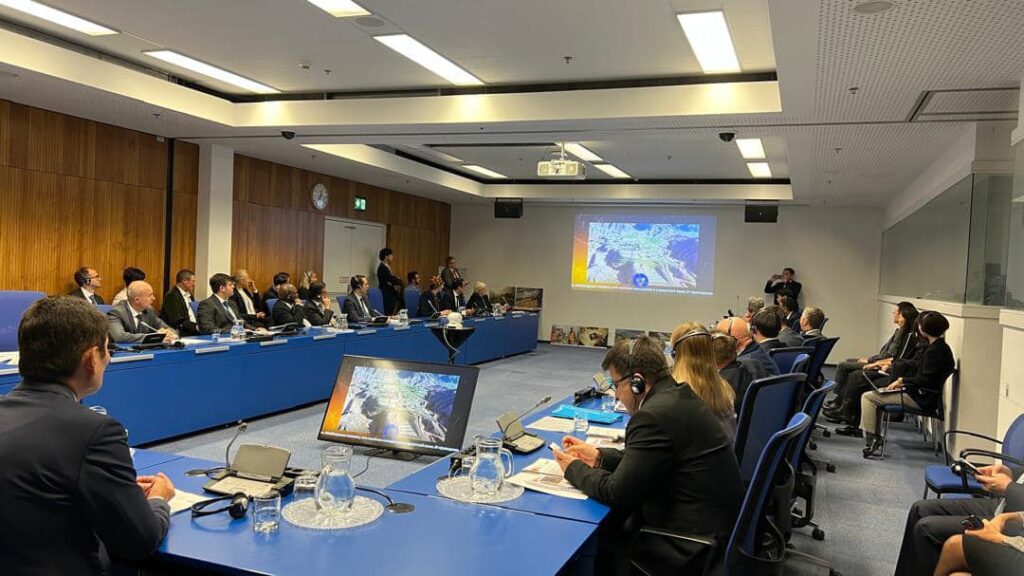
Kyrgyzstan's Deputy Minister of Emergency Situations, Azamat Mambetov, has asked for support from Central Asian countries at the International Atomic Energy Agency's General Session in Vienna, Austria. The 68th session of the IAEA General Conference is taking place from September 16 to 20, 2024. An official from the Kyrgyz Republic Ministry of Emergency Situations made a speech that called for attention to be paid to the importance of ensuring environmental safety in the region. “In his speech, Azamat Mambetov emphasized the importance of the problem of radiation safety in Central Asia and called for the intensification of international efforts to reclaim uranium tailings in the region,” the Ministry of Emergency Situations stated. The IAEA adopted a resolution on “The Role of the International Community in Preventing Radiation Threats in Central Asia.” A strategic master plan was developed to reclaim uranium sites in the region and create a special account for environmental remediation in Kyrgyzstan, Uzbekistan, and Tajikistan. The Deputy Minister of Emergency Situations of Kyrgyzstan informed IAEA members about the process of completing the reclamation of two nuclear waste sites in the country's south. This has allowed about 80,000 people in that area to live safely. The Kyrgyz Ministry of Emergency Situations stressed that it is grateful to all countries and international organizations that have made a significant contribution to the environmental rehabilitation of the tailing dumps left over from Soviet-era uranium mining in Central Asia. However, approximately another $45 million is needed to implement the Strategic Master Plan fully. According to the Kyrgyz Ministry of Emergency Situations, there are currently 92 toxic and radioactive waste dumps in the country. Of these, 23 tailings contain uranium elements, while the rest contain radioactive rock residues, heavy metals, and cyanide.