• KGS/USD = 0.01144 0%
  • KZT/USD = 0.00216 0%
  • TJS/USD = 0.10456 0%
  • UZS/USD = 0.00008 0%
  • TMT/USD = 0.28571 0%
  • KGS/USD = 0.01144 0%
  • KZT/USD = 0.00216 0%
  • TJS/USD = 0.10456 0%
  • UZS/USD = 0.00008 0%
  • TMT/USD = 0.28571 0%
  • KGS/USD = 0.01144 0%
  • KZT/USD = 0.00216 0%
  • TJS/USD = 0.10456 0%
  • UZS/USD = 0.00008 0%
  • TMT/USD = 0.28571 0%
  • KGS/USD = 0.01144 0%
  • KZT/USD = 0.00216 0%
  • TJS/USD = 0.10456 0%
  • UZS/USD = 0.00008 0%
  • TMT/USD = 0.28571 0%
  • KGS/USD = 0.01144 0%
  • KZT/USD = 0.00216 0%
  • TJS/USD = 0.10456 0%
  • UZS/USD = 0.00008 0%
  • TMT/USD = 0.28571 0%
  • KGS/USD = 0.01144 0%
  • KZT/USD = 0.00216 0%
  • TJS/USD = 0.10456 0%
  • UZS/USD = 0.00008 0%
  • TMT/USD = 0.28571 0%
  • KGS/USD = 0.01144 0%
  • KZT/USD = 0.00216 0%
  • TJS/USD = 0.10456 0%
  • UZS/USD = 0.00008 0%
  • TMT/USD = 0.28571 0%
  • KGS/USD = 0.01144 0%
  • KZT/USD = 0.00216 0%
  • TJS/USD = 0.10456 0%
  • UZS/USD = 0.00008 0%
  • TMT/USD = 0.28571 0%

Viewing results 187 - 192 of 1552

Kazakh Journalists Set to Ring in 2026 at the “JingleBendz” Media Party

On 12 December, Almaty will host the New Year’s edition of the professional media party “Day J,” titled JingleBendz 2025. The annual event brings together journalists, editors, public relations specialists, and media executives, and is regarded as one of the leading informal networking platforms in Kazakhstan’s communications industry. According to the organizers, the evening will include informal awards for journalists and PR professionals. Since the project’s launch 11 years ago, more than 140 representatives of the media sector have received accolades. This year, participants will also receive special gifts, including a separate award presented by the event’s general sponsor, Yandex Qazaqstan. The party is supported by several project partners, including Oriflame, KAZ Minerals, RG Brands, and First Brewery, all of which will provide prizes and New Year gifts. Kazakhstan’s major media outlets are backing the event, among them The Times of Central Asia, Tribune, BesMedia, Kapital, Kursiv, Shishkin_like, BlueScreen, Profit, Finratings, CheckPoint, Newtimes.kz, and Aleminform.kz. The Times of Central Asia editorial team will attend JingleBendz 2025 and report on the event’s key moments.

“Winter Begins in Karakol”: Kyrgyzstan Launches Ski Season with Cultural Events

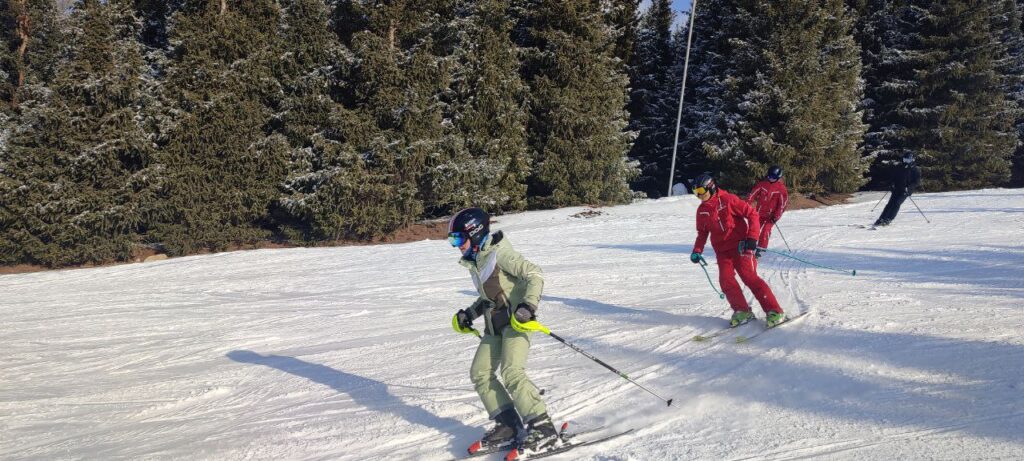
The winter tourist season has officially opened in Karakol, Kyrgyzstan, long considered one of Central Asia’s top destinations for active winter tourism. The city is traditionally the first in the country to open its ski slopes, and this year’s launch was not merely technical, but a full-scale event aimed at boosting both domestic and international tourism. A festive program was held at the ski base, featuring music and dance performances, as well as the launch of the “Jaryk Fest” festival. Local artisans hosted master classes in felt-making, showcasing clothing and souvenir production. This crafts section played an important role in positioning the region as a cultural as well as an adventure destination. [caption id="attachment_40525" align="aligncenter" width="402"] @TCA[/caption] “Jaryk Fest is a celebration of light, snow, and vivid emotions. It’s timed to coincide with the opening of the winter season across Kyrgyzstan. We even have a slogan: ‘Winter begins in Karakol,’” said Ulukbek Almakebek, manager of the Karakol ski resort, in an interview with The Times of Central Asia. According to the organizers, the resort continues to draw tourists from Russia and Kazakhstan, but recent years have seen a notable rise in visitors from Europe and Southeast Asia, a trend that Kyrgyzstan is actively encouraging by expanding its winter tourism offerings. Skiers highlight Karakol’s unique terrain as one of its main attractions. Many of the trails pass through dense coniferous forests, creating picturesque and varied descents not found at other regional resorts. Erdenet Kasymov, director of the Kyrgyzstan Tourism Department, noted that winter tourism is rapidly diversifying. In addition to traditional skiing and hot springs, European tourists are increasingly opting for mountain hiking and horseback riding. [caption id="attachment_40526" align="aligncenter" width="396"] @TCA[/caption] “Tourists from South Korea and India are particularly drawn to snowshoeing in deep snow. It’s a relatively new form of recreation, but one that’s quickly gaining popularity,” Kasymov said. One emerging trend is winter yachting on Issyk-Kul Lake. Because the lake does not freeze in winter, it offers an extended season and opportunities for new types of recreation. Two modern yachts have already been acquired for the region, and work is ongoing to restore older vessels and build docks and piers. This approach aligns with a vision outlined by President Sadyr Japarov, a native of the Issyk-Kul region, who has previously called for moving beyond the traditional separation of “winter” and “summer” tourism. According to Japarov, Kyrgyzstan is building a model of year-round tourism designed to take advantage of the country’s diverse natural offerings.

FIFA World Cup: Uzbekistan to Face Portugal and Colombia in Group K

Among the highlights for Uzbekistan at next year’s FIFA World Cup will be facing Portugal striker Cristiano Ronaldo in his last campaign in the event, to be held in Mexico, Canada and the United States. Uzbekistan, which has qualified for the World Cup for the first time and is ranked 50th in the FIFA rankings, is in the four-team group K, one of 12 groups in the draw that was announced on Friday in Washington D.C. Group K includes sixth-ranked Portugal; Colombia, which is 13th in the FIFA standings; and a fourth team that is yet to be decided. Either Jamaica, Democratic Republic of Congo or New Caledonia will take that last spot after facing each other in playoffs. A total of 48 teams are competing in the World Cup next year, up from 32 in previous contests. Ronaldo, 40, has said next year’s World Cup will be his last one. In Qatar in 2022, he became the first player to score at five World Cups. He currently plays for Al-Nassr in Saudi Arabia. Uzbekistan’s team is led by coach Fabio Cannavaro, a former defender who was captain of Italy’s winning team in the 2006 World Cup in Germany. Cannavaro replaced Timur Kapadze, an Uzbekistani former pro football player who led Uzbekistan’s national team to its first-ever qualification for the World Cup with a 0-0 draw against the United Arab Emirates in Abu Dhabi in June. “Everything” can happen in the World Cup, a smiling Cannavaro said after the draw was announced. “We are so happy because we are here,” the coach said, adding that he hoped the team would fight “until the end.”  

La Tregua: A Bridge Across Wars and Worlds – An Interview with Director Miguel Ángel Vivas

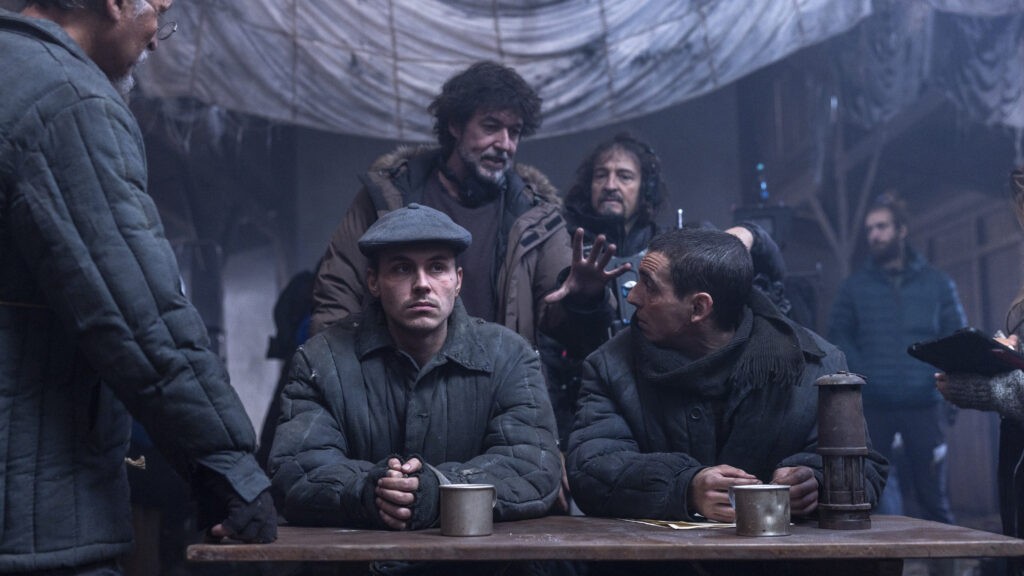
In the misty green heart of Bizkaia, where mountains rise like ancient sentinels and the air carries the scent of rain and earth, a remarkable filmmaking journey unfurled. This is where director Miguel Ángel Vivas Moreno, known for Money Heist (La Casa de Papel), Cicatriz, Desaparecidos, and Secuestrados, reconstructed one of the most haunting landscapes of the twentieth century: a Soviet gulag on the distant Kazakh steppe. His new film, La Tregua (The Truce), invites viewers into a story based on actual events that unfolded far from Spain, but holds deep ties to its history. It traces the ordeal of Spanish prisoners during World War II who fell into Soviet hands and were compelled to endure the harsh, frozen conditions of a labor camp. Their struggle becomes a bridge between past and present, between countries and cultures, and between two men who must learn to recognize each other beyond the uniforms that once made them enemies. [caption id="attachment_40358" align="aligncenter" width="2560"] All images courtesy of the production[/caption] The project is an unprecedented Spanish-Kazakh co-production from Spassk 99, AIE, Amanat Capital, LTD, and Umaifilm, LLP. This partnership gives the film a reach that feels genuinely cross-continental. It is a motion picture passport that opens a window onto a forgotten corner of global history. At the center of the story are Miguel Herrán and Arón Piper, who step into the roles of Reyes and Salgado. The characters appear as ideological enemies; having fought on opposing sides during the Spanish Civil War, both carry heavy psychological baggage. Inside the camp, their former certainties fall away. What begins as uneasy coexistence becomes an inward journey shaped by hunger, fear, and the starkness of their new reality. Executive producer César Benítez recalls searching for two actors capable of expressing both the physical exhaustion of imprisonment and the spark of hope that keeps a person standing. He says that the moment he saw Miguel and Arón together, he recognized that rare blend of fragility and fire. Miguel Ángel Vivas talked to TCA to break down the challenges and highlights behind the production. [caption id="attachment_40356" align="aligncenter" width="2560"] All images courtesy of the production[/caption] TCA: The story is fictional, but it is based on real events in Kazakhstan. Can you explain the historical context and how it inspired La Tregua? Miguel: The story begins with a documentary about Spaniards in the Soviet gulags. That’s where we discovered that republicans and fascists shared the same prison two years after the Spanish Civil War ended. It struck us as a fascinating starting point for a human story about the relationships that formed between them. [caption id="attachment_40357" align="aligncenter" width="2560"] All images courtesy of the production[/caption] TCA: The premise is intriguing: how two fighters on opposite sides of the Spanish Civil War end up in a gulag in Kazakhstan. In an increasingly polarized world, is there a lesson in the film to help heal the wounds that divide Spain, or even the world in general? Miguel: That was the idea! In such a...

How Vaccine Refusals Are Affecting Public Health in Kazakhstan

New data from analysts at Ranking.kz highlights a concerning trend: rising anti-vaccination sentiment in Kazakhstan is contributing to the resurgence of infectious diseases that could have been prevented through routine immunization. A Sharp Rise in Preventable Infections According to the National Statistics Bureau, the incidence of several vaccine-preventable diseases has spiked over the past five years. When comparing cases per 100,000 people between 2019 and 2024, whooping cough increased 19-fold, scarlet fever 5.4-fold, viral hepatitis 3.1-fold, and measles nearly doubled. These increases are also reflected in absolute numbers. The resurgence of measles is particularly striking. After a decline following the 2018-19 outbreak, the disease surged again in 2023, with cases jumping from just 4 to 29,700. Health officials described it as the largest outbreak in a decade, attributing the spike to imported infections and their spread among unvaccinated communities. While the situation showed little improvement by the end of 2024, 2025 brought some relief. According to Kazakhstan's chief sanitary doctor, Sarkhat Beisenova, 2,800 cases were recorded in the first ten months of the year. Notably, 80% of those infected were unvaccinated children, mostly due to parental refusal. Why Vaccine Refusals Are Increasing The number of vaccination refusals has been rising steadily in Kazakhstan. According to the Ministry of Health, there were 5,300 recorded refusals in 2017. By 2024, that figure had jumped to 20,700 and approached 20,000 again in 2025. A 2024 UNICEF study revealed that in 60% of cases, parents offered no specific reason for refusing vaccinations, citing only personal beliefs. Religious objections accounted for 12%, distrust of vaccines for another 12%, and 6% admitted they were influenced by negative rumors. Social media continues to fuel fear around “severe vaccine reactions,” “risks of complications,” and widely debunked myths, such as a link between vaccines and autism. In response, Kazakhstan’s National Center for Public Health has launched an informational portal to provide evidence-based explanations of vaccine safety and to refute common misinformation. Herd Immunity: A Collective Responsibility To effectively stop the spread of contagious diseases, a high level of immunization is critical. For measles, 95-97% of the population must be vaccinated; for polio, around 80%. According to the Committee for Sanitary and Epidemiological Control, Kazakhstan’s overall vaccine coverage stood at 95.3% in February 2025. International data supports Kazakhstan’s strong vaccination rates among infants. In 2024, more than 98% of children under one were vaccinated against polio, hepatitis B, whooping cough, diphtheria, and tetanus. Measles and rubella vaccinations reached 93%, and pneumococcus 90%, rates higher than the global, Asian, and European averages. Still, even a small unvaccinated population segment can trigger disease outbreaks. The World Health Organization classifies vaccine hesitancy as one of the top threats to global health. A landmark study by Australian epidemiologist Andrew Shattock, published in The Lancet, modeled a world without vaccines. Over the past 50 years, vaccines have prevented 154 million deaths, 146 million of them children under five. “In 2024, the probability that a child under 10 will live to see their next birthday is...

British-Kazakh Cultural Festival Returns to Burabay

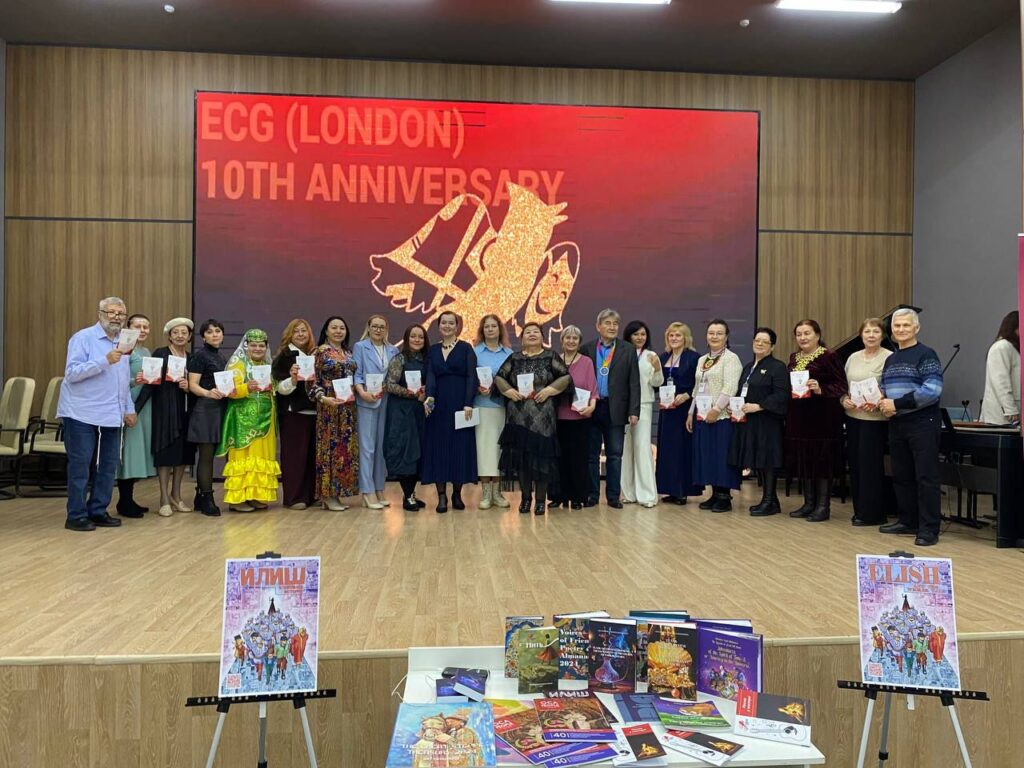
Burabay, a popular lake resort in northern Kazakhstan, has hosted the 10th edition of the 'Voices of Friends: Poetry & Art' festival, which ran from 29 November to 2 December. The annual gathering, arranged by the London-based Eurasian Creative Guild (ECG), has become one of Central Asia's events for cultural collaboration, bringing together writers, filmmakers, visual artists and musicians from 20 countries. This year’s programme continued the festival’s mix of literature and modern arts, with an emphasis for 2025 on emerging film talent, through the youth-focused Cinema Future festival and the Burabay International Short Film Festival (BISFF). According to filmmaker and BISFF jury member Timur Akhmedjanov, “Young filmmakers from different countries on one screen [means] the birth of a new generation of cinema.” Alongside film events, the festival featured book presentations from publishers Hertfordshire Press, discussions about art, performances by an international community choir, and creative workshops hosted at the ECG Horizons residency. Organisers emphasised that for the festival, collaboration is as important as presentation. “The festival grows like a living universe of ideas and emotions. Here everyone is a creator – and everyone feels that their voice matters,” said festival director and cultural projects author Taina Kaunis. During the event's closing ceremony, awards were presented to some figures shaping Eurasian culture, while the Eurasian Creative Guild announced a change in leadership ahead of its 2026 season. Founder Marat Akhmedjanov, originally from Uzbekistan but now residing in Scotland, highlighted the organisation’s international ethos, saying: “Creativity knows no borders. We speak dozens of languages, yet understand each other perfectly.” ECG vice-chair Saltanat Khamzeyeva called it “the beginning of a big story” for cultural development in Central Asia. The Guild underscores that the Burabay resort has become more than a picturesque location for a festival. Chair Francesca Mepham summed up its growing impact: “We see Eurasian creativity becoming a global voice – and this voice will only become stronger.”