• KGS/USD = 0.01144 0%
  • KZT/USD = 0.00216 0%
  • TJS/USD = 0.10456 0%
  • UZS/USD = 0.00008 0%
  • TMT/USD = 0.28571 0.28%
  • KGS/USD = 0.01144 0%
  • KZT/USD = 0.00216 0%
  • TJS/USD = 0.10456 0%
  • UZS/USD = 0.00008 0%
  • TMT/USD = 0.28571 0.28%
  • KGS/USD = 0.01144 0%
  • KZT/USD = 0.00216 0%
  • TJS/USD = 0.10456 0%
  • UZS/USD = 0.00008 0%
  • TMT/USD = 0.28571 0.28%
  • KGS/USD = 0.01144 0%
  • KZT/USD = 0.00216 0%
  • TJS/USD = 0.10456 0%
  • UZS/USD = 0.00008 0%
  • TMT/USD = 0.28571 0.28%
  • KGS/USD = 0.01144 0%
  • KZT/USD = 0.00216 0%
  • TJS/USD = 0.10456 0%
  • UZS/USD = 0.00008 0%
  • TMT/USD = 0.28571 0.28%
  • KGS/USD = 0.01144 0%
  • KZT/USD = 0.00216 0%
  • TJS/USD = 0.10456 0%
  • UZS/USD = 0.00008 0%
  • TMT/USD = 0.28571 0.28%
  • KGS/USD = 0.01144 0%
  • KZT/USD = 0.00216 0%
  • TJS/USD = 0.10456 0%
  • UZS/USD = 0.00008 0%
  • TMT/USD = 0.28571 0.28%
  • KGS/USD = 0.01144 0%
  • KZT/USD = 0.00216 0%
  • TJS/USD = 0.10456 0%
  • UZS/USD = 0.00008 0%
  • TMT/USD = 0.28571 0.28%

Viewing results 421 - 426 of 1292

Kyrgyz Security Chief Outlines Two Alleged Assassination Attempts on President

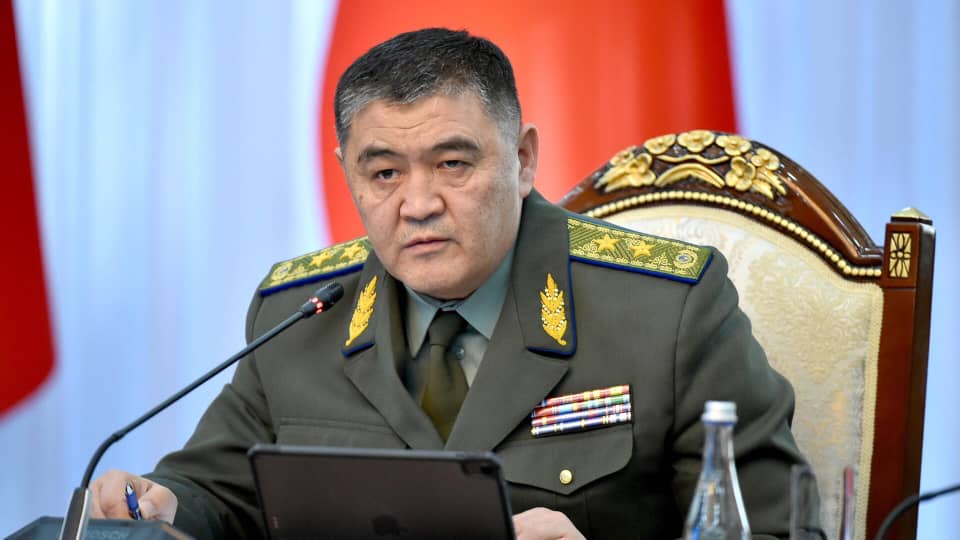
Kyrgyzstan’s State National Security Committee (GKNB) says it has prevented two assassination attempts on President Sadyr Japarov. This was reported by Kamchybek Tashiyev, Chairman of the GKNB, when speaking to journalists. Tashiyev also claimed that since taking up his post, five or six attempts on his life have been made. Tashiyev stressed that such attempts are regularly thwarted, and significant financial resources are allocated to this end. According to Tashiyev, one of the attempts involved the planned bombing of a road he was supposed to travel on. In addition, Tashiyev described repeated threats against him and his family, in particular a threatening letter he received, which, in his opinion, bore the hallmark of foreign special services and certain oligarchs. “The millions you offered, I did not take. You were angry that you would not be [able to operate] in our country, neither criminals nor oligarchs," Tashiyev stated. "Maybe you'll hurt me, but as long as I'm alive, I will not turn from the path I started.” Born on September 27, 1968, in Barpy, a village in Jalal-Abad Oblast, Kamchybek Tashiyev is a Kyrgyz was appointed as chairman of the  GKNB in October 2020, having previously served as Minister of Emergency Situations (2007–2009) and as a deputy of the Jogorku Kenesh. In 2022, he was awarded the title of Hero of the Kyrgyz Republic, and in 2024, he was elected President of the Kyrgyz Football Federation. Tashiyev is also the vice-president of the National Boxing Federation of Kyrgyzstan.

AI Facial Recognition System Being Tested in Two Cities in Kazakhstan

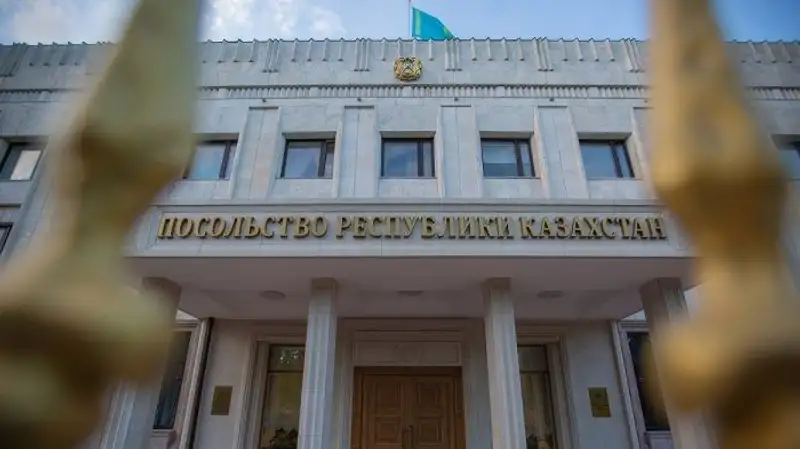
Kazakhstan has launched a national video monitoring system powered by artificial intelligence technologies. The project, developed by the Ministry of Internal Affairs, the National Security Committee, and the Ministry of Digital Development, Innovation, and Aerospace Industry, aims to enhance surveillance capabilities across key locations in the country. The system is designed to recognize faces, detect abandoned objects, capture offenses, and identify vehicles by make, model, and color. Critical sites such as railway stations, airports, hotels, streets, intersections, and shopping malls are priority areas for implementation. During the World Nomad Games in Astana, the technology was reportedly instrumental in locating lost children and missing persons. Authorities also noted that the system helped detain 46 wanted individuals in Astana and 30 in Almaty. Proponents argue that these technologies could contribute to improving public safety and reducing crime. Kazakhstan’s initiative follows a broader global trend of integrating AI into “smart city” systems, similar to developments in China, Russia, and some European countries. Officials say the system will be expanded with additional cameras nationwide to increase monitoring coverage. To date, more than 1.3 million video cameras have been installed in Kazakhstan, with 310,000 of them connected to operational control centers and police duty stations. Advocates of the system highlight its potential to deter crime and bolster public security, although concerns about privacy and misuse of surveillance technology have been raised internationally. Worldwide, AI video surveillance systems are being adopted to improve law enforcement and public safety. In China, they are used for facial recognition to track criminals and prevent offenses. Russia has integrated AI into its video systems to detect potential threats, while in the UK, intelligent cameras are used for crowd management and event security. While supporters emphasize the benefits of such systems in enabling faster responses to incidents and reducing crime, the deployment of AI in surveillance has sparked ongoing debates over privacy, civil liberties, and the potential for misuse.

Kazakhstan’s Ambassador: Kazakh Companies Do Not Want To Be Under Sanctions

Kazakh companies seek to avoid secondary sanctions, but the country will continue to cooperate closely with Russia. This was stated by Kazakhstan's Ambassador to Russia, Dauren Abayev, at a press conference in TASS news agency. According to him, about ten companies in the country have fallen under such sanctions, but these are isolated cases. “Kazakh companies, naturally, do not want to be under sanctions, as any restrictions have a negative impact on their activities,” Abayev emphasized. Nevertheless, he noted that strategic partnership and allied relations remain between Kazakhstan and Russia, and the growth of trade turnover confirms the continuation of cooperation. Earlier in August, Kazakhstan's Deputy Prime Minister Serik Zhumangarin said in an interview with Bloomberg that the republic would not blindly follow sanctions against Russia but would take into account international restrictions. He emphasized that Kazakhstan will not allow a ban on trade for its companies, but the country cannot completely ignore the sanctions because of the risk of economic isolation. Kazakhstan's Minister of National Economy Nurlan Baibazarov commented in early November on Kazakhstan companies being placed on the UK sanctions lists, saying that these violations are not systemic. He said the sanctions were mainly one-day firms, and the republic continues to comply with international restrictions.

Turkmenistan Unveils New English Textbook for 11th Grade Students

A new English language textbook for 11th-grade students has been introduced in Turkmenistan’s general education schools. According to the Ministry of Education of Turkmenistan, the textbook incorporates modern didactic principles and advanced teaching methods to enhance students' reading, writing, and speaking skills. It aligns with the national curriculum, providing students with improved opportunities to communicate effectively in English. The release of this textbook is part of Turkmenistan’s broader effort to modernize its education system. A key component of this effort is the Concept for Improving Foreign Language Education in Turkmenistan, a policy focused on integrating language learning at all educational stages. Drawing on both domestic and international best practices, the policy aims to elevate language instruction across the country. English language teaching in Turkmenistan has seen significant progress: • In January 2024, the first TESOL conference brought together 250 educators to exchange experiences and explore innovative teaching techniques. • In August 2024, the U.S. Embassy, in collaboration with the Ministry of Education, conducted workshops to enhance the professional skills of English teachers. • In November 2024, Turkmenistan and the UK held discussions on strengthening educational cooperation and improved educational services. Turkmenistan’s focus on advancing English language education reflects its commitment to integrating into the global educational framework and fostering international collaboration. These initiatives aim to equip students and educators with the tools needed to engage in a globalized world.

Kazakhstan to Begin Purchasing Electricity from Rogun HPP

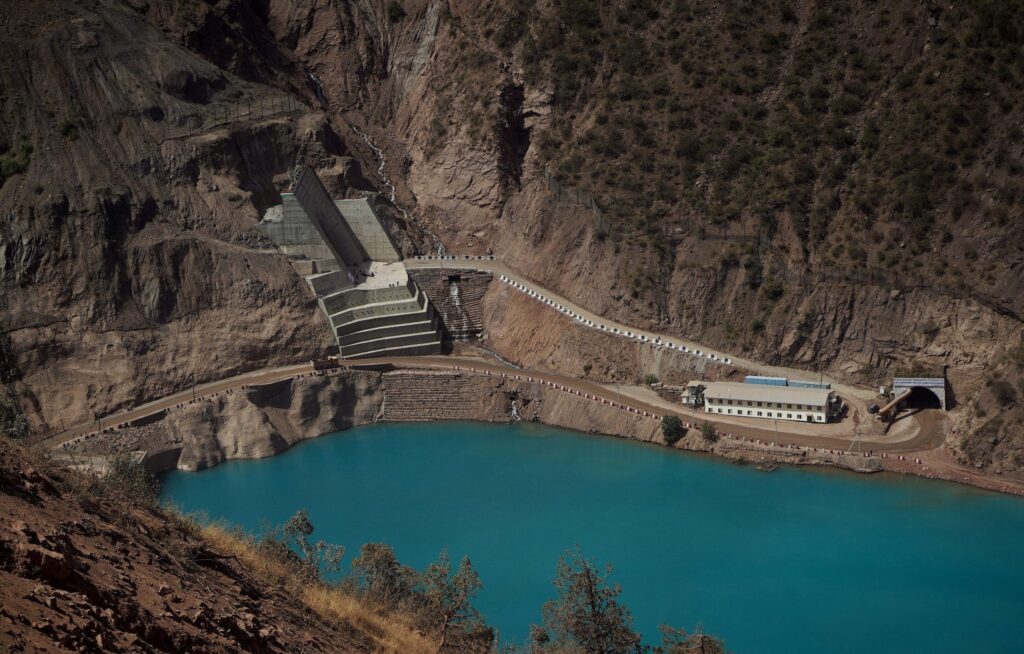
Kazakhstan has announced plans to purchase electricity from Tajikistan’s Rogun hydropower plant (HPP), a major facility currently under construction. According to a draft agreement published on Tajikistan's official legal information portal, the cooperation between the two countries is set to last for 20 years, with an option to extend for an additional 10 years. The price for the electricity is set at $0.034 per kilowatt-hour (excluding VAT), plus a transit surcharge determined by the seller’s costs. Payments are to be made within 35 days for each supply period. The supply will only occur during scheduled shortages and will be integrated into KEGOC’s national grid. Rogun HPP will handle transportation to the border, while the Settlement and Financial Center for Renewable Energy Support LLP will oversee control on the Kazakh side. Any disputes arising from the agreement will be resolved through the Singapore International Arbitration Center. Electricity agreements with Kazakhstan and Uzbekistan are a critical component for securing international financing for the Rogun HPP’s construction. Project costs have risen to $6.4 billion, according to recent estimates. To cover these costs, the Tajik government is negotiating semi-concessional loans worth $1.73 billion, $850 million in grants, and $390 million in concessional loans. The remainder will come from the government budget and revenues generated by the plant. This year, the Tajik government allocated 5 billion somoni (approximately $460 million) for the Rogun project, with 2.8 billion somoni coming from the state budget and 2.2 billion somoni from investment projects. By the end of September 2024, 4.3 billion somoni (about $395 million) had already been spent on construction. Once completed, Rogun HPP will become the largest hydropower facility in Central Asia, boasting a capacity of 3,600 MW and capable of producing up to 17 billion kWh of electricity annually. This output represents 65–85% of Tajikistan’s total electricity production. The plant will house six units of 600 MW each, with full commissioning expected by 2029. Currently, two units are operating at low capacity, having been commissioned in 2018 and 2019. The project serves as a landmark achievement for Tajikistan’s energy sector and a key driver of regional energy cooperation, promoting economic stability and resource-sharing throughout Central Asia.

Kyrgyzstan’s Largest Hydropower Plant Boosts Generating Capacity

On November 19, Kyrgyzstan launched the modernized hydroelectric generating unit No. 1 at the Toktogul Hydroelectric Power Plant (HPP), the country’s largest power facility. Located on the Naryn River, the Toktogul HPP generates approximately 40% of Kyrgyzstan’s electricity. The modernization of hydroelectric unit No. 1 began in March 2024 and has increased its generating capacity by 60 MW. Prior to this upgrade, the Toktogul HPP had a total capacity of 1,200 MW, with each of its four units producing 300 MW. Two units had already been upgraded in previous phases, collectively adding 120 MW to the plant's total capacity. The reconstruction of the fourth and final hydroelectric unit is scheduled for 2025. Once the modernization project is complete, Toktogul HPP will gain an additional 240 MW of generating capacity, extending its service life by 25–30 years. The $210 million rehabilitation project is funded by a $110 million loan from the Asian Development Bank (ADB) and $100 million from the Eurasian Fund for Stabilization and Development (EFSD). With a total volume of 19.5 billion cubic meters, the Toktogul HPP reservoir plays a dual role in meeting Kyrgyzstan's energy demands and providing essential irrigation water to Kazakhstan and Uzbekistan. During the winter, increased water releases are used to generate electricity for Kyrgyzstan, while summer releases support irrigation for southern Kazakhstan’s dry regions. As of November 19, 2024, the Toktogul reservoir contained 12.991 billion cubic meters of water, compared to 11.694 billion cubic meters on the same date in 2023. The reservoir currently receives 246 cubic meters of water per second and releases 488 cubic meters per second. Despite this year’s higher water levels, Kyrgyzstan continues to face electricity shortages, according to Energy Minister Taalaibek Ibrayev. Toktogul HPP's modernization and efficient management of water resources remain critical to addressing these challenges and ensuring regional energy and water security.