• KGS/USD = 0.01144 0%
  • KZT/USD = 0.00212 0%
  • TJS/USD = 0.10609 0.28%
  • UZS/USD = 0.00008 0%
  • TMT/USD = 0.28530 0%
  • KGS/USD = 0.01144 0%
  • KZT/USD = 0.00212 0%
  • TJS/USD = 0.10609 0.28%
  • UZS/USD = 0.00008 0%
  • TMT/USD = 0.28530 0%
  • KGS/USD = 0.01144 0%
  • KZT/USD = 0.00212 0%
  • TJS/USD = 0.10609 0.28%
  • UZS/USD = 0.00008 0%
  • TMT/USD = 0.28530 0%
  • KGS/USD = 0.01144 0%
  • KZT/USD = 0.00212 0%
  • TJS/USD = 0.10609 0.28%
  • UZS/USD = 0.00008 0%
  • TMT/USD = 0.28530 0%
  • KGS/USD = 0.01144 0%
  • KZT/USD = 0.00212 0%
  • TJS/USD = 0.10609 0.28%
  • UZS/USD = 0.00008 0%
  • TMT/USD = 0.28530 0%
  • KGS/USD = 0.01144 0%
  • KZT/USD = 0.00212 0%
  • TJS/USD = 0.10609 0.28%
  • UZS/USD = 0.00008 0%
  • TMT/USD = 0.28530 0%
  • KGS/USD = 0.01144 0%
  • KZT/USD = 0.00212 0%
  • TJS/USD = 0.10609 0.28%
  • UZS/USD = 0.00008 0%
  • TMT/USD = 0.28530 0%
  • KGS/USD = 0.01144 0%
  • KZT/USD = 0.00212 0%
  • TJS/USD = 0.10609 0.28%
  • UZS/USD = 0.00008 0%
  • TMT/USD = 0.28530 0%

Viewing results 25 - 30 of 468

Opinion: Gas, Geopolitics, and Realism: U.S.–Turkmenistan Talks Signal Shift

U.S. Secretary of State Marco Rubio and his Turkmen counterpart Rashid Meredov wrapped up bilateral consultations last week in Washington, DC. The encounter suggested a new awareness on Washington’s part of Turkmenistan’s pivotal geostrategic location in the heart of Central Asia and its status as a major hub of natural resources. Since becoming head of state in March 2022, Turkmenistan’s President Serdar Berdimuhamedov has shifted his country’s foreign policy from one of strategic isolation to what might be called practical realism, whereby priority is given to fair trade and investments that are in line with national interests and long-term development. Like the other Central Asian heads of state, Berdimuhamedov also champions a pragmatic, interest-based foreign policy. Consequently, they find the current, pragmatic U.S. administration with its concern to work out deals (presumably mutually beneficial ones) more congenial than its predecessor, with its penchant for geostrategic maneuvering and ideology. Secretary Rubio recently observed: “A mature foreign policy requires a balancing of interests - that’s a fact.” This way of thinking goes over well in smaller independent states such as Turkmenistan and other Central Asian countries, whose key national priorities include establishing their statehood on a firm basis and safeguarding their sovereignty amid the turbulent great power politics being played out in their vicinity. Oil and Gas Over the years, Berdimuhamedov has insisted that foreign entities seeking access to the country’s vast natural gas reserves must play by Ashgabat’s rules. Home to the world’s fourth-largest gas reserves, Turkmenistan invites foreign participation in its energy sector, provided that agreements are structured as win-win arrangements and don’t give suitors the geostrategic upper hand. In this context, it would make sense for Washington to get the word out about two upcoming conferences in Ashgabat: The Turkmenistan Investment Forum, September 18– 19, 2025, which will serve to attract long-term investment into the country's economy, and the 30th Oil & Gas of Turkmenistan – 2025 International Conference & EXPO (OGT 2025) on 22–24 October. Turkmenistan had a strong 2024 in terms of energy, producing 77.6 billion cubic meters of natural gas and 8.3 million tons of oil. The OGT 2025  will showcase the country’s resource potential and new investment opportunities, focusing on upstream projects such as the Galkynysh gas field and the Caspian blocks, as well as on initiatives in the areas of renewable energy, methane mitigation, and infrastructure modernization. Moreover, Ashgabat wants to expand its Trans-Caspian and north-south economic corridors and complete the Turkmenistan-Afghanistan-Pakistan-India (TAPI) gas pipeline, among other initiatives in transport and logistics. U.S. companies may want to explore these new opportunities. Travel Limitations to the U.S. Ashgabat is working with the U.S. Department of State to lift recently imposed restrictions on Turkmen citizens wishing to travel to the U.S. Both sides are aiming to ensure that applicants are properly screened before a visa is granted and that recipients comply with its terms. To further deepen ties, Washington should view Turkmenistan’s neutrality towards others on the global stage in security and foreign-policy matters not as an obstacle, but as an advantage that facilitates dialogue. While maintaining its advocacy for democratic principles,...

Insider’s View: From Reform to Rights – Strengthening Uzbekistan’s Legal Foundations

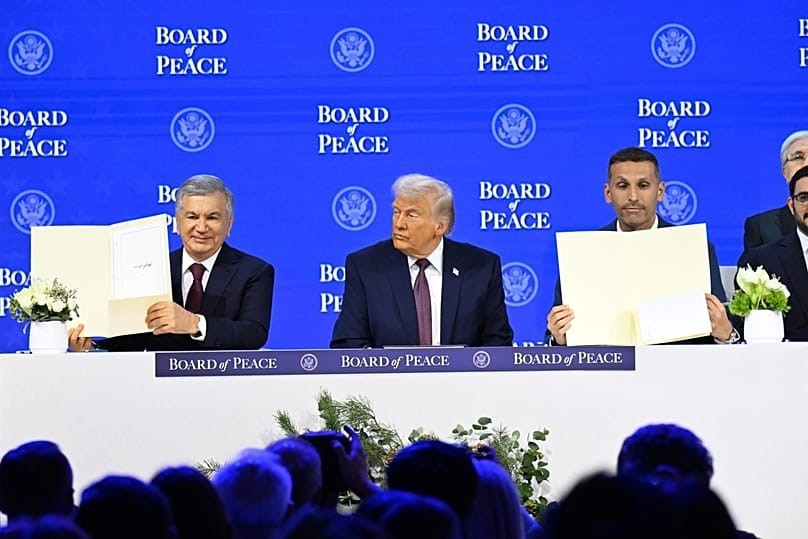
New Uzbekistan is pressing ahead with democratic reforms while pursuing a pragmatic foreign policy, deepening dialogue with the international community, and rolling out reforms that reinforce guarantees for human rights and fundamental freedoms. Within the framework of the Uzbekistan–2030 Strategy - now paired with the State Program, “Year of Environmental Protection and the Green Economy” – the authorities are upgrading legal safeguards and institutional mechanisms aimed at protecting citizens’ rights. As President Shavkat Mirziyoyev stated, “The dreams and aspirations of our people, shaped over centuries through diverse ideas and practical endeavors, are today embodied in the concept of New Uzbekistan.” That vision has coincided with rapid socioeconomic change: GDP has topped $110 billion; preschool enrollment has risen sharply since 2017; higher-education participation has climbed from about 9% in 2017 to roughly 42%; and elite public schools - creative, specialized, and presidential - have taken root. Uzbek athletes placed among the top national teams at recent global competitions, and football milestones at both the youth and senior levels have broadened the country’s international profile. Together, these gains bolster Uzbekistan’s status as a sovereign, democratic, legal, social, and secular state, and as a more reliable partner on the global stage. The Pragmatic Diplomacy of New Uzbekistan Against a backdrop of armed conflicts, environmental emergencies, trade frictions, and evolving security threats, Uzbekistan has worked to strengthen peace and regional stability while educating its youth in the spirit of both national and universal values. In recent years, high-level outreach has rebuilt trust with neighbors and helped popularize concepts such as a “Central Asian spirit” and “Central Asian identity.” The March unveiling of a Friendship Stele at the junction of the Uzbekistan–Kyrgyzstan–Tajikistan borders symbolized this thaw, while cooperation on transit, water and energy exchanges, and security has become more predictable. A “New Central Asia” is taking shape as a unified transport and logistics space. Mutual trade volumes in the region have multiplied, investment flows have increased, and cross-border ventures have expanded. Major projects—from the China–Kyrgyzstan–Uzbekistan railway to rising cargo across the Uzbekistan–Turkmenistan–Iran–Türkiye corridor—are laying the ground for a trans-continental transit hub. At the same time, Uzbekistan’s convening role has grown. In April 2025, Samarkand hosted the first EU–Central Asia Summit, chaired by President Mirziyoyev and attended by EU leaders and all five Central Asian presidents - an event that elevated ties to a strategic partnership and set a broader agenda on connectivity, critical raw materials, energy, and digital links. Environmental diplomacy has also moved up the agenda. The Samarkand Climate Forum gathered UN deputy secretary generals, heads of major environmental organizations, and experts from dozens of countries, signaling a step-change in the region’s engagement on ecology, desertification, and resilience. The Parliamentary Dimension of New Uzbekistan Tashkent’s rising parliamentary diplomacy culminated in the 150th Inter-Parliamentary Union (IPU) Assembly, held between 5–9 April 2025 - the first of its kind in Central Asia – which brought together some 2,000 parliamentarians from more than 140 countries, plus over 20 international organizations. The proceedings, themed “Parliamentary Action for Social...

Opinion: Washington Meeting and the Shifting Geopolitics of the Caspian

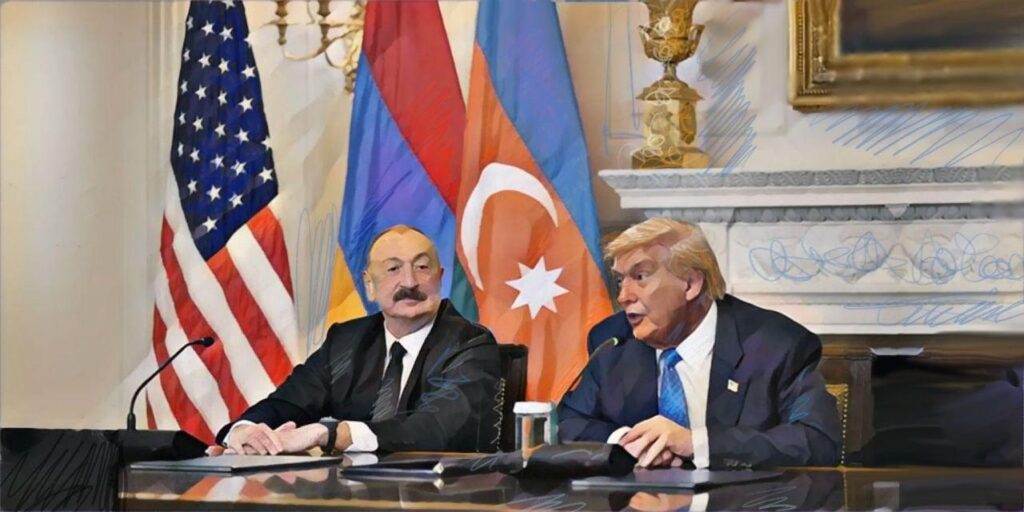
The Washington meeting between Armenia and Azerbaijan, hosted by President Donald Trump on August 8, 2025, may go down as a pivotal moment in the geopolitics of the Caspian and the wider Eurasian space. While on the surface the talks aimed to normalize relations between the two South Caucasus neighbors, the ripple effects extend far beyond bilateral reconciliation. For Azerbaijan, the meeting is not only about ending three decades of conflict with Armenia but also about positioning itself as a central bridge linking the Caspian Basin, Central Asia, and even Europe. The Caspian region has always been a security crossroads, where energy interests, military presence, and trade routes overlap. Russia’s war in Ukraine, the Iran-Israel conflict, and shifting Western engagement have made the region more volatile. In this context, a potential Armenia-Azerbaijan settlement offers a chance to stabilize the South Caucasus - the natural gateway between the Caspian and Europe. For Azerbaijan, peace with Armenia would solidify its position in the region where Baku has promoted several important transregional projects such as the Baku-Tbilisi-Ceyhan oil pipeline, the Southern Gas Corridor, and the Baku-Tbilisi-Kars railway. Azerbaijan is heavily investing in the development of the Caspian trade routes, energy infrastructure, and regional connectivity projects such as the Middle Corridor. Stability in the South Caucasus also makes it harder for external actors to exploit divisions - an especially significant factor given the previous attempt to exploit Armenia against Azerbaijan and Türkiye. That strategy brought no tangible results to Armenia, which remained regionally isolated and dependent on Russia. After the military defeats in 2020 and 2023, the Armenian leadership realized that peace and respect for the principle of territorial integrity is a much greater opportunity for the country rather than an irredentist project, which Prime Minister Nikol Pashinyan dubbed “mythical.” At the same time, a peace framework reduces the risk of military escalation spilling into the Caspian region. Naval modernization efforts by Russia and Iran in recent years have heightened anxieties. In short, normalization indirectly enhances Azerbaijan’s capacity to act as a stabilizing actor within the Caspian basin. Increasingly, Iran has also spoken about peace and cooperation, especially with Azerbaijan. Relations were tense a few years ago, but the incumbent President, Masud Pezeshkian, questioned the strategy employed previously by the Iranian clerics regarding Azerbaijan, which failed to gain any benefits. Perhaps the most significant geopolitical dividend for Azerbaijan lies eastward, across the Caspian. The Central Asian states - Kazakhstan, Uzbekistan, Turkmenistan, Kyrgyzstan, and Tajikistan - have long sought secure, diversified links to Europe. Russia’s war has made northern routes through its territory unreliable, while instability in the Red Sea undermines the traditional supply route. That leaves the Trans-Caspian link through Azerbaijan as promising. The Washington meeting, by promoting the peace agenda, reassures Central Asian partners that Baku is a reliable hub. Azerbaijan, Kazakhstan, and Uzbekistan signed an MOU about the transfer of alternative energy sources to Europe through another potential project – a Black Sea electricity cable from Georgia to Romania and Hungary. Azerbaijan...

Opinion: Over the Past Eight Years, New Uzbekistan Has Absorbed Over $113 Billion in Foreign Investments

On the eve of the 34th anniversary of our country’s independence, the Executive Board of the International Monetary Fund finalized the 2025 consultations under Article IV of the IMF Agreement. The Fund’s main conclusion is that Uzbekistan’s economic outlook remains positive amid continued progress in the transition to a market economy. According to the published document, headline indicators are strong, including sustained growth, a reduced consolidated budget deficit, a narrower current account deficit, and an adequate level of international reserves. IMF staff note that the successful implementation of structural reforms supports a favorable baseline. Despite a high degree of uncertainty in global trade policy, the IMF projects real GDP growth will remain robust in the coming years. These trends reflect greater economic openness, ongoing industrialization, active investment policy, and measures designed to build the export potential of promising industries. The reform package - and the decisions already put into effect - aligns with available domestic resources and reserves, supporting long-term, sustainable development across the country and its regions. The commitment to irreversible market transformation allows Uzbekistan to combine targeted state support with space for private entrepreneurial initiative on the path to building a “New Uzbekistan.” In recent years, rising openness and growing investor confidence have driven a steady increase in capital formation. From 2017 to 2024, total foreign investment exceeded $113 billion, more than 80% of which comprised foreign direct investment and loans. Financing activity has been particularly strong in leading industries and the fuel and energy complex, accelerating industrialization in virtually every region. Deepening investment links with China, Russia, Germany, Turkey, Saudi Arabia, the Netherlands, the United States, the United Kingdom, and others is bringing advanced technologies and expertise, modern management practices, expanded localization, and stronger export capacity to priority sectors and regions. These resources are primarily directed to technological upgrades and modernization of existing facilities, as well as the creation of new production sites. Over the past eight years, investment programs have launched more than 96,000 projects worth about $100 billion, creating 1.8 million jobs. In 2024 alone, the value of commissioned projects was nearly eight times higher than in 2017, while the number of jobs increased by 2.6 times. Active involvement by the Head of State has been pivotal. Since the start of this year, visits and high-level events have produced 366 investment agreements totaling $75 billion. Roadmaps have also been approved for 222 projects worth about $45 billion. At the IV Tashkent International Investment Forum held in June, agreements were reached on investments exceeding $30 billion for 144 joint projects. In April 2025, on the sidelines of the 5th International Industrial Exhibition “INNOPROM. Central Asia” in Tashkent, 43 additional investment agreements were signed, with plans to attract a further $1 billion to the industrial sector. Uzbekistan has also intensified outreach to the international community about project opportunities. This year, Investors’ Day events took place in 13 foreign countries, drawing representatives of 700 well-known companies. More than 200 investment projects worth $6 billion were presented to potential...

Opinion: Why Russia May Stop Oil Supplies via the CPC

The global confrontation between the West and East could, quite literally, devastate the economies of Central Asian countries in the near future. Some experts argue that the position Kazakhstan and its regional neighbors now occupy, four years into the war between Russia and Ukraine, has spiraled beyond anyone’s control. The disruption began with Ukrainian drone strikes on Russian infrastructure used by the Caspian Pipeline Consortium (CPC), which indirectly impacted oil flows from Kazakhstan to Europe. On August 2, several media outlets, citing sources within the Ukrainian military, reported an attack on the Central Asia-Center (SAC) gas pipeline running through Kazakhstan. The attack allegedly caused an indefinite halt in gas deliveries that Russia had been sending in reverse flow to Uzbekistan. Kazakhstan also uses this gas domestically. Shortly after, the energy ministries of both Uzbekistan and Kazakhstan denied reports of any damage to the pipeline. Nonetheless, Ukraine’s classification of the SAC pipeline as a legitimate target remains on record. Notably, although Kazakhstan’s Foreign Ministry has issued a formal protest to Kyiv over the CPC attacks, it has yet to reveal any official response from the Ukrainian side. Kazakhstan thus finds itself in an extremely vulnerable position: its national budget is heavily dependent on oil exports, while its southern infrastructure increasingly relies on imported gas. For example, the planned conversion of Almaty’s TPP-2 to gas is unfeasible without stable fuel supplies. In other words, Kazakhstan has become fully dependent on developments in the Russian-Ukrainian war. Compounding the geopolitical tension, U.S. President Donald Trump has pursued an aggressive and often unpredictable foreign policy approach. He has threatened sanctions against Russia’s economic partners if they continue buying oil from President Vladimir Putin. This pressure is primarily directed at China and India, both of which have already signaled they do not intend to comply with Trump’s ultimatum. In response, Russia may adopt symmetrical countermeasures targeting American companies, specifically, by halting oil flows via the CPC. That’s the view of JPMorgan analysts, who suggest that such a move could drive global oil prices up to $80 per barrel. This would benefit Russia but would deal a serious blow to Kazakhstan, which relies on CPC to export up to a million barrels of oil per day. Unfortunately, Kazakhstan lacks viable alternatives. The Baku-Tbilisi-Ceyhan (BTC) pipeline, often cited as a backup route, depends heavily on Caspian Sea shipping, which is increasingly hindered by shallow waters. Heavier oil barges dispatched from Aktau to Baku risk running aground. As a result, Kazakhstan's oil volume transported via BTC is expected to increase by only 300,000 tons this year, from 1.4 to 1.7 million tons. It's worth noting that CPC exports oil produced by American firms Exxon and Chevron, the British company Shell, Italy's ENI, and France’s TotalEnergies. These are the very firms Russia could target in retaliation. As Trump’s statements deepen the appearance of a Russia-versus-West conflict, energy infrastructure could increasingly become a battlefield. Hints of Moscow’s readiness to act have already emerged. In mid-July, President Putin signed a decree mandating...

Opinion: Ghosts of the Gulag – A View From the Ground

Recently, The Times of Central Asia published an article titled Ghosts of the Gulag: Kazakhstan’s Uneasy Dance With Memory and Moscow. While it is essential to consider outside opinions, it is equally important to articulate how this perspective looks from within. In Kazakhstan, there are three large museums dedicated to the memory of the victims of the communist regime. These are the infamous ALZHIR (Akmolinsk Camp for Wives of Traitors to the Motherland), the museum dedicated to the memory of victims of political repression, KARLAG (Karaganda camp), and a smaller memorial complex to the victims of political repression at Zhanalyk, located about 40 kilometers from Almaty. Historians believe that around 2,500 people are buried there, including prominent members of the Kazakh intelligentsia, such as Akhmet Baitursynov, Mukhamedzhan Tynishpaev, Saken Seifullin, Ilyas Jansugurov, and Beimbet Maily. In addition to these museums, there are monuments to the victims of political repression and the famine of the 1920s–30s in many cities across the country. But it's not just about the number of museums and monuments. What matters most is that the memory of these events is preserved, and it is being carefully studied. In 2020, a state commission for the full rehabilitation of victims of political repression was established by the government. Over several years, 425 scholars, researchers, and experts have participated in its work. More than 2.6 million documents and materials have been declassified. Most importantly, this commission has rehabilitated more than 311,000 victims of political repression within the framework of existing legislation. The results of this work are documented in 72 volumes. There are no sections in these research materials divided by nationality. The approach is the same for everyone: justice and fairness for all. This calls into question the “collective amnesia that obstructs historical reckoning” referred to by Guillaume Tiberghien, a specialist in dark tourism at the University of Glasgow. Regarding any "emphasis on what the prison system ‘contributed’ to the nation” mentioned by Margaret Comer, a memory studies expert at the University of Warsaw, there are conflicts of interest and truths people would rather not face. One of the main purposes of Karlag was to serve as a major base of food supplies for Kazakhstan’s growing coal and metallurgical industries. In addition to industrial development, by 1941 the camp had 70 sheep farms, 45 cattle farms, one horse farm, and two pig farms. By 1950, 4,698 people worked on these farms, including 13 academic scientists. The communist system of corrective labor camps was an integral part of economic development, achieved through what was essentially slave labor. This is the full cynicism of the regime on display: prisoners were expected to “work off” their guilt. “The country is walking a tightrope,” Tiberghien suggests, pointing to President Tokayev’s speech on May 31, the official Day of Remembrance for Victims of Political Repression. “It wants to keep things calm, to avoid upsetting Russia.” In this speech, while calling for the rehabilitation of victims and greater access to archives, Tokayev also condemned the...