• KZT/USD = 0.00214
  • TJS/USD = 0.10810
  • UZS/USD = 0.00008
  • TMT/USD = 0.29850
  • KZT/USD = 0.00214
  • TJS/USD = 0.10810
  • UZS/USD = 0.00008
  • TMT/USD = 0.29850
  • KZT/USD = 0.00214
  • TJS/USD = 0.10810
  • UZS/USD = 0.00008
  • TMT/USD = 0.29850
  • KZT/USD = 0.00214
  • TJS/USD = 0.10810
  • UZS/USD = 0.00008
  • TMT/USD = 0.29850
  • KZT/USD = 0.00214
  • TJS/USD = 0.10810
  • UZS/USD = 0.00008
  • TMT/USD = 0.29850
  • KZT/USD = 0.00214
  • TJS/USD = 0.10810
  • UZS/USD = 0.00008
  • TMT/USD = 0.29850
  • KZT/USD = 0.00214
  • TJS/USD = 0.10810
  • UZS/USD = 0.00008
  • TMT/USD = 0.29850
  • KZT/USD = 0.00214
  • TJS/USD = 0.10810
  • UZS/USD = 0.00008
  • TMT/USD = 0.29850

Viewing results 31 - 36 of 437

Opinion: Tokayev’s National Kurultai Address: A Moral Message, Not a Political One

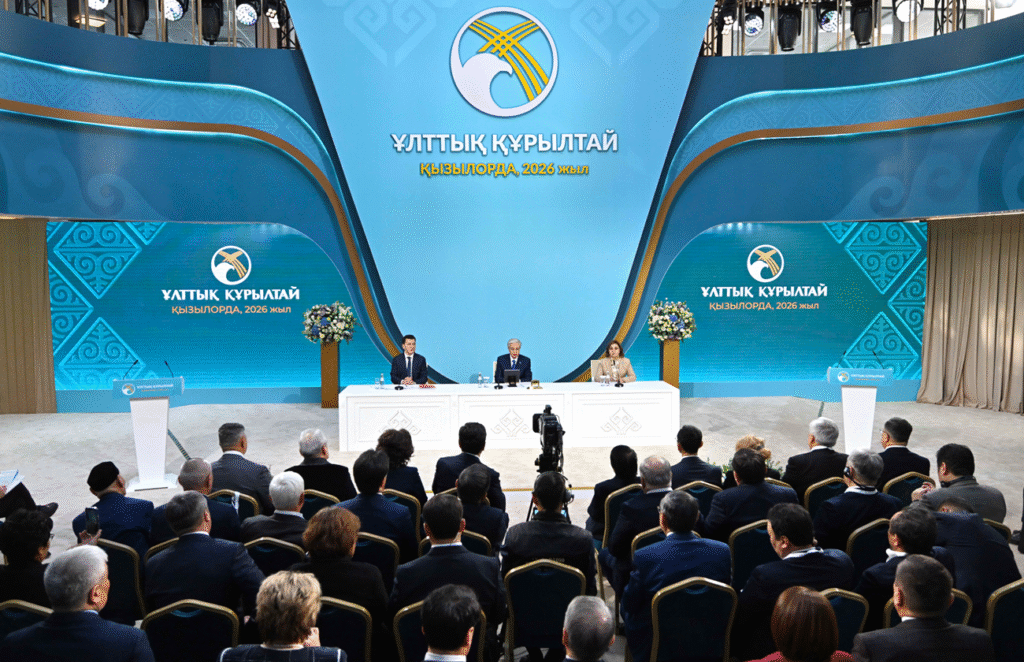
On January 20, 2026, Kassym-Jomart Tokayev, the President of Kazakhstan, addressed the nation at a session of the National Kurultai, an age-old platform for public dialogue, akin to a wise men’s council – at any rate, that’s how it’s often billed. To no one’s surprise, Tokayev pressed ahead with his stated agenda of political reform, highlighting foreign, economic, and development policies and goals. While not devoid of interest, those parts of the speech felt like little more than window dressing that tended to obscure the address’s underlying fire and true import. Tokayev’s oration seemed at points to echo Alexis de Tocqueville’s ideas in Democracy in America: nations endure only when citizens pair civic participation with moral virtue and personal responsibility, because unchecked individualism ultimately weakens free societies and institutions, regardless of the presence of law and order. On closer examination, Tokayev’s thinking reflects Tocqueville’s view that building democracy is hard but doable. As Tocqueville wrote: “nothing is more wonderful than the art of being free, but nothing is harder to learn how to use than freedom,” pointing towards the belief that nation-building depends on freedom bound to virtue. Tokayev’s Kurultai message went far beyond a list of technical fixes, platitudes about the economy, and empty cheerleading. Nor did it read as a sleight of hand or bait-and-switch tactic to preserve power in the face of a failing democracy. Those familiar with Tokayev know he has called for Tocquevillian-like responsible citizenship for years, which, to be sure, requires at times tough love. Tokayev drove home a familiar theme, that the nation’s fate rests on the character and outlook of its people—not just on its economy, wealth, and politics. He maintained that traditional values present the vital adhesive of society, without which, every effort at statecraft withers—or worse, becomes easy prey to unsavory ambitions or certain secular ideologies which have taken on religious force in modern culture. At the heart of Kazakhstan’s future, Tokayev thinks, there must lie a commitment to enduring human principles and timeless truths: unity, selflessness, sharing, mutual understanding, patience, compromise, and common sense. These values are not solely theoretical constructs but qualities evident for successful outcomes. They positively shape family formation, social relations, conflict resolution, and citizens’ engagement with the state and outsiders. What’s more, economic and institutional strength is only possible when built upon a society united by common values, clarity of purpose, and a spirit of service. Transforming Public Consciousness President Tokayev stressed that changing minds matters more than changing laws and hollow pep talks. Without a common moral compass, nation-building is fragile. Strong cultural and spiritual roots foster social cohesion, building trust, identity, and civic duty. Towards this end, he urged the older generation “to promote the values of work and enterprise, and wean young people from verbosity, glorification, laziness, indifference, and idleness.” Tokayev’s strategy for consolidating national consciousness focuses on two core investments: on advancing cultural infrastructure (museums, theatres, libraries) and creative capital, thereby recharging towns and schools as sites of learning, dialogue, and shared...

Opinion: Central Asia–Japan Summit Signals Shift in Eurasian Geoeconomics — and Russia’s Waning Role

In December 2025, Tokyo hosted the first leaders-level Central Asia + Japan summit — a watershed moment for Eurasian diplomacy that quietly reshapes the region’s strategic architecture. The declaration adopted at the summit lays out a clear economic-geostrategic vision: Japan is no longer a peripheral partner, but a central engine of multi-vector engagement with Central Asia. In the process, it exposes a growing gap in Russia’s regional influence — not because of rhetoric, but because of substance. Japan’s Agenda: Economy, Connectivity, Human Capital The Tokyo Declaration pivots on three pragmatic pillars that align tightly with Central Asian development priorities: Green growth and sustainability - decarbonization, energy security, and climate resilience; Connectivity - transport, logistics, customs facilitation, and digital corridors; Human resource development - education, training, exchanges, and technology transfer. This is not diplomatic abstraction. It reflects Japan’s long-term model of engagement: concessional finance, technology cooperation, and capacity building rather than quick geopolitical wins. In practical terms, there is now a numerical investment target - a combined public-private cooperation envelope of three trillion yen (approximately $20 billion) over five years -marking a shift from consultative dialogue to project delivery at scale. Importantly, the summit also reinforced cooperation in emerging domains such as artificial intelligence, digital transformation, and resilient supply chains - areas where Central Asia aims to leap ahead rather than merely catch up. This underscores how cooperation is being framed: not as charity, but as co-production of future-oriented infrastructure and capabilities. The significance of the summit lies not only in the declaration itself, but in the trajectory it has set for Japan–Central Asia engagement in the months ahead. What This Means for Russia: Substance Trumps Symbolism At first glance, Russia’s absence from explicit mention in the declaration may seem benign; after all, engagement with external partners often requires diplomatic balance. Yet silence in this case is meaningful. For decades, Russia’s influence in Central Asia was rooted in security ties, historical institutions, and energy networks. These were powerful structural levers in the twentieth century, but they are increasingly less relevant in an era defined by diversified markets and technological competition. The Tokyo summit highlights several structural realities: Russia does not offer a comparable economic agenda, particularly in green technologies, digital infrastructure, or human capital development. Russia’s model remains reactive, centered on existing corridors and legacy links rather than on new corridors of integration connecting Central Asia with Asian and European value chains. Russia is overweighted in traditional domains such as security and media presence, yet underweighted in economic agency suited to the twenty-first century. By contrast, Japan’s approach addresses precisely the gaps Central Asian states prioritize: employment, logistics, energy transition, and technological self-sufficiency. Even more strikingly, this shift is occurring without anti-Russian rhetoric. The summit was framed as an exercise in cooperation and development, not rivalry. Nevertheless, the outcomes effectively relegate Russia to the background — a clear indicator of the structural erosion of Moscow’s regional primacy. Multi-Vector Policy in Practice: Central Asia’s Agency For Central Asian states, the Tokyo summit...

Opinion: Iranian Unrest Creates Opening for U.S., Partners in Central Asia

As protests in Iran enter their third week, nationwide unrest is exerting political strain and societal pressure on the Islamic Republic. The nation’s current escalation reflects a level of sustained mobilization comparable to Iranian demonstrations that erupted in 2022 following the death of Mahsa Amini. While the outcome of these developments remains uncertain, ongoing unrest in Iran is more likely to impact Central Asia’s existing energy, transit, and security dynamics, rather than alter the broader regional landscape. This moment nonetheless offers the United States and its partners a strategic opportunity to advance long-term objectives in Central Asia while supporting regional resilience at a time when geopolitical alignments are rapidly shifting. Combined with ongoing disruptions caused by Russia’s War in Ukraine, the recent protests in Iran may create a heightened sense of uncertainty or risk perceptions in global energy markets. In particular, the current Iranian unrest may raise concerns regarding potential oil supply disruptions and broader geopolitical tensions. For neighboring producers like Kazakhstan, which maintains an oil-dependent economy, this elevated volatility could translate into higher revenues from existing exports. Increased fiscal flexibility from rising oil revenues may therefore provide Astana with the opportunity to expand its scope for economic cooperation with Western partners. The United States, which maintains long-standing bilateral energy ties with Kazakhstan, could draw on these existing partnerships to deepen its bilateral energy and technical ties. Beyond its impact on energy markets, ongoing instability in Iran may also affect regional connectivity initiatives. For example, disruptions could emerge along the International North-South Transport Corridor (INSTC), a multimodal network connecting India, Iran, and Russia, with branches that involve the Caspian and Central Asia. Although the Kazakhstan-Turkmenistan-Iran railway sits along this route and facilitates the transport of energy resources and critical minerals across the region, the corridor currently plays a more limited role in regional transit across Central Asia. This route nonetheless remains of interest to Central Asia because it offers the region an opportunity to enhance long-term economic diversification through access to new markets in the Persian Gulf. Minor disruptions could therefore underscore the corridor’s growing geopolitical value as a connector for trade and energy transport across multiple countries and regions. This context creates a strategic opening for the United States and its partners to contribute to the region’s long-term trade and connectivity landscape. By supporting Central Asian nations in reducing reliance on Iranian transit, the United States can accelerate investment in alternative routes like the Middle Corridor that bypass both Russia and Iran. During an investors' forum in Tashkent late last year, Europe announced it would increase its investment in the Middle Corridor. However, the United States continues to remain on the periphery of this project. By collaborating with European partners to enhance infrastructure along this route during a critical time, the United States can help Central Asian nations position the Middle Corridor as the region’s most resilient and viable alternative for trade and exports. This would ultimately advance shared interests by enhancing Central Asia’s connectivity and facilitating greater U.S....

Opinion: Prospects for Central Asia’s Access to Persian Gulf Infrastructure

The agreement signed on December 8, 2025, between Saudi Arabia and Qatar to construct a high-speed railway linking Riyadh and Doha marks a pivotal development in transport connectivity across the Persian Gulf. Beyond its bilateral implications, the project could have broader consequences for transregional logistics, particularly for Central Asia and Kazakhstan. The 785-km railway will pass through key cities in Saudi Arabia’s Eastern Province, including Dammam and Al-Hufuf, and will connect King Salman and Hamad International Airports. Trains are expected to reach speeds exceeding 300 km/h, reducing travel time between the two capitals to approximately two hours. The six-year project is projected by officials to boost the combined GDP of both countries by around $30 billion and create up to 30,000 jobs. The Gulf Railway and New Regional Connectivity The Riyadh-Doha line is a central element of the Gulf Railway initiative, which is seeking to establish a unified railway network among Gulf Cooperation Council (GCC) member states, Saudi Arabia, Qatar, the UAE, Bahrain, Kuwait, and Oman, with a target date of around 2030. Originally envisioned primarily as a freight system, the Gulf Railway is increasingly incorporating high-speed passenger services alongside freight, reflecting the region’s push for greater internal integration and reduced dependence on air travel. The Riyadh-Doha segment forms a vital axis between the Gulf’s political and financial hubs and is expected to link with Saudi, Emirati, and Omani infrastructure, laying the groundwork for a more integrated regional transport system. Beyond the Peninsula While the Gulf Railway’s scope is geographically confined to the Arabian Peninsula, meaningful integration with Eurasia would require additional connectivity, particularly via land and multimodal routes through Iran, Turkey, and the Caspian region. Among these, the overland corridor through Iran is especially significant, though constrained by sanctions, financing risks, and political uncertainty. Kazakhstan-Turkmenistan-Iran Corridor Unlike many conceptual infrastructure proposals, the Kazakhstan-Turkmenistan-Iran railway, operational since 2014, is already a functioning freight corridor. It provides Central Asian nations with direct access to Persian Gulf ports and Middle Eastern markets. For Kazakhstan, the route offers strategic diversification away from traditional corridors. While no formal plans exist to link GCC rail infrastructure directly with Central Asia, the emergence of high-capacity Gulf rail corridors reshapes the long-term connectivity landscape. A future interface could allow Astana overland access to Gulf markets, while enabling reciprocal flows from the Gulf into Central Asia, China, and Europe. President Kassym-Jomart Tokayev has previously described Iran as a “gateway” to Southeast Asia and Africa. Kazakhstan has also outlined plans to establish its own logistics terminal in the Iranian port of Shahid Rajai in Bandar Abbas, further enhancing its position in Gulf-Eurasia trade flows. Iran’s Evolving Role Historically, Iran’s role as a transit state has been hampered by international sanctions and regional tensions. However, the 2023 normalization of relations between Saudi Arabia and Iran, brokered by China, has altered the regional calculus. Although still fragile, this diplomatic thaw improves prospects for long-term infrastructure projects involving Iran as a critical transit link between the Persian Gulf and Eurasia. Alternatives and Their...

Opinion: Is Uzbekistan Importing a Future Crisis?

Once hidden from the view of international investors, Uzbekistan is rapidly rewriting its economic narrative. Over the past eight years, the nation attracted over $113 billion in foreign investment, drawing financial firms and mutual funds eager to seize the momentum of Tashkent’s trade liberalization and its ambition to double GDP by 2030. And rightly so; 40% of the country’s population, which is the largest in Central Asia, is under the age of 25, while its gold production is within the top ten globally. Uzbekistan is in its breakout moment. With Uzbek bonds receiving a further upgrade to a BB rating from both Fitch and S&P Global, comparisons to Vietnam or Indonesia no longer seem aspirational. However, the question remains: Is Uzbekistan ready to set foot on the financial global stage, and, more importantly, is it structurally equipped to stay there? Amidst its sweeping economic transformation, IMF officials have warned the administration to remain vigilant against economic shocks beyond its control: volatile commodity prices, contractions in foreign investor liquidity, and consequently, tighter external financing. These warnings are not theoretical. They come from decades of IMF experience with financial crises in other emerging markets, such as the Latin American debt crises in the 1980s, the “Tequila Crisis” in 1994, and the “Asian Flu” in 1997. In those historic cases, newly liberalized economies suffered not because they lacked growth, but because they lacked a defense against the liquidity cycle. The economic reality is that global capital flows are often driven by decisions made in New York or London, not Tashkent. This economic phenomenon is often explained by the “liquidity model,” which argues that changes in exogenous liquidity conditions - driven by the economic situation of investor countries - shape capital flows into emerging markets. Thus, without sufficient financial market depth, emerging capital markets cannot absorb external shocks. And when global liquidity tightens, these flows can abruptly reverse, resulting in prolonged economic instability and loss of monetary sovereignty. The sequence unfolds as follows: capital inflows surge and balance-sheet vulnerabilities quietly build up; then an external shock - such as a monetary tightening in the creditor economy - causes inflows to slow; the local currency depreciates; and a feedback spiral of declining confidence and weakening balance sheets pushes the economy into crisis. Currency loses trust, struggles to recover, and money flees. Some initial signs of this pattern can be observed in Uzbekistan’s current boom. The economy is increasingly reliant on foreign borrowing: external debt as a share of GDP rose from 24.7% in 2017 to 61.4% in 2024, reaching $78.5 billion by June 2025. According to CEIC benchmarks, this level is already comparable to Poland’s 51.8% and Malaysia’s 69.9%, and now exceeds Kazakhstan’s 59.2%, reflecting growing dependence on financing from the World Bank, Eurobond investors, and major East Asian institutions. High debt levels alone do not necessarily imply instability. They can reflect efforts to accelerate domestic development. The real source of fragility in past crises was not the volume of debt but its denomination. When...

Opinion: Kazakhstan Bets Big on AI to Power Local and Global Growth

A bold vision for Kazakhstan’s future In his recent State of the Nation address, the President of Kazakhstan articulated a bold and ambitious future for the country. He presented a new vision, central to which was the announcement of artificial intelligence adoption and digitization as new national priorities, positioning them as essential for the country’s economic modernization and long-term competitiveness. The speech marked a significant moment for the government. Historically, much of its policy focus has been on managing risk and navigating regulatory uncertainty. Now, the administration is pivoting to focus instead on high-growth, innovation-led initiatives to build a more competitive and resilient Kazakhstan that can thrive in a rapidly changing global economy. In his address, President Tokayev announced the creation of the Ministry of Artificial Intelligence and Digital Development. Its initial mandate is to develop the Digital Code, a comprehensive framework that will set out how every sector of the economy, from finance and energy to education and healthcare, will integrate AI and digital tools in a structured and sustainable way. Leapfrogging into the digital economy Kazakhstan is embracing leapfrog innovation to harness tools such as AI and blockchain technologies to help accelerate economic growth and diversify its economy. This bet will ensure that the nation remains competitive for generations to come in a digital-led global landscape where technology leadership increasingly defines prosperity. Central to the project’s long-term success is the evolution of Kazakhstan’s educational system, and the country has recently approved its first national framework for integrating AI into its curriculum, signaling a major shift toward future-ready learning. This initiative covers areas including ethics, legal regulation, personal data protection, and academic integrity. Kazakhstan is now one of the first countries to adopt its own national approach in this field, having drawn on the recommendations of UNESCO, OECD, and the EU’s work to ensure global best practices. Building tomorrow’s AI leaders today From the 2025–2026 academic year, AI is being integrated throughout the curriculum with the aim of converting classrooms into technology-literate talent pipelines. Students will benefit from new online courses, while teachers will be supported with professional development programs (with over 11,000 teachers already trained and more to follow). Globally, the adoption of AI in education is surging. According to AllAboutAI, in 2025, 86% of students worldwide use AI in their studies, and half of all teachers will leverage AI for lesson planning. The market for AI in education is projected to reach over $2.7 trillion by 2033, having been valued at $177 billion in 2023. With nearly 30% of Kazakhstan’s population under the age of 15 and a median age of just 29, the country is well placed to transform its students into a new generation of professionals ready to contribute to the country’s technological evolution and global competitiveness. Universities such as the Astana IT University (AITU), International Information Technology University, and the Kazakh-British Technical University, all part of the NNEF ecosystem, are at the forefront of integrating AI across their curricula, ensuring that students gain the skills they need for the digital economy and innovation-driven...