• KGS/USD = 0.01144 0%
  • KZT/USD = 0.00215 0%
  • TJS/USD = 0.10680 0.19%
  • UZS/USD = 0.00008 0%
  • TMT/USD = 0.28530 0%
  • KGS/USD = 0.01144 0%
  • KZT/USD = 0.00215 0%
  • TJS/USD = 0.10680 0.19%
  • UZS/USD = 0.00008 0%
  • TMT/USD = 0.28530 0%
  • KGS/USD = 0.01144 0%
  • KZT/USD = 0.00215 0%
  • TJS/USD = 0.10680 0.19%
  • UZS/USD = 0.00008 0%
  • TMT/USD = 0.28530 0%
  • KGS/USD = 0.01144 0%
  • KZT/USD = 0.00215 0%
  • TJS/USD = 0.10680 0.19%
  • UZS/USD = 0.00008 0%
  • TMT/USD = 0.28530 0%
  • KGS/USD = 0.01144 0%
  • KZT/USD = 0.00215 0%
  • TJS/USD = 0.10680 0.19%
  • UZS/USD = 0.00008 0%
  • TMT/USD = 0.28530 0%
  • KGS/USD = 0.01144 0%
  • KZT/USD = 0.00215 0%
  • TJS/USD = 0.10680 0.19%
  • UZS/USD = 0.00008 0%
  • TMT/USD = 0.28530 0%
  • KGS/USD = 0.01144 0%
  • KZT/USD = 0.00215 0%
  • TJS/USD = 0.10680 0.19%
  • UZS/USD = 0.00008 0%
  • TMT/USD = 0.28530 0%
  • KGS/USD = 0.01144 0%
  • KZT/USD = 0.00215 0%
  • TJS/USD = 0.10680 0.19%
  • UZS/USD = 0.00008 0%
  • TMT/USD = 0.28530 0%

Viewing results 25 - 30 of 107

Netflix Documentary ‘Off Road’ Showcases Kyrgyzstan to the World

A new documentary series, Off Road, filmed in Kyrgyzstan by Faraway Road Productions, has premiered on the global streaming platform Netflix. The project was produced in collaboration with Kyrgyzstan’s Ministry of Economy and Commerce, the Department of Tourism, and the Tourism Development Support Fund, all of whom played key roles in facilitating filming across the country. Off Road takes viewers on a thrilling automotive adventure across some of Kyrgyzstan’s most breathtaking landscapes from the capital Bishkek to the high mountain valleys of Issyk-Kul, Karakol, and other iconic destinations. Over six episodes, the series immerses audiences in the country’s natural beauty, vibrant culture, and the renowned hospitality of the Kyrgyz people. Edil Baisalov, Deputy Chairman of the Cabinet of Ministers of Kyrgyzstan, emphasized the significance of the series: “Thanks to the release of Off Road, millions of viewers around the world will discover the stunning nature of Kyrgyzstan and the traditional warmth of our people. We are grateful to the production company and Netflix for choosing Kyrgyzstan as a filming location. Next year, several additional films and series are expected to launch, further promoting our country’s tourism potential on Netflix and other international platforms.” More than a backdrop, Kyrgyzstan emerges as the true protagonist of Off Road, inviting global audiences to experience its rugged terrain, rich traditions, and unspoiled beauty.

How The New York Times Came to Publish an Obituary for Kazakh writer Mukhtar Auezov

While browsing old issues of The New York Times, we wondered: “Is there anything here about the Kazakhs or Kazakhstan?” One edition stood out, the June 28, 1961 issue. On page 35, alongside obituaries for several prominent figures, was one for our great writer, Mukhtar Auezov. [caption id="attachment_33412" align="aligncenter" width="378"] “Winner of Lenin Prize in 1959 for 2-Volume Work Dies Mukhtar O. Auezov, the Kazakh poet and philosopher whose two-novel work, ‘Abai’ and ‘The Road of Abai,’ earned a Lenin Prize two years ago, died yesterday in Alma-Ata.”[/caption] The article went on to note that Mukhtar Auezov was born and raised in the Shyngystau region (known today as the Abai District), and later wrote a major work about the life of Abai. It also mentioned that he studied at Leningrad University and authored numerous literary works. In 1960, Auezov visited several U.S. states as part of a Soviet writers’ delegation. Upon returning home, he expressed in interviews his admiration for the towering skyscrapers of New York City. What pleased us even more was that The New York Times included a photograph of Auezov alongside the obituary. This shows that even in the 1960s, American literary circles recognized and took notice of a Kazakh writer. In other words, Auezov left a lasting impression on the American public. Other articles about him may have appeared in the U.S. press, but so far this obituary is the only one we have been able to find. Mukhtar Omarkhanuli Auezov holds the distinction of being the first known Kazakh writer to set foot on American soil. His official visit was well covered by the U.S. press and known to the American public at the time. This likely explains why such a major publication honored him with a dedicated obituary, informing readers around the world of his passing. The gesture reflects a significant level of respect and recognition. Mukhtar Auezov indeed visited the United States from February 17 to March 17, 1960, as part of a delegation of Soviet writers. This trip was part of the “Agreement Between the United States of America and the Union of Soviet Socialist Republics on Exchanges in the Cultural, Technical, and Educational Fields.” According to the agreement, four American writers visited the USSR in 1959, and in return, a Soviet delegation traveled to the U.S. in February/March 1960. To give readers a closer look at his journey, we are sharing excerpts from Mukhtar Auezov’s diary, where he reflects on the trip. The entries were later published in a bilingual edition, Mukhtar Auezov: Impressions of America, in 2021, in both Kazakh and English. Below are a few details from Auezov’s impressions of the U.S.: That day we toured Washington, D.C. It’s a very beautiful city. No two houses look alike. Even the cars are all different, though there are many, they never repeat. We visited the old part of the city, the area known as ‘Georgetown.’ All the houses here are old, yet highly stylish, elegant two-story homes. There is one...

Kazakh Archaeologists Uncover Scythian-Era Treasures

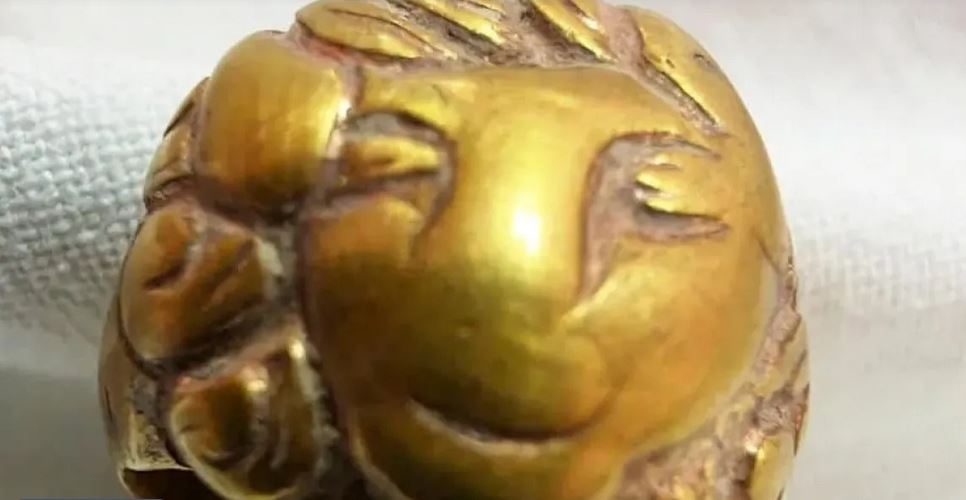
Archaeologists from Al-Farabi Kazakh National University have uncovered artifacts from the Scythian era in Kazakhstan’s Almaty region, including a rare gold ring weighing nearly eight grams. A Symbol of Power and Authority The excavations took place in the Uyghur district near the village of Togyzbulak and were led by Professor Dosbol Baigunakov, dean of the university’s history department. The team studied the Togyzbulak-1 and Togyzbulak-2 burial mound complexes, which contain more than 20 ancient burial sites. Among the most notable discoveries were burial mounds No. 3 and No. 4, which contained the remains of a man and a woman, along with ceramic vessels, iron and stone artifacts, and gold jewelry. The standout find was a gold ring engraved with a lion, a symbol of strength and authority. Researchers believe the image combines human and animal traits, reflecting the spiritual worldview of the Saka tribes in the 3rd-4th centuries BC. “These findings confirm that the territory of the modern Uyghur region was a cultural center of the Saka civilization,” the university said in a statement. Ruins of a Burned City [caption id="attachment_33402" align="aligncenter" width="931"] Image: Al-Farabi National University[/caption] Separately, a potentially groundbreaking discovery has been made in the Zhetysu region. Olga Gumirova, executive director of the Petroglyph Hunters Foundation, reported the discovery of ruins from a medieval city previously known only through historical texts. Archaeologists unearthed remnants of a tower, fragments of brick walls, and traces of fire, suggesting the city may have been destroyed during the Mongol invasion. While further research is ongoing, early comparisons are being drawn to the UNESCO World Heritage Sites of Talkhiz and Koylyk. A month earlier, archaeologists from the Saryarka Archaeological Institute discovered 25 historical and cultural sites in the Shet district of the Karaganda region. These include burial mounds, necropolises, and complexes dating to the Bronze Age, Iron Age, and Middle Ages. According to the institute’s director, Alexei Kukushkin, this marks the beginning of an extensive research campaign, with formal dating pending excavation approvals. The “Golden Man” and Buddhist Relics One of the most significant archaeological discoveries in recent years is the 2018 find in the Tarbagatay district of East Kazakhstan, where over 3,000 gold artifacts were unearthed in a burial site. Led by renowned archaeologist Zainolla Samashev, the expedition found women’s bell earrings, gemstone necklaces, and ornate horse adornments dating to the 7th-8th centuries BC, treasures of exceptional artistic and historical value. Another major discovery occurred in the Ayranada Gorge in the Merken district, where archaeologists found fragments of an ancient Buddhist temple and a carved stone head of Buddha. Anna Krokosheva, senior researcher at the Museum of Ancient Taraz, noted that the find reinforces the region’s historical importance along the Silk Road. Despite the site’s remote location at over 3,000 meters above sea level, the artifacts are well-preserved and could enhance scientific and cultural tourism in southern Kazakhstan.

The Hearth of Hospitality: The Importance of the Chaikhana in Central Asia

“Every meal begins with tea and ends with tea. Every guest is welcomed with tea. Every festival and every ceremony – from the celebration of birth to wedding to funeral – must feature tea” - Ketan Desai. Across Central Asia, the chaikhana, or teahouse, holds a cherished place in the region’s social and cultural fabric. Beyond serving cups of steaming tea, it represents history, hospitality, and a space where the rhythms of daily life unfold. For Central Asians, tea isn’t just a drink; it’s a way of life. Every pour, sup, and serving is steeped in tradition. Green tea is considered supreme in the east, while black tea holds court in the west. The offering of tea isn’t just polite, it’s a heartfelt symbol of welcoming and friendship, and to turn it down is practically a cultural crime. Tea is always poured into a piala, a small ceramic or porcelain bowl similar to the Chinese gaiwan or the Japanese chaiwan, but with its own unique steeped allure. A Link to History [caption id="attachment_33095" align="aligncenter" width="1024"] Chaikhana, Samarkand, 1905; image: Prokudin-Gorskiĭ[/caption] The chaikhana has roots stretching back centuries, intertwined with the history of the Silk Road. These teahouses sprang up along trade routes as places where merchants, travelers, and locals could rest and exchange goods, ideas, and stories. Over time, chaikhanas became hubs of cultural exchange, bearing silent witness to the blending of a rich tapestry of traditions. Central Asia is a region shaped by the collapse of the Soviet Union and subsequent episodes of democratization, political coercion, and repression. Throughout history, the chaikhana also played a role in the region’s intellectual life. Much like coffeehouses in Europe, these spaces often served as platforms for debate, poetry readings, and the airing of progressive ideas. These venues often feature private rooms with enclosed spaces or pull-down shades and outdoor spots with canopies or yurt-like structures, ensuring discretion for guests. Unlike typical restaurants or cafes, which rarely offer such private arrangements, teahouses allow organizations to hold meetings comfortably and confidentially. Teahouses serve a dual purpose by balancing privacy with public engagement, making them invaluable to those seeking both discretion and societal visibility. [caption id="attachment_33096" align="aligncenter" width="1019"] Bukhara Chaikhana; image: Joepyrek[/caption] Teahouses serve as neutral spaces where the general public and government can freely interact. They offer a safe space for open discussions, even for government employees, highlighting their unique role in fostering dialogue. The subversive potential of teahouses cannot be overlooked, as debates frequently occurred outside formal governmental frameworks. They have quietly allowed people to organize and challenge institutional power in subtle yet meaningful ways. Tradition and Architecture Chaikhanas are more than just teahouses; they’re cultural treasures enriched by stunning architecture. From simple wooden benches in rural areas to urban teahouses adorned with intricate carvings, colorful tiles, and ornate patterns, these spaces are as much about artistry as they are about tea. The interiors feature low tables and cushions, encouraging leisurely conversations and fostering a warm, communal atmosphere. Whether beside a flowing stream...

Kyrgyzstan: Film Festival Showcases Central Asian Talent, New and Old

An international film festival in Kyrgyzstan this week is celebrating the past, present, and future of Central Asian cinema. The Bishkek International Film Festival features a retrospective of the work of Kyrgyz director Tolomush Okeev, whose films include The Ferocious One, The Red Apple, and The Descendant of the Snow Leopard; a presentation of ten film projects by emerging directors in Central Asia; and a competition among nine films whose directors are from Kyrgyzstan, Kazakhstan, Uzbekistan, and Tajikistan. The June 11-15 festival also has master classes for those who really want to dig into the craft of making films. Hosts of some of the classes include actor and educator Olesya Gribok, who will talk about working with emotions, self-presentation, and other core actor values; designer Alex Rosno, who will discuss using AI tools to create scenes and build storyboards; and Andrzej Bartkowiak, a cinematographer and director with decades of experience with lighting, movement, and composition. Films from India, Mongolia, Germany and other countries will vie for an international prize. A separate contest involves nine films from Central Asia, seeking to highlight the region’s movie-making talent. There’s also “KyrgyzBox” - a competition just for movies, including box office standouts, from Kyrgyzstan. In another contest, film project contenders are “accepted only from citizens from Central Asian countries – Kyrgyzstan, Kazakhstan, Uzbekistan, Turkmenistan and Tajikistan - with strong potential for international distribution,” according to the film festival. The project must be a feature film that is at least 75 minutes long and filming must be planned in Central Asia or have a “close connection” to the region. The retrospective of Okeev, who died in 2001 at age 66, showcases a screenwriter and director who made films over several decades of the Soviet era and was known for filming in the majestic mountains and deserts of Kyrgyzstan. The Bishkek festival, the third edition of the event, will screen several of Okeev’s films, including The Descendant of the Snow Leopard, a 1984 film that draws inspiration from Kyrgyz tales about hunters who follow ancient laws. “When a young chief, Kojozhash, breaks a sacred ancestral taboo, it leads to tragic consequences for the entire tribe,” the festival says in a description of the film. The snow leopard is a national symbol of Kyrgyzstan, which is taking steps to protect the vulnerable species.

A British Scholar’s Glimpse into Kazakh Life a Century Ago

A century ago, in 1925, British historian, writer, and revolutionary Ralph Fox published People of the Steppes, a compelling account of his travels offering rare insights into the life and culture of the Kazakh people. Fox (1900–1936) was no ordinary observer. A journalist, Marxist, and author of biographies on Lenin and Genghis Khan, he traveled through Soviet Central Asia in the early 1920s and spent his final years working at the Marx-Engels Institute in Moscow, where he wrote his last major tome. In the foreword to People of the Steppes, Fox states that his aim was not political propaganda but to record what he had witnessed. His observations, written as he journeyed through the steppe from the Orenburg region to the Aral Sea, provide a vivid portrait of nomadic life. As the train carried him across Turkestan, Fox was struck by the sights outside his window: “For the first time I see, through the train windows, the round black tents of the nomads, shaped like broad beehives, and I whisper to myself that under just such a tent was Chingiz Khan born… Sometimes there passes a family on the march, the elders and children perched above their household goods on the beautiful shaggy Bactrian camels, the youths on horseback, small, sturdy ponies. It is all strange to me and I feel a beauty of slowness and order in their movements, the eternal rhythm of a wandering shepherd's life.” Fox shortly visited a nomadic camp, recording his impressions in the sub-section “The Tents of the Kazakhs”. “We sat on some empty crates and watched the hens scutter across the floor," he wrote, "while his wife, a quiet, kindly woman, brought us a bowl of Kummis (Mare’s milk) to drink." The hospitality of the Kazakhs left a lasting impression: “ They roused me when the meal was ready. ‘The Kazaks, men and women, sat round the pot in the dim tent, for smoke filled all the upper part now, and the sun had set. Brown arms were thrust into the mess, or painted wooden spoons, while we dainty whites were given wooden bowls. ‘The meat was tough and greasy, and to me only the little cakes of dough were palatable, though they were gritty with sand, so I did not eat much… It was all fantastic around that evil-smelling fire.” The next day, Fox encountered a group of Lesser Horde Kazakhs migrating from Siberia along the Syr Darya River. He noted that some had already settled in Torgai, while others aimed to reach the Urals. “ Once there, they would willingly sell off their surplus stock to buy their necessities on the bazaars to last them through the following year, at Kazalinsk, at Jussali, at Perovsk and ‘Turkestan, the great bazaars of the Syr Daria.” Fox also explored the broader historical and cultural context of the Kazakhs, noting that their nomadic lifestyle limited the development of written literature but fostered rich oral traditions and epic poetry: “It is hard to unravel their...