• KGS/USD = 0.01144 0%
  • KZT/USD = 0.00211 0%
  • TJS/USD = 0.10438 0%
  • UZS/USD = 0.00008 0%
  • TMT/USD = 0.28490 0%
  • KGS/USD = 0.01144 0%
  • KZT/USD = 0.00211 0%
  • TJS/USD = 0.10438 0%
  • UZS/USD = 0.00008 0%
  • TMT/USD = 0.28490 0%
  • KGS/USD = 0.01144 0%
  • KZT/USD = 0.00211 0%
  • TJS/USD = 0.10438 0%
  • UZS/USD = 0.00008 0%
  • TMT/USD = 0.28490 0%
  • KGS/USD = 0.01144 0%
  • KZT/USD = 0.00211 0%
  • TJS/USD = 0.10438 0%
  • UZS/USD = 0.00008 0%
  • TMT/USD = 0.28490 0%
  • KGS/USD = 0.01144 0%
  • KZT/USD = 0.00211 0%
  • TJS/USD = 0.10438 0%
  • UZS/USD = 0.00008 0%
  • TMT/USD = 0.28490 0%
  • KGS/USD = 0.01144 0%
  • KZT/USD = 0.00211 0%
  • TJS/USD = 0.10438 0%
  • UZS/USD = 0.00008 0%
  • TMT/USD = 0.28490 0%
  • KGS/USD = 0.01144 0%
  • KZT/USD = 0.00211 0%
  • TJS/USD = 0.10438 0%
  • UZS/USD = 0.00008 0%
  • TMT/USD = 0.28490 0%
  • KGS/USD = 0.01144 0%
  • KZT/USD = 0.00211 0%
  • TJS/USD = 0.10438 0%
  • UZS/USD = 0.00008 0%
  • TMT/USD = 0.28490 0%

Viewing results 97 - 102 of 1480

Tajik Border Guards Kill 4 Gunmen From Afghanistan

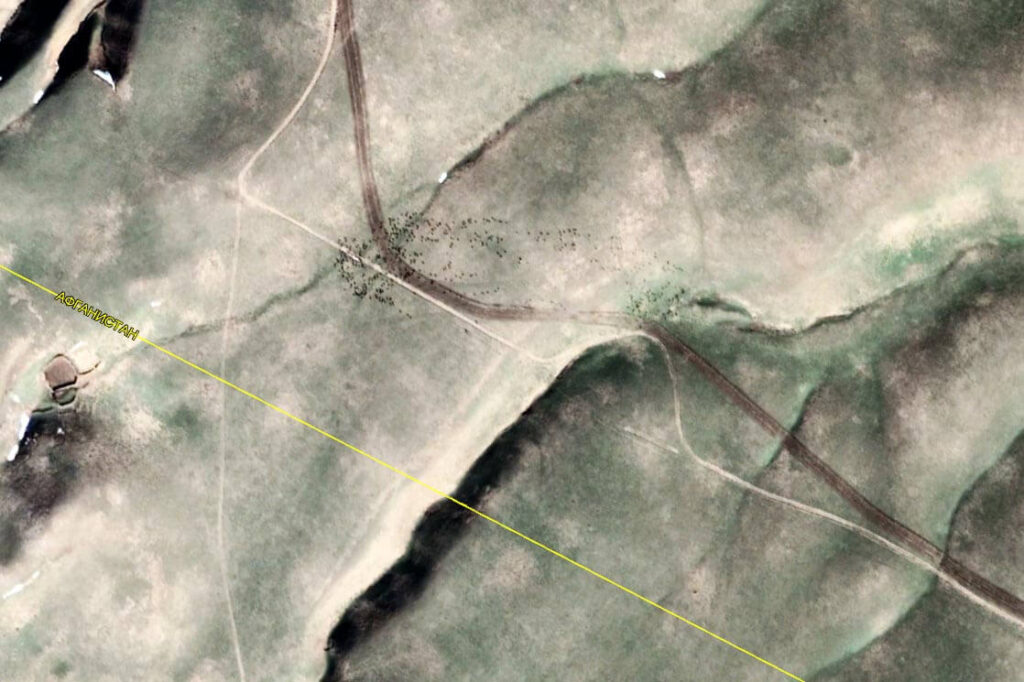
Security forces in Tajikistan killed four armed men who crossed the border from Afghanistan, the Tajik government said. It was the latest clash in a rugged, sparsely populated area that has become a hotspot for violence along the frontier. Border guards in Tajikistan’s Shamsiddin Shohin district located the assailants after they entered the country early on Sunday, according to a border force statement that was reported by the state Khovar news agency. “The terrorists refused to obey the border guards' order to surrender and offered armed resistance,” the border force said. “All four terrorists were killed during the operation.” The statement said security forces seized equipment, including three Kalashnikov assault rifles, one pistol, ammunition, mobile phones, one walkie-talkie, and one boat. The vessel was likely used to cross the Pyanj River from Afghanistan into Tajikistan. Chinese gold mining operations in Tajikistan’s border area have become a target of deadly attacks, prompting China to urge Tajikistan to take robust measures to get the situation under control. On January 15, Yusuf Rahmon, secretary of Tajikistan’s Security Council, met Chinese ambassador Guo Zhijun to discuss regional stability.

Tajikistan Accelerates Transition to Green Energy

Tajikistan has launched its largest solar energy initiative to date, marking a significant step in its transition to green energy. The project entails the construction of two photovoltaic power stations with a combined capacity of 500 MW, an unprecedented scale for the country’s energy sector. An investment agreement formalizing the project was signed on 13 January 2026 between the government of Tajikistan and Ayon Energy. The project will involve the development of two equally sized solar power plants: 250 MW in Asht District 250 MW in Jaihun District These new facilities are expected to play a crucial role in mitigating seasonal electricity shortages. Tajikistan, which relies heavily on hydropower, frequently faces deficits during the winter months. The introduction of solar generation capacity will ease pressure on existing hydroelectric resources, improving the reliability of electricity supply for both households and businesses. Ayon Energy has committed to completing the design, construction, and commissioning of the plants within 2026. The total investment is estimated at $250 million. In addition to this approved project, Tajikistan is also evaluating a potential 400 MW solar power plant in partnership with the UAE’s state-owned company Masdar.

IAEA Extends Central Asia Uranium Cleanup Plan Through 2030

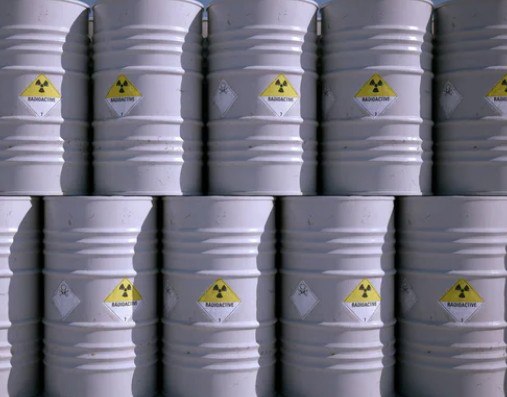
The International Atomic Energy Agency (IAEA) has released a new Strategic Master Plan extending its cooperation with Kyrgyzstan, Tajikistan, and Uzbekistan, alongside international partners, for the remediation of uranium legacy sites in Central Asia through 2030, according to World Nuclear News. Central Asia served as a key uranium source for the former Soviet Union, with mining and processing conducted over more than 50 years. In addition to local production, uranium ore was imported for processing, leaving vast amounts of radioactive waste stored in tailings and mining dumps. Most sites were shut down by 1995, but limited remediation both pre- and post-closure, has left behind long-term environmental and public health risks, including the threat of groundwater and surface water contamination in agriculturally vital areas. Since 2012, the IAEA’s Coordination Group for Uranium Legacy Sites has supported Central Asian countries with expert missions, legal and regulatory framework development, and remediation strategies. In 2017, the IAEA, the European Commission, the European Bank for Reconstruction and Development, the CIS Economic Council, and the governments of Kyrgyzstan, Tajikistan, and Uzbekistan adopted a Strategic Master Plan. Published in May 2018, it identified seven former uranium sites as the highest priority, with initial remediation costs estimated at €85 million. A revised plan was signed in September 2021, and the most recent version was presented in Tashkent in October 2025. It emphasizes long-term monitoring, maintenance, recordkeeping, and ongoing engagement with local communities to ensure the safe reuse of remediated land. “The new plan, an extension of our collaboration since 2017, focuses on enhancing the regulatory, technical, financial, and human resources for the long-term management of the remediated sites, according to IAEA safety standards,” said Hildegarde Vandenhove, Director of the IAEA Division of Radiation, Transport and Waste Safety. The updated plan puts the total cost of the Environmental Remediation Account programme at €113 million. This includes remediation work, project management, and contingencies. Since 2017, four of the seven high-priority sites have been fully remediated, two in Kyrgyzstan and two in Uzbekistan, while work continues at a fifth site in Kyrgyzstan. In Tajikistan, one site has been partially remediated, and another remains untouched. Lower-priority sites are also covered under the new plan, with some funding secured through bilateral agreements with Russia. Sardorbek Yakubekov, Deputy Chairman of Uzbekistan’s Industrial, Radiation and Nuclear Safety Committee, said the programme “stands as a vivid example of how the collective efforts of the international community… can yield tangible and lasting results.” As previously reported by The Times of Central Asia last December, Tajikistan still faces tens of millions of tons of radioactive waste from Soviet-era uranium mining, highlighting both the scale of the challenge and the critical need for sustained international support.

Glacier Growing Despite Global Warming Discovered in Tajikistan

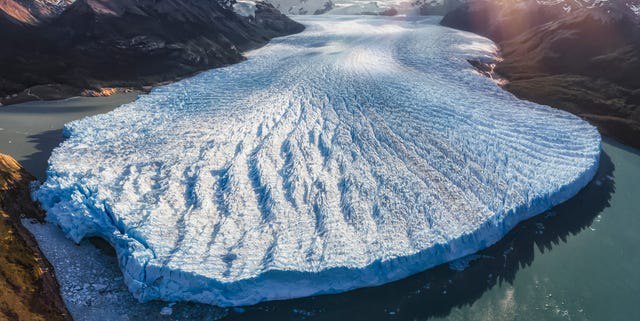
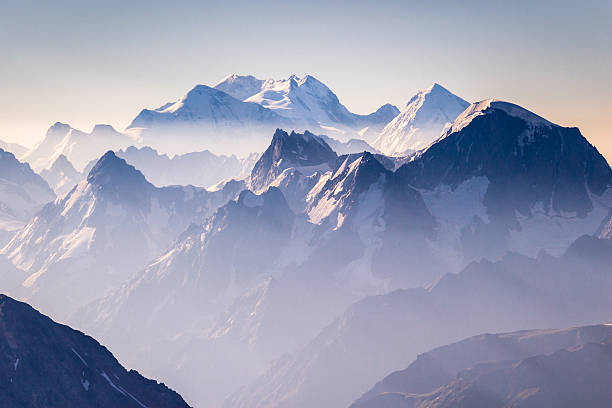
While most of the world’s glaciers are retreating due to climate change, a rare anomaly has been discovered in the Pamir Mountains. Researchers have identified a glacier in eastern Tajikistan that is not melting but is, in fact, growing. The discovery, reported by Popular Mechanics, concerns the Kon-Chukurbashi ice cap, a rare formation demonstrating resilience in the face of global warming. Located in the Sarykol Range of the Pamirs, near the Chinese border, the glacier lies on the slopes of the peak bearing the same name. The expedition reached an altitude of approximately 5,810 meters (nearly 19,000 feet) above sea level to conduct research. Scientists extracted two ice cores, each over 100 meters long, from the glacier. These cores preserve up to 30,000 years of climate history. One was sent to the Ice Memory Foundation’s underground archive in Antarctica for long-term preservation. The other was delivered to the Institute of Low Temperature Science at Hokkaido University in Japan, where Professor Yoshinori Iizuka is leading an investigation into the glacier’s mass gain. Researchers hope the analysis of the ice’s structure, trapped air bubbles, and chemical composition will help explain why this glacier defies global trends. Understanding these mechanisms could offer insight into glacial stability not only in Central Asia but globally. The region, often referred to as the “Roof of the World”, is characterized by extreme altitudes, a harsh continental climate, and a near-total absence of permanent human settlement. Due to its remoteness, access to Kon-Chukurbashi is limited primarily to scientific missions, underscoring the rarity and importance of the data collected. Scientists believe that studying this glacier could provide critical insights into the future of freshwater resources and climate risk assessment in mountainous regions worldwide.

From Tehran to Tashkent: How Iran’s Crisis and U.S. Tariffs Reverberate Across Central Asia

At the end of 2025, Iran once again emerged as a flashpoint on the global political map. Mass protests erupted across the country, fueled by spiraling inflation and economic hardship. At present, the Iranian rial has plummeted to the point where it is effectively worth less than the paper it's printed on. The current wave of unrest, already the largest and deadliest nationwide unrest Iran has seen since 2022, is not occurring in isolation. U.S. President Donald Trump has renewed what his administration describes as a policy of “maximum pressure” on Tehran, and his administration is now pursuing what observers have characterized as a strategy of “pushing the falling,” a move aimed at reshaping the political order of the Middle East. What might this mean for neighboring Central Asia? Tajik political analyst Muhammad Shamsuddinov argues the crisis must be viewed within a broader geopolitical context. “The situation in Iran is directly tied to Trump’s second-term pressure campaign,” Shamsuddinov said, referencing a string of destabilizing events. “These include the 12-day U.S.-Israel war against Iran and the reimposition of U.N. sanctions in September 2025," he added, referring to the 12-day June 2025 conflict between Israel and Iran, during which U.S. forces also struck Iranian nuclear facilities. "All of these have deepened the domestic crisis in Iran.” In a further escalation, on January 12, Trump announced 25% tariffs on countries conducting trade with Iran. The move appears targeted primarily at Russia, China, and India - Iran’s largest international partners, but also has implications for Central Asian economies. In the first nine months of 2025, trade between Kazakhstan and Iran grew by nearly 45%, reaching $310.8 million. Tajikistan, which maintains the closest economic ties to Tehran among Central Asian states, reported trade worth $430.7 million in the first eleven months of 2025, an increase of 28% over the same period in 2024. Uzbekistan, while less directly exposed to Iran than Kazakhstan or Tajikistan, has also moved cautiously in recent years to expand trade links with Tehran, making it sensitive to further sanctions pressure. Turkmenistan, meanwhile, faces its own exposure through gas swap arrangements involving Iran, which could become collateral damage of escalating regional tensions. Iranian investments in Tajikistan are also substantial. Among the most prominent projects is the Sangtuda-2 hydroelectric power plant, estimated at $256 million. The Iranian government contributed approximately $180 million, with an additional $36 million from an Iranian contractor. The remainder was financed by Tajikistan. According to official data, roughly 160 companies with Iranian capital are currently operating in Tajikistan across multiple sectors. In Kazakhstan, around 650 Iranian companies are registered, with over 350 operational, primarily in manufacturing, infrastructure, and agriculture. By contrast, trade between Iran and Russia, a strategic partner since the signing of a bilateral cooperation agreement in January 2025, increased by only 8% in the first nine months of 2025, according to official figures. Despite modest growth, Russian analysts view the figures optimistically. “Growth is happening under challenging geopolitical conditions, with sanctions, logistical restructuring, and financial hurdles,” said...

Families in Tajikistan Relocated from Zones at High Risk from Disasters

Authorities in Tajikistan have relocated hundreds of families from areas vulnerable to natural disasters, continuing a multi-year effort to reduce risk to life and property. Jamshed Kamolzoda, Head of the Main Directorate for Civil Protection and Territories under the Committee for Emergency Situations and Civil Defense, outlined the scope of the relocation initiative, the primary threats identified, and the state resources allocated for disaster prevention. According to Kamolzoda, 328 households were moved from high-risk zones in 2024-2025. Of these, 154 were relocated in 2024, and 174 followed in 2025. The relocations were carried out under the government-approved “Medium-Term Plan for the Organized Resettlement of Environmental Migrants for 2024-2026,” which mandates the annual resettlement of 175 households based on risk assessments. Kamolzoda emphasized that the Committee annually conducts geological and engineering evaluations of vulnerable areas and develops corresponding risk-reduction measures in cooperation with other agencies. A central component of this effort remains the relocation of at-risk populations. “Special working groups have been established under the Committee, comprising experts in engineering, geology, construction, and emergency response,” he said. These groups inspect residential buildings and infrastructure on-site and issue recommendations grounded in technical and scientific analysis. Their findings form the basis for resettlement decisions. The relocation program is part of the broader National Strategy for Disaster Risk Reduction for 2019-2034, which aims to minimize human and material losses, bolster preventative measures, and improve public preparedness for emergencies. Mudslides, earthquakes, and avalanches are the most frequent natural disasters in Tajikistan, with earthquakes considered the most  dangerous due to their potential scale. With 93% of the country’s territory classified as mountainous, the most at-risk regions include the Gorno-Badakhshan Autonomous Oblast (GBAO), the Rasht Valley, the Zeravshan Valley, and the mountainous areas of the Sughd Region. In 2025 alone, the Committee recorded 287 emergency incidents across Tajikistan, 12 of which were natural disasters. The total estimated damage exceeded $2.2 million.