• KGS/USD = 0.01143 0%
  • KZT/USD = 0.00213 0%
  • TJS/USD = 0.10593 0.47%
  • UZS/USD = 0.00008 0%
  • TMT/USD = 0.28571 0%
  • KGS/USD = 0.01143 0%
  • KZT/USD = 0.00213 0%
  • TJS/USD = 0.10593 0.47%
  • UZS/USD = 0.00008 0%
  • TMT/USD = 0.28571 0%
  • KGS/USD = 0.01143 0%
  • KZT/USD = 0.00213 0%
  • TJS/USD = 0.10593 0.47%
  • UZS/USD = 0.00008 0%
  • TMT/USD = 0.28571 0%
  • KGS/USD = 0.01143 0%
  • KZT/USD = 0.00213 0%
  • TJS/USD = 0.10593 0.47%
  • UZS/USD = 0.00008 0%
  • TMT/USD = 0.28571 0%
  • KGS/USD = 0.01143 0%
  • KZT/USD = 0.00213 0%
  • TJS/USD = 0.10593 0.47%
  • UZS/USD = 0.00008 0%
  • TMT/USD = 0.28571 0%
  • KGS/USD = 0.01143 0%
  • KZT/USD = 0.00213 0%
  • TJS/USD = 0.10593 0.47%
  • UZS/USD = 0.00008 0%
  • TMT/USD = 0.28571 0%
  • KGS/USD = 0.01143 0%
  • KZT/USD = 0.00213 0%
  • TJS/USD = 0.10593 0.47%
  • UZS/USD = 0.00008 0%
  • TMT/USD = 0.28571 0%
  • KGS/USD = 0.01143 0%
  • KZT/USD = 0.00213 0%
  • TJS/USD = 0.10593 0.47%
  • UZS/USD = 0.00008 0%
  • TMT/USD = 0.28571 0%

Viewing results 259 - 264 of 1567

Russia–Central Asia Summit in Dushanbe Tests Putin’s Grip

Russian President Vladimir Putin arrived in Tajikistan on October 8 for a three-day state visit that includes a Russia–Central Asia summit in Dushanbe, and a larger Commonwealth of Independent States (CIS) meeting. His arrival comes at a time of geopolitical flux in Central Asia, with Russia seeking to reaffirm its waning influence amid migration tensions, economic pressures, and security challenges on its southern flank. The Visit and Summit: What Has Happened So Far Putin was greeted at Dushanbe airport by Tajik President Emomali Rahmon, who has governed the country since 1992. Upon his arrival, the two leaders conducted a private meeting and later presided over expanded talks with their delegations. In his opening remarks, Putin told Rahmon that Russia and Tajikistan are “reliable allies” and pledged that Moscow would fulfil its obligations to Dushanbe, particularly in terms of security. In the first seven months of 2025, bilateral trade rose by more than 17%, a figure Putin cited to underscore that relations are developing “very positively.” Following the meeting, the two leaders signed a joint statement on “deepening the strategic partnership and alliance” between their countries. Alongside Rahmon, on October 9, Putin met with the presidents of Kazakhstan, Kyrgyzstan, Turkmenistan, and Uzbekistan as part of the Russia–Central Asia summit. As previously reported by The Times of Central Asia, the summit agenda includes cooperation in trade, transport, energy, security, migration, and environmental policy. A concluding communiqué is expected to lay out joint priorities for 2025–2027 in these fields. Following the Russia–Central Asia gathering, a broader CIS head-of-state meeting is scheduled for October 10. Alongside Russia and the Central Asian states, representatives from Armenia, Azerbaijan, and Belarus will also attend. Draft agendas suggest the adoption of a military-cooperation concept through 2030, counterterrorism and border security strategies, efforts to fight transnational crime, and discussions on a “CIS Plus” format that would allow third-party countries and international organizations to participate in selected CIS events. Russia’s Defense Minister Andrei Belousov held talks in Dushanbe with his Tajik counterparts on October 8, stating that “cooperation between our two military institutions” is key to regional stability. Tajikistan hosts Russia’s largest foreign military base and shares a long, porous border with Afghanistan, which makes the security relationship central to both sides’ calculus. Historical and Geopolitical Context Russia has long viewed Central Asia as its strategic backyard, but since 2022, its dominance has been challenged. Sanctions on Russia due to the war in Ukraine have constrained its economic leverage, while China has expanded its presence via Belt and Road investments. At the same time, the European Union has elevated its engagement with Central Asian states through trade, infrastructure funding, and diplomatic outreach. Central Asian governments have shown increasing boldness in balancing their relations between Moscow, Beijing, and the West. None of the Central Asian governments has openly backed Russia’s full-scale invasion of Ukraine. Surveys in Kazakhstan show that only 15% of respondents explicitly support Russia, while a larger share leans toward Ukraine or nonalignment. Kazakhstan has refused to recognize the...

Dushanbe Hosts Central Asia-Russia Summit and CIS Heads of State Meeting

Dushanbe has become the center of Eurasian diplomacy this week as it hosts the “Central Asia-Russia” summit alongside the meeting of the Council of CIS Heads of State. Over two days, leaders from across the region are set to discuss security, economic ties, transport infrastructure, energy cooperation, and new models of regional integration. The inaugural "Central Asia-Russia” meeting took place in Astana in October 2022, focusing on counterterrorism, support for small and medium-sized enterprises, and initiatives in energy, industry, and digitalization. Analysts note that the current summit does not duplicate the functions of existing integration frameworks such as the Eurasian Economic Union (EAEU) or the Collective Security Treaty Organization (CSTO). Instead, it complements them by offering a more flexible and pragmatic platform for dialogue. “The Central Asia-Russia format has the potential to become not just a venue for political signaling, but an instrument for the rapid implementation of infrastructure and regulatory solutions,” said Alibek Tazhibaev, Director of the Center for Eurasian Monitoring. He noted that the region has become a natural zone of industrial cooperation and logistics for Russia, with mutual economic interdependence deepening under the pressure of sanctions. Among the key priorities being discussed are the development of North-South and East-West transport corridors, Russian gas transit through Kazakhstan, and the construction of new energy facilities. In 2024, trade turnover between Central Asian countries and Russia totaled $44.7 billion, an increase of 11.3% from the previous year. Tazhibaev also argued that Central Asia could emerge as an independent “Eurasian hub” if it transitions from a simple transport corridor to a region that integrates added value. “Central Asia can offer a ‘door-to-door’ logistics service if it builds digital gateways, assembly warehouses, and unified logistics standards. This would help retain profit margins and manage standards within the region,” Tazhibaev said. CIS: Pragmatism and New Initiatives The second major component of Dushanbe’s diplomatic agenda is the summit of the Commonwealth of Independent States (CIS). Despite persistent criticism, the CIS continues to serve as a relevant platform for cooperation. Taisiya Marmontova, Associate Professor at Astana International University and Director of the Institute for Regional Integration Studies, noted that the CIS has “preserved a space for dialogue and joint projects after the collapse of the USSR.” According to the CIS Executive Committee, the combined GDP of member states is growing at an average annual rate of 4.5%, while internal trade has risen by 40% over the past five years. Kazakhstan remains a key player, with trade turnover with CIS countries reaching $37.3 billion in 2024, including $4.3 billion in services. During the summit, leaders are expected to consider several initiatives proposed by Kazakh President Kassym-Jomart Tokayev, including the creation of a “CIS+” dialogue format and the launch of the “Commonwealth Fair” intergovernmental program. The first such fair is scheduled to take place in Taraz in 2026. Member states have also agreed on the Strategy for Transport Corridor Digitalization, the Strategy for Scientific and Technological Development until 2035, and a new Concept for Construction Pricing. “Integration...

S. Paul Kapur Confirmed as U.S. Assistant Secretary for South and Central Asian Affairs

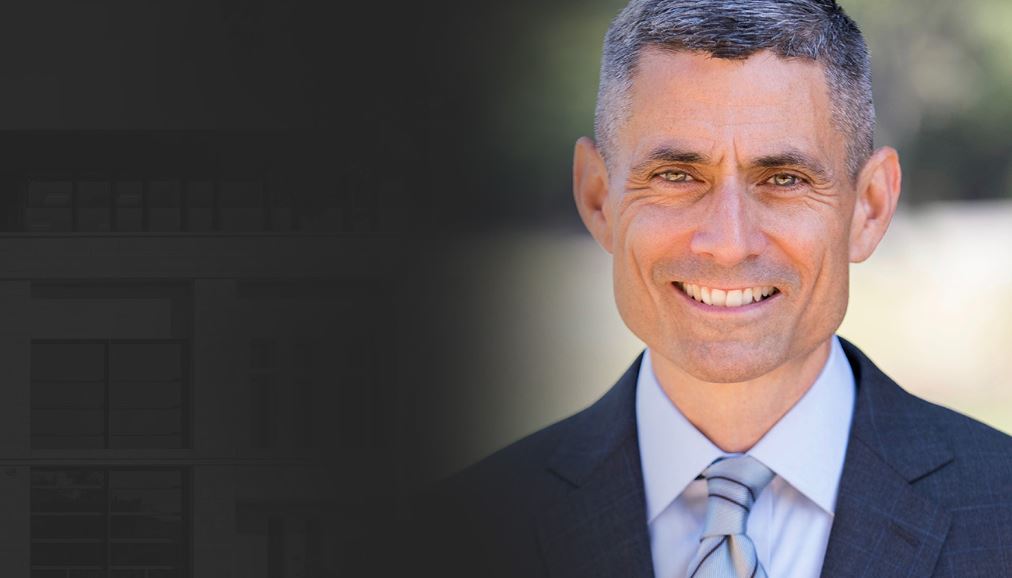
The U.S. Senate has confirmed political scientist S. Paul Kapur as Assistant Secretary of State for South and Central Asian Affairs to lead the State Department bureau that oversees relations with Afghanistan, Pakistan, India, Sri Lanka, Bangladesh, Nepal, Maldives, Bhutan, and the five Central Asian republics. The position carries responsibility for guiding U.S. diplomacy across the region, coordinating security and development strategy, and advising on policy toward regional powers such as China and Russia. Kapur, 56, is an Indian American scholar known for his work on nuclear deterrence and South Asian security. He was born in New Delhi to an Indian father and an American mother, but grew up in the United States. After studying the region in graduate school, he pursued an academic career, earning a doctorate in political science from the University of Chicago and a bachelor’s degree from Amherst College. Kapur taught at Claremont McKenna College and Stanford University before joining the U.S. Naval Postgraduate School, where he is a professor of national security affairs and runs U.S.–India strategic dialogues for the Department of Defense. Paul Kapur, a seasoned academic and security specialist, now takes a post that places him at the center of Washington’s engagement with Kazakhstan, Kyrgyzstan, Tajikistan, Turkmenistan, and Uzbekistan. His confirmation fills a key regional portfolio in the Trump administration, which may shape how the United States approaches Central Asia within its broader regional strategy. Kapur’s portfolio covers both South and Central Asia, but his confirmation has been closely watched in the five republics that straddle the heart of Eurasia. Central Asian governments and business leaders are eager to see whether the new Assistant Secretary will continue Washington’s traditional emphasis on security partnerships or shift toward deeper economic and investment ties. Kapur brings a distinguished scholarly pedigree and deep expertise in international security. He has written extensively on nuclear deterrence, South Asian security, and great-power competition. While much of his work focuses on India, Pakistan, and U.S. grand strategy, he has also examined how India manages its relationships with larger powers such as the United States and China - an enduring middle-power dynamic. That perspective is particularly relevant to Kazakhstan, an emerging middle power, and to Central Asia acting collectively, which is seeking to balance Russian and Chinese influence. During his confirmation hearing, Kapur emphasized that U.S. engagement in Central Asia will focus on advancing the sovereignty and territorial integrity of the regional states. He noted that, if confirmed, he would leverage the C5+1 framework and bilateral partnerships to pursue cooperation in areas such as energy, critical minerals, counterterrorism, combating transnational crime, and developing physical and digital infrastructure. His remarks reflected a commitment to strengthening regional independence and stability while deepening practical cooperation with the United States. For Central Asian governments, Kapur’s arrival comes at a time of shifting geopolitics. Russia’s war in Ukraine has unsettled long-standing assumptions, while China’s Belt and Road Initiative continues to expand Beijing’s economic influence. The United States has not always prioritized matching these dynamics. However, Kapur’s testimony...

Putin in Tajikistan for CIS Summit Amid Migration Tensions

When President Vladimir Putin arrives in Dushanbe on 8 October for his first state visit, Tajikistan will briefly become the focal point of regional diplomacy. Currently holding the rotating chair of the Commonwealth of Independent States (CIS), Dushanbe is preparing to host both the CIS Heads of State Council and the second Russia–Central Asia summit. For Moscow, Central Asia has remained a priority since the invasion of Ukraine, and the visit highlights what is at stake for both Russia and its host. Tajikistan depends heavily on Russia for security, trade, and employment opportunities for its citizens, but relations have been tested by the aftermath of the March 2024 Crocus City Hall attack, which exposed the fragility of migration-driven economics and the risk of renewed extremism. An Old Relationship Tested by New Tensions Russia and Tajikistan have been closely entwined since the collapse of the Soviet Union. Putin has already made twelve trips to Tajikistan since taking office, and this will be his first with state‑visit status. Security cooperation remains the backbone of the relationship. Russia’s 201st military base in Tajikistan - formerly the 201st motor rifle division and now Moscow’s largest overseas facility - has long been billed as a shield along the Afghan frontier; the two sides continue to coordinate through the CSTO (Collective Security Treaty Organization), and within the SCO (Shanghai Cooperation Organization) framework. Trade between the two nations has expanded despite sanctions headwinds. On the eve of the visit, presidential aide Yuri Ushakov said bilateral turnover rose by more than 17 % in the first seven months of 2025, and reached about US$1.5 billion in 2024. Russia accounts for over 22 % of Tajikistan’s foreign trade. Meanwhile, more than 1.2 million Tajik citizens work in Russia, making up about 16 % of all foreign workers there. They remitted US$1.8 billion back home last year, roughly 17 % of Tajikistan’s GDP. This symbiosis means that the two leaders routinely discuss labor migration and social issues alongside security and trade. Yet the relationship has been strained by a wave of xenophobia following the Crocus City Hall attack, which killed 145 people, which the Russian authorities accused militants from Tajikistan of perpetrating. As previously reported by The Times of Central Asia, following the arrest of four Tajik suspects, Central Asian migrants in Russia have faced arson attacks, beatings, and boycotts of their businesses. Russian law enforcement has launched aggressive street inspections and created special units to check hostels and businesses frequented by Central Asians. Even long‑time Tajik residents with Russian citizenship have reported menacing phone calls and threats. In the wake of the attack, diaspora leaders urged compatriots not to leave their homes, and the Tajik interior ministry publicly rebutted Russian media reports, stating that three of the four suspects named were not involved. Those pressures hit a country heavily reliant on remittances. The World Bank’s 2025 update estimates that money sent home by migrants accounted for 49 % of Tajikistan’s GDP in 2024. Since the start of the Ukraine war, Russian politicians and media have become increasingly hostile toward Central Asian migrants, leading Moscow to deactivate all foreign‑owned SIM cards and...

EBRD Launches Online Mentoring Platform for Entrepreneurs in Tajikistan

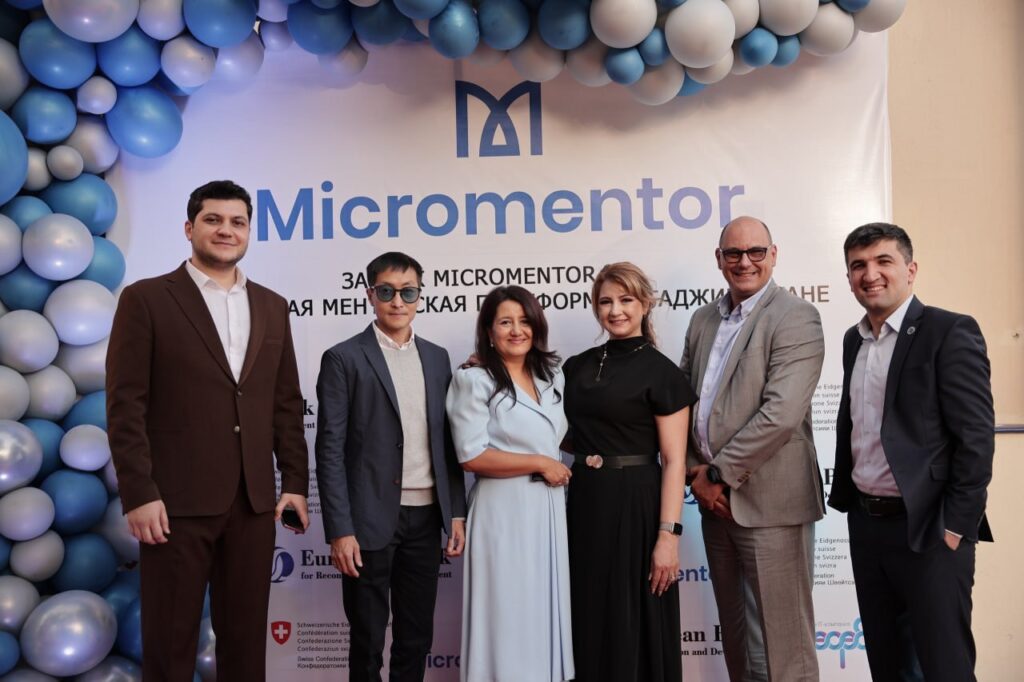
Small and medium-sized enterprises (SMEs) in Tajikistan have a new avenue of support: the European Bank for Reconstruction and Development (EBRD) has launched an online platform offering mentoring and professional consultations. The initiative is funded by the Government of Switzerland. A Global Community for Tajik Entrepreneurs The new platform, MicroMentor.tj, connects Tajik business owners with a global network of more than 420,000 entrepreneurs and 120,000 mentors across 180 countries. Available in six languages, including Russian, the service is free and accessible to entrepreneurs even in remote regions of Tajikistan. The platform aims to expand opportunities for SMEs, foster innovation, support business development, and generate employment. Promotion of the platform within the country is supported by local partner Shedevr, headed by Muboriz Subkhonov. Mentoring as a Growth Tool The EBRD has long supported SMEs not only through financial instruments but also via non-financial services such as mentoring, sector-specific consultations, training, and educational events. According to the bank, 77% of entrepreneurs who engaged actively with mentors reported increased revenues. The new platform builds on the Mentoring for Women Entrepreneurs program, which supported more than 100 participants from Dushanbe, Khatlon, Sughd, and Gorno-Badakhshan Autonomous Oblast (GBAO), with guidance from 50 mentors from Kazakhstan, Kyrgyzstan, and Armenia. Over a nine-month period, 108 mentor-mentee pairs were formed. Nearly all participants reported tangible outcomes: 95% improved their business skills 93% expanded their businesses 90% created new jobs EBRD Updates Strategy for Tajikistan Coinciding with the platform’s launch, the EBRD approved a new country strategy for Tajikistan through 2030, prioritizing structural reforms, private sector development, and sustainable growth in energy, transport, and urban infrastructure. “The new strategy reflects our commitment to supporting Tajikistan’s economic development through a comprehensive approach combining financial resources, policy dialogue, and technical assistance,” the EBRD press service stated. The bank plans to support projects that enhance competitiveness and foster technological independence. To date, the EBRD has invested more than €1 billion in Tajikistan’s economy across 185 projects. According to the latest Regional Economic Prospects report, the EBRD forecasts Tajikistan’s GDP growth at 7% in 2025 and 5.7% in 2026. Key drivers include infrastructure investments, private sector expansion, and advancements in digital technologies and energy. The new strategy integrates investment, advisory support, and regulatory reform to create a more favorable business environment for Tajikistan’s growing economy.

Tajikistan’s Rogun Dam to Triple Forests Under No Net Loss Plan

The construction of Tajikistan’s massive Rogun Hydropower Plant (HPP) will proceed under strict environmental conditions, guided by what experts describe as a "No Net Loss" (NNL) approach to nature. According to Asia-Plus, the updated Environmental and Social Impact Assessment (ESIA) for the project outlines a series of measures to offset ecological damage, including large-scale forest restoration. The report states that 262 hectares of land, including 185 hectares of juniper forest and 77 hectares of floodplain, will be lost due to construction. To compensate, authorities plan to restore 786 hectares of new forest, tripling the area impacted. The reforestation effort will prioritize juniper, riverside, and fruit and nut forests, while also establishing new protected areas to reinforce local ecosystems. Tajikistan’s Forestry Agency has already allocated nearly 7,600 hectares of land for these efforts. Reforestation is expected to cost over $7.5 million, with annual maintenance costs projected at approximately $10,500. The ESIA outlines a phased strategy. From 2025 to 2030, specific restoration sites will be identified. Practical implementation, including planting and ecosystem protection, is scheduled to begin in 2031. The NNL principle aims to ensure that long-term ecological gains outweigh short-term environmental disruptions. Once completed, the Rogun HPP will have an installed capacity of 3,780 megawatts, making it the largest hydropower facility in Central Asia. Its six turbines, each with a capacity of 630 MW, are expected to generate over 14.5 billion kilowatt-hours of electricity annually once the plant becomes fully operational in 2029. Two units, launched in 2018 and 2019, are already producing power at reduced capacity. In 2024, the plant generated 1.22 billion kWh, accounting for 5.5 percent of Tajikistan’s total electricity output. However, the project has not escaped controversy. The World Bank’s Inspection Panel recently agreed to review a formal complaint filed by residents of Uzbekistan and Turkmenistan, supported by the regional coalition Rivers Without Boundaries. The complaint questions the adequacy of the project's environmental assessments, which critics argue fail to fully account for downstream impacts on communities and ecosystems along the Amu Darya basin. Despite these concerns, Tajik officials maintain that Rogun will enhance national energy independence while also helping position Central Asia as a hub for renewable energy.