• KGS/USD = 0.01144 0%
  • KZT/USD = 0.00210 0%
  • TJS/USD = 0.10559 0%
  • UZS/USD = 0.00008 0%
  • TMT/USD = 0.28530 0%
  • KGS/USD = 0.01144 0%
  • KZT/USD = 0.00210 0%
  • TJS/USD = 0.10559 0%
  • UZS/USD = 0.00008 0%
  • TMT/USD = 0.28530 0%
  • KGS/USD = 0.01144 0%
  • KZT/USD = 0.00210 0%
  • TJS/USD = 0.10559 0%
  • UZS/USD = 0.00008 0%
  • TMT/USD = 0.28530 0%
  • KGS/USD = 0.01144 0%
  • KZT/USD = 0.00210 0%
  • TJS/USD = 0.10559 0%
  • UZS/USD = 0.00008 0%
  • TMT/USD = 0.28530 0%
  • KGS/USD = 0.01144 0%
  • KZT/USD = 0.00210 0%
  • TJS/USD = 0.10559 0%
  • UZS/USD = 0.00008 0%
  • TMT/USD = 0.28530 0%
  • KGS/USD = 0.01144 0%
  • KZT/USD = 0.00210 0%
  • TJS/USD = 0.10559 0%
  • UZS/USD = 0.00008 0%
  • TMT/USD = 0.28530 0%
  • KGS/USD = 0.01144 0%
  • KZT/USD = 0.00210 0%
  • TJS/USD = 0.10559 0%
  • UZS/USD = 0.00008 0%
  • TMT/USD = 0.28530 0%
  • KGS/USD = 0.01144 0%
  • KZT/USD = 0.00210 0%
  • TJS/USD = 0.10559 0%
  • UZS/USD = 0.00008 0%
  • TMT/USD = 0.28530 0%

Viewing results 451 - 456 of 1534

Tajikistan Predicts Economic Slowdown Amid Declining Remittances

Tajikistan's economic growth is projected to decelerate to 7.5% in 2025, largely due to weakening domestic demand, according to the latest regional economic review by the Eurasian Fund for Stabilization and Development (EFSD). Migrant Remittances: A Key Factor The anticipated slowdown is primarily attributed to a decline in remittances from labor migrants, which have historically formed a substantial share of Tajikistan’s GDP. EFSD analysts forecast that from 2025 to 2027, the volume of transfers will gradually normalize after peaking between 2022 and 2024. Despite this decline, the EFSD maintains that Tajikistan’s balance of payments will remain stable, helped in part by reduced capital outflows, including foreign currency purchases. Previously, the World Bank reported that migrant remittances accounted for 45% of the country’s GDP in 2024, the highest proportion globally. By comparison, remittances made up 24% of GDP in Kyrgyzstan and 14% in Uzbekistan. The Asian Development Bank (ADB) expects this share to fall to 37% in 2025. Inflation Pressures Rise EFSD economists also warn of mounting inflationary pressures. Inflation is projected to approach the upper limit of the National Bank of Tajikistan’s target corridor, 5% with an acceptable deviation of ±2 percentage points. Over the medium term, inflation is expected to stabilize within the target range. Food prices remain the primary risk to price stability, the EFSD cautioned. Exports, External Risks, and Trade Barriers The ADB has also published a forecast supporting a more restrained outlook, highlighting falling global prices for Tajikistan’s key exports, metals and agricultural goods, including aluminum, as an added drag on growth. Additionally, regional trade barriers are posing challenges. Uzbekistan recently raised import duties on Tajik cement, a move seen by analysts as part of a broader trend of protectionist policies in neighboring countries. External conditions are also exerting pressure. Economic slowdowns in Russia and China, Tajikistan’s primary trading partners, could suppress both export revenue and remittances, the majority of which come from migrant workers in Russia. GDP Projections and Sector Breakdown According to the ADB’s baseline scenario, Tajikistan’s GDP growth is expected to slow to 7.4% in 2025 and 6.8% in 2026. In contrast, Tajik authorities aim to maintain growth at no less than 8%. In 2024, the economy grew by 8.4%, a 0.1 percentage point increase over the previous year. GDP totaled 153.4 billion somoni (approximately $14 billion). The sectoral composition of GDP included agriculture (22.8%), industry (16.9%), trade (15.2%), transportation (9.3%), construction (8.1%), taxes (9.4%), and other services (18.3%). Despite the projected slowdown, ADB experts remain cautiously optimistic. They cite sustained investment in energy and industrial sectors, expanded agricultural and service output, and continued, albeit diminished, remittance inflows as key factors that will support Tajikistan’s economic momentum.
Afghanistan and Central Asia: Pragmatism Instead of Illusions

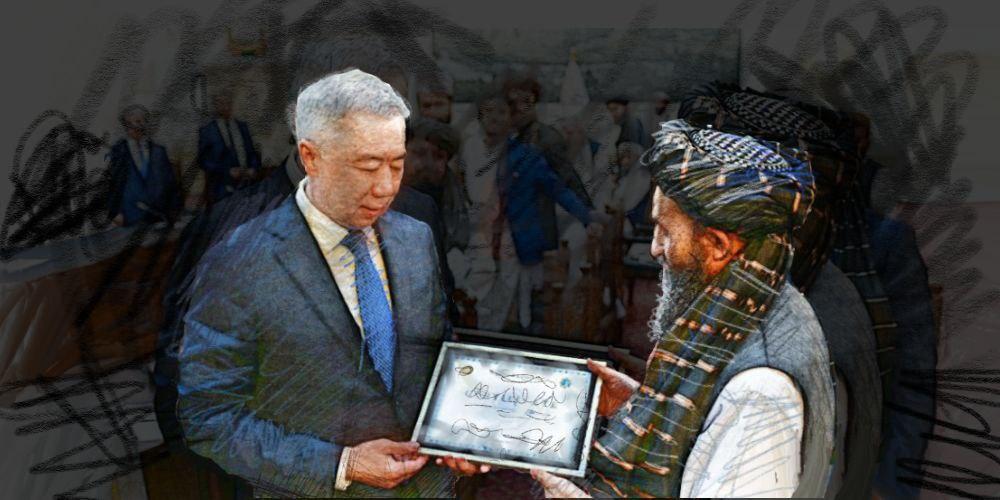
“When the winds of change blow, some build walls, others build windmills.” — Chinese proverb Afghanistan remains one of the most complex and controversial spots on the map of Eurasia. After the Taliban came to power in 2021, it seemed the countries of Central Asia were faced with a choice: to distance themselves from the new regime or cautiously engage with it. However, it appears they have chosen a third path - pragmatic cooperation free from political intentions. Today, a window of opportunity is opening for the Central Asian states to reconsider their relationship with Afghanistan, not as a buffer zone or a source of instability, but as a potential element of a new regional architecture. At the same time, these countries are in no hurry to establish close political ties with Kabul. They avoid making declarations about "integrating" Afghanistan into Central Asia as a geopolitical region. Instead, the focus is on practical, rather than political or ideological, cooperation in areas such as transportation, trade, energy, food security, and humanitarian engagement. This pragmatic approach is shaping a new style of regional diplomacy, which is restrained yet determined. Against this backdrop, two key questions emerge: What role can Afghanistan play in regional development scenarios, and what steps are needed to minimize risks and maximize mutual benefit? Afghanistan After 2021: Between Stability and Dependency Since the end of the war and the Taliban’s return to power, Afghanistan has experienced a degree of relative order. However, the country remains economically and institutionally dependent on external assistance. Historically, Afghanistan has survived through subsidies and involvement in external conflicts, from the “Great Game” to the fight against international terrorism. Today, new actors, such as China, Russia, India, Turkey, and the Arab states, are stepping onto the stage alongside Russia, the United States, and the broader West. In the context of current geopolitical realities after the fall of its “democratic” regime, Afghanistan has found itself in a gap between the experiences of the past and a yet undetermined future. It has a unique opportunity to transcend its reputation as the “graveyard of empires” and determine its fate while simultaneously integrating into the international community. How the de facto authorities in Afghanistan handle this opportunity will not only shape the Afghan people's and the region's future but also influence the development of the entire global security paradigm. In parallel, the countries of Central Asian are building bilateral relations with Kabul on strictly pragmatic terms: participation in infrastructure and energy projects, food supply, and humanitarian aid. All of these steps have been taken without political commitments and without recognizing the regime. [caption id="attachment_30841" align="aligncenter" width="1062"] The border between Afghanistan and Tajikistan near Khorog, GBAO; image: TCA, Stephen M. Bland[/caption] Geo-Economics and Logistics: Afghanistan as a Strategic Hub The regional reality in Central Asia is increasingly taking on a geo-economic dimension. The region is not only an arena for the interests of external powers but also a zone for developing transport, logistics, and energy networks in which Afghanistan is playing an...

Central Asia: An Arena of Geopolitical Attraction

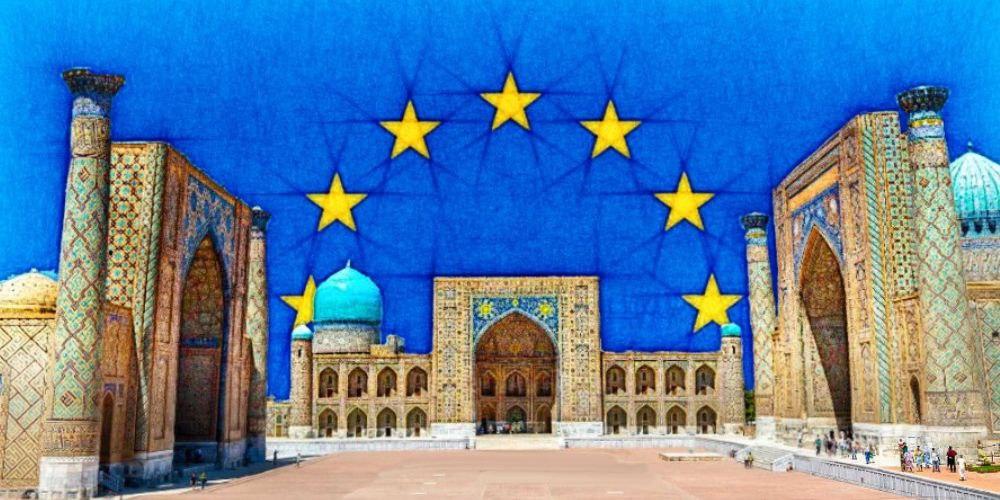
Though 2025 is not yet at its halfway point, Central Asia has already emerged as one of the primary stages of global diplomatic engagement. Rich in natural resources and strategically positioned between global powers, the region has attracted increasing interest from the European Union, China, Russia, and others. Kazakhstan, Uzbekistan, and their neighbors are asserting greater agency, pursuing multi-vector foreign policies, and striving to capitalize on evolving geopolitical dynamics. EU-Central Asia: A New Chapter Amid regular annual meetings, a landmark event this year was the inaugural EU-Central Asia Summit, held in Samarkand, Uzbekistan, on April 3-4. Leaders of all five Central Asian states met with European Council President António Costa and European Commission President Ursula von der Leyen. Discussions centered on infrastructure development, including the Trans-Caspian route, digitalization, energy security, and water resource management. The summit concluded with a pledge to sign an Enhanced Partnership and Cooperation Agreement. This meeting was facilitated by a reconfiguration of global alliances. U.S. President Donald Trump's new tariff policies and the evolving relationship between Washington and Moscow have led European leaders, unwilling to restore ties with Russia, to seek new partnerships. Central Asia, with its strategic position and investment potential, is increasingly appealing. Kazakhstan and Uzbekistan, the region’s economic leaders, are particularly eager to attract foreign capital. The EU represents a possible source, though Russian analysts remain skeptical about Europe’s ability to dislodge Russian and Chinese influence. For instance, Mikhail Neizhmakov of the Russian Agency for Political and Economic Communications noted that while von der Leyen spoke of a €12 billion Global Gateway investment package, China is the largest exporter of investment in the Eurasian region, with accumulated direct investment of $58.6 billion at the end of the first half of 2024, according to the Eurasian Development Bank. Security Discourse and Russian Narratives In addition to the EU summit, the region hosted other key diplomatic events, such as the Digital Forum in Almaty earlier this year, which was attended by Russian Prime Minister Mikhail Mishustin. Another major gathering was the CIS Council of Foreign Ministers, held on April 11, also in Almaty. Ministers approved a 2025 consultation plan and adopted joint statements on regional security, humanitarian cooperation, and opposition to unilateral sanctions. Kazakhstan: A Regional Diplomatic Hub Kazakhstan has so far distinguished itself as Central Asia’s foremost diplomatic player in 2025, hosting high-level visits and spearheading regional engagement. In January, Prime Minister Mishustin visited Astana and Almaty. February saw King Abdullah II of Jordan meet with President Kassym-Jomart Tokayev to discuss investment and humanitarian cooperation. In March, President Tokayev welcomed his Slovenian counterpart, Nataša Pirc Musar, who expressed interest in expanding bilateral trade. French President Emmanuel Macron is also preparing to visit Kazakhstan later this year, reinforcing France’s strategic interest in the region. In June, meanwhile, Chinese President Xi Jinping is scheduled to attend the second Central Asia-China Summit in Astana, where trade and investment will top the agenda. Navigating a New Geopolitical Order Today, Central Asia represents a vital intersection of East and West....

Tajikistan’s Passport Remains Among the World’s Weakest

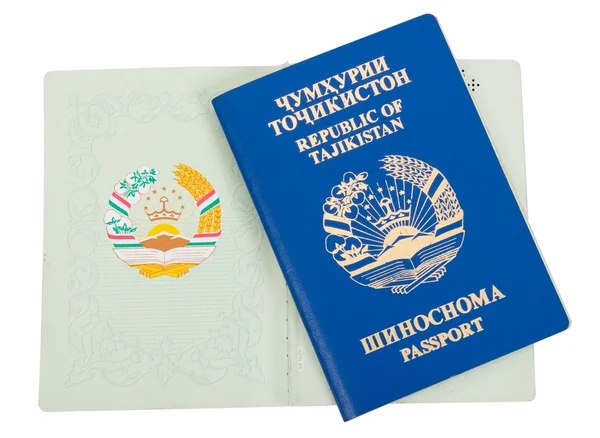
Tajikistan's passport has once again ranked among the lowest globally in terms of travel freedom, highlighting the country’s ongoing limitations in global mobility. This is according to the updated 2025 Visa Index ranking, Tajikistan placed 84th out of more than 90 countries surveyed. Holders of Tajik passports can travel visa-free to just 23 countries. An additional 33 countries offer visas on arrival, and two allow electronic travel authorizations (eTAs). Entry into 40 countries requires an e-visa, while advance visas are mandatory for 131 destinations. Compared to other former Soviet republics, Tajikistan trails significantly behind. Ukraine ranks 28th with 149 visa-free destinations, Georgia 45th (125 countries), Kazakhstan 63rd (82), Kyrgyzstan 79th (63), and Uzbekistan 80th (62). The only country in the region with a weaker passport is Turkmenistan, which ranks 92nd, offering access to just 48 countries. An alternative ranking by Passport Index places Tajikistan 66th, counting 23 visa-free countries, 47 with visa-on-arrival options, and four that accept eTAs. These slight differences arise from variations in methodology and recognition of visa regimes. Official data from Tajikistan’s Ministry of Foreign Affairs partially supports these findings, listing 35 visa-free destinations. These include 23 countries that offer unrestricted entry to Tajik citizens, regardless of passport category. Among them are Russia, Iran, Ukraine, Georgia, Armenia, Malaysia, Belarus, the Philippines, Uzbekistan, and Kyrgyzstan. Despite modest improvements, Tajik citizens still face significant challenges when traveling to most developed countries. Entry into the European Union, the United Kingdom, the United States, Canada, Japan, and Australia, 131 countries in total, requires advance visa processing. Experts note that visa liberalization depends on numerous factors, including political and economic stability, diplomatic engagement, and international trust. Rankings like Visa Index and Passport Index evaluate travel freedom based on the number of countries accessible via visa-free entry, visa-on-arrival, or eTA. The highest-ranked passports provide access to over 180 destinations without the need for prior visas. For citizens of countries with "weak" passports, some turn to citizenship-by-investment programs to circumvent travel restrictions, especially businesspeople or frequent international travelers seeking broader mobility. Tajikistan’s passport remains one of the least mobile in the world. While visa-free travel to CIS and selected Asian countries provides some leeway, broader global access remains limited. Improving this situation will require intensified diplomatic negotiations and stronger economic partnerships that could eventually influence international visa policies.

Jewelry Factory Opens in Tajikistan with Chinese Investment

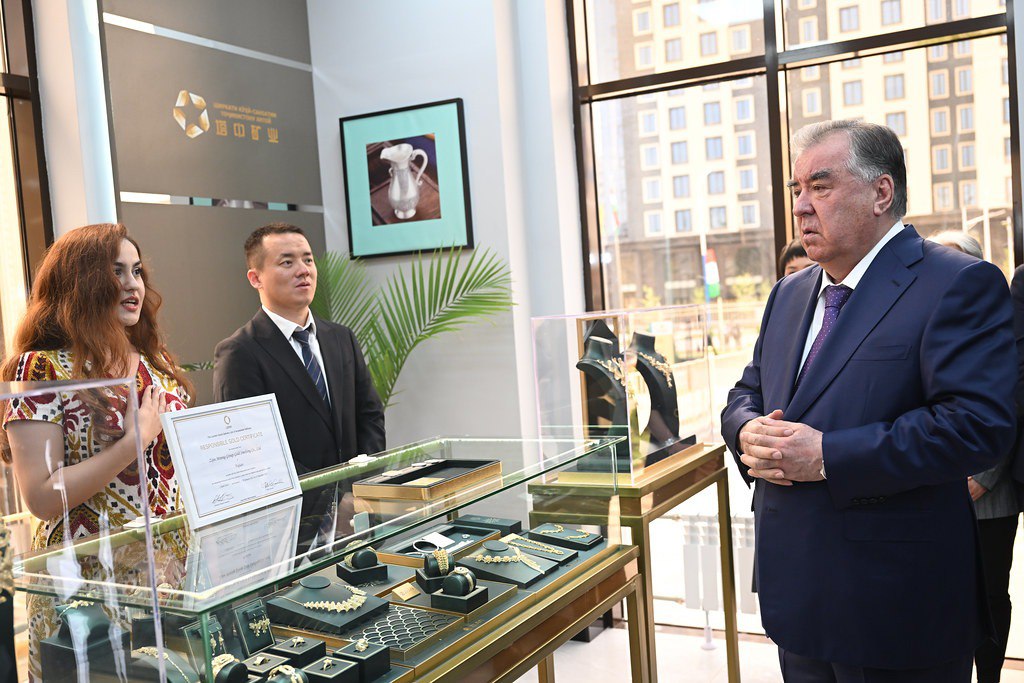
A new jewelry factory operated by China-Tajikistan Mining Industry Company LLC officially opened in Dushanbe on April 10. The inauguration ceremony was attended by President Emomali Rahmon of Tajikistan. Construction of the facility began in 2023. The complex now includes modern production facilities and a two-story gold sales center. Utilizing the latest Chinese technology, the factory is capable of processing up to one ton of gold and 30 tons of silver annually. It will also produce a variety of goods, including jewelry, home decorations, and household items. On the same day, President Rahmon laid the foundation stones for two additional jewelry factories, also backed by Chinese investment. One will be operated by TBEA Dushanbe Mining Industry Company LLC, and the other by Pakrut Company LLC. Both are slated for completion within a year and will be located in Dushanbe. China currently controls over 75% of Tajikistan’s gold production. While Chinese investment has helped develop Tajikistan’s mining infrastructure, it has also raised concerns. Critics point to potential environmental risks and labor rights issues associated with the expanding influence of Chinese firms in the sector.

Tajikistan Abolishes Criminal Prosecution for Social Media ‘Likes’

Tajikistan will no longer criminalize the use of “likes” or emoji reactions on social media posts. Amendments to the Criminal Code were unanimously approved on April 10 during the first session of the newly elected lower house of parliament, the Majlisi Namoyandagon. The legislative initiative, introduced by First Deputy Prosecutor General Umed Karimzoda, removes language from Articles 179(3) and 307(1) of the Criminal Code that allowed for punishment for “endorsing” extremist or terrorist content. Specifically, the phrase “liking or other sign of approval” will be eliminated from the law. The reform will take effect after approval by the upper house of parliament, a presidential signature, and official publication. Up to 15 Years for Liking: The Way It Used to Be Previously, Tajikistan’s legislation permitted real prison sentences for online activity. Article 179(3), concerning public incitement to terrorism, carried penalties of 5 to 15 years in prison. Article 307(1), concerning public justification of extremism, allowed for 3 to 12 years behind bars. This justification included simple actions such as liking or reposting flagged content. According to Karimzoda, 1,507 people are currently imprisoned for social media activity involving likes or comments on extremist-designated materials. This figure, cited from the Main Department of Corrections, had not been officially disclosed prior to his statement. The Supreme Court of Tajikistan has also consistently declined to release related statistics to the press or the public. Government Response and Rahmon’s Remarks President Emomali Rahmon had already voiced concern over such judicial practices in October 2024, calling on authorities to end prosecutions based on social media interactions. “Some bodies are bringing cases without grounds and this should be stopped,” Rahmon said at the time. Despite this directive, media reports indicate that security services continued to detain individuals, seize phones, and inspect social media activity. One high-profile example involved the family of journalist Shervon Umriddin. In April 2024, his brother was detained in the town of Penjikent after authorities inspected his phone and discovered likes on opposition-related posts. A similar incident had affected another relative a year earlier. Both were eventually released after paying fines. Legal Experts and Human Rights Concerns Media lawyer Ranget Yatimov recalled that as early as 2018, human rights defenders warned of the risk of abuse stemming from the vague interpretation of anti-extremist legislation. Courts began equating “likes” on controversial content with public justification of terrorism. Yatimov also highlighted that such court hearings are typically held behind closed doors, lacking transparency or external oversight. Following Rahmon’s remarks, lawyers and civil society activists emphasized that rhetorical criticism was insufficient. “If the president has a desire to change the situation, he should officially initiate the legislative abolition of such norms. Otherwise, it will remain in words,” said political migrant Farҳod Odinaev. International human rights organizations have repeatedly condemned Tajikistan for restricting freedom of expression. Criminal penalties for digital activity, including likes and comments, have been widely regarded as a violation of basic human rights. The repeal of this provision could mark a step toward more proportionate law...