• KGS/USD = 0.01144 0%
  • KZT/USD = 0.00208 0%
  • TJS/USD = 0.10440 -0.19%
  • UZS/USD = 0.00008 0%
  • TMT/USD = 0.28571 0.28%
  • KGS/USD = 0.01144 0%
  • KZT/USD = 0.00208 0%
  • TJS/USD = 0.10440 -0.19%
  • UZS/USD = 0.00008 0%
  • TMT/USD = 0.28571 0.28%
  • KGS/USD = 0.01144 0%
  • KZT/USD = 0.00208 0%
  • TJS/USD = 0.10440 -0.19%
  • UZS/USD = 0.00008 0%
  • TMT/USD = 0.28571 0.28%
  • KGS/USD = 0.01144 0%
  • KZT/USD = 0.00208 0%
  • TJS/USD = 0.10440 -0.19%
  • UZS/USD = 0.00008 0%
  • TMT/USD = 0.28571 0.28%
  • KGS/USD = 0.01144 0%
  • KZT/USD = 0.00208 0%
  • TJS/USD = 0.10440 -0.19%
  • UZS/USD = 0.00008 0%
  • TMT/USD = 0.28571 0.28%
  • KGS/USD = 0.01144 0%
  • KZT/USD = 0.00208 0%
  • TJS/USD = 0.10440 -0.19%
  • UZS/USD = 0.00008 0%
  • TMT/USD = 0.28571 0.28%
  • KGS/USD = 0.01144 0%
  • KZT/USD = 0.00208 0%
  • TJS/USD = 0.10440 -0.19%
  • UZS/USD = 0.00008 0%
  • TMT/USD = 0.28571 0.28%
  • KGS/USD = 0.01144 0%
  • KZT/USD = 0.00208 0%
  • TJS/USD = 0.10440 -0.19%
  • UZS/USD = 0.00008 0%
  • TMT/USD = 0.28571 0.28%

Viewing results 463 - 468 of 1438

EBRD and ADB Finance Upgrade of Key Road in Tajikistan

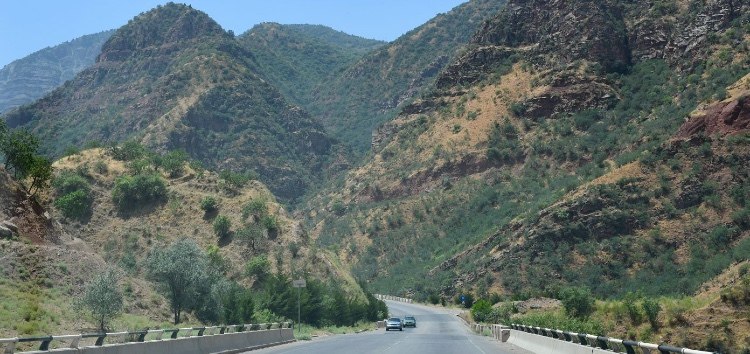
The European Bank for Reconstruction and Development (EBRD) has announced a loan to finance the upgrade and expansion of the Dangara-Guliston road in Tajikistan​. Built in the 1930s as part of a major international highway, this road serves as a crucial link between the north and south of the Khatlon region, an area that produces more than 53% of Tajikistan’s agricultural output and is home to 35% of the country’s population. Financing and Project Scope The EBRD’s sovereign loan of up to €38 million will help finance improvements to a 49-kilometer section of the road, including the construction of charging infrastructure for electric vehicles. The Asian Development Bank (ADB) will provide $86.7 million (€83.5 million) in grant financing to support the project. The upgrades will convert the existing single-lane road into a dual-lane highway, significantly improving transportation efficiency and reducing cargo delivery times across the Khatlon region and beyond. Additionally, the upgraded road will feature: Improved lighting Cycle paths Pavements for pedestrians Electric Mobility and Sustainability This will be one of the first roads in Tajikistan equipped with charging stations for electric vehicles (EVs), encouraging wider EV adoption in the country. The EBRD will also provide a technical cooperation grant to develop a national electric mobility action plan, aimed at stimulating public and private investment in sustainable transportation infrastructure across Tajikistan. EBRD's Broader Investment in Tajikistan To date, the EBRD has invested over €1 billion in Tajikistan through 183 projects, supporting key sectors such as infrastructure, energy, and private enterprise development.

Kyrgyz-Tajik Border Agreement Seeks to End Years of Hostility

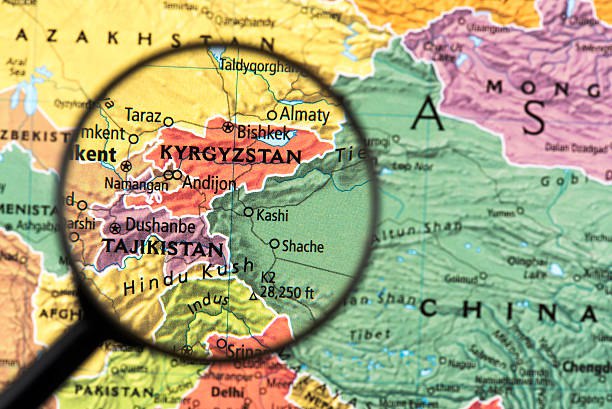
Kyrgyzstan and Tajikistan signed an agreement on March 13 that aims to put an end to tensions that have made their border the deadliest area in Central Asia for more than a decade. Underscoring the significance of this breakthrough was Tajikistan President Emomali Rahmon making his first state visit in nearly twelve years to the Kyrgyz capital Bishkek to sign the deal on the delimitation of the Kyrgyz-Tajik border. A Long-Standing Dispute Marking the border in the mountainous, sparsely inhabited eastern section of the two countries’ border was not difficult, and by 2011, some 520 kilometers had been demarcated. Reaching a final agreement on the western 487 kilometers, located in the Ferghana Valley and more densely populated, however, was far more complicated due to roads and canals that passed through both countries’ territories. Rahmon’s visit in May 2013 came a month after hundreds of residents of border communities clashed near the Kyrgyz village of Ak-Sai and Tajikistan’s Vorukh enclave. Such incidents were increasing, though at that time they were limited to fistfights, throwing sticks and stones, and vandalism of property, usually vehicles. In May 2013, Rahmon and then Kyrgyz President, Almazbek Atambayev, discussed measures to ease tensions along the border, but along the frontier, the meeting of the two presidents in the Kyrgyz capital made little difference. In January 2014, a Kyrgyz construction crew started work on a bypass road around the Tajikistan’s Vorukh enclave, and an argument broke out between border guards of the two countries. Insults led to an exchange of fire, during which Tajik border guards reportedly used grenade launchers and mortars. Five Kyrgyz and two Tajik border guards were wounded in the fighting. It was the first time weapons were used during border conflicts, but from that time on, disputes increasingly involved gunfire, increasing the number of casualties and sometimes resulting in deaths. Both governments sent additional troops and military equipment to the border area, adding fuel to the fire. On July 26, 2019, four days after another clash near the Vorukh enclave left one person dead and 27 injured, Rahmon met with then-Kyrgyz President Soronbai Jeenbekov in the Vorukh enclave. Again, there were promises of new steps to defuse tensions and hasten an agreement on border delimitation, but as had happened previously, it was not long before fights erupted, adding to the growing casualty list along the Kyrgyz-Tajik border. From Bad to Worse On April 28, 2021, Kyrgyz villagers spotted a group of Tajik citizens setting up a camera on a water intake station near the Kyrgyz village of Kok-Tash. An argument quickly led to large-scale clashes that spread along several sections of the Kyrgyz-Tajik border. Armed forces from the two countries used heavy machine guns, mortars, and armored vehicles. Tajikistan even sent helicopter gunships to attack one area in Kyrgyzstan. The fighting only lasted two days, but when it was over, 54 people were dead, hundreds were wounded, thousands were forced to flee the area, and there was damage to homes and other buildings....

Kyrgyzstan and Tajikistan Finalize Historic Border Agreement, Ending Decades-Long Dispute

On March 13, the presidents of Kyrgyzstan and Tajikistan met in Bishkek, where Sadyr Japarov and Emomali Rahmon signed a landmark agreement on the delimitation and demarcation of the Kyrgyz-Tajik border. Following the signing, the agreement will be sent to the parliaments of both countries for consideration. Deputies must approve the ratification bill before it returns to the heads of state for final endorsement. The presidents are expected to exchange instruments of ratification on March 31 during the Fergana Valley summit, where Uzbek President Shavkat Mirziyoyev is also set to attend. Only then will the demarcation process, marking the border with physical infrastructure, begin. The Kyrgyz-Tajik border stretches 1,006 kilometers. As of 2011, only 520 kilometers had been officially defined. In the past three years, both nations have settled on an additional 487 kilometers of the border. During a recent parliamentary session, Kamchybek Tashiyev, head of Kyrgyzstan’s State Committee for National Security (GKNB) and chair of the intergovernmental commission on border negotiations, outlined key principles that guided the discussions. Notably, Tajikistan agreed to use 1991 documents to define border territories instead of relying on maps from 1924-1927. The negotiations aimed to balance both nations' interests while avoiding unilateral decisions that could lead to renewed tensions. Beyond the border agreement, both governments also signed intergovernmental deals on cooperation between their Foreign Ministries, as well as agreements on water and energy management and road transportation infrastructure.  Additionally, the two sides agreed to officially reopen the Kairagach (Leilek district) and Kyzyl-Bel (Batken district) border checkpoints, which had been closed for nearly four years. Both checkpoints resumed operations on March 13.

Opinion: How Central Asia Has Strengthened Ties with the West Since 2022

The Russian invasion of Ukraine has changed the relationship between Russia and Central Asia. Russia’s decision to invade a neighboring country, and the devastation and destruction that followed, has forced Central Asia to reconsider its relationship with the Russian Federation.  Russia is no longer seen as an “invincible superpower,” meaning it cannot be relied on to protect other members of the CSTO (Collective Security Treaty Organization). In addition, the U.S. and European countries have levied heavy sanctions on Russia for its invasion of Ukraine. Russia has attempted to evade these sanctions by conducting business with third parties, but the international community has warned several organizations and countries not to partake in these relations. Otherwise, should these businesses and countries opt to help Russia, then the international community has said that it will impose stiff penalties on these Russian intermediaries as well. Given these events, the Central Asian states have now been actively pursuing new relationships beyond Russia to bolster national, economic, and energy security within the region. During this process, China has attempted to assert itself as Central Asia’s new ally. Like Russia, China already has a significant trade relationship with Central Asia. In addition, China is Central Asia’s largest gas consumer, meaning the Chinese have attempted to force Central Asia into an economic and energy partnership. Despite this relationship, the countries of Central Asia have opted not to increase their reliance on China. Instead, recent developments have led them to improve their relations with the United States, the United Kingdom, and the European Union. But how has the West strengthened its relationship with Central Asia since 2022? Take, for example, the United States. When Russia’s invasion began in February 2022, the then U.S. Secretary of State Antony Blinken met with foreign ministers from Kazakhstan, Kyrgyzstan, Tajikistan, and Uzbekistan to discuss the war. During their meeting, Secretary Blinken stated that the United States supports Central Asia’s “sovereignty, independence, and territorial integrity.” He also said that the United States will continue to strengthen its relationship with the region. Since this meeting, Blinken has met with foreign ministers from Central Asia on several occasions in 2023 and 2024, where they further discussed how Central Asia can “develop the strongest possible capacities for their own security, their growing economic prosperity, and the strength and resilience of their societies.” Furthermore, U.S. President Joe Biden met with senior officials from Central Asia. During his meeting with his Central Asian counterparts in September 2023, Biden said that the United States would help “invest in and develop Central Asia’s energy infrastructure.” The United States also established a new business initiative with Central Asia, where the United States has provided hundreds of millions of dollars in assistance to the region. Then, during the United States-Central Asia Trade Investment Framework Council in June 2024, the United States and the Central Asian states discussed new investment opportunities and how they could diversify trade. These discussions were well received, and the United States called for future engagements between it and Central...

World Bank Report Examines Migration Trends in Central Asia

The World Bank has released a report titled The Way Forward: Supporting Successful Migration in the Europe and Central Asia Region, which analyzes migration trends and their impact on countries in the region, including Uzbekistan, Kazakhstan, Kyrgyzstan, and Tajikistan. Migration remains a significant issue in Europe and Central Asia, a region home to 100 million migrants, one-third of the world’s total migrant population. People move across borders in search of better job opportunities, as well as in response to changing demographics, climate change, and conflicts. This trend is expected to continue. According to the report, most migrants from Tajikistan and Kyrgyzstan head to Russia, with over 80% of migration from these countries directed there in 2023. Migration from Uzbekistan is more diverse, with 57% of Uzbek migrants residing in Russia, 15% in Kazakhstan, and 10% in Ukraine. The Economic Role of Labor Migration Labor migration plays a crucial role in the economies of Central Asian nations. In 2024, remittances accounted for: 45% of Tajikistan’s GDP 24% of Kyrgyzstan’s GDP 14% of Uzbekistan’s GDP Many households rely heavily on money sent home by migrants. The report highlights that without remittances, the poverty rate among Kyrgyz households with migrant family members would rise from 10% to 50%, while in Uzbekistan, it would increase from 9.6% to 16.8%. The total volume of remittances sent to Uzbekistan in 2024 reached a record $14.8 billion. Recommendations for Better Migration Management The report underscores the need for improved migration policies, as its full potential remains underutilized. If managed effectively, migration can help address economic and demographic challenges. The World Bank recommends several measures to enhance migration management: Developing tailored strategies for skilled and unskilled workers. Integrating labor migration into national economic planning to support growth. Implementing policies to mitigate "brain drain" and encourage skilled workers to return home. Improving migrant registration and formalizing agreements with destination countries. Providing migrants with accurate job information to ensure safer and more organized migration processes. The report concludes that with the right policies in place, migration has the potential to serve as a powerful tool for economic development in Central Asia.

How Women in Central Asia Celebrate International Women’s Day

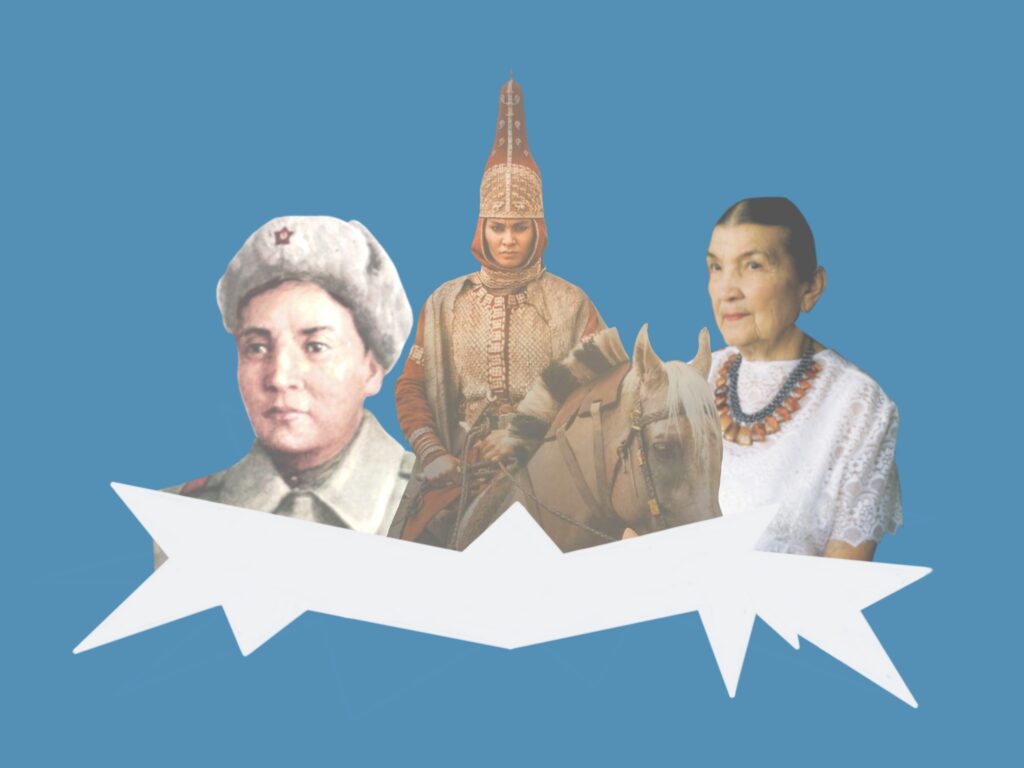
March 8, International Women’s Day, holds a special place in Central Asia. Over the years, the holiday has evolved from its Soviet-era roots into a modern celebration that blends tradition with contemporary interpretations. The Soviet Past: March 8 as a Day for Working Women During the Soviet Union, March 8 was more than a celebration of spring and femininity, it symbolized the struggle for women’s rights and equality. The day honored working women, with official ceremonies highlighting their achievements. State-run enterprises and organizations staged formal events and presented flowers and gifts to female employees, and media outlets published articles about the country’s outstanding women. The Transition Period: The 1990s Following the collapse of the Soviet Union, Central Asian countries began redefining their identities, which was reflected in how they marked March 8. The holiday took on a more personal and familial character, with less ideological emphasis. While state celebrations continued, they became more subdued. Men still gifted flowers and presents to women, but the political significance of the day gradually faded into the background. Modern Celebrations: Balancing Tradition and New Trends Today, March 8 in Central Asia is primarily a day to recognize women’s contributions and express gratitude. The holiday remains widely celebrated across Kazakhstan, Kyrgyzstan, Uzbekistan, Tajikistan, and Turkmenistan, though each country has developed its distinct traditions. Kazakhstan: Major cities host flash mobs, charity events, and cultural programs. In recent years, feminist activism has gained momentum, with some using the holiday to highlight gender inequality. “For me, March 8 is not just about receiving flowers, it’s a reminder that equality is not a privilege but a necessity,” Ainur, 24, from Almaty told TCA. Uzbekistan: The holiday remains warm and family-oriented. Women receive flowers, sweets, and gifts from colleagues and relatives, while government agencies organize concerts and celebrations. “My friends and I always celebrate March 8. It’s wonderful to receive gifts from my brothers, friends, and husband, but I wish there was more year-round appreciation for women,” Madina, 27, from Tashkent told TCA. Kyrgyzstan: Alongside traditional celebrations, women's organizations and activists hold marches and discussions on gender rights, reflecting a shift toward reinterpreting the holiday. “I participate in the women’s rights march every year because this day is not just about flowers; it’s about our opportunities and freedoms,” Gulzat, 23, from Bishkek told TCA. Tajikistan and Turkmenistan: March 8 remains an official holiday, but without any strong political agenda. “For me, this day is a time to gather with family, but I see that younger women are giving it a new meaning,” Zarina, 40, from Dushanbe told TCA. Changing Values and Perspectives Each year, debates over the significance of March 8 grow stronger. Some argue that it should remain a celebration of spring and femininity, while others emphasize its role in promoting gender equality. Regardless of interpretation, International Women’s Day remains an important occasion that unites different generations of women and reinforces the need for respect and support. Over time, the holiday in Central Asia has evolved from a Soviet...