• KGS/USD = 0.01144 0%
  • KZT/USD = 0.00212 0%
  • TJS/USD = 0.10803 0%
  • UZS/USD = 0.00008 0%
  • TMT/USD = 0.28571 0%
  • KGS/USD = 0.01144 0%
  • KZT/USD = 0.00212 0%
  • TJS/USD = 0.10803 0%
  • UZS/USD = 0.00008 0%
  • TMT/USD = 0.28571 0%
  • KGS/USD = 0.01144 0%
  • KZT/USD = 0.00212 0%
  • TJS/USD = 0.10803 0%
  • UZS/USD = 0.00008 0%
  • TMT/USD = 0.28571 0%
  • KGS/USD = 0.01144 0%
  • KZT/USD = 0.00212 0%
  • TJS/USD = 0.10803 0%
  • UZS/USD = 0.00008 0%
  • TMT/USD = 0.28571 0%
  • KGS/USD = 0.01144 0%
  • KZT/USD = 0.00212 0%
  • TJS/USD = 0.10803 0%
  • UZS/USD = 0.00008 0%
  • TMT/USD = 0.28571 0%
  • KGS/USD = 0.01144 0%
  • KZT/USD = 0.00212 0%
  • TJS/USD = 0.10803 0%
  • UZS/USD = 0.00008 0%
  • TMT/USD = 0.28571 0%
  • KGS/USD = 0.01144 0%
  • KZT/USD = 0.00212 0%
  • TJS/USD = 0.10803 0%
  • UZS/USD = 0.00008 0%
  • TMT/USD = 0.28571 0%
  • KGS/USD = 0.01144 0%
  • KZT/USD = 0.00212 0%
  • TJS/USD = 0.10803 0%
  • UZS/USD = 0.00008 0%
  • TMT/USD = 0.28571 0%

Viewing results 25 - 30 of 456

Moody’s Upgrades Tajikistan’s Credit Rating to B2, Citing Economic Improvements

International rating agency Moody’s has upgraded Tajikistan's long-term sovereign credit rating to B2 with a stable outlook, according to the National Bank of Tajikistan. According to the financial regulator, Tajikistan has been cooperating with Moody’s since 2014, and the latest decision marks the first time the country’s sovereign rating has been raised to the B2 level. The National Bank said the upgrade reflects the government’s ongoing economic reforms and policy measures aimed at strengthening the country’s financial system and macroeconomic stability. Moody’s cited several factors behind the upgrade from B3 to B2, including sustained economic growth in recent years, improvements in fiscal management, and continued positive macroeconomic trends. The agency also highlighted progress in structural reforms, reduced risks related to public debt, and improvements in public financial management. The stable outlook indicates Moody’s expectation that Tajikistan will maintain prudent fiscal and monetary policies in the coming years. A B2 sovereign rating signals moderate creditworthiness. This means that while the country is capable of meeting its financial obligations, certain economic and external risks remain. Compared with the previous B3 rating, the upgrade reflects a stronger financial position and increased confidence from international financial markets. The stable outlook also suggests that no major macroeconomic shocks are expected in the medium term and that economic risks are considered manageable. Assessments by international rating agencies play an important role for countries seeking access to global financial markets. First, sovereign credit ratings help investors and lenders evaluate a government’s ability to meet its financial obligations, which directly affects borrowing costs and loan conditions. Second, a higher rating increases a country’s attractiveness to international investors. Global financial institutions often rely on such ratings when assessing investment risks, meaning improvements can help attract foreign capital. Credit ratings are also viewed as indicators of economic stability and fiscal discipline, strengthening confidence in government policies among international partners and domestic market participants. In addition, sovereign ratings influence external debt management and help governments raise financing for infrastructure and social development projects. The Moody’s upgrade is not the only positive signal for Tajikistan’s economy. Just a month earlier, another major international rating agency, Standard & Poor’s, improved the outlook on Tajikistan’s long-term sovereign credit rating from stable to positive while maintaining the rating at B. Taken together, the assessments from two leading global rating agencies highlight improvements in Tajikistan’s macroeconomic conditions and point to stronger prospects for financial stability in the coming years.

Dushanbe and London Agree on Cooperation on Critical Minerals

The Tajik government has approved a draft memorandum of understanding with the United Kingdom on cooperation in the field of critical minerals. The agreement is expected to be concluded between Tajikistan’s Ministry of Industry and New Technologies and the UK government. The draft memorandum emphasizes the strategic importance of critical minerals for the global economy. These resources are essential for industrial development, advanced technologies, and the transition to low-carbon energy systems. The document notes that sustainable and transparent supply chains for such minerals are crucial for economic security. The market for these resources remains vulnerable due to the high concentration of production in a limited number of countries and the risk of supply disruptions. Cooperation between Tajikistan and the UK aims to diversify supply sources and promote the development of more sustainable international supply chains for the extraction and processing of raw materials. The parties also intend to implement high sustainable development standards throughout project lifecycles, including environmental, social, and governance (ESG) principles. The memorandum also includes the possibility of export credit and project insurance, subject to certain conditions. In addition to business cooperation, the agreement provides for the development of scientific and educational initiatives. In particular, the following measures are planned: the creation of academic partnerships; the exchange of experience between research institutes; strengthening the institutional capacity of the mining sector. A joint working group on critical minerals will be established to coordinate cooperation, with meetings planned twice a year. The memorandum will be valid for five years, with the possibility of automatic renewal. Tajikistan has significant reserves of several strategic resources. According to geologists, there are indications of lithium deposits in the country, a key metal used in the production of electric vehicle batteries and electronics. Rare earth elements have also been identified, including potential deposits of cerium and praseodymium, which are used in electronics and renewable energy technologies. In addition, the country has reserves of niobium and tantalum.

Iran Volatility Tests Central Asia’s Overland Corridors

The current escalation around Iran holds the potential for transforming the long-term geopolitical configuration of Eurasia, including Central Asia. In the short and medium term, aside from the security and safety of its citizens, Central Asia's main concern is economic, because it puts stress on overland rail and trucking routes that cross Iranian territory. Central Asian exporters do not ship through the Gulf, so for now the key issue is whether an Iran-crossing land route remains reliable enough, and financeable enough, to serve as a routine outlet for trade. The Iran transit option differs from trans-Caspian reliance on ports and rail interfaces around the Caspian Sea, transiting to onward rail across the South Caucasus and into Europe. The Iran option offers a continuous land arc from Central Asian railheads and road networks into Iran, then onward to Türkiye and connected European rail networks, with the additional possibility of reaching Iran’s southern ports for Indian Ocean-facing trade. Each route has its own chokepoints, paperwork burdens, and exposure to risk premiums. Rail is efficient for bulk and container flows when schedules and documentation are stable. Trucking provides flexibility, short-notice capacity, and last-mile options, but it is more sensitive to security conditions and border clearance delays. Technical capacity at the Iran–Turkmenistan crossings is key. Recent reports of discussions in Sarakhs describe efforts to expand the use of a specialized rail logistics process whereby entire wheel assemblies are replaced on railcars to transition between different track gauges. There is also a need to address customs constraints at Sarakhs and Incheh Borun. Against that operational background, Kazakhstan has signaled diplomatic attention to Gulf partners and Jordan. President Kassym-Jomart Tokayev has sent messages of support to leaders of the United Arab Emirates, Saudi Arabia, Qatar, Bahrain, and Kuwait, followed by a similar message to Jordan, and a phone call with Qatar’s emir. The language emphasized solidarity and diplomacy and, in commercial terms, reads as partner-management. It reassures major investors and energy-market counterparts that Kazakhstan is engaged, attentive, and positioning itself for stability rather than escalation. The trans-Iran rail foundation is over a decade old. On December 3, 2014, the presidents of Kazakhstan, Turkmenistan, and Iran inaugurated the 928-kilometer Uzen–Bereket–Gorgan railway, characterized by RFE/RL (which gave the length as 935 kilometers) as the shortest railway connecting the three states. The International Union of Railways similarly notes the inauguration of the Gorgan–Inche Boroun link on that date as part of the corridor connecting Iran to Turkmenistan and Kazakhstan. Recent reporting suggests renewed efforts to operationalize the Iran option as a westbound channel. Uzbekistan, in cooperation with Türkiye, launched freight rail services along the Uzbekistan–Turkmenistan–Iran–Türkiye route in 2022. The Organization of Turkic States described a December 2022 event in Tashkent as the first freight train organized from Türkiye to Uzbekistan, which anchors the same basic idea: make westbound rail via Iran more regular and more visible to logistics markets. The point is not that Iran becomes the sole answer, but that Central Asian exporters and transit states have been...

Central Asia’s Population Could Reach 96 Million by 2040, Raising Infrastructure Pressures

Central Asia’s population could grow to 96 million by 2040, a trend expected to stimulate economic expansion while placing significant strain on infrastructure, energy systems, and water resources across the region, according to Russia’s state news agency TASS. In an interview with TASS, Nikolai Podguzov, Chairman of the Management Board of the Eurasian Development Bank (EDB), said demographic growth would be one of the defining factors shaping Central Asia’s long-term development. “By 2040, according to our estimates, the population of Central Asia may reach 96 million. This should become a driver of economic growth, but at the same time such numbers will create enormous pressure on infrastructure,” he said. As previously reported by The Times of Central Asia, Central Asia’s population exceeded 84 million in 2025, continuing a rapid upward trend after surpassing 80 million in 2024. Projections indicate that the population could exceed 100 million by 2050, underscoring the scale of demographic and economic transformation facing the region in the coming decades. Podguzov added that the region would require significant progress in energy efficiency, modern transport systems, and water management to ensure sustainable development. He described Central Asia as one of the regions of the world most vulnerable to climate change. According to EDB forecasts, water shortages are expected to intensify, with an annual deficit potentially reaching between 5 and 12 cubic kilometers by 2028. A substantial portion of water resources is already lost due to outdated irrigation and distribution systems. Podguzov said the bank is financing projects to modernize irrigation networks, introduce water-saving technologies, and implement digital water accounting mechanisms across the region. To address these challenges, the EDB has proposed a Eurasian Transport Framework, a network of transport corridors aimed at lowering logistics costs and accelerating trade flows. While existing routes predominantly run east to west, Podguzov emphasized the growing importance of north-south connections, including the potential Trans-Afghan corridor, which could provide access to markets in South Asia and the Persian Gulf. The bank projects that the combined economies of Central Asia’s five countries will reach approximately $600 billion in 2026, positioning the region among the fastest-growing globally. However, Podguzov stressed that demographic expansion, transport development, and water security are closely interconnected challenges that require coordinated policy responses.  

Gold Mining in Afghanistan Raises Security Concerns for Central Asia

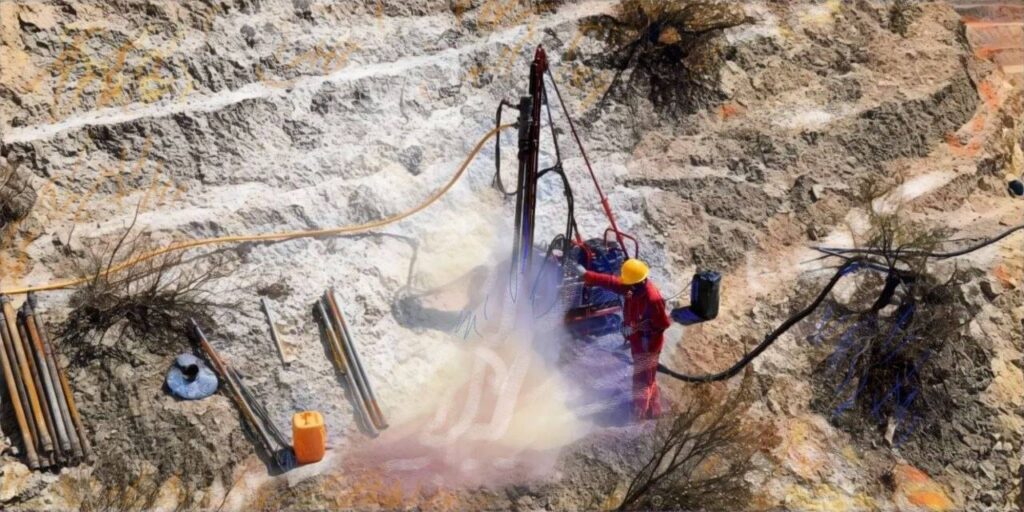
Large-scale gold mining in northern Afghanistan is increasingly raising tensions and potential security risks for Central Asia, particularly along the Afghan-Tajik border, according to a report by ExpressAsia. The outlet reports that intensive extraction activities are continuing in border areas adjacent to Tajikistan, where clashes and exchanges of fire have periodically occurred between Tajik border guards and individuals described as illegal miners or smugglers attempting to cross the frontier. Over the past two years, mining operations have expanded significantly, with thousands of units of heavy equipment, including excavators and trucks, reportedly transported to Afghanistan’s Takhar and Badakhshan provinces. Local residents have referred to the rapid industrial expansion as a “gold apocalypse.” Mining is concentrated in the Chah Ab district, as well as the Shahri Buzurg and Raghistan areas, which border Tajikistan’s Khatlon region. The report states that around five Chinese companies and two Turkish firms are operating in the area, along with approximately 30 enterprises linked to Haji Bashir Noorzai, whom analysts widely describe as a major figure in Afghanistan’s narcotics trade, in addition to numerous smaller operators. Badakhshan province is considered one of Afghanistan’s most resource-rich regions. In addition to gold, deposits of rubies, lapis lazuli, platinum, and other valuable minerals are being actively extracted. Official figures cited in the report indicate that gold mining generated approximately $900 million in government revenue in 2025. At the same time, experts estimate that gold worth roughly $60 million is extracted daily in border areas alone. Despite the scale of the operations, analysts cited by ExpressAsia say regulatory oversight remains weak and revenue distribution lacks transparency. A significant share of profits is believed to flow to intermediaries and armed groups, while local communities reportedly receive limited economic benefit. Environmental concerns are also mounting. Ecologists warn that intensive mining has already degraded agricultural land, with some fertile areas reportedly turning into sandy terrain, potentially creating long-term ecological challenges for the region. Additional tensions stem from unresolved border management issues along the Panj River, which forms the natural boundary between Afghanistan and Tajikistan under agreements reached in the 1970s. As the river’s course gradually shifts, disputed islands have emerged, increasing the risk of unintentional crossings by miners and triggering repeated protests from the Tajik side. According to ExpressAsia, Tajik authorities have begun reinforcing riverbanks, a move that could further alter water flow and complicate territorial arrangements as mining activity continues to expand.

Digital Inequality in Central Asia: Who Is Winning the AI Race in Finance?

AI in Central Asia’s financial sector is no longer a fashionable add-on. It has become a dividing line between leaders and laggards. A comprehensive report by the National Bank of Kazakhstan and the Fintech AI Center highlights a stark reality: while some institutions are building sovereign data centers, others are still attempting to automate basic document management processes. Kazakhstan is setting the pace. In his introduction to the report, Timur Suleimenov, Governor of the National Bank of Kazakhstan, echoes President Tokayev’s digital modernization agenda, writing: “Artificial intelligence is rapidly becoming a new paradigm for the development of the national economy… Our country faces the task of not only avoiding being left on the periphery of the global technological trend, but also of using its potential to accelerate economic modernization.” The regional AI race in finance is effectively underway, and the findings reveal deep digital inequality. The Balance of Power: Leaders and Followers A review of AI implementation across the region shows a pronounced technological divide. Kazakhstan remains the undisputed leader. Its banking sector has moved beyond experimental pilot projects. According to the report, AI is most actively deployed in the development of new products (14% of financial institutions) and marketing (13%), where neural networks enable hyper-personalized offerings. A further 10% of institutions use AI in operational activities and compliance. Elsewhere in Central Asia, governments are developing ambitious strategies, but implementation in the financial sector remains limited. Kyrgyzstan plans to launch a National AI Platform under its Digital Transformation Concept for 2024-2028. However, most of the country’s banks remain at the pilot or early implementation stage. Current AI applications focus primarily on decision-making optimization and advertising materials rather than complex financial operations. Tajikistan has positioned itself prominently at the policy level. It adopted an AI Development Strategy through 2040, the region’s first long-term framework, and initiated a United Nations General Assembly resolution on AI for Central Asia in July 2025. Yet in practice, the country’s financial market is dominated by microfinance organizations (MFOs), which are cautious in adopting advanced technologies. Their AI use is largely confined to risk management and documentation, while automation, software development, and data processing lag behind. Only 7% of institutions apply AI in financial consulting and customer support. Uzbekistan has taken a different route, prioritizing international and regional partnerships. In October 2024, the government approved its AI Development Strategy through 2030. Rather than building infrastructure independently, Tashkent is partnering with global technology providers. The state is working with Huawei to develop physical AI infrastructure and deploy ready-made industry solutions. At the same time, Uzbekistan is strengthening its academic capacity, including investments in high-performance computing for Inha University in Tashkent. Regional integration is also central to its strategy: IT Park Uzbekistan has signed a memorandum with Kazakhstan’s Astana Hub to integrate startup ecosystems. This combination, collaboration with global vendors, academic investment, and regional partnerships, is enabling Uzbekistan to narrow its technological gap more quickly. People Instead of Servers Digital inequality is most evident in spending priorities. Investment structures...