• KGS/USD = 0.01144 0%
  • KZT/USD = 0.00212 0%
  • TJS/USD = 0.10803 0%
  • UZS/USD = 0.00008 0%
  • TMT/USD = 0.28571 0%
  • KGS/USD = 0.01144 0%
  • KZT/USD = 0.00212 0%
  • TJS/USD = 0.10803 0%
  • UZS/USD = 0.00008 0%
  • TMT/USD = 0.28571 0%
  • KGS/USD = 0.01144 0%
  • KZT/USD = 0.00212 0%
  • TJS/USD = 0.10803 0%
  • UZS/USD = 0.00008 0%
  • TMT/USD = 0.28571 0%
  • KGS/USD = 0.01144 0%
  • KZT/USD = 0.00212 0%
  • TJS/USD = 0.10803 0%
  • UZS/USD = 0.00008 0%
  • TMT/USD = 0.28571 0%
  • KGS/USD = 0.01144 0%
  • KZT/USD = 0.00212 0%
  • TJS/USD = 0.10803 0%
  • UZS/USD = 0.00008 0%
  • TMT/USD = 0.28571 0%
  • KGS/USD = 0.01144 0%
  • KZT/USD = 0.00212 0%
  • TJS/USD = 0.10803 0%
  • UZS/USD = 0.00008 0%
  • TMT/USD = 0.28571 0%
  • KGS/USD = 0.01144 0%
  • KZT/USD = 0.00212 0%
  • TJS/USD = 0.10803 0%
  • UZS/USD = 0.00008 0%
  • TMT/USD = 0.28571 0%
  • KGS/USD = 0.01144 0%
  • KZT/USD = 0.00212 0%
  • TJS/USD = 0.10803 0%
  • UZS/USD = 0.00008 0%
  • TMT/USD = 0.28571 0%

Viewing results 19 - 24 of 456

Central Asia Avoids Fuel Shock as Global Pressures Build

Central Asia has so far avoided the immediate fuel shocks spreading across much of the world following the U.S. and Israel’s war with Iran. There are no lines at gas stations, no visible shortages, and no signs of panic buying. But that stability sits within a rapidly tightening global market, where disruptions in Asia and policy responses in Europe are reshaping fuel flows in ways the region will struggle to avoid. Across Southeast Asia, governments are already taking precautionary steps. Some state agencies and private firms are shifting parts of their workforce to remote work to reduce fuel consumption and prepare for potential price spikes and logistics disruptions, while Thailand is preparing contingency measures, including possible fuel rationing. China, one of Asia’s largest suppliers of refined fuels, has moved to restrict exports of gasoline, diesel, and jet fuel in an effort to prevent domestic shortages linked to the war. The move is expected to tighten supplies across Asia, especially for countries that rely on Chinese fuel imports. China supplied about one-third of Australia’s jet fuel last year, highlighting the wider regional impact, and roughly half of the Philippines’ and Bangladesh’s in 2024. Vietnam has already warned airlines to prepare for flight reductions in April due to the risk of shortages caused by these export restrictions. Indonesia is also imposing limits on fuel sales.  Fuel-related pressures have begun to emerge in Europe as well. Poland has introduced tax measures aimed at reducing fuel prices, with the government saying this will lower prices for consumers. Slovenia, meanwhile, has introduced significant restrictions on fuel consumption. Under new rules, private motorists are limited to purchasing a maximum of 50 liters per day, while businesses and farmers may purchase up to 200 liters daily. The combined effect of war-driven energy shocks and renewed tariff barriers is raising global costs and adding pressure across trade, transport, and inflation. Against this backdrop, Central Asia’s apparent stability is misleading. It is highly unlikely that import-dependent states such as Kyrgyzstan and Uzbekistan will be as well protected as Kazakhstan, which may benefit in the short term from higher crude prices. Starting April 1, Russia is banning gasoline exports in an effort to stabilize its own domestic market. Russia is a key fuel supplier to Central Asia. However, according to assurances from the Ministry of Energy of the Russian Federation, the temporary export ban will not affect supplies to Uzbekistan. Deliveries under intergovernmental agreements are expected to continue, ensuring that at least part of the region’s supply remains uninterrupted. In Kyrgyzstan, despite recent developments, fuel prices and supplies remain relatively stable. The government is considering lowering taxes or temporarily waiving excise duties for fuel importers should the crisis continue. Information from Turkmenistan is difficult to verify independently. Despite reports of fuel shortages at gas stations last year, official media are now indicating a significant increase in domestic gasoline production. The production plan for January-February 2026 was reportedly fulfilled at 122.7%, according to Deputy Chairman of the Cabinet of Ministers Guvancha...

Chinese Company Plans to Build Solar Power Plant in Tajikistan

Authorities in Tajikistan’s Khatlon region are in talks with a Chinese company over the construction of a 500-megawatt solar power plant, a project that could significantly reshape the region’s energy landscape. The proposal was discussed at a meeting between Khatlon regional head Davlatali Said and representatives of the Chinese company SETS. For a region where power outages remain a persistent issue, the project could mark an important step forward. With population growth and rising energy demand placing increasing strain on the existing grid, authorities are turning to alternative energy sources. Regional officials expect the plant to help reduce electricity shortages and improve environmental conditions. The Chinese side has expressed readiness to invest in the project and introduce modern technologies. The company reportedly has experience implementing similar energy projects, including in Central Asia. Although the project remains at the discussion stage, the parties are already considering key aspects of implementation, including construction timelines and personnel training. If agreements are finalized, the solar power plant in Khatlon could become one of the largest renewable energy projects in Tajikistan.

Asian Development Bank: Poverty in Tajikistan Declining, But Inequality Rising

Tajikistan is experiencing mixed socioeconomic trends. While the country’s poverty rate has declined markedly in recent years, inequality and structural economic constraints remain significant challenges. This assessment is outlined in the Asian Development Bank’s (ADB) country partnership strategy for 2026-2030. According to the ADB, the share of the population living below the national poverty line fell from 30.9% in 2020 to 19.9% in 2024. However, the improvement has been driven largely by rising incomes linked to wage growth and remittances from labor migrants rather than by sustained job creation within the domestic economy. Analysts note that this development may contribute to widening inequality, particularly in rural and remote areas where access to economic opportunities remains limited. Most of Tajikistan’s population lives in southern and central regions, where economic activity is heavily dependent on agriculture. These areas face heightened social risks. Women remain among the most vulnerable groups due to restricted access to employment opportunities and higher levels of food insecurity. Despite overall progress in poverty reduction, food security challenges persist. Approximately 1.5 million people are considered vulnerable, while around 50,000 are experiencing acute food shortages. In the 2025 Global Hunger Index, Tajikistan ranked 63rd out of 123 countries, the lowest position among Central Asian states. The ADB identifies weak economic diversification as a key structural issue. Heavy reliance on agriculture leaves the country exposed to external shocks and climate-related risks. Private sector development has been slow, constrained by shortages of skilled labor, underdeveloped infrastructure, and a complex regulatory environment. Limited integration into regional and global markets further hampers growth. Infrastructure quality remains among the weakest in the region. Restricted access to transport networks and logistics services continues to hinder industrial development and trade expansion. The energy sector also faces structural challenges. Dependence on hydropower increases vulnerability to climate change, particularly through declining water availability and glacier melt. At the same time, gaps in education and vocational training contribute to persistent shortages of qualified workers. These pressures are intensified by high levels of labor migration, especially among young people. As a result, the domestic economy experiences workforce shortages in sectors that could otherwise drive long-term growth. Although agriculture remains central to livelihoods, it is increasingly exposed to climate risks and constrained by limited access to markets, financing, and modern technologies.

Tajikistan’s Reliance on External Funding for State Investment Projects Is Growing

Tajikistan continues to implement a large-scale state investment programme. International financial institutions play a key role in financing these projects, however, while the government's own contribution remains limited. According to data from the State Committee on Investment and State Property Management, 82 state investment projects are currently under way in the country The total value of ongoing initiatives is estimated at approximately $4.67 billion. Of these, 55 projects are being implemented on a grant basis, five through loans, and another 22 have mixed financing. About $3 billion has already been allocated for procurement, works, and services related to the implementation of these projects. However, more than 70% of the funding is provided by just three international institutions. The World Bank remains the largest donor, contributing $1.725 billion (36.9%). It is followed by the Asian Development Bank with $914.7 million (19.5%) and the European Bank for Reconstruction and Development (EBRD) with $658.1 million (14.1%). Other investors include the Islamic Development Bank ($207.9 million), the Chinese government ($194.9 million), the Asian Infrastructure Investment Bank ($142.5 million), the German Development Bank ($129.3 million), and the European Investment Bank ($114.8 million). Against the backdrop of extensive external financing, Tajikistan’s own contribution remains small. The state is investing approximately $151.2 million, accounting for only 3.2% of the total. This means that the implementation of key infrastructure and social projects largely depends on international donors and lenders. At the same time, in 2025 Tajikistan managed to significantly increase capital inflows. Foreign investment reached approximately $7 billion, rising by nearly $2 billion (35.1%) compared with the previous year. The authorities hope to sustain this momentum by improving the investment climate, including through legislative updates. A key step was the adoption on May 14, 2025, of a new version of the law “On Investments and the Promotion of Investment Activity,” aimed at increasing the country’s attractiveness to international partners. The current development model allows Tajikistan to implement large-scale projects that would be difficult to carry out relying solely on domestic resources. However, this financing structure also increases dependence on external sources, making the economy more sensitive to the conditions set by international institutions and the global financial environment.

European Investment Fund Commits Over $200 Million to Tajik Airline

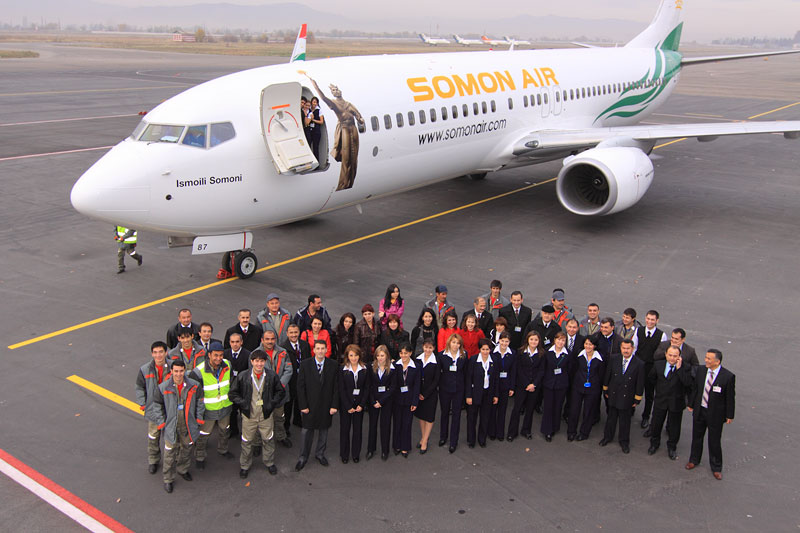
The European investment fund CFC s.r.o. plans to invest more than $200 million in the development of Tajikistan’s private carrier Shohin Airlines. The five-year agreement follows several months of negotiations between the parties. According to Shohin Airlines, the final round of talks took place on March 10, 2026, in Dushanbe. The meeting was attended by the airline’s chief executive officer, Zafar Ahmadzoda, and the founder of CFC s.r.o., Guntars Selikovs. One factor influencing the investor’s decision was the recent improvement in Tajikistan’s sovereign credit ratings by the international agencies Moody’s and S&P Global Ratings. This development has increased foreign partners’ confidence in the country’s economic stability. The parties agreed that the investment will be directed toward expanding the airline’s fleet, developing operational capacity, and modernizing infrastructure. “The signing of the investment agreement is an important milestone in Shohin Airlines’ development,” Ahmadzoda said, noting that the deal is expected to accelerate the company’s growth and expand its route network. Selikovs stated that negotiations lasted more than six months and included meetings in Dubai and several European countries. “This allowed us to thoroughly assess the company’s business model and market potential,” he said. Shohin Airlines is a private carrier focused on developing regional aviation in Tajikistan and neighboring markets. At present, the company operates specialized helicopter flights. The next stage of development will involve fleet expansion. In the near future, the airline plans to acquire an L-410 NG, a Czech-made turboprop aircraft designed for regional transport. CFC s.r.o., a fund registered in the Czech Republic, operates across markets in Europe, the Persian Gulf, and Central Asia. Its investment strategy focuses on fast-growing industries. The agreement with Shohin Airlines could become one of the largest private investments in Tajikistan’s aviation sector in recent years and may signal growing interest among international investors in the country.

From Electricity to Fuel, Central Asia is Doing More Business with Afghanistan

Central Asia is becoming even more important to Afghanistan. After the Taliban returned to power in August 2021, most of the countries of Central Asia established a dialogue with its leadership that focused on business potential, backed up by security promises. This understanding is more important than ever to the Taliban government, as events along Afghanistan’s eastern and western borders have left Central Asia as the only reliable import-export route for Afghanistan at the moment. Booming Trade At the start of March, Afghanistan’s Ministry of Industry and Commerce released figures for 2025 that showed trade with Central Asia increased from $1.79 billion in 2024 to $2.4 billion in 2025. While most of the trade is exports from Central Asia to Afghanistan, reports mentioned that Afghan exports to Central Asia -- mostly to Kazakhstan and Uzbekistan -- increased by 77 percent, from $122 million in 2024 to $216 million in 2025. A closer look shows that Uzbekistan-Afghanistan trade in 2025 totaled some $1.6 billion.  A full figure for Kazakh-Afghan trade in 2025 is not yet available. However, trade between Kazakhstan and Afghanistan amounted to some $525.2 million in 2024.  Kazakhstan's Deputy Prime Minister Serik Zhamangarin said at a Kazakh-Afghan business forum in Kazakhstan’s southern city of Shymkent in October 2025 that bilateral trade in the first eight months of 2025 had reached some $335.9 million. These figures are certain to have grown.  Fresh agreements worth more than $360 million were signed on the sidelines of the Kazakh-Afghan business forum. On March 6, Uzbekistan’s President Shavkat Mirziyoyev signed a decree ratifying the Preferential Trade Agreement between Uzbekistan and Afghanistan. Trade totals for Kyrgyzstan, Turkmenistan, and Tajikistan with Afghanistan are more modest, but, as in the cases of Kazakhstan and Uzbekistan, are set to grow.  Kyrgyz-Afghan trade for the 12 months to March 2025 came to some $66 million, but, during a Kyrgyz-Afghan business conference in Kabul commercial contracts worth some $157 million were signed.  There are no figures for Turkmen-Afghan trade in 2025, but Turkmen electricity exports to Afghanistan are increasing. Turkmenistan is also preparing to export natural gas to Afghanistan. A natural gas pipeline is slowly being constructed from the Turkmen border to the western Afghan city of Herat, which could start operation as soon as 2027. Tajikistan was the lone Central Asian country to shun contact with the Taliban after they returned to power. Representatives of the previous government of Ashraf Ghani continue to occupy the Afghan embassy in Dushanbe.  Tajik and Taliban authorities finally established contacts only in late 2024 but even to this day the two sides rarely meet face-to-face. However, Tajik-Afghan trade in 2025 still totaled some $120 million. Afghanistan’s Ministry of Industry and Commerce noted that most of Central Asia’s exports to Afghanistan are electricity, fuel products, and natural gas. Uzbekistan, Tajikistan, and Turkmenistan export electricity to Afghanistan via transmission lines that were built during the 20 years the Taliban were out of power. Some 80 percent of Afghanistan’s electricity is imported, and most of that (75-80 percent) comes...