• KGS/USD = 0.01143 0%
  • KZT/USD = 0.00205 0%
  • TJS/USD = 0.10724 0.09%
  • UZS/USD = 0.00008 0%
  • TMT/USD = 0.28571 0%
  • KGS/USD = 0.01143 0%
  • KZT/USD = 0.00205 0%
  • TJS/USD = 0.10724 0.09%
  • UZS/USD = 0.00008 0%
  • TMT/USD = 0.28571 0%
  • KGS/USD = 0.01143 0%
  • KZT/USD = 0.00205 0%
  • TJS/USD = 0.10724 0.09%
  • UZS/USD = 0.00008 0%
  • TMT/USD = 0.28571 0%
  • KGS/USD = 0.01143 0%
  • KZT/USD = 0.00205 0%
  • TJS/USD = 0.10724 0.09%
  • UZS/USD = 0.00008 0%
  • TMT/USD = 0.28571 0%
  • KGS/USD = 0.01143 0%
  • KZT/USD = 0.00205 0%
  • TJS/USD = 0.10724 0.09%
  • UZS/USD = 0.00008 0%
  • TMT/USD = 0.28571 0%
  • KGS/USD = 0.01143 0%
  • KZT/USD = 0.00205 0%
  • TJS/USD = 0.10724 0.09%
  • UZS/USD = 0.00008 0%
  • TMT/USD = 0.28571 0%
  • KGS/USD = 0.01143 0%
  • KZT/USD = 0.00205 0%
  • TJS/USD = 0.10724 0.09%
  • UZS/USD = 0.00008 0%
  • TMT/USD = 0.28571 0%
  • KGS/USD = 0.01143 0%
  • KZT/USD = 0.00205 0%
  • TJS/USD = 0.10724 0.09%
  • UZS/USD = 0.00008 0%
  • TMT/USD = 0.28571 0%

Viewing results 43 - 48 of 317

Central Asia’s Population Could Reach 96 Million by 2040, Raising Infrastructure Pressures

Central Asia’s population could grow to 96 million by 2040, a trend expected to stimulate economic expansion while placing significant strain on infrastructure, energy systems, and water resources across the region, according to Russia’s state news agency TASS. In an interview with TASS, Nikolai Podguzov, Chairman of the Management Board of the Eurasian Development Bank (EDB), said demographic growth would be one of the defining factors shaping Central Asia’s long-term development. “By 2040, according to our estimates, the population of Central Asia may reach 96 million. This should become a driver of economic growth, but at the same time such numbers will create enormous pressure on infrastructure,” he said. As previously reported by The Times of Central Asia, Central Asia’s population exceeded 84 million in 2025, continuing a rapid upward trend after surpassing 80 million in 2024. Projections indicate that the population could exceed 100 million by 2050, underscoring the scale of demographic and economic transformation facing the region in the coming decades. Podguzov added that the region would require significant progress in energy efficiency, modern transport systems, and water management to ensure sustainable development. He described Central Asia as one of the regions of the world most vulnerable to climate change. According to EDB forecasts, water shortages are expected to intensify, with an annual deficit potentially reaching between 5 and 12 cubic kilometers by 2028. A substantial portion of water resources is already lost due to outdated irrigation and distribution systems. Podguzov said the bank is financing projects to modernize irrigation networks, introduce water-saving technologies, and implement digital water accounting mechanisms across the region. To address these challenges, the EDB has proposed a Eurasian Transport Framework, a network of transport corridors aimed at lowering logistics costs and accelerating trade flows. While existing routes predominantly run east to west, Podguzov emphasized the growing importance of north-south connections, including the potential Trans-Afghan corridor, which could provide access to markets in South Asia and the Persian Gulf. The bank projects that the combined economies of Central Asia’s five countries will reach approximately $600 billion in 2026, positioning the region among the fastest-growing globally. However, Podguzov stressed that demographic expansion, transport development, and water security are closely interconnected challenges that require coordinated policy responses.  

Gold Mining in Afghanistan Raises Security Concerns for Central Asia

Large-scale gold mining in northern Afghanistan is increasingly raising tensions and potential security risks for Central Asia, particularly along the Afghan-Tajik border, according to a report by ExpressAsia. The outlet reports that intensive extraction activities are continuing in border areas adjacent to Tajikistan, where clashes and exchanges of fire have periodically occurred between Tajik border guards and individuals described as illegal miners or smugglers attempting to cross the frontier. Over the past two years, mining operations have expanded significantly, with thousands of units of heavy equipment, including excavators and trucks, reportedly transported to Afghanistan’s Takhar and Badakhshan provinces. Local residents have referred to the rapid industrial expansion as a “gold apocalypse.” Mining is concentrated in the Chah Ab district, as well as the Shahri Buzurg and Raghistan areas, which border Tajikistan’s Khatlon region. The report states that around five Chinese companies and two Turkish firms are operating in the area, along with approximately 30 enterprises linked to Haji Bashir Noorzai, whom analysts widely describe as a major figure in Afghanistan’s narcotics trade, in addition to numerous smaller operators. Badakhshan province is considered one of Afghanistan’s most resource-rich regions. In addition to gold, deposits of rubies, lapis lazuli, platinum, and other valuable minerals are being actively extracted. Official figures cited in the report indicate that gold mining generated approximately $900 million in government revenue in 2025. At the same time, experts estimate that gold worth roughly $60 million is extracted daily in border areas alone. Despite the scale of the operations, analysts cited by ExpressAsia say regulatory oversight remains weak and revenue distribution lacks transparency. A significant share of profits is believed to flow to intermediaries and armed groups, while local communities reportedly receive limited economic benefit. Environmental concerns are also mounting. Ecologists warn that intensive mining has already degraded agricultural land, with some fertile areas reportedly turning into sandy terrain, potentially creating long-term ecological challenges for the region. Additional tensions stem from unresolved border management issues along the Panj River, which forms the natural boundary between Afghanistan and Tajikistan under agreements reached in the 1970s. As the river’s course gradually shifts, disputed islands have emerged, increasing the risk of unintentional crossings by miners and triggering repeated protests from the Tajik side. According to ExpressAsia, Tajik authorities have begun reinforcing riverbanks, a move that could further alter water flow and complicate territorial arrangements as mining activity continues to expand.

Digital Inequality in Central Asia: Who Is Winning the AI Race in Finance?

AI in Central Asia’s financial sector is no longer a fashionable add-on. It has become a dividing line between leaders and laggards. A comprehensive report by the National Bank of Kazakhstan and the Fintech AI Center highlights a stark reality: while some institutions are building sovereign data centers, others are still attempting to automate basic document management processes. Kazakhstan is setting the pace. In his introduction to the report, Timur Suleimenov, Governor of the National Bank of Kazakhstan, echoes President Tokayev’s digital modernization agenda, writing: “Artificial intelligence is rapidly becoming a new paradigm for the development of the national economy… Our country faces the task of not only avoiding being left on the periphery of the global technological trend, but also of using its potential to accelerate economic modernization.” The regional AI race in finance is effectively underway, and the findings reveal deep digital inequality. The Balance of Power: Leaders and Followers A review of AI implementation across the region shows a pronounced technological divide. Kazakhstan remains the undisputed leader. Its banking sector has moved beyond experimental pilot projects. According to the report, AI is most actively deployed in the development of new products (14% of financial institutions) and marketing (13%), where neural networks enable hyper-personalized offerings. A further 10% of institutions use AI in operational activities and compliance. Elsewhere in Central Asia, governments are developing ambitious strategies, but implementation in the financial sector remains limited. Kyrgyzstan plans to launch a National AI Platform under its Digital Transformation Concept for 2024-2028. However, most of the country’s banks remain at the pilot or early implementation stage. Current AI applications focus primarily on decision-making optimization and advertising materials rather than complex financial operations. Tajikistan has positioned itself prominently at the policy level. It adopted an AI Development Strategy through 2040, the region’s first long-term framework, and initiated a United Nations General Assembly resolution on AI for Central Asia in July 2025. Yet in practice, the country’s financial market is dominated by microfinance organizations (MFOs), which are cautious in adopting advanced technologies. Their AI use is largely confined to risk management and documentation, while automation, software development, and data processing lag behind. Only 7% of institutions apply AI in financial consulting and customer support. Uzbekistan has taken a different route, prioritizing international and regional partnerships. In October 2024, the government approved its AI Development Strategy through 2030. Rather than building infrastructure independently, Tashkent is partnering with global technology providers. The state is working with Huawei to develop physical AI infrastructure and deploy ready-made industry solutions. At the same time, Uzbekistan is strengthening its academic capacity, including investments in high-performance computing for Inha University in Tashkent. Regional integration is also central to its strategy: IT Park Uzbekistan has signed a memorandum with Kazakhstan’s Astana Hub to integrate startup ecosystems. This combination, collaboration with global vendors, academic investment, and regional partnerships, is enabling Uzbekistan to narrow its technological gap more quickly. People Instead of Servers Digital inequality is most evident in spending priorities. Investment structures...

Central Asia Accounts for 1.3% of Global Economic Growth

A recent study by Visual Capitalist, based on projections from the International Monetary Fund, maps who is powering global growth in 2026. The analysis highlights heavyweights like China, which accounts for 26.6% of global GDP growth, India at 17.0%, and the United States at 9.9%. Together, these three economies account for roughly 53–54% of global economic expansion, underscoring their scale and sustained growth momentum. Yet beneath those headline figures lies a quieter but strategically important development: Central Asia is steadily increasing its contribution to global economic growth. According to the study, Kazakhstan is set to contribute 0.7% of total global GDP growth in 2026, making it the clear regional anchor. Uzbekistan adds 0.4%. Turkmenistan will contribute 0.1%, while both Kyrgyzstan and Tajikistan will account for approximately 0.05% each. Taken together, this amounts to a 1.3% share of global GDP growth. While modest in absolute terms, the figure is notable given the region’s scale. With a population of over 80 million—comparable to Germany and Turkey—Central Asia’s aggregate contribution compares with these mid-sized advanced economies, which account for roughly 0.9% and 2.2% of global growth respectively. Moreover, with projected average annual growth exceeding 6%, Central Asian economies are expanding faster than much of Europe and other mature markets, reinforcing their rising relative contribution to global economic momentum.

87 Industrial Enterprises Closed in Tajikistan in 2025

In 2025, 87 industrial enterprises ceased operations in Tajikistan, according to Minister of Industry and New Technologies Sherali Kabir, who outlined the reasons for the closures and presented key industry indicators at a press conference. Kabir described the suspension of activity at certain production facilities as “one of the ongoing issues.” The ministry is working with each enterprise individually, noting that “every job is important for the state management system.” Nevertheless, some companies were shut down, including at the initiative of the ministry. Among the main reasons cited were zero production indicators and changes in organizational and legal status. The minister also pointed to discrepancies between statistical and tax reporting. “This enterprise is registered as three enterprises in tax accounting and as one enterprise in statistics. This should not be the case,” Kabir said. He paid particular attention to cotton-processing enterprises. According to the minister, a number of small factories relied on outdated technologies and “had a negative impact” on the sector. “The fiber length at foreign enterprises processing our cotton is different. However, about 120 cotton ginning enterprises located in the Khatlon region, unfortunately, had a negative impact,” Kabir said. The ministry, together with other agencies, established a special commission and proposed that these enterprises cease operations. At the same time, the total production capacity of Tajikistan’s cotton ginning enterprises is estimated at 2.4 million tons, while actual processing volumes amount to around 500,000 tons. According to the minister, most enterprises have not properly established efficient operations. As an alternative, authorities are considering the creation of technology parks on the sites of former enterprises. The proposal is currently under government review. Kabir stressed that closures or changes in legal status should not be viewed exclusively in negative terms. As of January 1, 2026, Tajikistan had 3,972 registered industrial enterprises employing 92,927 people.

Tajikistan Plans Over $1 Billion for Rogun Hydropower Project in 2026

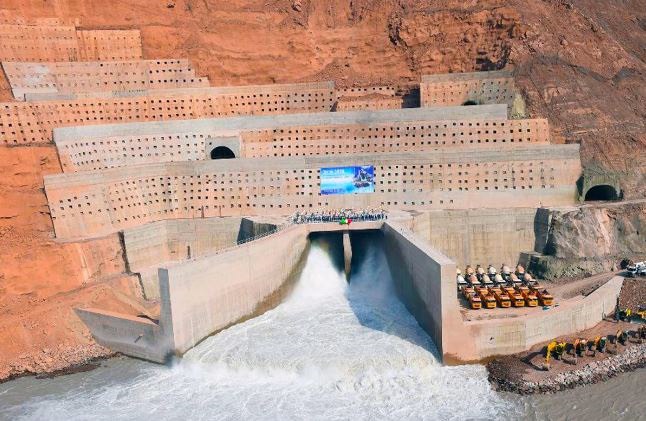
The government of Tajikistan plans to allocate at least 10 billion TJS (more than $1 billion) to finance the Rogun hydropower project in 2026, Finance Minister Faiziddin Qahhorzoda said on February 13 at a press conference in Dushanbe. The statement was later released by the Ministry of Finance and reported by Asia-Plus. Qahhorzoda specified that 8.2 billion TJS has already been earmarked in the state budget for completion of the Rogun hydropower plant. He added that additional financing could be mobilized through development partners, as agreements have been signed and the required domestic procedures and partner conditions have been fulfilled. “Certain conditions had to be met by the government of Tajikistan to access these funds. All conditions have been completed, and financing under the first tranche of $350 million has begun,” the minister said, referring to grant funding from the World Bank. He added that negotiations for an additional $300 million from the institution have been concluded successfully, with the funds expected to become available by mid-year. The minister also stated that domestic procedures are being finalized to attract $150 million from the Islamic Development Bank, as well as $100 million each from the Saudi Fund for Development, the Kuwait Fund for Arab Economic Development, and the OPEC Fund for International Development. According to Qahhorzoda, the remaining step is the completion of tender procedures. In addition, all procedures have reportedly been completed to secure $500 million from the Asian Infrastructure Investment Bank, of which $270 million is expected to be disbursed in the first tranche. According to the Finance Ministry, approximately 11 billion TJS was allocated in 2025 for the completion of Rogun, including 2 billion TJS designated for servicing Eurobonds issued to support the project. Earlier, at the end of January, the Energy Ministry stated during a separate press conference that several financing agreements signed with international partners in 2024-2025 had already entered into force. Officials noted that activating these agreements required fulfilling a number of technical and procedural conditions. The Rogun hydropower plant, located 110 kilometers from Dushanbe on the Vakhsh River, is the largest energy project in Tajikistan. Construction began in 1976 but was suspended following the collapse of the Soviet Union. Work resumed after independence. Of the six planned generating units, each with a capacity of 600 MW, two are currently operational and had produced 9.9 billion kWh of electricity by the end of last year. In December 2025, President Emomali Rahmon announced that the third unit is scheduled to be commissioned in September 2027. Once all six units are operational, the plant’s total installed capacity will reach 3.78 GW, and its 335-meter dam is projected to become the tallest in the world. The total cost of construction has been estimated at $6.2 billion.