• KZT/USD = 0.00221
  • TJS/USD = 0.10850
  • UZS/USD = 0.00008
  • TMT/USD = 0.29760
  • KZT/USD = 0.00221
  • TJS/USD = 0.10850
  • UZS/USD = 0.00008
  • TMT/USD = 0.29760
  • KZT/USD = 0.00221
  • TJS/USD = 0.10850
  • UZS/USD = 0.00008
  • TMT/USD = 0.29760
  • KZT/USD = 0.00221
  • TJS/USD = 0.10850
  • UZS/USD = 0.00008
  • TMT/USD = 0.29760
  • KZT/USD = 0.00221
  • TJS/USD = 0.10850
  • UZS/USD = 0.00008
  • TMT/USD = 0.29760
  • KZT/USD = 0.00221
  • TJS/USD = 0.10850
  • UZS/USD = 0.00008
  • TMT/USD = 0.29760
  • KZT/USD = 0.00221
  • TJS/USD = 0.10850
  • UZS/USD = 0.00008
  • TMT/USD = 0.29760
  • KZT/USD = 0.00221
  • TJS/USD = 0.10850
  • UZS/USD = 0.00008
  • TMT/USD = 0.29760
25 October 2026

Viewing results 49 - 54 of 359

China Tajikistan Financial Cooperation Talks Focus on Banking Links

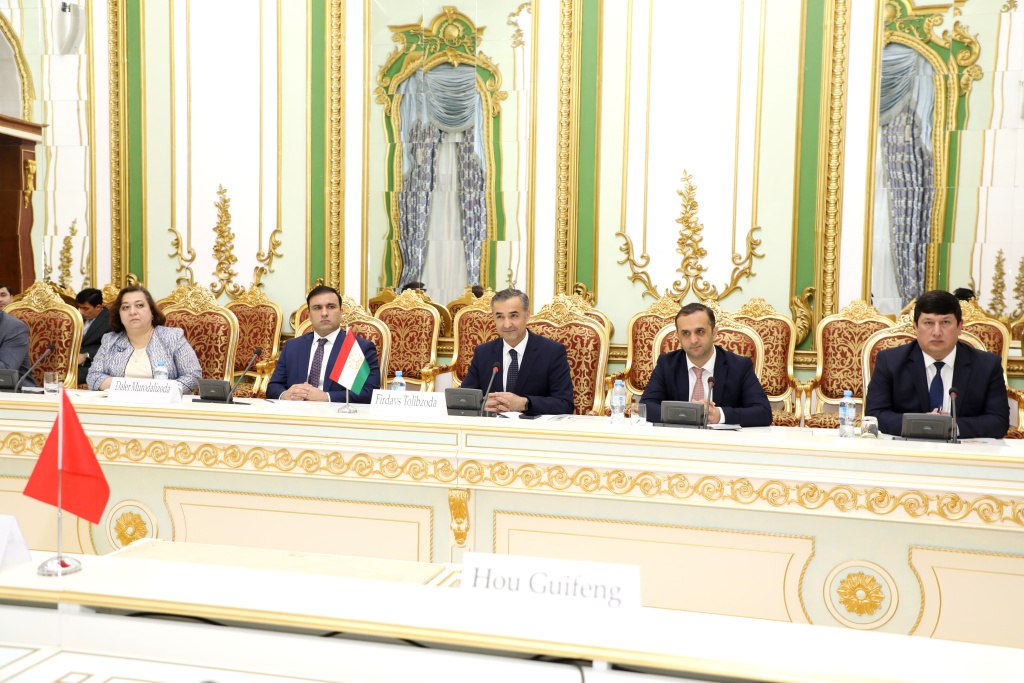
China and Tajikistan have discussed expanding financial cooperation, as Dushanbe looks to deepen banking links with one of its most important economic partners. The discussions took place on June 2 during a meeting between Firdavs Tolibzoda, chairman of the National Bank of Tajikistan, and Gu Shu, chairman of the Agricultural Bank of China, one of China’s largest lenders. The talks focused on practical banking links between the two countries, including easier settlement of trade payments, support for Chinese-backed investment projects, and the use of digital tools in Tajikistan’s financial sector. Tolibzoda described China as one of Tajikistan’s key strategic and economic partners and said cooperation has continued to grow. He noted that long-standing cooperation between Chinese banks and Tajik financial institutions has helped facilitate trade and investment flows between the two countries. The two sides also discussed the possibility of opening branches of Chinese banks in Tajikistan, a move Tajik officials said could further expand bilateral cooperation. The Chinese finance sector's role in Tajikistan has expanded alongside its wider economic presence. In 2025, China overtook Russia as Tajikistan’s largest trading partner for the first time, with bilateral trade reaching $964 million in January-May, up nearly 30% year-on-year. China’s share of Tajikistan’s foreign trade stood at 24.8%, compared with Russia’s 23.2%. During the meeting, Tajik officials presented an overview of the country’s economic performance, highlighting strong growth, stable inflation, and a banking sector they said had become more resilient. According to Tolibzoda, recent reforms have improved the performance of financial institutions, increased deposits, expanded lending to the real economy, and strengthened overall financial stability. Gu Shu welcomed the prospects for Tajikistan’s economic development and expressed the Agricultural Bank of China’s readiness to deepen cooperation with the National Bank of Tajikistan. Potential areas of cooperation include professional training and knowledge exchange, support for green finance initiatives, digital transformation projects, cybersecurity, compliance systems, and workforce development, he said. The meeting concluded with both sides reaffirming their interest in expanding financial cooperation and exploring new opportunities to strengthen economic ties between Tajikistan and China.
Tajikistan and Pakistan Agree to Expand Trade and Economic Cooperation

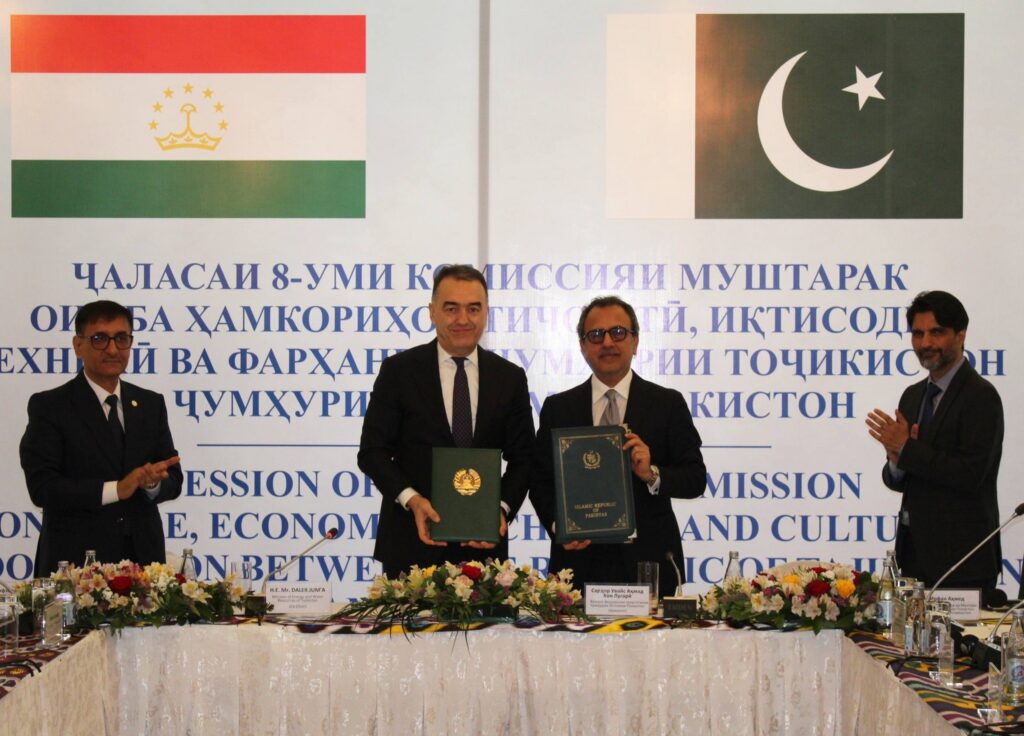
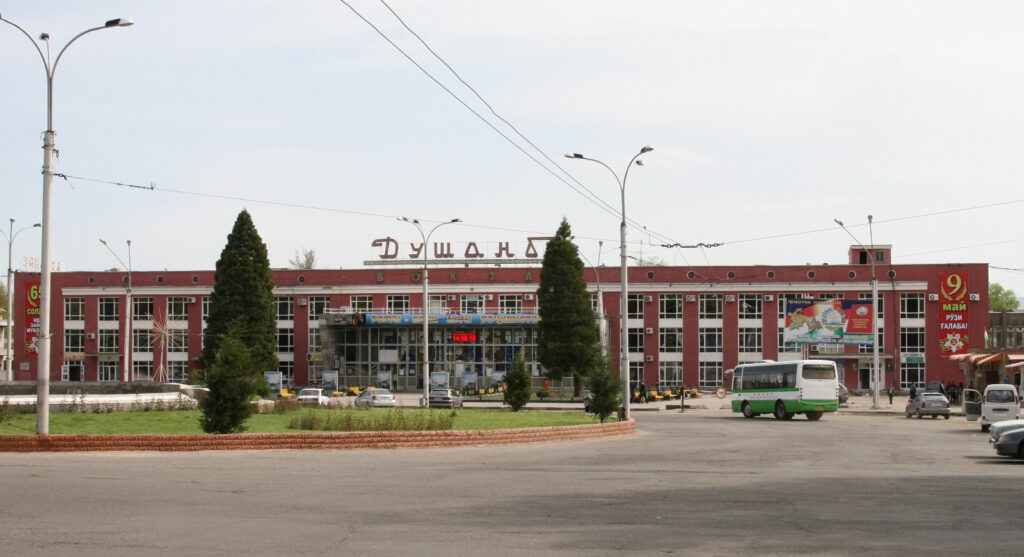
Tajikistan and Pakistan have agreed to deepen trade and economic cooperation following the eighth meeting of their Joint Commission on Trade, Economic, Scientific, and Technical Cooperation in Dushanbe. The meeting concluded with the signing of a protocol outlining measures to expand bilateral cooperation across a range of sectors, including trade, investment, energy, agriculture, and transport. According to Tajikistan’s Ministry of Energy and Water Resources, the discussions also covered banking, education, science and technology, tourism, youth policy, sports, and communications. Tajikistan’s delegation was led by Minister of Energy and Water Resources Daler Juma, while Pakistan was represented by Federal Minister for Energy Sardar Awais Ahmad Khan Leghari. Officials from both countries said bilateral relations have improved in recent years, supported by growing political engagement and economic cooperation. Trade between the two countries reached $43 million in 2025, according to figures presented during the meeting. Bilateral trade totaled $8.9 million in the first quarter of 2026. The two sides agreed on the need to increase trade volumes by expanding the range of goods exchanged, identifying new areas of cooperation, and developing ties between businesses and investors. Particular attention was given to the CASA-1000 electricity transmission project, which aims to export surplus hydropower from Tajikistan and Kyrgyzstan to Afghanistan and Pakistan. Participants described CASA-1000 as a key element of regional energy cooperation and an important platform for expanding economic links between Central and South Asia. The protocol of the commission’s eighth session is expected to help advance future cooperation and support the implementation of joint initiatives. The meeting ended with the signing of the protocol of the commission’s eighth session, which both sides said would help advance future cooperation and support the implementation of joint initiatives.

Dushanbe-Moscow Train Service Resumes After Pandemic Suspension

Tajikistan and Russia will reopen a direct passenger train route between Dushanbe and Moscow, restoring the service after it was suspended during the pandemic six years ago. The Dushanbe-Moscow service, a trip of several thousand kilometers that takes four days and passes through Uzbekistan and Kazakhstan, will start again on June 21. The service will run every two weeks, leaving Dushanbe on Sunday and arriving at Moscow’s Paveletsky Station on Wednesday, and leaving Moscow on Thursday and arriving in Tajikistan’s capital on Monday. “At the request of the Railway Administration of the Republic of Tajikistan and in coordination with the railway administrations of Kazakhstan and Uzbekistan, direct rail communication between Moscow and Dushanbe has been restored,” Russian Railways said in a statement. It said the service had been suspended in March 2020 because of the COVID-19 outbreak. Tajikistan’s state Khovar news agency confirmed the resumption of the train route, citing the Ministry of Transport. Stops on the journey include Bukhara, Nukus, Kungrad, Kandyagash, Aktobe, Sol-Iletsk, Orenburg, Samara, Syzran, Kuznetsk, Penza, Ryazhsk, Skopin, and Ozherelye. Tajikistan and Russia had discussed restarting the train route between their capitals as far back as early 2025. Currently, Tajikistan operates train services that link Dushanbe, Khujand, and Kulob to the Russian city of Volzhsky. Migrants from Tajikistan seeking work in Russia have traditionally traveled on the Dushanbe-Moscow train route.

Inside Tajikistan’s Rogun Dam, the Mega-Project Built to Power a Nation

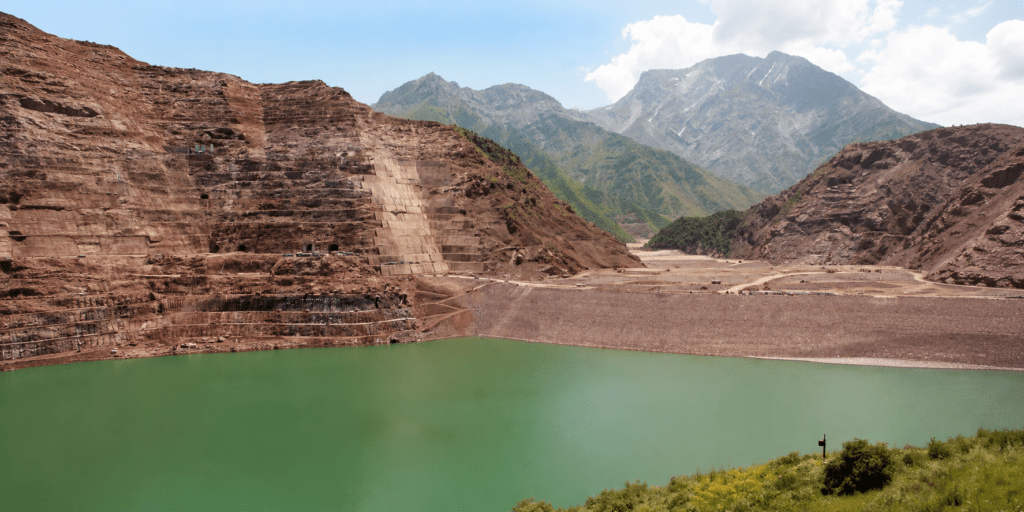
“Building a hydroelectric power plant is a responsibility for our country!” Displayed in Tajik at the entrance to the Rogun construction site, deep in the mountains of Tajikistan, the slogan captures the significance of what has become the most ambitious infrastructure project in the country’s history - and one of the largest hydropower developments in the world. Nearly fifty years after the Soviet authorities launched construction in 1976, the mega-project is finally entering a decisive phase. Long delayed by the collapse of the Soviet Union, the civil war of the 1990s, and the economic struggles of Central Asia’s poorest country, the project has gained renewed momentum over the past decade. After a two-hour drive through the mountains east of Dushanbe, the scale of the site gradually comes into view. Located more than 1,300 meters above sea level, Rogun is far more than a dam. The complex includes dozens of kilometers of tunnels, diversion canals, underground power stations, and an extensive network of technical infrastructure carved into the rock. [caption id="attachment_49947" align="aligncenter" width="1365"] Turbines in the process of being built[/caption] Once completed, according to current project plans, the structure will rise to 335 meters, making it the tallest dam in the world, Tajik officials proudly note. For now, it stands at approximately 140 meters. “This is where the Vakhsh River flows,” says Anvar Rahmonov, Production Director at Rogun HPP, standing on a ridge overlooking the future reservoir. [caption id="attachment_49948" align="aligncenter" width="2048"] Anvar Rahmonov, Production Director at Rogun HPP[/caption] Fed by glaciers in the Pamir Mountains, the river is diverted through underground galleries that currently power two 600-megawatt turbines. Below, dozens of trucks move continuously across the site while workers labor across different sections of the project. The deep blue waters of the future reservoir - designed to hold more than 13 billion cubic meters of water - contrast sharply with the surrounding red-earth mountains and the constant movement of heavy machinery. The project remains far from complete. Four additional turbines are still under construction. Once fully operational, the plant will have a total installed capacity of 3,600 megawatts, according to Tajik project officials, comparable to that of a nuclear power station. Ending Chronic Energy Shortages For a country of just over ten million people that continues to face electricity shortages every winter, the stakes are enormous. Despite possessing one of Central Asia’s largest hydropower potentials, Tajikistan still suffers from a chronic energy deficit. During the winter months, the country lacks roughly a quarter of the electricity needed to meet domestic demand, resulting in rationing and power restrictions across much of rural Tajikistan. “Thanks to this project, Tajikistan will be able to achieve energy independence,” says Andres Ricaldi, an engineer with the Franco-Belgian consultancy Tractebel, which is involved in the project. In the substation, a diagram of the power lines supplying the different regions is shown. [caption id="attachment_49946" align="aligncenter" width="2048"] Substation zone[/caption] Yet Rogun’s ambitions extend well beyond the domestic market. “The meaning of the Rogun Dam has changed,” explains Artemy Kalinovsky,...

Tajikistan Links Green Energy Push to Regional Power Exports

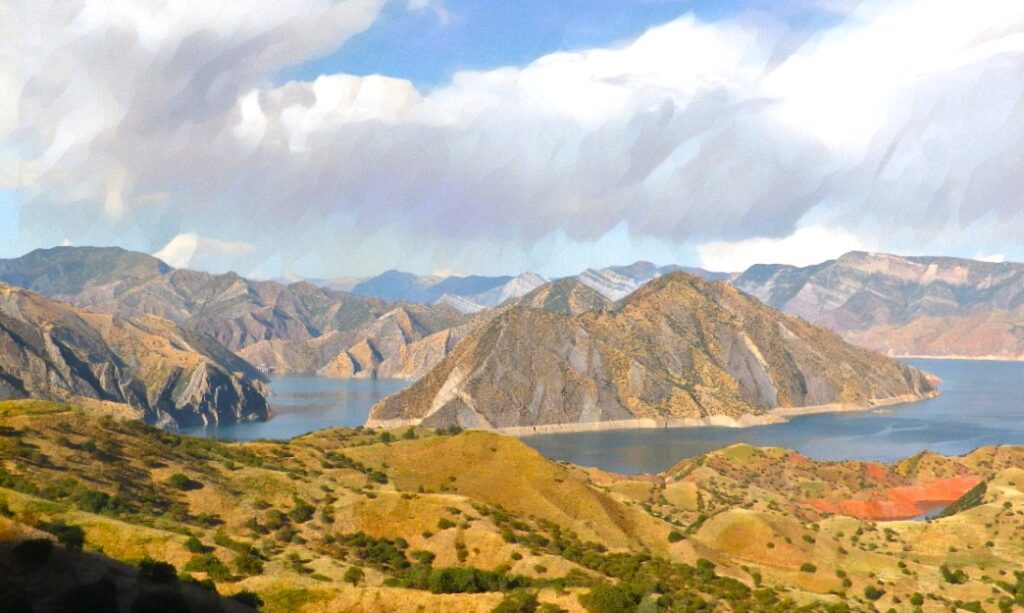
Tajikistan is positioning renewable energy and regional electricity trade as central to its long-term economic strategy, as Dushanbe seeks to build on its hydropower base while reducing exposure to climate- and seasonal-supply risks. The message was delivered by Deputy Minister of Energy and Water Resources Sharif Makhmadzoda during a ministerial dialogue on the renewable energy transition in Central Asia. The session, titled International Cooperation for a Sustainable and Diversified Energy Future, was held as part of the Baku Energy Forum. According to Makhmadzoda, the energy transition has become one of Tajikistan’s key long-term development priorities. He said the shift toward renewable energy is not only about meeting international climate commitments, but also about strengthening energy security, supporting industrial development, and improving living standards. Tajikistan continues to place hydropower at the center of its energy strategy. Makhmadzoda noted that approximately 95% of the country’s electricity is generated by hydroelectric power plants, making the republic one of the world’s leading producers of green energy. Makhmadzoda also stressed the need to diversify the country’s energy mix, citing climate change, glacier melt, seasonal changes in river flows, and rising domestic electricity demand. Against this backdrop, the government sees modernization of the energy sector and the expansion of other renewable energy sources as increasingly important. Particular attention is being paid to the development of solar and wind power generation. Regional cooperation was another key theme of Makhmadzoda’s remarks. According to the deputy minister, Tajikistan’s renewed participation in the Central Asian Unified Energy System could play an important role in creating a regional market for clean electricity. CASA-1000 is designed to carry up to 1,300 megawatts of surplus electricity from Central Asia to high-demand markets in South Asia, linking Tajikistan and Kyrgyzstan with Afghanistan and Pakistan. The comments underline a wider challenge for Tajikistan. Hydropower gives the country one of the region’s cleanest power systems, but it also leaves the energy sector heavily exposed to water availability, climate pressures, and seasonal demand peaks.

Uzbekistan-Born Mansurova Named EBRD Regional Head for Kyrgyzstan, Tajikistan, and Turkmenistan

The European Bank for Reconstruction and Development (EBRD) has named Nodira Mansurova as its next regional head for Kyrgyzstan, Tajikistan, and Turkmenistan, putting her in charge of operations in three Central Asian markets where the bank has invested more than €2.5 billion combined. Mansurova will be based in Bishkek and is expected to take up the post on September 1, 2026. She will replace Ayten Rustamova, who has led the regional office since 2021. The appointment gives Mansurova oversight of one of the EBRD’s more varied regional portfolios in Central Asia. As of March 31, 2026, the bank’s cumulative investment stood at €1.177 billion in Kyrgyzstan, €1.059 billion in Tajikistan, and €327 million in Turkmenistan. The three countries present different operating environments for the bank. In Kyrgyzstan and Tajikistan, EBRD activity has included infrastructure, private-sector development, financial services, and energy-related projects. In Turkmenistan, the bank’s work has been more limited and has focused mainly on private businesses and financial-sector activity. Mansurova has worked for the EBRD since 2001. Born in Uzbekistan and now a British citizen, she has held roles in London and in several countries where the bank operates. Her previous posts included regional head of SME Finance and Development for Central Asia, based in Almaty, and head of the EBRD’s operations in Tunisia. Her new role comes as international financial institutions continue to focus on infrastructure, energy transition, private-sector growth, and regional connectivity in Central Asia.