• KGS/USD = 0.01144 0%
  • KZT/USD = 0.00208 0%
  • TJS/USD = 0.10440 -0.19%
  • UZS/USD = 0.00008 0%
  • TMT/USD = 0.28571 0.28%
  • KGS/USD = 0.01144 0%
  • KZT/USD = 0.00208 0%
  • TJS/USD = 0.10440 -0.19%
  • UZS/USD = 0.00008 0%
  • TMT/USD = 0.28571 0.28%
  • KGS/USD = 0.01144 0%
  • KZT/USD = 0.00208 0%
  • TJS/USD = 0.10440 -0.19%
  • UZS/USD = 0.00008 0%
  • TMT/USD = 0.28571 0.28%
  • KGS/USD = 0.01144 0%
  • KZT/USD = 0.00208 0%
  • TJS/USD = 0.10440 -0.19%
  • UZS/USD = 0.00008 0%
  • TMT/USD = 0.28571 0.28%
  • KGS/USD = 0.01144 0%
  • KZT/USD = 0.00208 0%
  • TJS/USD = 0.10440 -0.19%
  • UZS/USD = 0.00008 0%
  • TMT/USD = 0.28571 0.28%
  • KGS/USD = 0.01144 0%
  • KZT/USD = 0.00208 0%
  • TJS/USD = 0.10440 -0.19%
  • UZS/USD = 0.00008 0%
  • TMT/USD = 0.28571 0.28%
  • KGS/USD = 0.01144 0%
  • KZT/USD = 0.00208 0%
  • TJS/USD = 0.10440 -0.19%
  • UZS/USD = 0.00008 0%
  • TMT/USD = 0.28571 0.28%
  • KGS/USD = 0.01144 0%
  • KZT/USD = 0.00208 0%
  • TJS/USD = 0.10440 -0.19%
  • UZS/USD = 0.00008 0%
  • TMT/USD = 0.28571 0.28%

Viewing results 49 - 54 of 166

Qosh Tepa Canal Sparks Concerns in Central Asia

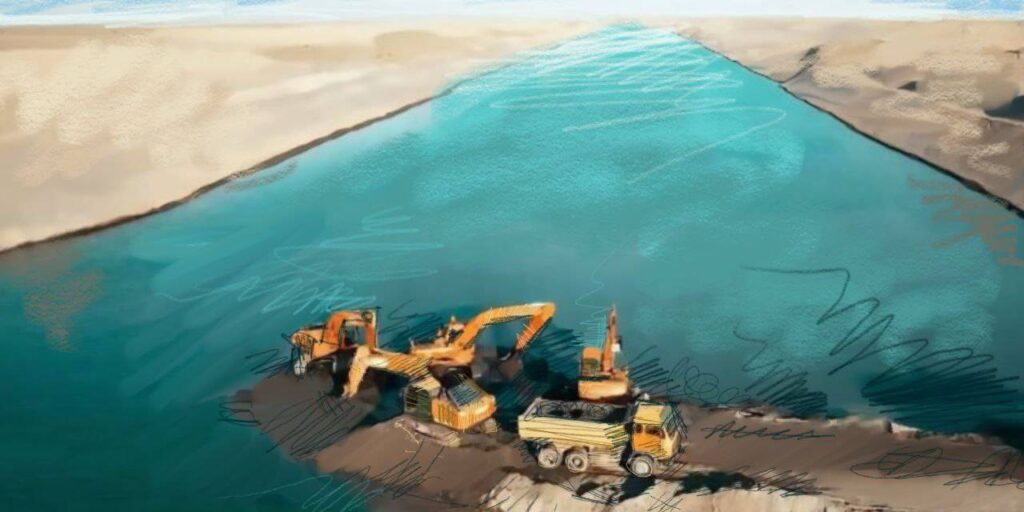
Afghanistan is rapidly advancing construction of the Qosh Tepa Canal, a large-scale water infrastructure project in the north of the country that could have far-reaching consequences for its Central Asian neighbors, according to Euronews. The 285-kilometer canal aims to divert an estimated 25-30% of the Amu Darya River’s flow to irrigate more than 500,000 hectares of farmland. The Amu Darya is one of Central Asia’s principal water sources, flowing through Tajikistan, Uzbekistan, and Turkmenistan. Uzbekistan and Turkmenistan, both downstream countries, depend heavily on the river for agriculture and hydroelectric power. Experts warn the canal could reduce Uzbekistan’s water intake by 15% and Turkmenistan’s by as much as 80%, with potential consequences including reduced crop yields, job losses, deepened poverty, and even cross-border tensions or migration. Although Kazakhstan and Kyrgyzstan are not directly linked to the Amu Darya, the ripple effects could still reach them. Azamatkhan Amirtayev, leader of Kazakhstan’s Baytaq party, cautioned that Uzbekistan may compensate by drawing more water from the Syr Darya River, thereby reducing Kazakhstan’s water supply by up to 40%. Environmental concerns are also mounting. The Aral Sea, already severely degraded by decades of mismanagement, may face further deterioration. “This project could be the last nail in the coffin for the Aral Sea,” said regional water expert Bulat Yessekin. He urged Central Asian countries to engage Afghanistan through offers of shared energy and food in exchange for coordinated water management. The canal’s implications were a key topic at the recent Water Security and Transboundary Water Use conference, where participants warned that it threatens to reverse years of regional cooperation aimed at restoring the Aral Sea. While Central Asian countries participate in international water-sharing frameworks, Afghanistan does not. Its Taliban-led government remains unrecognized internationally and is not bound by existing treaties. However, diplomatic ties are evolving. Uzbekistan has opened channels of cooperation with Kabul, and both Kazakhstan and Kyrgyzstan have removed the Taliban from their lists of banned organizations. Afghanistan’s Deputy Foreign Minister Mohammad Naeem Wardak expressed openness to dialogue. “The Qosh Tepa canal will not be to the detriment of anyone,” he stated. Kazakhstan, which chairs the International Fund for Saving the Aral Sea in 2025, has proposed using the platform to initiate talks. The country’s Ministry of Water Resources emphasized that any solution must involve regional cooperation and the adoption of water-saving technologies to reduce wastage.

Kyrgyzstan Offers Support to Tajikistan with Innovative Water-Saving Technology

Kyrgyzstan is offering a novel solution to Tajikistan’s mounting water scarcity and pasture degradation: the construction of artificial glaciers, or so-called “ice towers.” These structures store water during the winter and release it during the arid summer months, providing a lifeline for communities affected by climate change. Innovation Amid a Warming Climate The initiative was highlighted during the session “Activating Global Action to Enhance Glacier Resilience: Civil Society Experiences in Central Asia,” held as part of the recent International Conference on Glacier Conservation in Dushanbe. According to Anar Alymkulova, executive director of Kyrgyzstan’s Institute for Sustainable Development, artificial glaciers have proven effective in mitigating the effects of climate change and addressing water shortages. Since the first ice tower was constructed in 2022 in Jalal-Abad, the initiative has expanded significantly. Two more towers were added in 2023, and in 2024, seven were built in Batken region, collectively storing over 1.5 million cubic meters of ice during the winter. By the end of this year, four additional towers are planned in the Batken and Leylek districts. In total, approximately 30 such structures now operate across Kyrgyzstan. How Ice Towers Work The technology is simple yet effective. Water from springs is channeled via an underground pipeline, spanning several kilometers, to a vertical pipe up to 20 meters tall. During winter, water is sprayed from the pipe and freezes, forming an ice tower 30 to 50 meters high. In the spring and summer, the ice melts gradually, supplying water for people and livestock. Oleg Guchgeldiev, Kyrgyzstan's representative in the UN's Food and Agriculture Organization (FAO), noted that each ice tower costs between $3,000 and $4,000 and can store up to 50,000 cubic meters of water. This method offers a practical solution in remote, arid regions where traditional water sources have become unreliable. A Critical Issue for Tajikistan Sustainable water management is a growing concern in Tajikistan, where more than 1,000 glaciers have disappeared in the last 23 years. The country has lost about 20% of its glacier volume and 30% of its glacier area over the past five to six decades. According to UNEP projections, Central Asia could lose over half its glaciers by 2050, jeopardizing water security for more than 64 million people, particularly in rural and mountainous areas. In response, the Tajikistan's President Emomali Rahmon spearheaded a successful campaign at the UN General Assembly to declare 2025 the International Year of Glacier Conservation. The initiative culminated in a major conference from May 29 to 31 in Dushanbe, attracting over 2,500 delegates from 80 countries and numerous international organizations. A Scalable Regional Solution The Kyrgyz model of artificial glaciers presents a scalable solution for Tajikistan and potentially the broader Central Asian region. As glacier retreat accelerates and drought risks rise, such technologies could play a key role in national climate adaptation strategies. “Artificial glaciers are not only a way to store water, but also a tool for adapting to a changing climate,” experts at the Dushanbe conference emphasized. “They demonstrate how local communities...

Kazakhstan, Tajikistan, and Uzbekistan to Share Water from Bahri Tojik Reservoir in Summer 2025

Kazakhstan, Tajikistan, and Uzbekistan have agreed to jointly use irrigation water from Tajikistan’s Bahri Tojik reservoir during the summer of 2025. The Bahri Tojik reservoir, formerly known as the Kairakkum reservoir until its renaming in 2016, is one of Tajikistan’s largest water bodies. Located in the Sughd region in the north of the country, it was constructed on the Syr Darya River and has been operational since 1959. During the summer growing season, Tajikistan typically releases additional water to support downstream countries, including Uzbekistan and Kazakhstan, which face seasonal irrigation shortages. Water ministers from the three countries signed a protocol outlining the use of the reservoir from June to August 2025. The agreement aims to ensure a balanced and equitable distribution of water resources among the signatories. For Kazakhstan, the agreement is particularly significant, as the country anticipates receiving 491 million cubic meters of water from the reservoir at the height of the growing season. Nurzhan Nurzhigitov, Kazakhstan’s Minister of Water Resources and Irrigation, stressed the importance of regional cooperation on water issues. “Kazakhstan is committed to implementing joint projects on water resources management, as well as promoting the principles of international water law. Water is not only a natural resource, but also an instrument of sustainable development and regional stability,” he said.

Experts Warn Tajikistan’s Melting Glaciers Threaten Regional Food Security

From May 29 to 31, Dushanbe is hosting the first-ever International Conference on Glacier Preservation. The event has drawn more than 2,500 representatives from 80 countries to the Tajik capital. On the eve of the forum, alarming data was released: Tajikistan has lost more than 1,000 glaciers over the past 23 years, a trend that jeopardizes food security for millions across Central Asia. Glaciers in Retreat, Climate in Crisis Tajikistan’s Deputy Prime Minister Dilrabo Mansuri noted that average air temperatures in the country have risen between 0.7°C and 1.9°C over the past 65 years, depending on the region. In the same period, glaciers have lost 20% of their volume and 30% of their area. “The disappearance of glaciers is not a distant threat, but a constant crisis,” emphasized Agasi Arutyunyan, the Food and Agriculture Organization's (FAO) representative in Tajikistan. Bahodur Sheralizoda, Chairman of the Committee on Environmental Protection, highlighted the increasing frequency of natural disasters, landslides, droughts, and floods, that threaten both the economy and daily life. UNICEF Executive Director Catherine Russell warned that up to 27% of regional water resources could be lost, with children and vulnerable groups being disproportionately affected. Amina Mohammed, Deputy Secretary-General of the United Nations, stressed the need for immediate resource mobilization and reliance on scientific data. Her UN colleague, Armida Salsiah Alisjahbana, Executive Secretary of ESCAP, proposed a regional meeting ahead of the 2026 UN Water Conference to build momentum. Agriculture Under Climate Stress Adham Musallam, Director of the World Food Programme in Tajikistan, reiterated that more than 1,000 glaciers have vanished since 2000, leading to water shortages and degradation of arable land. Forum participants underscored the urgency of adopting climate-resilient agricultural practices. Tajikistan is home to around 14,000 glaciers, with a combined volume exceeding 845 km³. Approximately 1,000 glaciers have disappeared over the last 150 years. The Vangjakh glacier, for example, is retreating by more than 16 meters annually. According to UNEP, Central Asia could lose over 50% of its glaciers by 2050, endangering the water supply of more than 70 million people. Tajik glaciers currently contribute over 80% of the Amu Darya’s flow, 1% of the Syr Darya’s, and around 64 km³ to the Aral Sea basin. Their decline could severely disrupt the region’s water balance and worsen shortages in neighboring countries. Regional Initiatives and Scientific Collaboration The forum emphasized the importance of inclusive climate action, particularly the leadership roles of women and youth. Yasmine Siddiqui of the Asian Development Bank stated, “Women must not only be participants, but also leaders in environmental decisions.” New initiatives included the launch of the Blue World of Central Asia 2.0 project and promotion of the WEFE Nexus approach, integrating water, energy, food, and ecosystem management to enhance cross-border cooperation. Participants also discussed establishing a regional glaciology coordination center, expanding satellite glacier monitoring, and leveraging science diplomacy to mitigate climate risks. The melting of Central Asia’s glaciers is no longer a future concern, it is a present-day crisis impacting water availability, food production, public health, and...

Central Asia’s Green Energy Dream: Too Big to Achieve?

Although most Central Asian nations are heavily dependent on fossil fuel production and exports, they are aiming to significantly increase the use of renewable energy, hoping to eventually become crucial suppliers of so-called green electricity to Europe. Achieving such an ambitious goal will be easier said than done, given that developing the green energy sector in the region requires massive investment. What Central Asian states – struggling to attract long-term private capital into clean energy projects – need is financing for projects that modernize power networks, improve grid stability, and enable cross-border electricity flows. These upgrades are essential for large-scale renewable energy deployment and regional trade in power. Most actors in Central Asia seem to have taken major steps in this direction. In November 2024, at the COP29 climate conference held in Baku, Kazakhstan signed several deals worth nearly $3.7 billion with international companies and development institutions to support green energy projects. Neighboring Uzbekistan, according to reports, has attracted more than €22 billion ($23.9) in foreign investment in renewable energy, while Kyrgyzstan, Turkmenistan, and Tajikistan – which is aiming to generate all its electricity from green energy sources by 2032 – have developed strategies to help increase their renewable potential. But to turn their goals into reality, all these nations will need funding – whether from oil-rich Middle Eastern countries, China, the European Union, or various international financial institutions. Presently, the development of the Caspian Green Energy Corridor – which aims to supply green electricity from Central Asia to Azerbaijan and further to Europe – remains the region’s most ambitious project. According to Yevgeniy Zhukov, the Asian Development Bank's (ADB) Director General for Central and West Asia, this initiative is a strategic priority for Kazakhstan, Uzbekistan, and Azerbaijan. “While the prospect of exporting green electricity to Europe is part of the long-term vision, the core goal of the initiative is to accelerate green growth within the region,” Zhukov told The Times of Central Asia. Together with the Asian Infrastructure Investment Bank, the ADB is funding a feasibility study for this proposed transmission corridor. The study will assess the technical and economic viability of such a system, along with the environmental and regulatory requirements. In the meantime, the ABD is expected to continue funding other green energy projects in the region. The financial entity, according to Zhukov, invested $250 million in Uzbekistan in 2023 to support renewable energy development and comprehensive power sector reforms, while in other Central Asian countries, it remains “firmly committed to driving the green energy transition.” “For instance, in Tajikistan we are exploring the potential to co-finance the Rogun Hydropower Project alongside the World Bank and other international partners. In Kyrgyzstan, our focus has been on supporting foundational reforms in the energy sector, including strengthening the policy and regulatory environment to attract private investment in renewables. In Turkmenistan, we’ve launched a total of $1.75 million technical assistance initiative to help lay the groundwork for future renewable energy development,” Zhukov stressed, pointing out that these efforts are part...

Opinion – Central Asia’s Looming Water Crisis: A Ticking Time Bomb

When people think of Central Asia, they often picture vast deserts, ancient Silk Road cities, and oil pipelines stretching to distant markets. Yet the region’s most urgent and combustible resource is not buried underground — it flows above it. Water, or more precisely the lack of it, is rapidly becoming the defining fault line of Central Asia’s future. For decades, the five Central Asian republics have tiptoed around a growing water crisis. The two major rivers that sustain life in this arid region, the Amu Darya and the Syr Darya, are now so contested and depleted that what was once a technical issue has metastasized into a geopolitical threat. The region's major rivers, the Amu Darya and the Syr Darya are under immense pressure, threatening agriculture, livelihoods, and regional stability. At the heart of the crisis is a tragic irony. The upstream countries, Kyrgyzstan and Tajikistan, are rich in water but poor in energy and cash. They need to release water in winter to generate hydropower. Downstream nations, particularly Uzbekistan and Turkmenistan, want water stored until the summer to irrigate vast cotton and wheat fields. The result? Mutual distrust, occasional diplomatic spats, and an accelerating race to dam, divert, and hoard water in a region already gasping under the weight of climate change. A Region Parched Central Asia annually utilizes over 60 billion cubic meters of water for irrigation from the Amu Darya and Syr Darya basins. However, recent years have seen a decline in river flows, with the actual flow of the Syr Darya being 20–23% less than the norm. Further, the ghost of the Aral Sea — a once-thriving inland lake that has now shrunk by over 90% in its volume and 74 % in surface area — serves as a haunting reminder of the cost of mismanagement. The Soviet legacy of excessive irrigation has morphed into a post-Soviet scramble for control, where water is not just a tool of survival but a lever of power. This desiccation has transformed the region, leading to the emergence of the Aralkum Desert and causing severe ecological and health issues. Climate Change Intensifies the Crisis Climate change is exacerbating water scarcity in Central Asia. A recent study revealed that an extreme heatwave in March 2025, with temperatures soaring 5 to 10°C above pre-industrial levels, was significantly amplified by global warming. Such temperature surges accelerate glacier melt and increase evaporation rates, further reducing water availability. By some estimates, Central Asia could lose over 30% of its freshwater resources by 2050. Yet, rather than galvanize cooperation, this existential threat has sparked more competition. International efforts have largely fallen flat. The International Fund for Saving the Aral Sea (IFAS), the region’s main water cooperation body, is riddled with inefficiencies and lacks enforcement power. External actors like China and Russia have their own interests, often deepening the regional divide rather than healing it. Inefficient Water Management Inefficient agricultural practices remain one of the most profound and persistent contributors to water mismanagement across Central Asia. In...