• KGS/USD = 0.01144 0%
  • KZT/USD = 0.00216 0%
  • TJS/USD = 0.10659 0%
  • UZS/USD = 0.00008 0%
  • TMT/USD = 0.28530 0%
  • KGS/USD = 0.01144 0%
  • KZT/USD = 0.00216 0%
  • TJS/USD = 0.10659 0%
  • UZS/USD = 0.00008 0%
  • TMT/USD = 0.28530 0%
  • KGS/USD = 0.01144 0%
  • KZT/USD = 0.00216 0%
  • TJS/USD = 0.10659 0%
  • UZS/USD = 0.00008 0%
  • TMT/USD = 0.28530 0%
  • KGS/USD = 0.01144 0%
  • KZT/USD = 0.00216 0%
  • TJS/USD = 0.10659 0%
  • UZS/USD = 0.00008 0%
  • TMT/USD = 0.28530 0%
  • KGS/USD = 0.01144 0%
  • KZT/USD = 0.00216 0%
  • TJS/USD = 0.10659 0%
  • UZS/USD = 0.00008 0%
  • TMT/USD = 0.28530 0%
  • KGS/USD = 0.01144 0%
  • KZT/USD = 0.00216 0%
  • TJS/USD = 0.10659 0%
  • UZS/USD = 0.00008 0%
  • TMT/USD = 0.28530 0%
  • KGS/USD = 0.01144 0%
  • KZT/USD = 0.00216 0%
  • TJS/USD = 0.10659 0%
  • UZS/USD = 0.00008 0%
  • TMT/USD = 0.28530 0%
  • KGS/USD = 0.01144 0%
  • KZT/USD = 0.00216 0%
  • TJS/USD = 0.10659 0%
  • UZS/USD = 0.00008 0%
  • TMT/USD = 0.28530 0%

Viewing results 181 - 186 of 786

New Drought Monitoring System Could Save Tajikistan Millions

Tajikistan stands to save between $4 million and $6 million annually by adopting a satellite-based drought monitoring system designed to reduce crop losses and improve water management. Regional Project Launch On August 20, a major regional initiative to monitor droughts in Central Asia was launched in Tashkent. The project, spearheaded by the United Nations Economic and Social Commission for Asia and the Pacific (ESCAP), will employ Earth Remote Sensing (ERS) technologies. The budget for the first phase is $300,000. The system will initially be piloted in Uzbekistan for two years, with implementation in Tajikistan and Kyrgyzstan expected by 2027. According to project analysts, Tajikistan’s annual savings will come from reduced agricultural losses, more efficient water use, and timely responses to drought conditions. Agriculture at High Risk Climate change poses a significant threat to Tajikistan. Over the past three decades, average temperatures in Central Asia have risen by 1.2°C, well above the global average of 0.85°C. Meanwhile, precipitation has decreased by 15-20%, increasing the frequency and severity of droughts. Agriculture accounts for 22% of Tajikistan’s GDP, and approximately 1.5 million people -- 15% of the population -- live in drought-prone areas. The country’s mountainous landscape and limited water resources further magnify the impact of even minor climate shifts. Current meteorological stations lack the capacity to monitor local variations. Weather conditions in mountainous areas can differ dramatically over short distances, rendering traditional methods insufficient. The new system will rely on satellite data from Europe’s Sentinel-2 and the U.S.’s Landsat-8. These satellites measure the normalized difference vegetation index (NDVI), soil moisture, and surface temperature. Forecasts are updated every 5-10 days and have an accuracy rate of 80-85%. This will enable farmers to better plan irrigation schedules, select suitable crops, and conserve water resources. Implementation Timeline The initiative builds on a 2024 pilot project that developed monitoring methodologies and collected baseline data. In 2025, trials began in Uzbekistan (in Karakalpakstan and the Fergana Valley). Nationwide implementation in Uzbekistan is scheduled for 2026, followed by rollout in Tajikistan and Kyrgyzstan in 2027. As part of the program, 150 specialists will be trained, and satellite data will be integrated into national meteorological systems. Tajikistan is expected to cut annual crop losses by 10-15%, boosting food security and delivering $4-6 million in economic benefits. The project also aims to mitigate social pressures in rural areas. In Uzbekistan, similar climate stresses displaced an estimated 120,000 people between 2018 and 2023 due to water shortages. By reducing drought-induced income loss, the system could help slow climate-related migration in Tajikistan as well. The initiative draws on successful international models. Australia’s Drought Watch program has cut agricultural losses by 12%, while India’s INSAT-3D satellite has improved forecast accuracy to 78%. Both approaches will be adapted for Central Asian conditions. Challenges Ahead Despite the promise, Tajikistan faces several hurdles. Internet access reaches only 55% of rural communities, there is a shortage of trained remote sensing specialists, and the system’s annual maintenance is estimated at $50,000. To address these challenges, ESCAP will provide...


CSTO Working Group on Military Training and Scientific Cooperation Opens in Bishkek

A working group meeting on military training and scientific cooperation under the Collective Security Treaty Organization (CSTO) opened in Bishkek today, bringing together delegations from Armenia, Belarus, Kazakhstan, Kyrgyzstan, Russia, and Tajikistan to coordinate officer education, joint curricula, and research collaboration across the bloc. The two-day session runs August 21–22 under Kyrgyzstan’s 2025 chairmanship. AKIpress reported the start of proceedings and its focus on aligning training and scientific work across member states. Officials have said the agenda will center on harmonizing military-education standards, expanding joint training for specialized branches, and mapping priority research areas that can be shared among defense academies and laboratories across the alliance. Outcomes from the Bishkek meeting are expected to inform the CSTO’s rolling program of joint trainings and institutional cooperation in 2026 and beyond. Recent Track Record in Central Asia Today’s meeting builds on a stepped-up schedule of CSTO drills and staff talks in Central Asia. In September 2024, Kyrgyzstan hosted the active phase of “Interaction-2024,” “Search-2024,” and “Echelon-2024” exercises designed to synchronize command-and-control, reconnaissance, logistics, and support elements of the alliance’s collective forces. The Kyrgyz leg concluded with combined operations demonstrations and evaluation of interoperability gains. In October 2024, Tajikistan hosted “Rubezh-2024,” focused on Central Asia’s rapid-deployment forces and scenarios involving incursions by illegal armed groups, hostage rescue, and air-defense coordination. The CSTO reported that the exercise’s operational objectives were achieved and that joint tactics were refined during the active phase at the Harbmaidon range. This year, the organization also ran a strategic command-staff training for its Joint Staff and national ministries on March 17–20, 2025, rehearsing planning and coordination procedures for regional contingencies - part of the bloc’s annual joint-training cycle. Policy framework and next steps The Bishkek working group is meeting against the backdrop of decisions taken by defense ministers in Bishkek on May 28, 2025, when CSTO members approved the Plan of Military Cooperation for 2026–2030 and the Plan of joint training for 2026 - documents that set training priorities, exercise calendars, and institutional cooperation goals across the alliance. By aligning academy programs and research agendas, and pairing them with the long-term exercise plan, the CSTO is aiming to standardize specialist training (from signals and EW to logistics and UAV operations), expand exchanges among defense universities, and convert lessons from recent drills into updated curricula. As chair, Kyrgyzstan is expected to circulate agreed proposals from this week’s sessions to the Council of Defense Ministers for inclusion in the 2026 training calendar and for incorporation into the 2026–2030 cooperation framework.

Trump-Putin Alaska Summit Ends Without Ceasefire

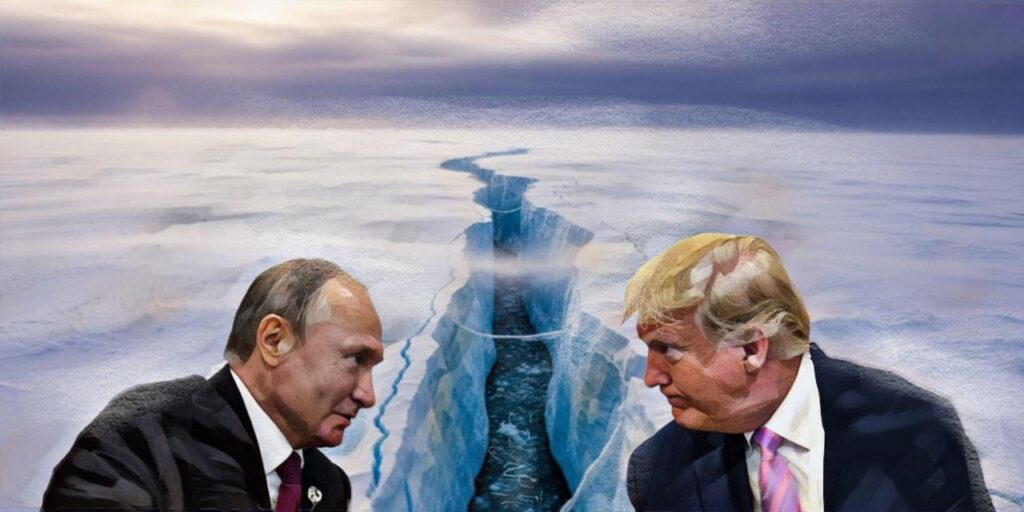
U.S. President Donald Trump and Russian President Vladimir Putin met on Friday in Alaska for their first face-to-face summit since the start of the Ukraine war. Despite optimism from the U.S. side, the talks ended without an agreement on a ceasefire. The leaders met for nearly three hours at Joint Base Elmendorf-Richardson in Anchorage, following a red-carpet welcome and military flyover. Only a handful of aides joined the private session. Afterward, Trump called the exchange “extremely productive” and said “some headway” had been made, but stressed that “there’s no deal until there’s a deal.” Putin described “progress” and “agreements,” though neither leader offered specifics, and neither took questions. No Ceasefire, Continued Dialogue Ending Russia’s invasion of Ukraine dominated the agenda. Trump had vowed to bring the war to a close quickly, but the Alaska talks produced no ceasefire. Ukrainian officials noted that Putin appeared to have “bought more time” as fighting continues. Air raid sirens sounded in Ukraine, and Russian border regions came under drone attack even as the summit unfolded. Having previously said on the way to his summit with Russian President Vladimir Putin that he wouldn’t “be happy if I walk away without some form of a ceasefire,” U.S. President Donald Trump walked away from the talks with no agreement in place, instead urging Ukrainian President Volodymyr Zelenskyy to “make a deal.” “I believe we had a very productive meeting,” Trump stated. “There were many, many points that we agreed on… I will call up NATO… I’ll of course call up President Zelenskyy and tell him about today’s meeting… We really made some great progress… I’ve always had a fantastic relationship with President Putin – with Vladimir…We were interfered with by the ‘Russia, Russia, Russia’ hoax,” he added. “Again, Mr. President, I’d like to thank you very much, and we’ll speak to you very soon and probably see you again very soon,” Trump said. “Thank you very much, Vladimir.” “Next time in Moscow,” Putin replied, chuckling, with a rare use of English, before Trump abruptly ended his press event, refusing to take any questions. Both leaders said the dialogue would continue. Trump claimed he and Putin agreed on “most things” and floated the idea of joining a future meeting between Putin and Ukrainian President Volodymyr Zelenskyy. Putin, while not referencing direct talks with Kyiv, urged Ukraine and its allies not to “derail” what he called constructive progress. Signals from Washington and Moscow Trump emphasized his desire to stop the fighting, stating, “I want the killing to stop,” and suggested he believed Putin wanted peace as well. He also said he would hold off on imposing new “severe” measures on Russia, a shift from earlier rhetoric. Trump also revealed that he would pause plans to levy tariffs on Chinese imports over Beijing’s purchases of Russian oil, saying progress in Alaska made that step unnecessary for now. Putin, meanwhile, repeated his long-standing demands that NATO expansion and other “root causes” be addressed before peace can be achieved. He warned that...

Trump–Putin Talks in Alaska: What Could They Mean for Central Asia?

As U.S. President Donald Trump prepares to meet Russian President Vladimir Putin at the Joint Base Elmendorf-Richardson, located just outside of Anchorage, Alaska, hopes and anxieties are reverberating across Central Asia. Trump has signaled that securing a ceasefire in Ukraine is his top priority, warning of “very severe consequences” for Moscow if Putin refuses to halt the war. For the five former Soviet republics of Central Asia, these peace talks carry high stakes. Any truce or breakdown could ripple into their economies and strategic calculus. The war has already fundamentally changed Central Asia’s strategic positioning, accelerating diversification away from Russian dependence. With Trump and Putin poised to negotiate, Central Asian leaders are mindful that all possible outcomes - a ceasefire, a prolonged conflict, or a major power realignment - could each reshape the region’s economic fortunes and foreign policy choices. Central Asian Stances on the Ukraine War All five Central Asian governments have officially maintained neutrality on the Ukraine conflict. On the first UN General Assembly resolution of March 2, 2022, Kazakhstan, Kyrgyzstan, and Tajikistan abstained, while Uzbekistan and Turkmenistan did not vote. On subsequent resolutions, Uzbekistan abstained alongside Kazakhstan, Kyrgyzstan, and Tajikistan; Turkmenistan continued not to vote. None has recognized Russia’s claims to Ukrainian territory. Seated beside Putin at a plenary session of the St. Petersburg International Economic Forum in June 2022, referring to them as “quasi-state territories,” President Kassym-Jomart Tokayev of Kazakhstan refused to recognize the independence of the so-called Donetsk and Lugansk People’s Republics. “Modern international law is the United Nations Charter,” Tokayev stated. Despite maintaining ties with Russia, Kazakhstan has boosted its engagement with China, Turkey, and Europe during the conflict. Whilst publicly affirming that it will comply with Western sanctions on Russia, Kazakhstan has stated that it will continue to prioritize its economic interests, vowing not to “blindly follow” such measures when they harm its domestic industries. “Kazakhstan will continue to comply with the sanctions but will pursue a balanced policy to minimize the impact on its own economy,” Deputy Prime Minister Serik Zhumangarin said in August 2024. Uzbekistan has adopted a similar “balanced and neutral” approach to the war in Ukraine. In March 2022, then-Foreign Minister Abdulaziz Kamilov stated that Uzbekistan “recognizes the independence, sovereignty and territorial integrity of Ukraine, and does not recognize the Luhansk and Donetsk People’s Republics.” Despite Kamilov leaving his position shortly after making this statement, the nation’s position appears largely unchanged. Calling for an immediate end to “hostilities and violence,” Tashkent has expanded links with Turkey, China, and the EU. According to a U.S. State Department report from 2024, “Uzbekistan formally committed to adhering to U.S. and EU sanctions and trade restrictions on Russia.” Kyrgyzstan has continued to maintain a close economic relationship with Moscow while abstaining from all key United Nations resolutions concerning the Ukraine war. President Sadyr Japarov has said the country “adheres to a neutral position” and that exports to Russia are civilian in nature. In January 2025, Kyrgyzstan’s Keremet Bank was designated by the U.S....

Archaeologists in Tajikistan Uncover 7th-Century Sewer System

Archaeologists in Istaravshan, in Tajikistan's northwestern Sughd region, have unearthed a remarkably well preserved sewer system dating back to the 7th century AD. The discovery was announced by architect and excavation participant Amindjon Khomid. The system was first uncovered in 2023 in the Kala-i-Mugh area during work conducted jointly with Professor Rakhim Nabiev, Doctor of Historical Sciences from Khujand. Ancient Engineering in Istaravshan Preliminary estimates place the sewer system’s age at around 1,300 years. Geological studies suggest even older cultural layers may lie beneath, potentially dating to the 1st century AD and as far back as five millennia. During excavations, archaeologists also found ceramic jugs from the 3rd and 6th centuries, as well as earlier eras. One 6th-century jug was made of concrete and lined with clay on the inside, an unusually advanced technology for its time. Khomid noted that the design and condition of the artifacts point to a high level of ancient engineering skill. Unique Jug from Khalkajjar As reported by The Times of Central Asia, earlier this year, archaeologists from the National Museum of Tajikistan uncovered another significant artifact at the Khalkajjar monument near the village of Sarband. In May 2025, they discovered a clay vessel bearing a complete inscription in the Bactrian language, dating to the Kushan Empire (1st-3rd centuries). The inscription, written in a distinctive broken script, was translated by Professor Nicholas Sims-Williams and numismatist Joe Cribb. It reads: “This water jug belongs to the woman Sagkina.” Researchers say such inscriptions are rare and provide valuable insights into literacy, property ownership, and social life in the Kushan Empire. The Kushan Empire was one of the largest states in ancient Central Asia, encompassing parts of modern Afghanistan, Pakistan, India, southern Uzbekistan, and Tajikistan. The Bactrian language, widely used in administration and trade at the time, remains a key tool for understanding the region’s history. Traces of Ancient Life in the Zeravshan Valley In November 2024, an international archaeological team reported the discovery of the multi-layered Soi Khavzak site in the Zeravshan Valley, containing evidence of human activity dating back 150,000 years. Led by Professor Yossi Zeidner of the Hebrew University, excavations revealed stone tools, animal bones, and plant remains from periods spanning the late to middle Paleolithic. Scientists believe the region may have served as a migration corridor for both Homo sapiens and Neanderthals, providing a place where they could meet and interact. The site’s excellent preservation of organic matter, including bones and wood, offers the possibility of discovering human remains, a find that could help identify the species of ancient inhabitants in Central Asia. Experts say these recent discoveries not only expand understanding of Tajikistan’s engineering and cultural history, but also highlight the region’s role as a hub of human innovation and migration over thousands of years.

Tajik Cotton Exports to Iran Reach Record Levels

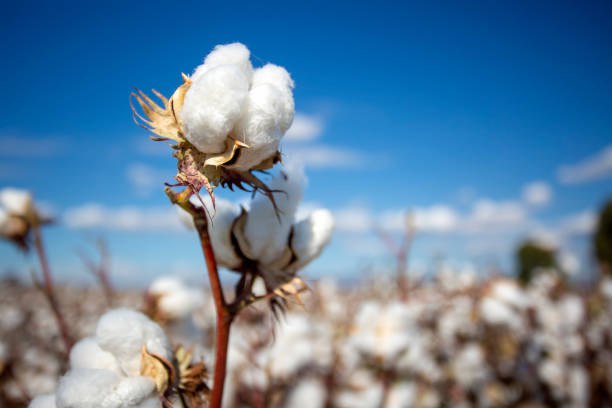
Since the start of 2025, Iran has imported more than 30,000 tons of cotton fiber from Tajikistan, accounting for over 83% of the country’s total foreign sales of this product. The value of these exports has reached $45.7 million. Geography and Structure of Exports Khurshed Zuhurzoda, First Deputy Director of the Tajikistan Export Agency, said Iran’s demand is driven by a shortage of raw materials for its domestic textile industry. According to the Iranian Cotton Fund, the country’s annual cotton demand stands at around 180,000 tons, while domestic production meets only 70,000-80,000 tons. Geographic proximity and the high quality of Tajik fiber have made it one of Iran’s primary import sources. From January to June 2025, Tajikistan exported 36,300 tons of cotton fiber worth $54.6 million to foreign markets. Of this, more than 30,900 tons, 83.61% in both value and volume, went to Iran. Other buyers included Russia ($4 million), Turkey ($1.97 million), Pakistan ($1.1 million), and China ($286,000). The Khatlon region was the largest domestic supplier, providing $29.6 million worth of exports (54.22%), followed by Sughd with $25 million (45.78%). The average export price per ton was $1,506. Negotiations on Expanding Cooperation On July 30, during the 10th Consultation of the Ministers of Agriculture of Shanghai Cooperation Organisation (SCO) member states in China, Tajik Agriculture Minister Kurbon Hakimzoda met with Iranian Agriculture Minister Gholamreza Nouri. Talks covered topics ranging from cotton supplies to the introduction of smart farming systems. Priorities included food security, development of greenhouse complexes, fish farming, organic agriculture, digital technologies, internationally accredited laboratories, climate change adaptation, and joint projects for product processing and packaging. Nouri emphasized that strengthening agricultural ties with neighboring countries is a strategic priority for Iran. Hakimzoda, in turn, noted “satisfactory progress” in implementing existing agreements. Prospects: Moving from Raw Cotton to Value-Added Exports Tajikistan forecasts raw cotton production to grow from 422,000 tons in 2026 to 437,000 tons in 2028. Cotton fiber output is projected at 150,000 tons, while yarn production will increase from 49,000 to 54,000 tons. The government’s export strategy aims to gradually reduce unprocessed cotton exports, from 72,000 tons in 2026 to 56,000 tons in 2028, while boosting yarn exports from 14,000 to 18,000 tons. Agricultural expert Bakhodur Khaito said this shift could alter trade arrangements with Iran. “With a reduction in direct fiber supplies, Dushanbe could offer Tehran more yarn, develop joint ventures, localize processing, and promote finished products to third markets,” he noted.