• KGS/USD = 0.01144 0%
  • KZT/USD = 0.00210 0%
  • TJS/USD = 0.10554 -0.09%
  • UZS/USD = 0.00008 0%
  • TMT/USD = 0.28530 0%
  • KGS/USD = 0.01144 0%
  • KZT/USD = 0.00210 0%
  • TJS/USD = 0.10554 -0.09%
  • UZS/USD = 0.00008 0%
  • TMT/USD = 0.28530 0%
  • KGS/USD = 0.01144 0%
  • KZT/USD = 0.00210 0%
  • TJS/USD = 0.10554 -0.09%
  • UZS/USD = 0.00008 0%
  • TMT/USD = 0.28530 0%
  • KGS/USD = 0.01144 0%
  • KZT/USD = 0.00210 0%
  • TJS/USD = 0.10554 -0.09%
  • UZS/USD = 0.00008 0%
  • TMT/USD = 0.28530 0%
  • KGS/USD = 0.01144 0%
  • KZT/USD = 0.00210 0%
  • TJS/USD = 0.10554 -0.09%
  • UZS/USD = 0.00008 0%
  • TMT/USD = 0.28530 0%
  • KGS/USD = 0.01144 0%
  • KZT/USD = 0.00210 0%
  • TJS/USD = 0.10554 -0.09%
  • UZS/USD = 0.00008 0%
  • TMT/USD = 0.28530 0%
  • KGS/USD = 0.01144 0%
  • KZT/USD = 0.00210 0%
  • TJS/USD = 0.10554 -0.09%
  • UZS/USD = 0.00008 0%
  • TMT/USD = 0.28530 0%
  • KGS/USD = 0.01144 0%
  • KZT/USD = 0.00210 0%
  • TJS/USD = 0.10554 -0.09%
  • UZS/USD = 0.00008 0%
  • TMT/USD = 0.28530 0%

Viewing results 265 - 270 of 719

A New Chapter of Peace and Cooperation in Central Asia: The Kyrgyz-Tajik Border Agreement

On March 13, 2025, a historic milestone was achieved with the signing of the Kyrgyz-Tajik border agreement. This long-anticipated treaty, signed by Kyrgyzstan's President Sadyr Japarov and Tajikistan’s President Emomali Rahmon, resolved a long-running dispute over the 984-kilometer boundary between the two nations. Clashes in 2021 and 2022 left scores dead, hundreds wounded, and thousands displaced. The resolution marked not only the end of an enduring source of regional tension but also the beginning of a prospective era of peace and collaboration. The significance of this agreement is substantial and far-reaching. For decades, the unresolved Kyrgyz-Tajik border remained a flashpoint for clashes, occasionally escalating into violence between communities living in border regions such as Batken. The new treaty now promises a peaceful future, with both leaders showing their commitment to long-term regional stability. A Diplomatic Achievement The path to this agreement was anything but straightforward, with Kyrgyz President Japarov characterizing the land exchanges involved in the treaty as a “tough but necessary decision.” During Nauryz celebrations in Osh, Japarov praised the expert teams who worked for four years to reach a settlement that balanced the interests of both sides. Japarov emphasized the benefits of the treaty for border-area communities, specifically in Batken, where tensions have been acute. The “lives of our citizens in border areas of the Batken region will be peaceful from now on,” he stated, promising new homes for residents displaced during past conflicts. The treaty aims to bring not only peace but also economic development, as secure frontiers pave the way for cross-border trade and infrastructure investment. For Tajikistan's President Rahmon, the agreement not only resolved a geopolitical challenge but reinforced the shared value of cooperation in the region. His message during Nauryz to President Japarov symbolized the optimism underpinning their new relationship. “I am confident that our countries, relying on the high universal values of this ancient holiday, will continue their joint efforts to enrich the content of their multifaceted relations,” Rahmon wrote. Messages of Support on a Symbol of Renewal The signing of the treaty aligned closely with Nauryz, the ancient festival that symbolizes renewal, prosperity, and unity across Central Asia. World leaders also viewed the timing as auspicious, with U.S. President Donald Trump extending his congratulations to President Rahmon in a message of goodwill on the occasion of Nauryz. “This is a major achievement that will bring great economic benefits and security to both countries," Trump wrote, highlighting the agreement's potential to stabilize the region. Trump also reaffirmed America's support for Tajikistan’s sovereignty, underscoring the importance of ongoing cooperation. His words echoed a broad international sentiment celebrating the Kyrgyz-Tajik agreement as a step toward enhanced regional partnerships. Regional Cooperation on the Rise The Kyrgyz-Tajik border agreement forms part of a broader trend of strengthening ties among Central Asian nations. Recently, Kyrgyzstan resolved a similar border issue with Uzbekistan, setting a precedent for peaceful dispute resolution. Now, Japarov has suggested taking the next step by creating a visa-free travel regime and even a unified regional...
Celebrating Nauryz: A Timeless Tradition of Unity, Renewal, and Heritage in Central Asia

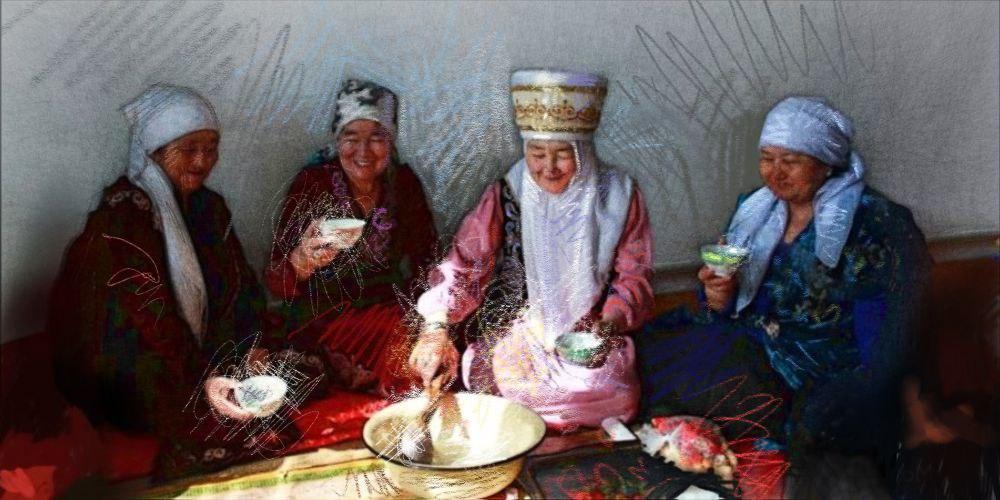
Nauryz is more than just a holiday - it is a symbol of spring renewal, harmony, and unity that has been celebrated by the peoples of Central Asia for centuries. Marking the arrival of the spring equinox, Turkic communities welcome the New Year with purification rituals, festive gatherings, and traditional games. While the holiday shares common roots across the region, each country celebrates it uniquely, reflecting its distinct cultural heritage. Nauryz has survived through the centuries, and despite the evolution of the celebration in the modern era, it continues to unite people through traditions. Kazakhstan In Kazakhstan, Nauryz is celebrated on a large scale, transforming cities and villages into festival grounds filled with folk rituals, sporting events, and cultural performances. The holiday begins with blessings from elders and family visits. At the heart of the festive table is Nauryz-kozhe, a traditional soup made from seven ingredients, each symbolizing key values in life. “Nauryz without Nauryz-kozhe is not Nauryz," Daniyar, 29, from Almaty, told The Times of Central Asia. "When I was a child, my grandmother told me that eating it would bring luck for the year. That’s why the whole family gathers around the table.” Beyond feasting, Nauryz is a time for competitions. Among the most popular are kokpar, an equestrian contest where riders traditionally competed for a goat carcass - now often replaced with a dummy version (serke), asyk atu, a traditional game of precision using sheep bones, and kazaksha kures, a national wrestling competition. “As a child, I always looked forward to this day because it was when I could see adults displaying strength and skill," Sanzhar, 25, from Taraz, told TCA. "These traditions are passed down through generations and strengthen our culture.” Ancient customs also come to life during the festival. People wear traditional Kazakh attire, exchange gifts, and partake in purification rituals. “When I put on a [traditional] Kazakh costume, I feel a deep connection with my ancestors. There’s something magical about this holiday - the aroma of freshly cooked kozhe, the sound of the dombra, the folk dances, and the spirit of unity. It’s a day to remember who we are and take pride in our culture,” said Aizhan, 40, from Astana. [caption id="attachment_29953" align="aligncenter" width="1200"] Nauryz celebration in Almaty; image: TCA[/caption] Kyrgyzstan In Kyrgyzstan, Nauryz represents renewal and rebirth. The celebrations begin with a cleansing ritual, where people clean their homes, courtyards, and even their minds, symbolizing a fresh start. Hospitality plays a central role, as it is customary to host and visit seven guests, symbolizing openness and strong social bonds. Like in Kazakhstan, Nauryz-kozhe is a staple of the festive table. However, Kyrgyz cuisine also features kuurdak, fried meat with potatoes and onions, and osh - also known as plov or palov - emphasizing the tradition of generous feasting. The holiday is further enriched by national sporting competitions, including horse races, wrestling (kuresh), ordo, a traditional strategy game, and arkan tartysh, a tug-of-war contest. “For us, Nauryz is more than just a holiday....

Opinion: What the Loss of RFE/RL Would Mean for Central Asia

The decision to terminate the federal grant agreement funding for Radio Free Europe/Radio Liberty (RFE/RL) is a crushing blow for hundreds of millions of people. These people know their governments are not telling them the full truth about what is happening in their countries or in the world outside. The objective information provided by RFE/RL has been important to people such as these. Perhaps as important, since the end of the Cold War, was the platform RFE/RL provides, whenever possible, for people in these countries to explain their views to the outside world. I know, because I worked at RFE/RL for 25 years covering Central Asia. RFE/RL was founded in 1950, and I didn’t show up there until 1997. I can only speak about what I saw and heard when I was an RFE/RL employee. My understanding of my tasks as an RFE/RL employee was that we were supposed to keep close track of what was happening in Central Asia, cover as many of the important topics of the region as possible, and make objective and accurate information on these topics available to the people in Central Asia. During Tajikistan’s 1992-1997 civil war, for example, RFE/RL’s Tajik service, Radio Ozodi, was the most trusted source of information for the people of Tajikistan. During the Coronavirus pandemic, the Turkmen government would not even allow the word COVID to be spoken and denied there were any cases of the virus in the country, leaving RFE/RL’s Turkmen service, Azatlyk, as one of the only sources of information for Turkmenistan’s people about the illness. I lived in Central Asia before joining RFE/RL, so I had some idea of what was important to people there. Calling for respect for fundamental rights is a big part of RFE/RL’s work. Read the constitutions of any Central Asian country and you will see enshrined there the right to freedom of speech, freedom of assembly, the right to freely receive or disseminate information, and much more. In practice, these rights are not always observed in Central Asia. In such a situations RFE/RL’s Central Asian services are a voice for those who, with good reason, are afraid to speak out publicly, or more importantly, for those who did speak out and are punished for that. At RFE/RL we looked for “impact stories,” testimony from people of the region about unfulfilled government promises, abuses, or state mismanagement that were hurting communities and individuals. Central Asian government officials are among the most faithful RFE/RL listeners, and often RFE/RL reports that raised social issues led officials to rectify the situation. Ramshackle buildings or schools were suddenly repaired, electricity or running water became accessible to city districts and rural areas, sufficient food became available to communities. The pleas of average citizens too often fell on deaf ears in government halls, but the criticism of an international organization such as RFE/RL, which was broadcasting to the entire country and Central Asian region, was too embarrassing for officials to ignore. This made RFE/RL unpopular with Central...

Tajikistan to Modernize Energy, Cotton, and Education Sectors with EU Grants

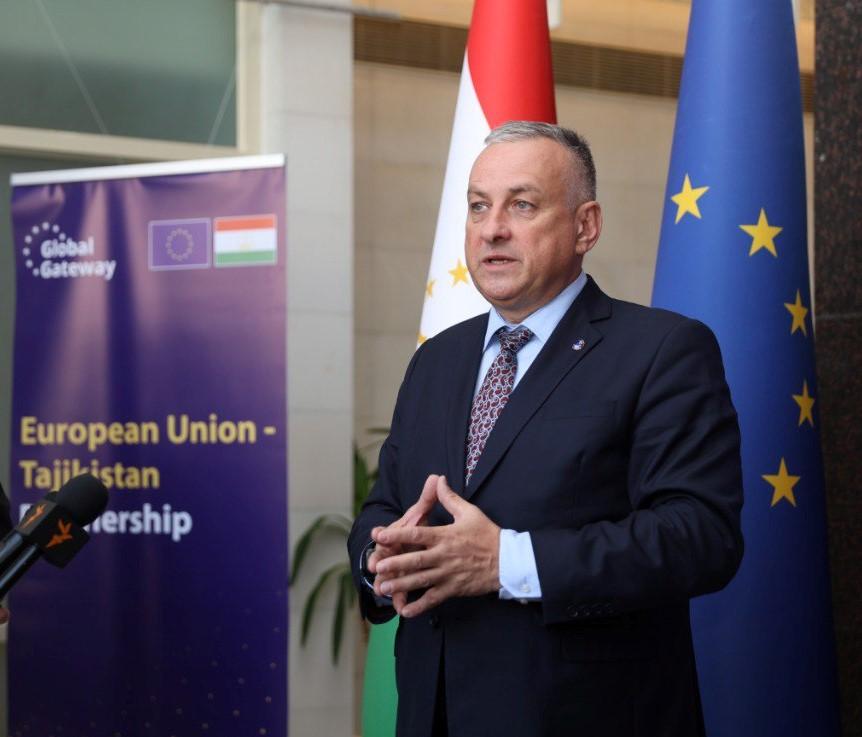
On March 14, European Commissioner for International Partnerships Jozef Síkela arrived in Tajikistan. He met with President Emomali Rahmon to reaffirm the European Union’s commitment to the country through the EU’s Global Gateway initiative​. During their meeting, Síkela and Rahmon discussed the state and future of EU-Tajikistan relations, as well as pressing regional issues. Their talks focused on expanding economic and trade ties, attracting investments in industry and agriculture, and securing funding for hydropower projects. Rahmon emphasized Tajikistan’s commitment to green technologies and its goal of generating 100% of its electricity from renewable sources under the Strategy for the Development of the Green Economy until 2037​. EU’s New Funding for Tajikistan During his visit, Síkela announced several new EU funding initiatives aimed at strengthening Tajikistan’s sustainable development. According to the EU Delegation to Tajikistan, two key agreements were signed with Team Europe partners to drive sustainability efforts in the country: A €20 million investment grant with the European Bank for Reconstruction and Development (EBRD) to modernize Tajikistan’s electricity grid, reduce energy losses, and prepare for future renewable energy investments. This aligns with the EU’s broader goal of enhancing energy security and supporting the green transition in Central Asia. A €20 million grant with Deutsche Gesellschaft für Internationale Zusammenarbeit (GIZ), the German Agency for International Cooperation, to promote sustainability in Tajikistan’s cotton sector. The initiative will support certified sustainable cotton production, improve processing for high-quality exports, and create new opportunities for the domestic private sector. Additionally, the EU announced a €10 million disbursement as part of a larger €30 million budget support program. This funding will help implement the National Strategy for Education Development 2030 and the Programme for Professional Training of Citizens 2021-2025, improving the quality and relevance of both general secondary education and vocational training​. As part of his visit, Síkela toured the Rogun Hydropower Plant, a crucial project for Tajikistan’s energy infrastructure. “With its Global Gateway strategy, the EU is investing in Tajikistan’s future by supporting critical infrastructure upgrades, expanding renewable energy capacity, and modernizing key industries such as cotton production,” Síkela stated. “These investments will reduce energy losses, create jobs, and open new export markets”​.

Kyrgyz-Tajik Border Agreement Seeks to End Years of Hostility

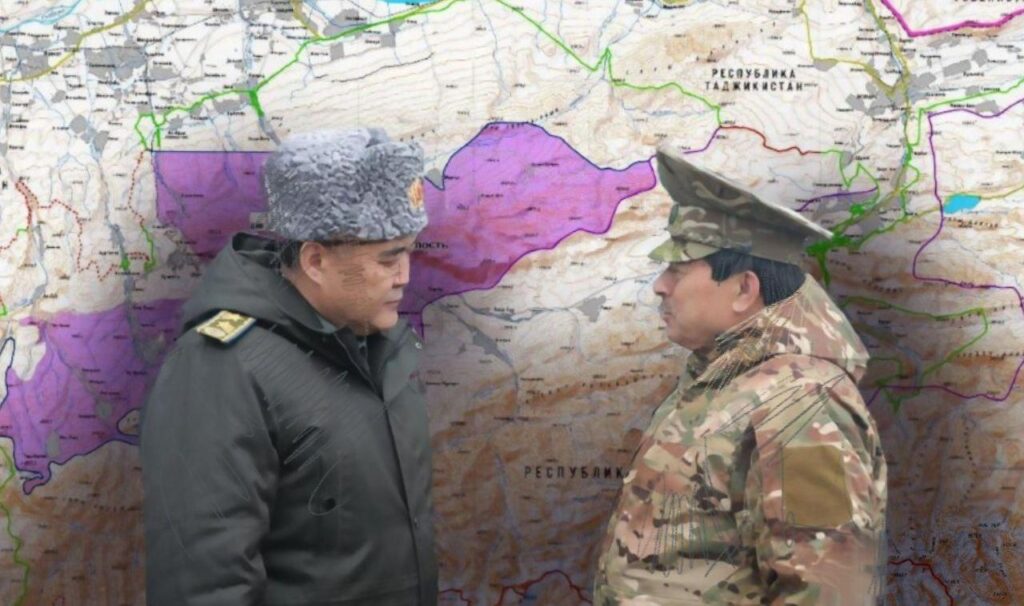
Kyrgyzstan and Tajikistan signed an agreement on March 13 that aims to put an end to tensions that have made their border the deadliest area in Central Asia for more than a decade. Underscoring the significance of this breakthrough was Tajikistan President Emomali Rahmon making his first state visit in nearly twelve years to the Kyrgyz capital Bishkek to sign the deal on the delimitation of the Kyrgyz-Tajik border. A Long-Standing Dispute Marking the border in the mountainous, sparsely inhabited eastern section of the two countries’ border was not difficult, and by 2011, some 520 kilometers had been demarcated. Reaching a final agreement on the western 487 kilometers, located in the Ferghana Valley and more densely populated, however, was far more complicated due to roads and canals that passed through both countries’ territories. Rahmon’s visit in May 2013 came a month after hundreds of residents of border communities clashed near the Kyrgyz village of Ak-Sai and Tajikistan’s Vorukh enclave. Such incidents were increasing, though at that time they were limited to fistfights, throwing sticks and stones, and vandalism of property, usually vehicles. In May 2013, Rahmon and then Kyrgyz President, Almazbek Atambayev, discussed measures to ease tensions along the border, but along the frontier, the meeting of the two presidents in the Kyrgyz capital made little difference. In January 2014, a Kyrgyz construction crew started work on a bypass road around the Tajikistan’s Vorukh enclave, and an argument broke out between border guards of the two countries. Insults led to an exchange of fire, during which Tajik border guards reportedly used grenade launchers and mortars. Five Kyrgyz and two Tajik border guards were wounded in the fighting. It was the first time weapons were used during border conflicts, but from that time on, disputes increasingly involved gunfire, increasing the number of casualties and sometimes resulting in deaths. Both governments sent additional troops and military equipment to the border area, adding fuel to the fire. On July 26, 2019, four days after another clash near the Vorukh enclave left one person dead and 27 injured, Rahmon met with then-Kyrgyz President Soronbai Jeenbekov in the Vorukh enclave. Again, there were promises of new steps to defuse tensions and hasten an agreement on border delimitation, but as had happened previously, it was not long before fights erupted, adding to the growing casualty list along the Kyrgyz-Tajik border. From Bad to Worse On April 28, 2021, Kyrgyz villagers spotted a group of Tajik citizens setting up a camera on a water intake station near the Kyrgyz village of Kok-Tash. An argument quickly led to large-scale clashes that spread along several sections of the Kyrgyz-Tajik border. Armed forces from the two countries used heavy machine guns, mortars, and armored vehicles. Tajikistan even sent helicopter gunships to attack one area in Kyrgyzstan. The fighting only lasted two days, but when it was over, 54 people were dead, hundreds were wounded, thousands were forced to flee the area, and there was damage to homes and other buildings....

How Women in Central Asia Celebrate International Women’s Day

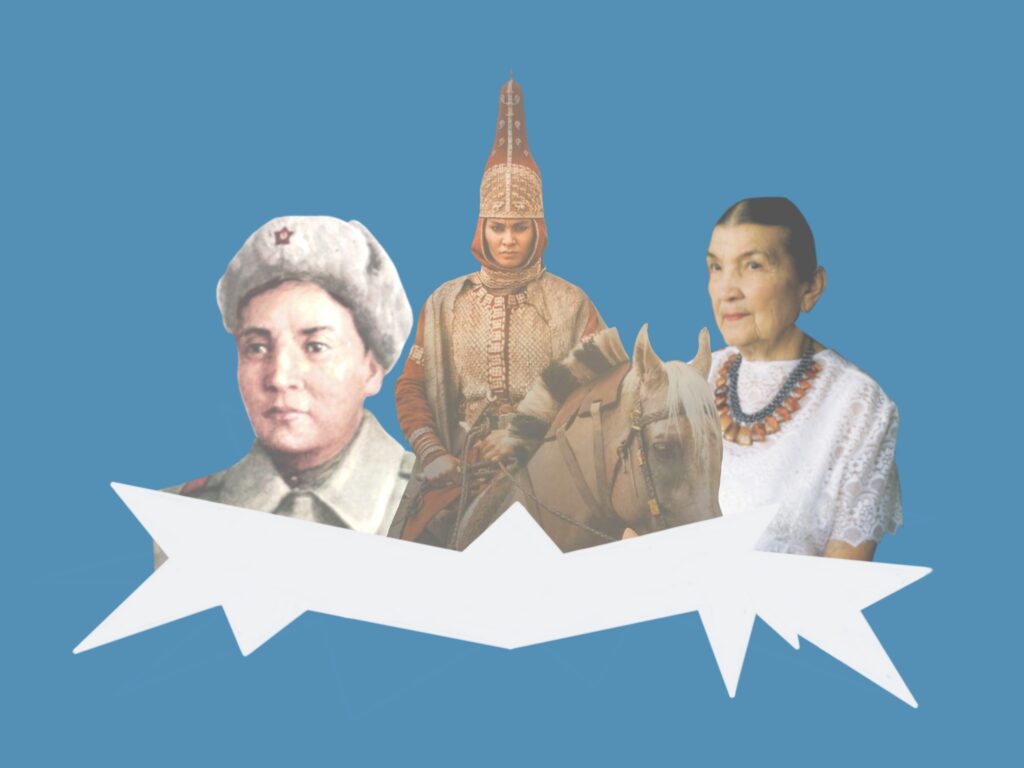
March 8, International Women’s Day, holds a special place in Central Asia. Over the years, the holiday has evolved from its Soviet-era roots into a modern celebration that blends tradition with contemporary interpretations. The Soviet Past: March 8 as a Day for Working Women During the Soviet Union, March 8 was more than a celebration of spring and femininity, it symbolized the struggle for women’s rights and equality. The day honored working women, with official ceremonies highlighting their achievements. State-run enterprises and organizations staged formal events and presented flowers and gifts to female employees, and media outlets published articles about the country’s outstanding women. The Transition Period: The 1990s Following the collapse of the Soviet Union, Central Asian countries began redefining their identities, which was reflected in how they marked March 8. The holiday took on a more personal and familial character, with less ideological emphasis. While state celebrations continued, they became more subdued. Men still gifted flowers and presents to women, but the political significance of the day gradually faded into the background. Modern Celebrations: Balancing Tradition and New Trends Today, March 8 in Central Asia is primarily a day to recognize women’s contributions and express gratitude. The holiday remains widely celebrated across Kazakhstan, Kyrgyzstan, Uzbekistan, Tajikistan, and Turkmenistan, though each country has developed its distinct traditions. Kazakhstan: Major cities host flash mobs, charity events, and cultural programs. In recent years, feminist activism has gained momentum, with some using the holiday to highlight gender inequality. “For me, March 8 is not just about receiving flowers, it’s a reminder that equality is not a privilege but a necessity,” Ainur, 24, from Almaty told TCA. Uzbekistan: The holiday remains warm and family-oriented. Women receive flowers, sweets, and gifts from colleagues and relatives, while government agencies organize concerts and celebrations. “My friends and I always celebrate March 8. It’s wonderful to receive gifts from my brothers, friends, and husband, but I wish there was more year-round appreciation for women,” Madina, 27, from Tashkent told TCA. Kyrgyzstan: Alongside traditional celebrations, women's organizations and activists hold marches and discussions on gender rights, reflecting a shift toward reinterpreting the holiday. “I participate in the women’s rights march every year because this day is not just about flowers; it’s about our opportunities and freedoms,” Gulzat, 23, from Bishkek told TCA. Tajikistan and Turkmenistan: March 8 remains an official holiday, but without any strong political agenda. “For me, this day is a time to gather with family, but I see that younger women are giving it a new meaning,” Zarina, 40, from Dushanbe told TCA. Changing Values and Perspectives Each year, debates over the significance of March 8 grow stronger. Some argue that it should remain a celebration of spring and femininity, while others emphasize its role in promoting gender equality. Regardless of interpretation, International Women’s Day remains an important occasion that unites different generations of women and reinforces the need for respect and support. Over time, the holiday in Central Asia has evolved from a Soviet...