• KGS/USD = 0.01144 0%
  • KZT/USD = 0.00209 0%
  • TJS/USD = 0.10523 0%
  • UZS/USD = 0.00008 0%
  • TMT/USD = 0.28530 0%
  • KGS/USD = 0.01144 0%
  • KZT/USD = 0.00209 0%
  • TJS/USD = 0.10523 0%
  • UZS/USD = 0.00008 0%
  • TMT/USD = 0.28530 0%
  • KGS/USD = 0.01144 0%
  • KZT/USD = 0.00209 0%
  • TJS/USD = 0.10523 0%
  • UZS/USD = 0.00008 0%
  • TMT/USD = 0.28530 0%
  • KGS/USD = 0.01144 0%
  • KZT/USD = 0.00209 0%
  • TJS/USD = 0.10523 0%
  • UZS/USD = 0.00008 0%
  • TMT/USD = 0.28530 0%
  • KGS/USD = 0.01144 0%
  • KZT/USD = 0.00209 0%
  • TJS/USD = 0.10523 0%
  • UZS/USD = 0.00008 0%
  • TMT/USD = 0.28530 0%
  • KGS/USD = 0.01144 0%
  • KZT/USD = 0.00209 0%
  • TJS/USD = 0.10523 0%
  • UZS/USD = 0.00008 0%
  • TMT/USD = 0.28530 0%
  • KGS/USD = 0.01144 0%
  • KZT/USD = 0.00209 0%
  • TJS/USD = 0.10523 0%
  • UZS/USD = 0.00008 0%
  • TMT/USD = 0.28530 0%
  • KGS/USD = 0.01144 0%
  • KZT/USD = 0.00209 0%
  • TJS/USD = 0.10523 0%
  • UZS/USD = 0.00008 0%
  • TMT/USD = 0.28530 0%

Viewing results 325 - 330 of 713

Tajikistan Court Issues Harsh Sentences to Opposition Group 24 Leader and Associate

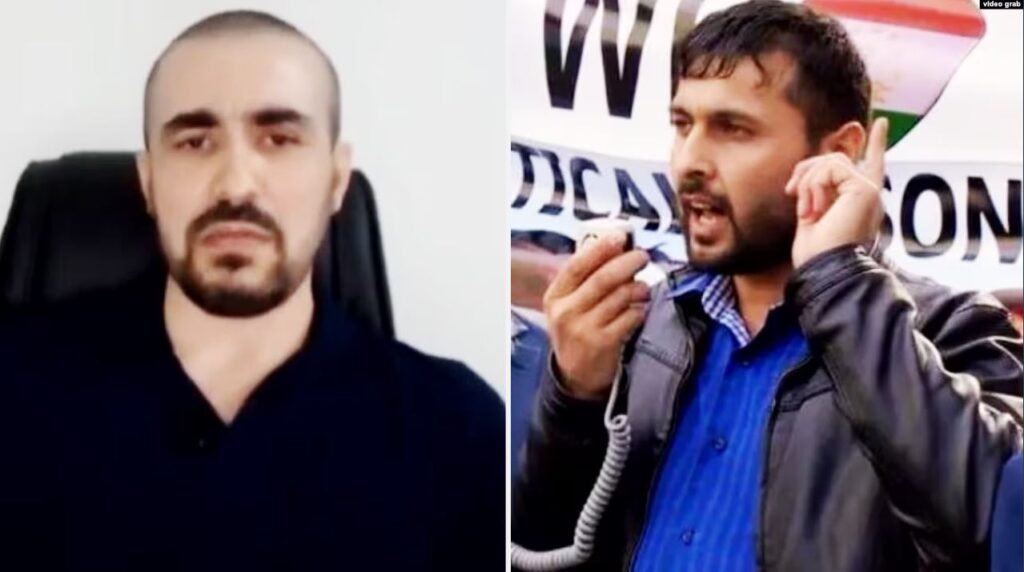
A Dushanbe court has handed down sentences to two opposition activists: Sukhrob Zafar, leader of the banned Group 24 (G24), and his associate Nasimjon Sharifov. Zafar was sentenced to 30 years and Sharifov to 20 years in prison. The verdict was announced on October 10 behind closed doors in the Dushanbe pre-trial detention center, and according to Radio Ozodi sources, it fully complies with the state prosecution's request. Official structures still need to confirm this information. Representatives of G24 say the sentences relate to the charges of “calls for violent change of the constitutional order” spread through the Internet. They consider these accusations unfounded and call the case politically motivated. In their opinion, the trial was conducted under pressure from the authorities and was a manifestation of Emomali Rahmon's government's repressive policy. Both activists previously lived in Turkey, where they were hiding from the Tajik authorities. Suhrob Zafar had been there since 2014 and had received repeated threats. He was detained several times at Tajikistan's request but was soon released. Sharifov had also been living in Turkey since 2015 and was detained three times but released each time. In March 2024, they mysteriously disappeared, and only in August it became known that they were taken to Dushanbe, where an investigation against them began. The trial, according to G24 representatives, was yet another example of human rights violations and political repression. The organization claims that the trial was held under tremendous pressure and calls the authorities' actions an act of suppression of dissent. Supporters believe that the repression of activists continues as part of the anti-opposition policy that the Tajik authorities have been pursuing for years. G24 is an opposition organization founded in 2012 by businessman Umarali Kuwwatov, who left Tajikistan after conflicts with the authorities. The movement opposes President Emomali Rahmon's policies, accusing him of corruption and authoritarianism. In 2014, Tajikistan's Supreme Court declared the organization extremist after calls for protests and banned its activities, including websites and publications. The group's founder was killed in 2015 in Turkey, raising suspicions of involvement by Tajik authorities.
Tajikistan’s Acute Hunger Issue

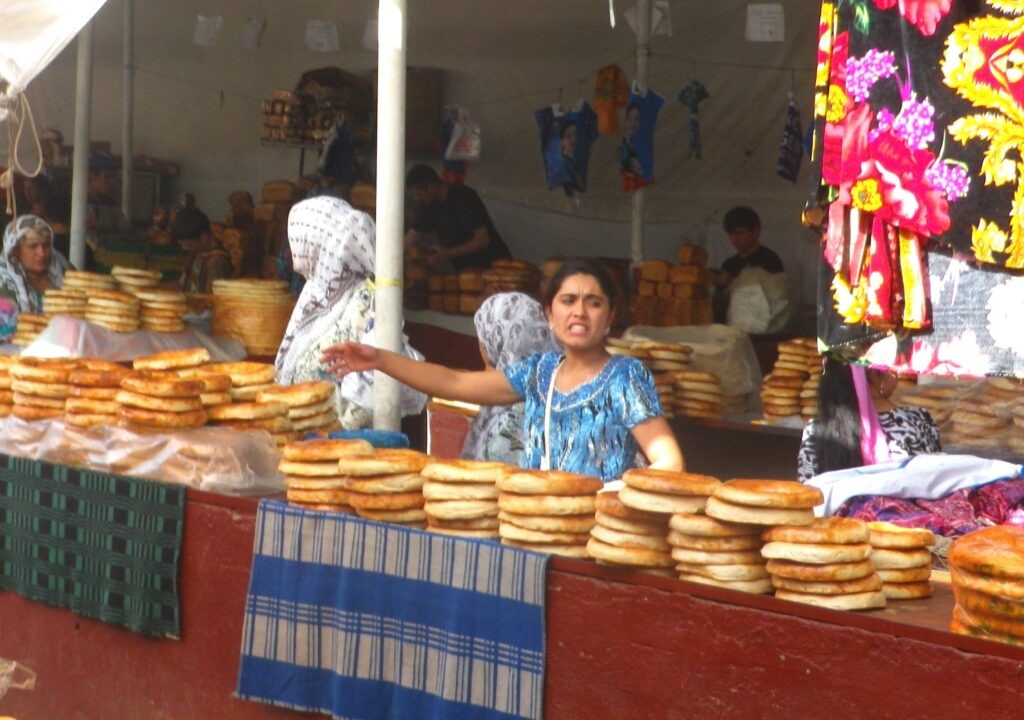
Tajikistan has been recognized as the hungriest country among the former Soviet republics. According to the Global Hunger Index prepared by the International Food Policy Institute, 8.7% of the country's population faces food shortages, and ranked 65th out of 127 countries in the world, is on par with countries such as Nicaragua and Ghana. Lower index scores equal less food problems. Assessments of hunger are based on child mortality, stunting, and wasting and in recent years, Tajikistan has consistently ranked lowest among post-Soviet countries in the Global Hunger Index. Despite attempts to improve the situation, the country remains one of the most vulnerable in the region. Today, 18.4% of children under five are stunted due to malnutrition, 5.1% are wasted, and 3% of children do not survive to the age of five; all indicative of  serious food security problems in the country. According to the Global Hunger Index, malnutrition varies widely across the former Soviet Union. The best results are demonstrated by Uzbekistan, which ranks first among countries with minimal hunger issues. In the republic, less than 2.5% of the population faces food shortages. Stunting affects 6.5% of children; wasting ,2.4% of children, and infant mortality does not exceed 3.1%. Uzbekistan was the only Central Asian country to rank highly among the 22 former Soviet republics with the lowest hunger rates, including Belarus, Estonia, Latvia, Lithuania, Russia, and Georgia. Belarus and Lithuania consistently demonstrate a high level of food security, making them among the leaders of the former Soviet republics. Armenia and Kazakhstan, in contrast, rank 23rd and 25th, respectively, demonstrating moderate nutritional problems among the population. Moldova, ranked 26th, has a similar situation: malnutrition remains relatively low but requires attention. Kyrgyzstan ranks 36th and Ukraine 46th, indicating average hunger levels. Turkmenistan was ranked 50th. The situation is particularly dire in Africa, which tops the list of countries with the most significant hunger problems. South Sudan, Burundi, Somalia, Yemen, and Chad, recognized as the hungriest countries in the world, experience extremely high rates of child mortality and malnutrition among their populations.

Central Asia’s Increasing Profile in Global Climate Policy

Between 11 and 22 November, the 29th Conference of the Parties (COP29) to the United Nations Framework Convention on Climate Change (UNFCCC) will take place in Baku, Azerbaijan. In the run-up to this global event, Central Asian countries have been continuing their integration into the cooperative implementation of the global energy and environmental agenda. Such measures include, but are not limited to, commitments to reducing methane emissions, contributions to green supply chains, and — for Kazakhstan in particular — its nuclear policy based on multi-vector diplomacy. One may anticipate their especially enhanced presence in view of the fact that several them have strategic-partner relations with Azerbaijan, which is cooperating with them also in the implementation of the Trans-Caspian International Trade Corridor (TITR or "Middle Corridor"). The Central Asian states are using their implementation of global energy and environmental priorities as an instrument to integrate further into the international system. Following their participation at COP28 (30 November – 23 December 2023, in Dubai, United Arab Emirates), all five of them signed the Global Methane Pledge to reduce methane emissions by at least 30% by 2030. They have also stepped up their contributions to green supply chains, signalling their ambitions to become more important players in global geoeconomics. At the same time, these initiatives also seek to promote domestic economic diversification. Kazakhstan, in particular, continues to play a central role with its multi-vector approach, notably in the nuclear energy sector, positioning itself at the intersection of sustainability and global energy security. Kazakhstan holds 12% of global uranium reserves. It became the world’s leading producer in 2009 and in 2022 accounted for 43% of global production. In Central Asia, Uzbekistan has a Rosatom-sponsored NPP project under way, as does Kyrgyzstan. Along with Kazakhstan, Uzbekistan and Turkmenistan in particular actively engaged in discussions on climate policy at COP28, acknowledging the need to balance their resource-rich economies with global sustainability goals. One of the key outcomes was the region's collective involvement in the Global Methane Pledge. Global environmental policy bodies have assessed that methane emissions are a significant concern for global climate policy. The effect of this assessment will be to load still greater financial burdens on oil and gas companies by making development of hydrocarbon deposits, and the transmission of hydrocarbon resources to market, more expensive. Kazakhstan’s commitment to cutting methane emissions by 30% by 2030 exemplifies this shift, signalling a readiness to reform domestic industries in line with global climate targets. Turkmenistan has the highest methane emissions intensity in the region, but challenges remain in terms of monitoring and implementation. Uzbekistan’s leadership was also highlighted at COP28. The country’s ambitious plans to scale up solar and wind energy by 2030 align with broader regional goals of reducing dependence on hydrocarbons. This is Tashkent's (and the region's) way of enhancing their profile as "good global citizens" as policy decisions by political bodies at the international level increasingly emphasize decarbonization. Uzbekistan has made strides in "green supply chains" by focusing on the renewable energy sector...

Laughter Amidst Ruins: Rediscovering Tajikistan’s Resilience Through Comedy and Cultural Exchange

The UN General Assembly's Human Rights Council recently condemned the government of Tajikistan for its failure to implement the recommendations of a 2019 study by UN representatives. The study focused on the unreconciled atrocities and societal wounds caused by the civil war that swept through the republic after the collapse of the Soviet Union. More than 60,000 people died in this war, and more than 250,000 fled the republic. Reading this news, I was reminded of and reflected on post-war Tajikistan, which I visited in the late summer of 2000. At that time, the country had been in a state of fragile peace for two years, and you could still feel the tension in the air. Since my visit to the country in 2000, the Tajik Civil War has been reflected on by many people in the arts. In the same year that UN researchers were raking up the old tragedy, the film Kazbat was released in Kazakhstan. This movie is a military drama about the real deaths of 17 soldiers of the Internal Troops of the Ministry of Internal Affairs of the Republic of Kazakhstan (now the National Guard), who fell into an ambush in Tajikistan on April 7, 1995. A little earlier, in 2017, Russian writer Vladimir Medvedev released the novel Zakhok, which talks about the horrors of that six-year war through the struggles of a single family, where the mother is Russian, and the children are half Tajik. My visit to this war-torn country was for a reason most wouldn’t have expected - a comedy festival. The group that I traveled with consisted of my teammates, Almaty residents, as well as people from other Kazakh, Uzbek, and Kyrgyz cities. Despite coming from all over Central Asia, we ended up in Tajikistan for the first international СVN festival (СVN - Club of the Funny and Inventive) in Central Asia. СVN is an improv and sketch comedy competition involving students that originated in Soviet times, the point of which is to satirize the surrounding reality through theatrical skits and question-based improv. Due to its satirical nature, СVN was banned for two decades during the Soviet-era. It was later revived during Perestroika, and, in the shortest possible time, became a phenomenon in all universities in Russia and across almost all of post-Soviet space. In Kazakhstan, СVN was developed immediately after the collapse of the USSR. Alma-Ata, which was the capital city back then, organized its own league, which included teams from the leading national universities of that time - Kazakh State University, Narkhoz, Almaty Institute of Transport Engineers, and Almaty State Medical Institute. I belong to the second generation of СVN players. Our task was to popularize this game throughout the republic and attract not only universities but also colleges and schools. Later, the new СVN league went beyond Kazakhstan, starting with friendly meetings with universities from Bishkek, Tashkent, and other Central Asian cities. Then, the International League of СVN, which was created and headed by Alexander Maslyakov, who passed...

Freedom of Speech in Tajikistan Discussed at OSCE Conference

The deteriorating situation for journalists and freedom of speech in Tajikistan was discussed at the plenary session of the OSCE Human Dimension Conference in Warsaw on October 2. Participants, including human rights defenders and civil society representatives, noted that arrests of journalists have become a common practice in the country. Some face harassment even outside Tajikistan. Gulnoza Said, program coordinator for the Committee to Protect Journalists in Europe and Central Asia, said the situation with human rights and freedom of expression has reached a critical point. She said eight journalists, including Ulfatkhonim Mamadshoeva, Daler Imomali, and Khushruz Dzhumayev, are currently in Tajik prisons. Said also emphasized that the sentences handed down to the journalists are incredibly harsh, ranging from seven to 20 years in prison. Muhammadjon Kabirov, editor-in-chief of Azda TV, broadcasting from Poland, noted that Tajikistan ranks 155th on the World Freedom of Expression Index, and its authorities have created a hostile environment for the media. Kabirov also recalled the transnational repression directed against journalists abroad. In his speech, he cited the conviction of journalists such as Hikmatullo Sayfullozoda and Abdukahor Davlat, who were sentenced to long prison terms in 2015. A recent example of pressure on the independent press was the arrest of the editor-in-chief of Pike, Ahmadi Ibrohim, who has been charged with bribery and is awaiting trial. The conference also raised the issue of Tajik authorities harassing journalists and their relatives to force them to stop their activities. Interestingly, although Tajikistan had previously taken an active part in such discussions, there were no representatives of Tajikistan at this year's event. International organizations have repeatedly criticized the situation with freedom of speech in Tajikistan. Organizations such as Amnesty International and Freedom House report the constant harassment of journalists, independent media, and activists. Opposition media outlets are banned in the country, and journalists face arrests and long prison terms on charges that human rights activists call trumped-up.

Tajikistan Mobilizes Civil Servants for Door-to-Door Anti-Radicalism Explanatory

As reported, officials and civil servants in Tajikistan have been tasked with going door-to-door and holding explanatory talks with the population on radicalism and extremism. In the southern Khatlon region, 1,800 civil servants, including teachers, healthcare workers, and local council members, have been assigned to carry out these talks. Officials claim the primary goal of these conversations is to prevent young people from becoming radicalized. During the meetings, they discuss topics like promoting traditional women’s clothing instead of hijabs, which authorities associate with radicalism. They also ask about relatives living abroad who might be at risk of becoming extremists and encourage young people to join the army. In the first seven months of this year, campaign groups visited over 620,000 houses. At the same time, campaign groups film their interactions with people and publish reports on social networks. Critics of the government in this regard claim that officials' door-to-door visits are nothing more than intrusions into people’s homes and interferences in their personal affairs. However, officials deny this; they say that the chosen method only allows for identifying the “most vulnerable” families and is necessary to combat radicalism among young people. “The issue of radicalization in the region is alarming, especially the joining of young people to various extremist movements. There are many cases,” said Davlatali Said, the governor of Khatlon region.