• KGS/USD = 0.01144 0%
  • KZT/USD = 0.00211 0%
  • TJS/USD = 0.10803 0%
  • UZS/USD = 0.00008 0%
  • TMT/USD = 0.28571 0%
  • KGS/USD = 0.01144 0%
  • KZT/USD = 0.00211 0%
  • TJS/USD = 0.10803 0%
  • UZS/USD = 0.00008 0%
  • TMT/USD = 0.28571 0%
  • KGS/USD = 0.01144 0%
  • KZT/USD = 0.00211 0%
  • TJS/USD = 0.10803 0%
  • UZS/USD = 0.00008 0%
  • TMT/USD = 0.28571 0%
  • KGS/USD = 0.01144 0%
  • KZT/USD = 0.00211 0%
  • TJS/USD = 0.10803 0%
  • UZS/USD = 0.00008 0%
  • TMT/USD = 0.28571 0%
  • KGS/USD = 0.01144 0%
  • KZT/USD = 0.00211 0%
  • TJS/USD = 0.10803 0%
  • UZS/USD = 0.00008 0%
  • TMT/USD = 0.28571 0%
  • KGS/USD = 0.01144 0%
  • KZT/USD = 0.00211 0%
  • TJS/USD = 0.10803 0%
  • UZS/USD = 0.00008 0%
  • TMT/USD = 0.28571 0%
  • KGS/USD = 0.01144 0%
  • KZT/USD = 0.00211 0%
  • TJS/USD = 0.10803 0%
  • UZS/USD = 0.00008 0%
  • TMT/USD = 0.28571 0%
  • KGS/USD = 0.01144 0%
  • KZT/USD = 0.00211 0%
  • TJS/USD = 0.10803 0%
  • UZS/USD = 0.00008 0%
  • TMT/USD = 0.28571 0%

Viewing results 19 - 24 of 545

Uzbekistan and Tajikistan Launch 10 Joint Projects During Rahmon’s State Visit

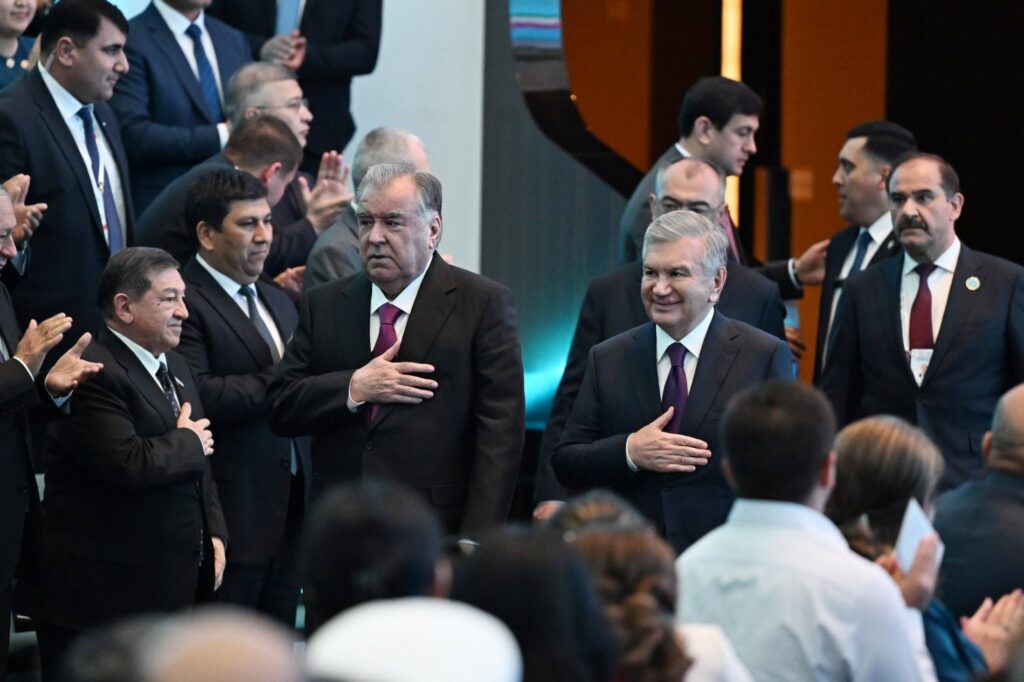
Uzbekistan's President Shavkat Mirziyoyev welcomed his Tajik counterpart Emomali Rahmon to Tashkent on March 26 for a state visit marked by high-level talks, and the launch of joint economic projects. Talks between the presidents followed, first in a one-on-one format and then during the inaugural meeting of the Supreme Interstate Council, a new platform aimed at deepening bilateral cooperation. Mirziyoyev described the visit as a landmark in bilateral relations, noting that the council would elevate cooperation and provide a mechanism for implementing joint initiatives. Both sides highlighted the increasing frequency of contacts between government institutions, parliaments, and agencies. In the lead-up to the visit, a series of events took place, including an intergovernmental commission meeting, an industrial exhibition, and forums involving regional leaders, academics, and youth. Uzbekistan also hosted Days of Tajik Culture and Cinema. During the discussions, Mirziyoyev and Rahmon reviewed opportunities to expand cooperation across key sectors, including trade, industry, transport, and water and energy security. Bilateral trade approached $1 billion last year, driven largely by the exchange of finished goods. The two countries aim to double this figure to $2 billion by 2030. Planned measures include accelerating the establishment of the Oybek-Fotekhobod border trade center, introducing digital certification systems and “E-Permit” mechanisms, and modernizing border infrastructure. The sides also agreed to adopt an industrial cooperation program covering mining, energy, agriculture, construction, and manufacturing. Following the council meeting, Mirziyoyev and Rahmon attended a ceremony to launch 10 joint projects. These include new enterprises producing furniture and leather goods, expanded household appliance manufacturing, textile production facilities in Tajikistan, and construction projects in Tashkent. Additional initiatives include food processing plants in Uzbekistan's Fergana region, dairy production in the city of Andijan, and facilities for making fruit juice and metal briquettes in the country's Surkhandarya region. A ceremony was also held to name a street in New Tashkent after Dushanbe, underscoring symbolic ties between the two capitals. The visit also featured the opening of a new building for Tajikistan’s embassy in Tashkent. The complex includes administrative offices, a consular section, a residence for the ambassador, and housing for diplomatic staff and their families. Cultural diplomacy formed another key part of the visit. Mirziyoyev and Rahmon attended a joint concert at the International Forums Palace featuring performers from both countries, with a program highlighting shared cultural heritage and longstanding ties between the Uzbek and Tajik peoples. The leaders also discussed regional and international issues, reaffirming their commitment to continued dialogue and cooperation within Central Asia. They agreed to strengthen coordination on security matters and expand interregional ties, as well as humanitarian, educational, and scientific exchanges. Given the presence of large diaspora communities in both countries, a proposal was put forward to adopt a five-year program aimed at strengthening cultural and humanitarian connections. At the conclusion of the visit, both sides agreed to develop a comprehensive roadmap to ensure implementation of the agreements reached, signaling continued efforts to expand cooperation across political, economic, and cultural spheres.

Asian Development Bank: Poverty in Tajikistan Declining, But Inequality Rising

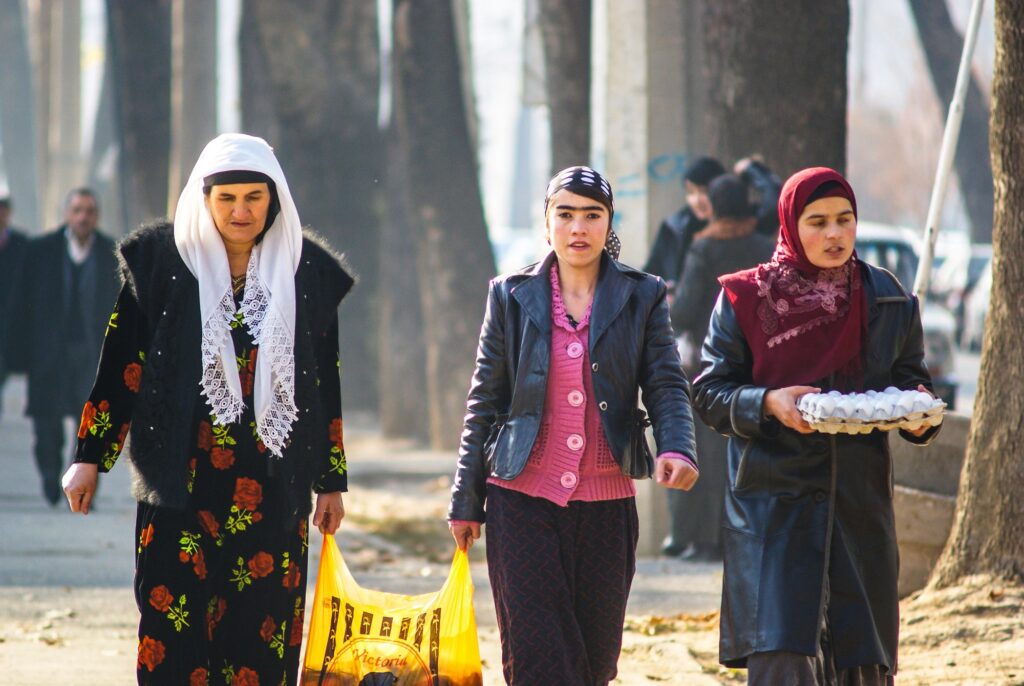
Tajikistan is experiencing mixed socioeconomic trends. While the country’s poverty rate has declined markedly in recent years, inequality and structural economic constraints remain significant challenges. This assessment is outlined in the Asian Development Bank’s (ADB) country partnership strategy for 2026-2030. According to the ADB, the share of the population living below the national poverty line fell from 30.9% in 2020 to 19.9% in 2024. However, the improvement has been driven largely by rising incomes linked to wage growth and remittances from labor migrants rather than by sustained job creation within the domestic economy. Analysts note that this development may contribute to widening inequality, particularly in rural and remote areas where access to economic opportunities remains limited. Most of Tajikistan’s population lives in southern and central regions, where economic activity is heavily dependent on agriculture. These areas face heightened social risks. Women remain among the most vulnerable groups due to restricted access to employment opportunities and higher levels of food insecurity. Despite overall progress in poverty reduction, food security challenges persist. Approximately 1.5 million people are considered vulnerable, while around 50,000 are experiencing acute food shortages. In the 2025 Global Hunger Index, Tajikistan ranked 63rd out of 123 countries, the lowest position among Central Asian states. The ADB identifies weak economic diversification as a key structural issue. Heavy reliance on agriculture leaves the country exposed to external shocks and climate-related risks. Private sector development has been slow, constrained by shortages of skilled labor, underdeveloped infrastructure, and a complex regulatory environment. Limited integration into regional and global markets further hampers growth. Infrastructure quality remains among the weakest in the region. Restricted access to transport networks and logistics services continues to hinder industrial development and trade expansion. The energy sector also faces structural challenges. Dependence on hydropower increases vulnerability to climate change, particularly through declining water availability and glacier melt. At the same time, gaps in education and vocational training contribute to persistent shortages of qualified workers. These pressures are intensified by high levels of labor migration, especially among young people. As a result, the domestic economy experiences workforce shortages in sectors that could otherwise drive long-term growth. Although agriculture remains central to livelihoods, it is increasingly exposed to climate risks and constrained by limited access to markets, financing, and modern technologies.

Tajikistan Loses Chance to Host the Asian Cup

Asian football is set for a major overhaul of its schedule. Under pressure from FIFA, the Asian Football Confederation (AFC) has decided to cancel the current selection process for Asian Cup hosts and effectively restart it, while also changing the traditional timing of the tournaments. The AFC has informed national federations of the suspension of the bidding process for the 2031 and 2035 Asian Cups. The decision came as a surprise, as the list of candidates had been published only a few weeks earlier. Among the bids was a joint proposal from Tajikistan, Uzbekistan, and Kyrgyzstan. However, the entire process has now been “reset”: all submitted applications are no longer valid, and the selection procedure will have to begin again. The changes follow a FIFA initiative to revise the schedule of continental competitions and move them to even-numbered years. After consultations, the AFC agreed to adopt the new model. As a result, the 2031 Asian Cup has been postponed to 2032, and the 2035 tournament to 2036. The 2027 Asian Cup, however, will take place as planned. The revised calendar is expected to place additional pressure on the international football schedule. With the rescheduling of major competitions, tournaments such as the UEFA European Championship, the Copa América, and the Asian Cup could be held in the same years. This may significantly “overload” national team calendars, forcing federations, coaches, and players to adapt to a more congested schedule and more complex planning requirements. The cancellation of the current bidding procedures means that countries will have to compete again for the right to host the tournaments. A new selection cycle has not yet been announced, and the timeline for its launch remains unclear.

Tajikistan’s Reliance on External Funding for State Investment Projects Is Growing

Tajikistan continues to implement a large-scale state investment programme. International financial institutions play a key role in financing these projects, however, while the government's own contribution remains limited. According to data from the State Committee on Investment and State Property Management, 82 state investment projects are currently under way in the country The total value of ongoing initiatives is estimated at approximately $4.67 billion. Of these, 55 projects are being implemented on a grant basis, five through loans, and another 22 have mixed financing. About $3 billion has already been allocated for procurement, works, and services related to the implementation of these projects. However, more than 70% of the funding is provided by just three international institutions. The World Bank remains the largest donor, contributing $1.725 billion (36.9%). It is followed by the Asian Development Bank with $914.7 million (19.5%) and the European Bank for Reconstruction and Development (EBRD) with $658.1 million (14.1%). Other investors include the Islamic Development Bank ($207.9 million), the Chinese government ($194.9 million), the Asian Infrastructure Investment Bank ($142.5 million), the German Development Bank ($129.3 million), and the European Investment Bank ($114.8 million). Against the backdrop of extensive external financing, Tajikistan’s own contribution remains small. The state is investing approximately $151.2 million, accounting for only 3.2% of the total. This means that the implementation of key infrastructure and social projects largely depends on international donors and lenders. At the same time, in 2025 Tajikistan managed to significantly increase capital inflows. Foreign investment reached approximately $7 billion, rising by nearly $2 billion (35.1%) compared with the previous year. The authorities hope to sustain this momentum by improving the investment climate, including through legislative updates. A key step was the adoption on May 14, 2025, of a new version of the law “On Investments and the Promotion of Investment Activity,” aimed at increasing the country’s attractiveness to international partners. The current development model allows Tajikistan to implement large-scale projects that would be difficult to carry out relying solely on domestic resources. However, this financing structure also increases dependence on external sources, making the economy more sensitive to the conditions set by international institutions and the global financial environment.

Tajikistan, Turkmenistan and Uzbekistan Send Humanitarian Aid to Iran

Tajikistan is sending a convoy of 110 trucks carrying humanitarian aid to Iran, which has been targeted by heavy U.S. and Israeli air strikes in a war that started on February 28. The dispatch of aid follows similar deliveries by Turkmenistan, Uzbekistan and Azerbaijan.  Central Asian countries are aiming for neutrality in the Mideast war, maintaining ties with the Iranian government even as they profess support for Gulf Arab states that have been targeted by Iranian drones and missiles. Iran’s relationships with countries to the east range from the close cultural affinity that it enjoys with Tajikistan to sometimes tense interactions with Azerbaijan, which has a military partnership with Israel.   The trucks from Tajikistan left for Iran on Wednesday and “will soon arrive in the friendly and brotherly country,” Tajikistan’s government said, without providing details about how the aid will be distributed. The convoy would likely travel through Uzbekistan and Turkmenistan to reach the northeastern Iranian border. The aid “comprises 3,610 tons of cargo, including 45 tons of medicines, a large volume of sanitary and hygienic products, children's clothing, various food products, household items, bedding, tents, building materials, and other necessary supplies,” Tajikistan’s Ministry of Foreign Affairs said.   Tajik President Emomali Rahmon posted a photo on social media that showed a long line of aid trucks on a highway.  Turkmenistan, which shares a border with Iran, has said it sent humanitarian aid, mainly for distribution to children. It appeared to allude to the war, saying that “supporting and assisting close neighbors in difficult times is a noble tradition of the Turkmen people, rooted in ancient times.” Uzbekistan has sent trucks carrying flour, rice, sugar, pasta, sunflower oil, canned goods and medical supplies to Iran.   Azerbaijan, which borders northwest Iran, has also dispatched truckloads of humanitarian aid to Iran, according to Ali Alizada, Azerbaijan’s ambassador to Iran. Azerbaijan previously said it was evacuating staff from its embassy in Tehran as well as its consulate in the Iranian city of Tabriz, after accusing Iran of drone attacks on its territory.

Global Internet Freedom Rankings: Tajikistan, Kyrgyzstan Far Ahead of Eurasian Neighbors

The 2026 Global Internet Freedom Rankings, published this week by the research agency Cloudwards, have revealed that the five countries of Central Asia have significantly less internet censorship than all of their Eurasian neighbors. Tajikistan and Kyrgyzstan’s online environments emerge as particularly encouraging cases. Cloudwards defines internet censorship as the banning or restricting of online content or services, such as social media platforms, VPN apps, and certain political or religious messaging. It also covers the more welcome deletion of harmful content. Censorship can be done by governments, or initiated by a country’s internet service providers and other businesses. The internet freedom rankings do not measure state censorship per se. Cloudwards' research scored 171 countries on a scale of 0-100, rating their overall levels of internet censorship using five key criteria: torrenting availability; adult content accessibility; social media platforms; access to varied political and religious content; and VPN regulations. Eleven nations returned the highest score of 92, including New Zealand, Belgium and Timor Leste. While North Korea scored 0, the next four worst countries for internet censorship – each scoring just 4 – all border Central Asia: China, Pakistan, Iran and Russia. Tajikistan’s score of 56, while only middling in the global context, means that its internet is subject to significantly less interference than almost anywhere in the wider Eurasia region. The Times of Central Asia reported last year that the country has repealed a law that allowed citizens to be prosecuted for ‘liking’ posts on social media that are critical of the government. The only Eurasian country to rival Tajikistan is its northern neighbor Kyrgyzstan, which has the second freest internet in Central Asia, scoring 52 in Cloudwards' ranking. For comparison, 52 is also the overall score given to the United Kingdom and Brazil. Kazakhstan scored 36 – above Singapore and South Korea, which both received a mark of 32. Uzbekistan scored 24. While Turkmenistan’s mark of 16 places it firmly among the world’s worst countries for internet censorship, this is nonetheless higher than countries including India and Turkey (both 12). Turkmen netizens still experience fewer restrictions than internet users in the aforementioned China, Pakistan, Iran and Russia. The authors of the Cloudwards report, British editors Kit Copson and Sandra Pattison, commented: "The reasons behind online censorship range from protecting people targeted by hate speech to quelling political dissent. In especially restrictive locations, censorship and internet monitoring are tools commonly to control narratives." They added: "The consequences for breaching government-imposed censorship laws depend on the country. They could include fines or even arrest or imprisonment for those in highly restrictive locations."