• KZT/USD = 0.00226
  • TJS/USD = 0.10830
  • UZS/USD = 0.00009
  • TMT/USD = 0.29760
  • KZT/USD = 0.00226
  • TJS/USD = 0.10830
  • UZS/USD = 0.00009
  • TMT/USD = 0.29760
  • KZT/USD = 0.00226
  • TJS/USD = 0.10830
  • UZS/USD = 0.00009
  • TMT/USD = 0.29760
  • KZT/USD = 0.00226
  • TJS/USD = 0.10830
  • UZS/USD = 0.00009
  • TMT/USD = 0.29760
  • KZT/USD = 0.00226
  • TJS/USD = 0.10830
  • UZS/USD = 0.00009
  • TMT/USD = 0.29760
  • KZT/USD = 0.00226
  • TJS/USD = 0.10830
  • UZS/USD = 0.00009
  • TMT/USD = 0.29760
  • KZT/USD = 0.00226
  • TJS/USD = 0.10830
  • UZS/USD = 0.00009
  • TMT/USD = 0.29760
  • KZT/USD = 0.00226
  • TJS/USD = 0.10830
  • UZS/USD = 0.00009
  • TMT/USD = 0.29760
27 September 2026

Viewing results 19 - 24 of 55

Opinion: Tajikistan Narrows Online Extremism Liability — Debate Intensifies in Uzbekistan

Tajikistan’s Prosecutor General has reported a decrease in terrorist and extremist crimes. Officials attributed the decrease to the easing of penalties for “likes” and shares on the internet, which came into force in early May 2025, when the authorities stated that “liking” certain types of online materials and sharing them on social networks would no longer, in themselves, constitute a criminal offense. From 2018 onward, criminal liability was applied to the distribution, storage, or public endorsement of materials deemed extremist or prohibited. According to human rights groups, more than 1,500 Tajiks were imprisoned under the policy. Following recent changes, however, Prosecutor General Habibullo Vohidov said the number of terrorist and extremist crimes had decreased by more than 23%, by 314, compared to 2024. According to Reuters, the clarification applies to online materials deemed extremist or terrorist in nature; “likes” or shares of such content would no longer automatically trigger criminal liability. The recent changes implemented in Tajikistan have led to heated discussions among the public in Uzbekistan, where liability for online “likes”, posts, and comments continues. International organizations have for years characterized Uzbekistan’s enforcement of online speech provisions as a form of pressure on freedom of expression. In Uzbekistan, enforcement previously focused primarily on materials related to extremism and terrorism, but legal changes in 2021 introduced criminal liability for online “discrediting” of the president and state authorities. Local activist Rasul Kusherbayev wrote the following on his Telegram channel: “This issue is urgent for us, too. Law enforcement agencies, which lack the ‘nerve’ to punish officials who are illegally destroying the property of citizens, are not ashamed to hold citizens liable for a ‘like’”. Some observers argue that Uzbekistan’s legislation is more regulated compared to that in Tajikistan. While liability for prohibited content had been established in Tajikistan, the exact list of prohibited materials was not consistently disclosed. In Uzbekistan, however, this list has been regularly updated and publicly announced in recent years. Article 244.1 and the Prohibited List Draft decisions related to prohibited information have appeared in Uzbek legislation since the 1990s. Documents regarding information policy signed in March 1999 on the Lex.uz website speak about banned information. However, what was included in this list was not announced in open sources in Uzbekistan for years. The draft law on disclosing the list to the public was signed in 2014. Publicly available information about the evidentiary basis for earlier cases remains limited. The list of social network accounts and sites prohibited in Uzbekistan was last updated in January 2026. Around 1,600 channels, pages, and materials were included in the list. Specifically, it includes 249 pages and channels on Facebook, 790 on Telegram, 265 on Instagram, 167 on YouTube, 36 on the Odnoklassniki social network, and 53 on TikTok. Materials in audio, video, and text formats on websites and social networks were included. Although the list is publicly available, questions have arisen regarding its comprehensibility and clarity. Observers argue that the breadth of the list risks encompassing ordinary religious and political expression. Activists emphasize...

Opinion: Central Asia–Japan Summit Signals Shift in Eurasian Geoeconomics — and Russia’s Waning Role

In December 2025, Tokyo hosted the first leaders-level Central Asia + Japan summit — a watershed moment for Eurasian diplomacy that quietly reshapes the region’s strategic architecture. The declaration adopted at the summit lays out a clear economic-geostrategic vision: Japan is no longer a peripheral partner, but a central engine of multi-vector engagement with Central Asia. In the process, it exposes a growing gap in Russia’s regional influence — not because of rhetoric, but because of substance. Japan’s Agenda: Economy, Connectivity, Human Capital The Tokyo Declaration pivots on three pragmatic pillars that align tightly with Central Asian development priorities: Green growth and sustainability - decarbonization, energy security, and climate resilience; Connectivity - transport, logistics, customs facilitation, and digital corridors; Human resource development - education, training, exchanges, and technology transfer. This is not diplomatic abstraction. It reflects Japan’s long-term model of engagement: concessional finance, technology cooperation, and capacity building rather than quick geopolitical wins. In practical terms, there is now a numerical investment target - a combined public-private cooperation envelope of three trillion yen (approximately $20 billion) over five years -marking a shift from consultative dialogue to project delivery at scale. Importantly, the summit also reinforced cooperation in emerging domains such as artificial intelligence, digital transformation, and resilient supply chains - areas where Central Asia aims to leap ahead rather than merely catch up. This underscores how cooperation is being framed: not as charity, but as co-production of future-oriented infrastructure and capabilities. The significance of the summit lies not only in the declaration itself, but in the trajectory it has set for Japan–Central Asia engagement in the months ahead. What This Means for Russia: Substance Trumps Symbolism At first glance, Russia’s absence from explicit mention in the declaration may seem benign; after all, engagement with external partners often requires diplomatic balance. Yet silence in this case is meaningful. For decades, Russia’s influence in Central Asia was rooted in security ties, historical institutions, and energy networks. These were powerful structural levers in the twentieth century, but they are increasingly less relevant in an era defined by diversified markets and technological competition. The Tokyo summit highlights several structural realities: Russia does not offer a comparable economic agenda, particularly in green technologies, digital infrastructure, or human capital development. Russia’s model remains reactive, centered on existing corridors and legacy links rather than on new corridors of integration connecting Central Asia with Asian and European value chains. Russia is overweighted in traditional domains such as security and media presence, yet underweighted in economic agency suited to the twenty-first century. By contrast, Japan’s approach addresses precisely the gaps Central Asian states prioritize: employment, logistics, energy transition, and technological self-sufficiency. Even more strikingly, this shift is occurring without anti-Russian rhetoric. The summit was framed as an exercise in cooperation and development, not rivalry. Nevertheless, the outcomes effectively relegate Russia to the background — a clear indicator of the structural erosion of Moscow’s regional primacy. Multi-Vector Policy in Practice: Central Asia’s Agency For Central Asian states, the Tokyo summit...

Opinion: Central Asia Is Consolidating Its Role as a Full-Fledged Actor in Global Processes

The seventh Consultative Meeting of the Heads of State of Central Asia, held in Tashkent, was far more than a routine regional gathering. It marked a pivotal moment with the potential to shape the political and economic architecture of the region for the next decade or two. President Shavkat Mirziyoyev’s keynote address stood out for articulating a forward-looking and comprehensive strategic vision. Notably, he proposed redefining the format itself from a loose “consultative mechanism” into a more cohesive and institutionalized “Central Asian Community.” At the summit, leaders endorsed several landmark documents: the Concept for Regional Security and Stability in Central Asia, the Catalogue of Threats to Central Asia’s Security and measures for their prevention for 2026-2028 and its implementation plan, a joint appeal supporting the Kyrgyz Republic’s candidacy for the UN Security Council, and the decision to admit Azerbaijan as a full-fledged participant. Taken together, these steps signal that Central Asia increasingly sees itself not as a passive bystander amid global geopolitical turbulence, but as an emerging regional actor capable of shaping its own trajectory. Two broader trends deserve special emphasis. First, the region is moving beyond reactive engagement with external initiatives and power blocs. Rather than relying solely on structures created by outside actors, Central Asia is beginning to develop its own institutions. This shift mirrors a global pattern: as the international order becomes more fragmented and unpredictable, regional communities are strengthening their internal mechanisms as a means of resilience. Second, the format envisioned in Tashkent diverges from “Brussels-style integration.” It does not require the transfer or dilution of sovereignty. Instead, it relies on soft integration, consultation, consensus-building, and phased convergence. As President Mirziyoyev noted, having a shared and realistic sense of “what we want our region to look like in 10-20 years” is essential. Without such a vision, Central Asia risks remaining the object of great-power competition rather than an autonomous participant in it. One of the summit’s most consequential developments was the decision to welcome Azerbaijan as a full-fledged member of the format. The emerging political and economic bridge between Central Asia and the South Caucasus is quickly becoming not only a transit nexus but also a cornerstone of a broader geopolitical space. The strengthening of Trans-Caspian corridors, the advancement of the “China – Kyrgyzstan – Uzbekistan” railway, the Trans-Afghan corridor, and the alignment of Caspian Sea transport routes will significantly expand the region’s strategic and economic potential. A further nuance is worth highlighting: Azerbaijan’s long-standing ties with the Western political and security architecture, through NATO partnership mechanisms and energy corridors, as well as its membership in the Organization of Turkic States, introduce new layers of connectivity. Its inclusion repositions the “Central Asian Community” from a post-Soviet platform into a wider geopolitical constellation spanning Eurasia, the South Caucasus, and the Middle East. For Central Asian states, this new configuration opens additional room for multi-vector diplomacy and reduces the risks of unilateral dependence.   The views expressed in this article are those of the author and do not...

Opinion: A Trump Visit to Central Asia Would Deliver Results and Anchor a Corridor Strategy

On November 6, Washington will host the C5+1 leaders’ summit, marking the format’s 10th anniversary and signaling a rare alignment of political attention and regional appetite for concrete outcomes. The date is confirmed by regional and U.S.-focused reporting, with Kazakhstan’s presidency and multiple outlets noting heads-of-state attendance in the U.S. capital. This timing is decisive. Russia’s bandwidth is constrained by the war in Ukraine, China’s trade weight in Central Asia has grown, and European demand for secure inputs and routes has intensified. All these developments together create a window where a visible United States presence can meaningfully alter the deal flow. A visit sequenced off the November C5+1 will attach U.S. political attention to minerals, corridors, and standards that regional governments already prioritize, confirming the conversion of the summit's symbolism into leverage. Washington already has the instruments but has lacked a synchronized presence. Development finance, export credit, and C5+1 working groups exist, yet announcements have too often outpaced commissioning. A targeted tour could unveil named offtakes, corridor slot guarantees, and training compacts. This would move from the dialogue to bankable packages if paired with financing envelopes, posted schedules, and third-party verification. Deals, dates, and delivery would make operational signals clear to partners and competitors alike. Strategic Rationale and Operating Concept The United States has three clear goals. These are to diversify critical minerals away from single-point dependency on China, de-risk trans-Eurasian routes that connect Asian manufacturing to European demand, and reinforce the sovereignty of the states in the region without pressuring them to choose sides in great-power competition over other issues. These imperatives already guide the national-security strategies of Central Asian governments, which implement them according to multi-vector doctrines. A presidential visit that treats minerals, corridors, and standards as a single package would show that Washington is prepared to move forward on the same problem set that the region has defined for itself. The ways to do that are through finance-first diplomacy and an end-to-end corridor approach, including the Caspian crossing. Finance-first diplomacy pairs every political announcement with insurance, offtake letters, and term sheets (short non-binding summaries of key commercial and legal terms for a proposed deal). These signal the intention to convert declarations into commissioning. An end-to-end corridor approach accepts the physical reality that Central Asian outputs move west through Central Asia, across the Caspian Sea, and across the South Caucasus, with Azerbaijan functioning as the hinge that makes Europe reachable at scale. Each element of the “minerals–corridors–standards” triad reinforces the others when the whole is pursued as a single program. Reliable customs and traceability raise corridor credibility, which raises project bankability, which in turn attracts the private capital required for mineral processing. The instrumentalities for this already exist. The C5+1 framework can be tasked to track deliverables; the Development Finance Corporation (DFC) and the Export-Import Bank (EXIM) can cover risk and long-term debt; aid and technical programs of the Department of State and Commerce can align standards, procurement integrity, and traceable supply chains; U.S. universities and labs can...

Opinion: The Contact Group on Afghanistan – Central Asia Formulates a Regional Position

On August 26, special representatives on Afghanistan from Kazakhstan, Kyrgyzstan, Tajikistan, and Uzbekistan met for the first time in Tashkent. The meeting resulted in the creation of a permanent regional platform: the Contact Group on Afghanistan. This gathering was not only a continuation of commitments outlined in the joint statement from the most recent Consultative Summit of Central Asian heads of state, but also a step toward preparing for the next high-level format, scheduled for November in Tashkent. Formally, Turkmenistan was absent. Available information suggests the reasons were purely technical. Ashgabat was ready to join and expressed support for the results through its foreign ministry channels. The key outcome is that Central Asian states have, for the first time, shown their readiness to speak with one voice on an issue long shaped by competing external interests. This is not the start of forming a common position; that had already developed de facto in recent years. All Central Asian countries have supported trade and transit with Afghanistan, continued supplying electricity and food, and maintained working contacts with the Taliban, while avoiding extremes. The Tashkent meeting institutionalized this approach: parallel tracks have now shifted, cautiously, toward coordination. Informal unity has been formalized into a tool. Unlike external players, who often cloak interests in grand rhetoric, Central Asia acts openly and pragmatically. The logic is simple: whatever is done for Afghanistan is, in fact, done for oneself. That is the distinctive feature of the regional approach - no ideological cover, no attempts to reshape Afghanistan. Examples are straightforward. Electricity continues to flow even when payments are delayed - not as charity, but as an investment in security. A blackout in Afghanistan could trigger refugee flows and threats heading north. Exports of flour and fuel sustain Afghan markets but also expand outlets for Central Asian producers. Participation in trans-Afghan corridors is not a gift to Kabul but an opportunity for Central Asia to anchor itself in southern logistics routes. Ultimately, every step “for Afghanistan” is primarily for the region itself. If Kabul ignores basic rules, cooperation will simply stop. In politics, there are no eternal friends, only eternal interests. The new format does not yet imply collective pressure on the Taliban. Rather, it creates conditions for each country to conduct more substantive bilateral dialogue, but grounded in a shared position. Until now, Central Asia has mainly spoken to the Taliban about trade, transit, and infrastructure. The Contact Group now makes it possible to add another dimension: clarifying boundaries of what is acceptable on issues like extremism, border escalation, or water pressure. For now, “red lines” are unlikely, since the Taliban have not crossed them. The situation remains manageable, leaving room for constructive dialogue. Equally important, the Contact Group is not a threat or ultimatum. Coordination is meant to expand opportunities for dialogue, not limit them. In the long run, this could evolve into a sustainable C5+A format. Afghanistan would then be integrated into regional frameworks not as a problem to be managed, but as...

Opinion: China’s Diplomatic Power Play Unfolds in Tianjin

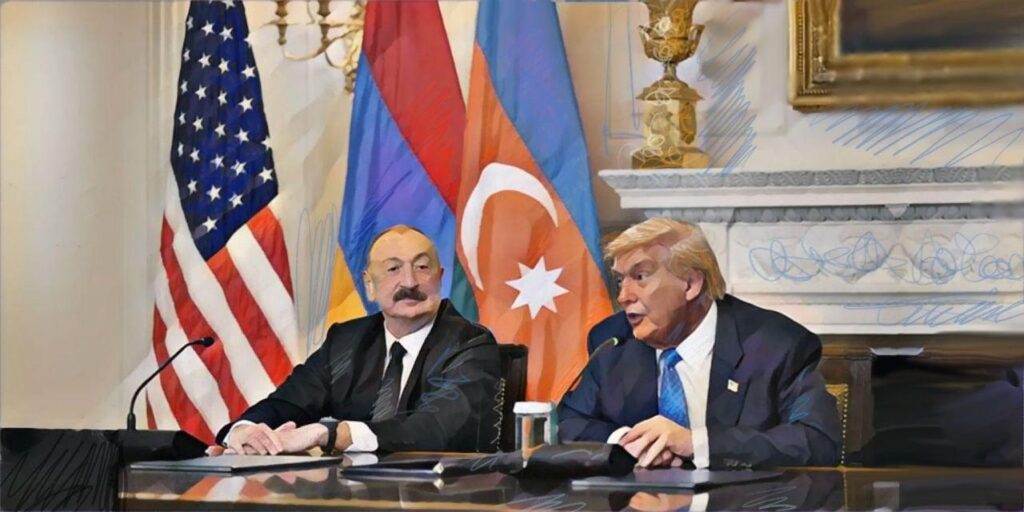
On August 31, the next SCO Plus summit will begin in the Chinese city of Tianjin and run through to September 1. Judging by the list of participants, China, under Chairman Xi Jinping, is positioning itself to challenge the United States for influence over the global geopolitical agenda. As part of the Shanghai Cooperation Organization (SCO) summit, Xi will host a formal banquet for the attending heads of state, according to the Chinese Foreign Ministry. Xi is also scheduled to chair the 25th meeting of the SCO Council of Heads of State and lead the expanded SCO Plus session - the largest since the establishment of the organization - where he will deliver a keynote address. Clues to the themes of Xi’s speech can be found in the diverse array of leaders expected to attend. Chinese Deputy Foreign Minister Liu Bin confirmed at a Beijing press conference that among the SCO member states, participants will include Russian President Vladimir Putin, Indian Prime Minister Narendra Modi, Pakistani Prime Minister Shahbaz Sharif, Iranian President Masoud Pezeshkian, Belarusian President Alexander Lukashenko, Kazakh President Kassym-Jomart Tokayev, Kyrgyz President Sadyr Japarov, Tajik President Emomali Rahmon, and Uzbek President Shavkat Mirziyoyev. Several leaders from non-member states will also join, including Turkish President Recep Tayyip Erdoğan; Mongolian President Ukhnaagiin Khurelsukh; Azerbaijani President Ilham Aliyev; Indonesian President Prabowo Subianto; and Turkmen President Serdar Berdimuhamedov, whose participation suggests Ashgabat’s cautious but growing interest in regional dialogue. Also in attendance will be the prime ministers of Armenia (Nikol Pashinyan), Cambodia (Hun Manet), Nepal (Khadga Prasad Sharma Oli), Egypt (Mostafa Madbouly), Malaysia (Anwar Ibrahim), and Vietnam (Pham Minh Chinh). The summit will also host key international institutional leaders, including UN Secretary-General António Guterres; SCO Secretary-General Nurlan Yermekbayev; CIS Secretary-General Sergey Lebedev; ASEAN Secretary-General Kao Kim Hourn; CSTO Secretary-General Imangali Tasmagambetov; EAEU Chairman Bakytzhan Sagintayev; and AIIB President Zhou Ji. Kazakhstan will be prominently represented. In addition to President Tokayev, three high-profile Kazakhs mentioned above - Yermekbayev, Tasmagambetov, and Sagintayev - will attend in their capacities as heads of international organizations. Their presence signals Astana’s growing diplomatic weight and reflects the strategic outreach led by Tokayev, himself a former UN Deputy Secretary-General. This background likely contributes to the rapport between Kazakhstan and Guterres. The summit will also inevitably draw attention due to the presence of the Armenian and Azerbaijani leaders, figures central to the ongoing realignment in the South Caucasus. Both Baku and Yerevan have increasingly distanced themselves from Moscow, favoring closer ties with Turkey and the United States. The recent peace agreement between Aliyev and Pashinyan, signed in the presence of President Trump, underscored the growing American role in the region and the diminishing influence of Russia. While Moscow appears willing to tolerate this shift, Tehran views it with deep concern, especially after its recent 12-day conflict with Israel. Russia, for its part, seems to be signaling disengagement from the region. Its silence in response to Baku and Yerevan’s Western overtures suggests strategic apathy, if not withdrawal. Beijing, of course, is...