• KZT/USD = 0.00220
  • TJS/USD = 0.10860
  • UZS/USD = 0.00008
  • TMT/USD = 0.29850
  • KZT/USD = 0.00220
  • TJS/USD = 0.10860
  • UZS/USD = 0.00008
  • TMT/USD = 0.29850
  • KZT/USD = 0.00220
  • TJS/USD = 0.10860
  • UZS/USD = 0.00008
  • TMT/USD = 0.29850
  • KZT/USD = 0.00220
  • TJS/USD = 0.10860
  • UZS/USD = 0.00008
  • TMT/USD = 0.29850
  • KZT/USD = 0.00220
  • TJS/USD = 0.10860
  • UZS/USD = 0.00008
  • TMT/USD = 0.29850
  • KZT/USD = 0.00220
  • TJS/USD = 0.10860
  • UZS/USD = 0.00008
  • TMT/USD = 0.29850
  • KZT/USD = 0.00220
  • TJS/USD = 0.10860
  • UZS/USD = 0.00008
  • TMT/USD = 0.29850
  • KZT/USD = 0.00220
  • TJS/USD = 0.10860
  • UZS/USD = 0.00008
  • TMT/USD = 0.29850
03 November 2026

Viewing results 19 - 24 of 293

Turkmenistan Gas Expansion in Caspian Advances with Petronas

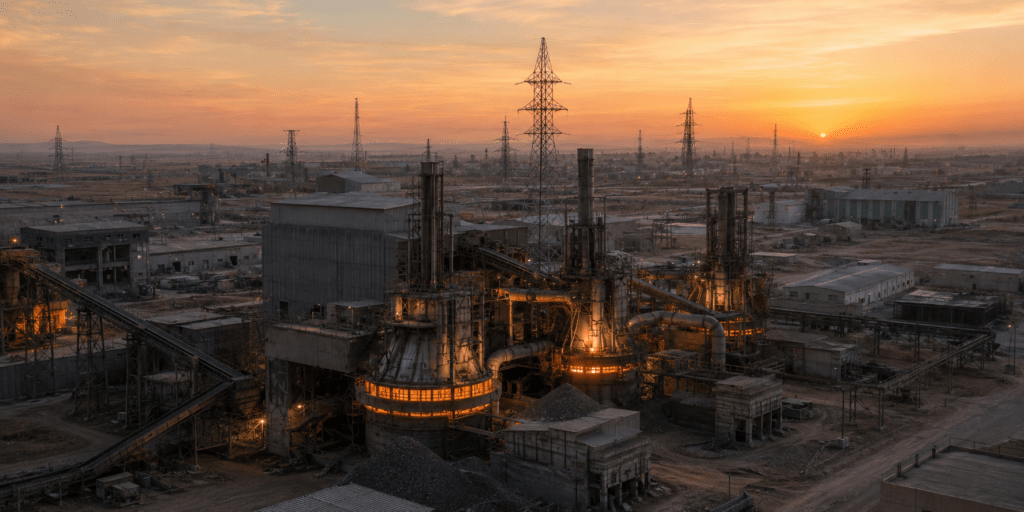
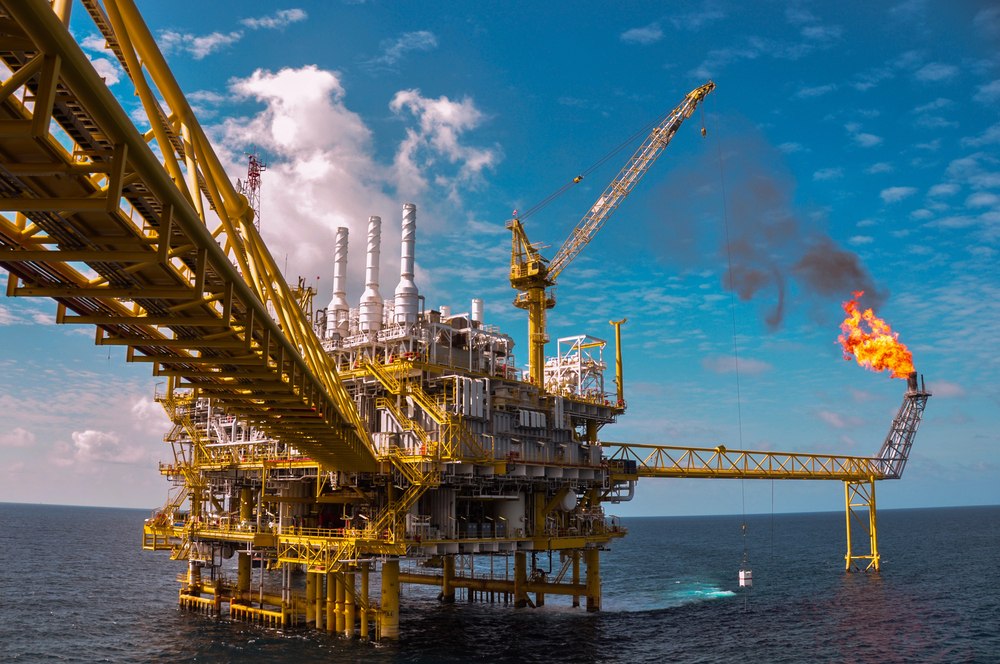
Turkmenistan is expanding offshore gas development in the Caspian Sea, while increasing production at existing fields and seeking new markets for its gas. Malaysia’s state-owned Petronas has secured two new offshore blocks after nearly 30 years in the country, while UAE-based XRG has joined it in the existing Block I project. Petronas Expands in the Caspian Petronas reported in late August that it had signed agreements covering offshore Blocks 19 and 20 in the Turkmen sector of the Caspian Sea. The agreements themselves were signed in June. Turkmenistan also plans geological surveys at four additional blocks — 11, 12, 13, and 14. The size of their reserves, future investment, and potential production timelines have not been disclosed. Petronas is Malaysia’s national oil and gas company and one of the largest foreign investors in Turkmenistan’s energy sector. It entered the country in 1996 and has since developed a group of offshore fields known as Block I. Over three decades, five offshore platforms have been built and around 40 exploration, appraisal, and production wells drilled in the area. According to Turkmenistan’s state oil company Türkmennebit, operations have produced more than 44 billion cubic meters of gas and 16 million tons of liquid hydrocarbons. In 2025, XRG joined the project. The international energy investment company was established by ADNOC, the state-owned oil and gas group of Abu Dhabi. Petronas retained operatorship and a 57% interest, XRG acquired 38%, and the remaining 5% is held by Turkmenistan’s state-owned Hazarnebit. The gas produced by the project is sold to state-owned Türkmengaz, which controls the country’s gas sector. The offshore fields currently produce around 11.3 million cubic meters of gas per day, while their resource base is estimated at around 200 billion cubic meters. A new well began producing at the Magtymguly field in August. The well produced more than 1.3 million cubic meters of gas and around 130 tons of gas condensate per day. Galkynysh and China The Caspian projects account for only part of Turkmenistan’s gas industry. Much larger volumes are produced in the east of the country, home to Galkynysh, one of the world’s largest natural gas fields. In April, Turkmenistan launched another stage of the field’s development with CNPC, China’s state-owned oil and gas company. The project, worth around $5.1 billion, is expected to add another 10 billion cubic meters a year to Galkynysh’s production capacity. The two projects reflect different strands of Turkmenistan’s gas strategy. China remains the main buyer of Turkmen gas, receiving around 30 billion cubic meters annually through the Central Asia-China gas pipeline. In the Caspian Sea, meanwhile, Turkmenistan is attracting capital and technology from Malaysian and Emirati companies. Seeking New Export Routes As production expands, Ashgabat is also trying to diversify its export markets. Most of the country’s gas export infrastructure is currently oriented toward China, prompting Turkmenistan to spend years exploring alternative routes. One is TAPI, the planned gas pipeline running through Afghanistan toward Pakistan and India. In recent months, work has advanced most actively on...
TAPI Pipeline Moves Closer to First Gas Sales in Afghanistan

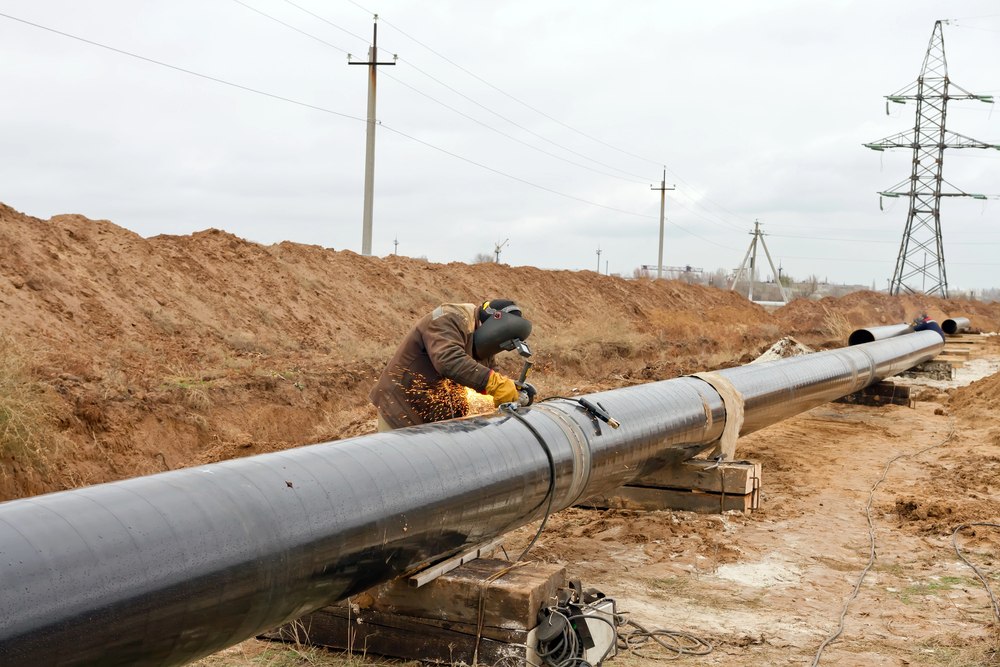
After decades of delays, the TAPI gas pipeline has moved closer than ever to actual gas sales – but first to the smallest of its intended markets. Turkmenistan is preparing to supply gas to Afghanistan’s Herat province, while the timeline for extending the pipeline to Pakistan and India remains uncertain. On August 10, state-owned Turkmengaz and Afghan Gas signed a memorandum covering the purchase of gas through TAPI. The document does not itself set a price or supply volume, but it brings closer the prospect that Afghanistan could become the first TAPI customer actually to receive gas. Afghanistan was already part of TAPI’s original customer base. Afghan Gas and Turkmengaz signed a gas sale-and-purchase agreement in 2013. What has changed is that the pipeline is now approaching a market it can physically serve. On August 27, Herat Governor Islam Jar said the local section of TAPI was expected to be commissioned within two months. Turkmenistan has not announced an equally specific date for the start of commercial gas supplies. TAPI was conceived as an approximately 1,800-kilometer pipeline running from Turkmenistan’s giant Galkynysh gas field through Afghanistan and Pakistan to the Indian border. Its planned capacity is 33 billion cubic meters of gas a year. At full capacity, Pakistan and India are each allocated 14 billion cubic meters of gas a year, while Afghanistan is allocated 5 billion. But after decades of planning, the pipeline has still not reached its principal intended customers. Construction of the 153-kilometer section from the Turkmen border toward Herat began in September 2024. Earlier this year, Turkmenistan said it expected to complete the section by the end of 2026, but no timetable has been announced for extending the pipeline farther south. According to the Afghan side, 116 kilometers of pipeline had been laid by early August. The August agreement also envisages the infrastructure needed to use the gas locally. Turkmen and Afghan officials have agreed to develop infrastructure in Herat to supply gas to industrial facilities, power plants, and households. The volumes involved would be modest compared with the roughly 30 billion cubic meters of gas Turkmenistan exports to China each year. But even limited sales through TAPI would give Ashgabat another export outlet. In February, Turkmenistan's still-influential former president Gurbanguly Berdimuhamedov described diversification of gas exports as one of the country’s main priorities. For TAPI itself, however, the first gas sales could matter even if the volumes are modest. Writing for The Times of Central Asia, Central Asia analyst Bruce Pannier noted that amid strained relations between Afghanistan and Pakistan, as well as between Pakistan and India, completion of the entire TAPI pipeline remains a distant prospect. He argued that supplying Herat alone could demonstrate to potential investors that the pipeline actually works. The memorandum signed on August 10 has offered little clarity on price, volumes and start dates. Afghanistan has separately proposed negotiating a long-term contract and pricing formula, while the gas distribution network in Herat still needs to be developed. The governor’s statement that the...

Turkmenistan Gas Exports: Could Tajikistan Become a New Market?

Turkmenistan has the world’s fourth-largest natural gas reserves, but most of its gas exports still go to China. Ashgabat has spent years seeking other markets and is again looking to potential customers elsewhere in Central Asia. Uzbekistan already buys Turkmen gas, while Tajikistan remains a potential customer. The prospect drew renewed attention after Tajik Foreign Minister Sirojiddin Muhriddin visited Turkmenistan on August 20–21. During meetings with President Serdar Berdimuhamedov and Foreign Minister Rashid Meredov, the two sides discussed trade, transport, energy, and other areas of cooperation. The published accounts of the talks, however, made no mention of new gas supplies. The Idea Dates Back to 2023 At an August 2023 summit in Ashgabat, the presidents of Turkmenistan, Uzbekistan, and Tajikistan agreed to cooperate on supplies of natural gas, oil, petroleum products, and electricity. They instructed their energy ministries to discuss joint projects. After the summit, Meredov identified Uzbekistan and Tajikistan as priority markets in the region. At the time, Turkmenistan said it planned to increase gas production by at least 60 billion cubic meters in the coming years, citing further development of Galkynysh, one of the world’s largest gas fields. State-owned Turkmengaz and UzGasTrade subsequently agreed on annual supplies of up to 2 billion cubic meters under a short-term contract and discussed a longer-term arrangement. The contract came as Uzbekistan became a net importer after decades as a gas exporter, with domestic production declining and demand rising. Output fell further in 2025 and the first half of 2026. Any Turkmen gas bound for Tajikistan would have to pass through Uzbekistan because the two countries do not share a border. Tajikistan already imported around 267 million cubic meters of Uzbek gas in 2024, but Turkmen supplies would require a separate commercial arrangement. No prices, volumes, or timetable have been announced, leaving the plan on paper. A Small Market, but a Short Route Tajikistan cannot replace China as a market for Turkmen gas. Hydropower provides almost all of its electricity, and its potential demand for imported gas is far smaller than China’s. In February, Gurbanguly Berdimuhamedov, Turkmenistan’s former president and current chairman of the Halk Maslahaty, described diversifying gas exports as one of the country’s main priorities. Turkmenistan’s landlocked position leaves it dependent on where its pipelines lead. The main route runs east through Uzbekistan and Kazakhstan, carrying around 30 billion cubic meters of gas to China each year via the Central Asia–China pipeline. That reliance may deepen after China National Petroleum Corporation reached an agreement with Turkmenistan in April to develop the fourth phase of Galkynysh. The $5.1 billion project is expected to add 10 billion cubic meters of annual gas-processing capacity. Bigger Alternatives Are Moving Slowly The best-known alternative is the Turkmenistan–Afghanistan–Pakistan–India (TAPI) gas pipeline. Although construction began on its Afghan section in 2024 after decades of discussion, the pipeline remains far from delivering gas to Pakistan or India. By August 2026, Afghan authorities said 116 kilometers had been laid. Afghanistan’s role could expand from transit country to gas buyer....

Turkmenistan and the New Geopolitics of Silicon

Central Asia is not foreign to the emerging geopolitics of silicon and artificial intelligence (AI). Kazakhstan especially has made itself noticed, joining the US-led Pax Silica initiative in June and the Chinese-led World Artificial Intelligence Cooperation Organization (WAICO) in July. Kazakhstan is the only country participating in both initiatives, which is characteristic of Astana’s multi-vector diplomacy. Whilst other Central Asian states have joined WAICO, Turkmenistan, consistent with its permanent neutrality stance, has joined neither. Neutrality, however, does not prevent economic participation, and a case has to be made for Turkmenistan. Two Frameworks for International Cooperation Although both initiatives respond to the same underlying reality - the growing strategic importance of artificial intelligence - they differ in scope and emphasis. Pax Silica is built around the material and economic foundations of AI, focusing on securing and coordinating the physical supply chains that make computation possible and aiming implicitly to reduce reliance on China. WAICO, by contrast, is centered on the political and normative dimension of AI, prioritizing governance, safety standards, and international coordination, where Beijing could push its rhetoric in favour of open-source artificial intelligence as a model for AI development. Taken together, they reflect two complementary but distinct ways of structuring the emerging AI order: one rooted in industrial capacity and supply-chain control, the other in multilateral rules. On that matter, Turkmenistan's possible relevance does not lie in software, semiconductor fabrication or AI regulation, but much further upstream: silicon metallurgy. From Gas to Silicon Silicon is abundant in nature, but transforming it into industrial materials is an energy-intensive process. Quartz or quartzite is used to produce both silicon ferroalloys and silicon metal. Ferrosilicon is principally consumed by the iron and steel industries, where it serves as a deoxidizing and alloying agent. Silicon metal, meanwhile, is used in aluminum alloys and chemical production, while a small share is further purified into the extremely high-purity silicon required by the semiconductor industry. Ferrosilicon should not be presented as a material that goes directly into AI chips. But establishing competitive ferrosilicon production can constitute a first industrial step into the broader family of silicon metallurgy. And Turkmenistan has already begun considering precisely that. In 2020, the Turkmen authorities reported that the Ministry of Industry was studying the production of metallurgical-grade silicon using local resources. Practical tests had already been conducted using quartz sand, metal mixtures and petroleum coke, while the government presented the development of domestic mineral resources as part of a broader strategy of industrialization and export diversification. The ambition became more concrete in January 2024. Turkmenistan's Ministry of Industry and Construction Production launched an international tender for a feasibility study for a ferroalloy plant intended to manufacture ferrosilicon, silicon carbide, and technical silicon. A 2024 feasibility study for such a project envisions a plant in Balkan Velayat capable of producing 15,000 tons of FeSi75 ferrosilicon annually. The proposed complex would operate two 12,500 kVA furnaces. Rather than depending exclusively on domestic raw materials, the study envisages sourcing quartzite from nearby Iran and...

Turkmenistan Tightens Diesel Limits as Fuel Shortages Persist

Turkmenistan has halved the amount of diesel that vehicles may carry in their tanks when leaving the country, cutting the limit from 300 to 150 liters from August 10. The charge for every liter above the limit has also risen from 20 manat (about $1) to 30 manat (about $1.50). The move is the second tightening of the rules in several months. According to Chronicles of Turkmenistan, President Serdar Berdimuhamedov signed the relevant decree on August 5. At the beginning of April, vehicles leaving Turkmenistan were limited to 300 liters of diesel in their tanks, with a charge of 20 manat, or about $1 at the market exchange rate, for every additional liter. Enforcement was assigned to the border and customs services, as well as the state-owned concern Turkmenneft, The Times of Central Asia reported. The large price difference between Turkmenistan and neighboring markets creates an incentive to take fuel across the border. In April, The Times of Central Asia reported that diesel in Turkmenistan cost around $0.05 per liter, compared with approximately $1 in Uzbekistan, $0.60 in Kazakhstan, and $0.90 in Russia. Low regulated prices extend beyond diesel. In July, petrol in Turkmenistan cost around $0.43 per liter, placing the country among the world's cheapest markets. By comparison, AI-95 petrol cost about $0.68 in Kazakhstan, approximately $1.02 in Kyrgyzstan, and around $1.34 in Uzbekistan, according to Chronicles of Turkmenistan. Independent media have also reported persistent shortages of petrol and diesel inside Turkmenistan, particularly outside Ashgabat. In July, Turkmen.news reported large queues at filling stations and shortages of both petrol and diesel in the regions. The outlet also published documents indicating problems with aviation kerosene supplies at Ashgabat International Airport. One document from June 2024 said the airport had 2,500 tons of kerosene available, enough for only two to three days at prevailing consumption levels. By December 2024, another document showed reserves had fallen to 728 tons, less than one day's supply. Turkmen.news reported that problems with kerosene allocations continued into 2026. The situation is notable because Turkmenistan produces and refines its own oil. The country has two major refining centers, the Turkmenbashi oil refinery complex on the Caspian Sea and the Seydi refinery in the east. Petroleum products are supplied to the domestic market and also exported. Fuel shortages have occurred repeatedly. In 2024, eastern regions of Turkmenistan experienced serious petrol shortages. Drivers in the Lebap and Mary regions waited for hours at filling stations, while some stations imposed purchase limits. The shortage also disrupted public transport and contributed to higher food prices, The Times of Central Asia reported. The latest border restrictions add another element to this picture. Independent outlets have linked the limits to the wide gap between heavily regulated domestic fuel prices and prices abroad, which creates opportunities for cross-border resale. Halving the diesel allowance to 150 liters further restricts the amount that can leave Turkmenistan in vehicle tanks as reports of domestic shortages continue.

Afghan Traders in Ashgabat Discuss Proposed Turkmenistan-Afghanistan Transit Corridor

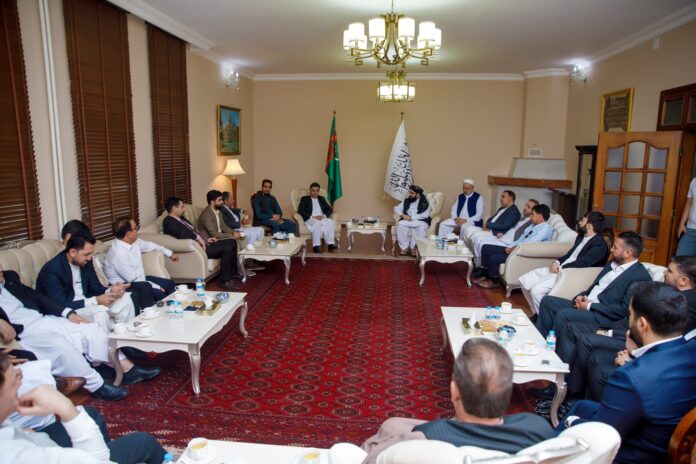
A delegation from the Afghanistan Chamber of Commerce and Investment was in Turkmenistan in recent days as the two countries explore ways to boost trade and develop transit corridors, according to Afghan state media. Mawlawi Fazal Mohammad Saber, Afghanistan’s chargé d'affaires in the Turkmen capital of Ashgabat, met the group of Afghan traders during their visit, the National Radio and Television of Afghanistan, also known as RTA, reported on Thursday. The Afghan delegates and their counterparts in Turkmenistan discussed a proposal to create a new transit corridor from the Turkmen city of Turkmenabat to the northern Afghan city of Mazar-e-Sharif, according to TOLOnews, a news organization based in Kabul. It said the Afghan side had invited Turkmenistan to send a delegation of 100 traders and investors to Afghanistan. Turkmenabat is an economic hub in eastern Turkmenistan that is close to the border with Uzbekistan. Mazar-e-Sharif is the biggest city in northern Afghanistan and is a significant transit point for trade in Central Asia. Mazar-e-Sharif is closely linked to Uzbek trade and transport networks, though Turkmenistan has also been working to expand its economic presence in the city. The latest outreach between Afghanistan and Turkmenistan reflects a wider policy among Central Asian countries to expand economic ties with Taliban authorities in Kabul and increase access to South Asian and other markets, adding to the landlocked region’s options for trade at a time of geopolitical uncertainty. The leadership of those countries retains concerns about the security situation in Afghanistan, but hopes that engagement will help to stabilize their southern neighbor. Kazakhstan and Uzbekistan are key drivers of Central Asia’s growing relationship with Afghanistan. One of the high-profile projects featuring Ashgabat’s involvement is the planned 1,800-kilometer Turkmenistan-Afghanistan-Pakistan-India (TAPI) gas pipeline, which has faced years of delays and challenges, including heightened Afghan-Pakistani tensions.