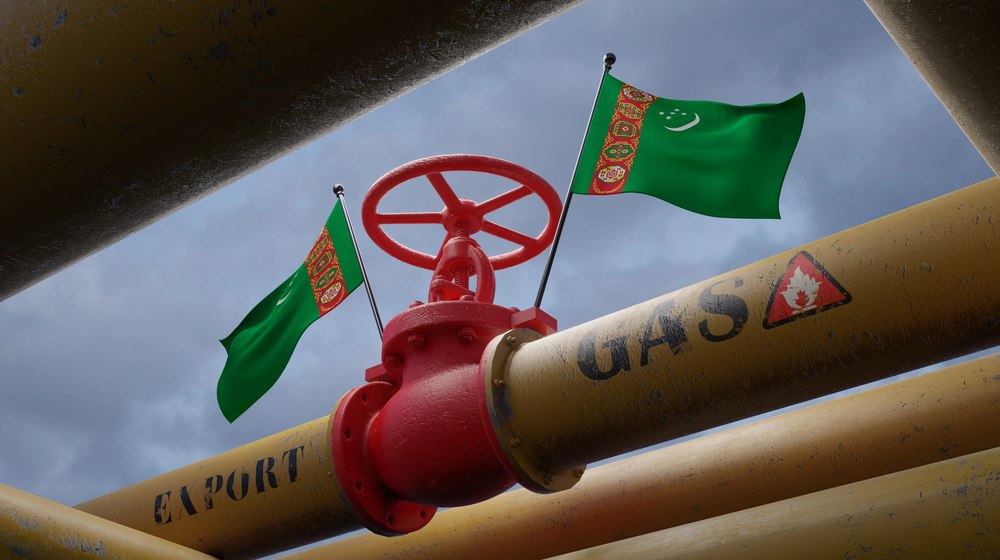
Turkmenistan has the world’s fourth-largest natural gas reserves, but most of its gas exports still go to China. Ashgabat has spent years seeking other markets and is again looking to potential customers elsewhere in Central Asia. Uzbekistan already buys Turkmen gas, while Tajikistan remains a potential customer.
The prospect drew renewed attention after Tajik Foreign Minister Sirojiddin Muhriddin visited Turkmenistan on August 20–21. During meetings with President Serdar Berdimuhamedov and Foreign Minister Rashid Meredov, the two sides discussed trade, transport, energy, and other areas of cooperation. The published accounts of the talks, however, made no mention of new gas supplies.
The Idea Dates Back to 2023
At an August 2023 summit in Ashgabat, the presidents of Turkmenistan, Uzbekistan, and Tajikistan agreed to cooperate on supplies of natural gas, oil, petroleum products, and electricity. They instructed their energy ministries to discuss joint projects.
After the summit, Meredov identified Uzbekistan and Tajikistan as priority markets in the region. At the time, Turkmenistan said it planned to increase gas production by at least 60 billion cubic meters in the coming years, citing further development of Galkynysh, one of the world’s largest gas fields.
State-owned Turkmengaz and UzGasTrade subsequently agreed on annual supplies of up to 2 billion cubic meters under a short-term contract and discussed a longer-term arrangement.
The contract came as Uzbekistan became a net importer after decades as a gas exporter, with domestic production declining and demand rising. Output fell further in 2025 and the first half of 2026.
Any Turkmen gas bound for Tajikistan would have to pass through Uzbekistan because the two countries do not share a border. Tajikistan already imported around 267 million cubic meters of Uzbek gas in 2024, but Turkmen supplies would require a separate commercial arrangement.
No prices, volumes, or timetable have been announced, leaving the plan on paper.
A Small Market, but a Short Route
Tajikistan cannot replace China as a market for Turkmen gas. Hydropower provides almost all of its electricity, and its potential demand for imported gas is far smaller than China’s.
In February, Gurbanguly Berdimuhamedov, Turkmenistan’s former president and current chairman of the Halk Maslahaty, described diversifying gas exports as one of the country’s main priorities.
Turkmenistan’s landlocked position leaves it dependent on where its pipelines lead. The main route runs east through Uzbekistan and Kazakhstan, carrying around 30 billion cubic meters of gas to China each year via the Central Asia–China pipeline.
That reliance may deepen after China National Petroleum Corporation reached an agreement with Turkmenistan in April to develop the fourth phase of Galkynysh. The $5.1 billion project is expected to add 10 billion cubic meters of annual gas-processing capacity.
Bigger Alternatives Are Moving Slowly
The best-known alternative is the Turkmenistan–Afghanistan–Pakistan–India (TAPI) gas pipeline. Although construction began on its Afghan section in 2024 after decades of discussion, the pipeline remains far from delivering gas to Pakistan or India. By August 2026, Afghan authorities said 116 kilometers had been laid.
Afghanistan’s role could expand from transit country to gas buyer. On August 10, Afghan Gas and Turkmengaz signed a memorandum on purchases under the TAPI framework, although prices and volumes remain undetermined.
The memorandum also envisages cooperation to develop infrastructure in Herat Province to supply gas to businesses, power plants, and households.
In 2025, Turkmen gas began flowing to Turkey through Iran under a swap arrangement. Turkmengaz said in October that supplies had been suspended after the sides failed to agree on volumes or price.
Even further from implementation, the proposed Trans-Caspian Gas Pipeline would carry Turkmen gas across the Caspian seabed to Azerbaijan and then through the South Caucasus and Turkey to Europe, but construction has not begun.
Growing energy demand across Central Asia, driven by population growth and industrial expansion, is creating more opportunities for regional trade.
A contract with Tajikistan would give Turkmenistan another market without requiring a separate transcontinental pipeline. Deals of this scale may offer the quickest path to diversification while larger projects remain stalled or incomplete.