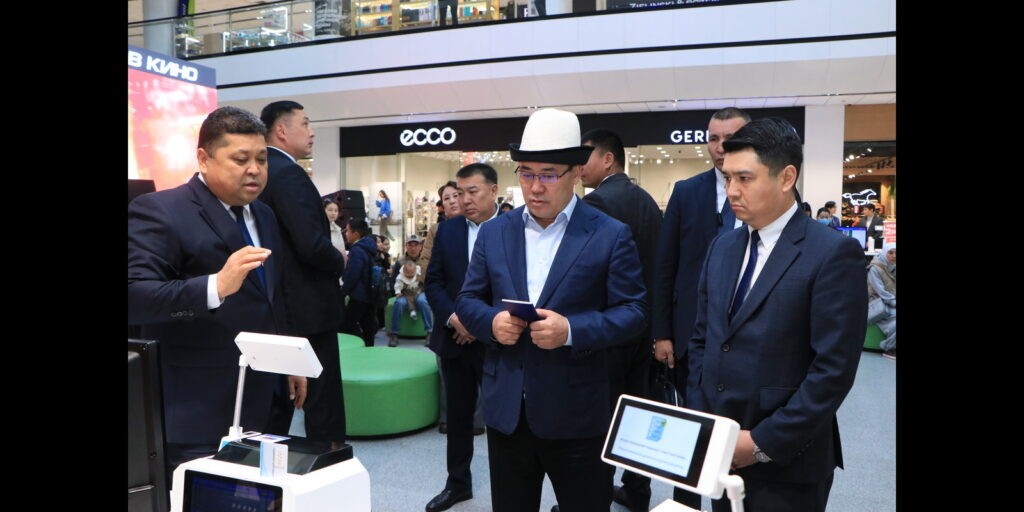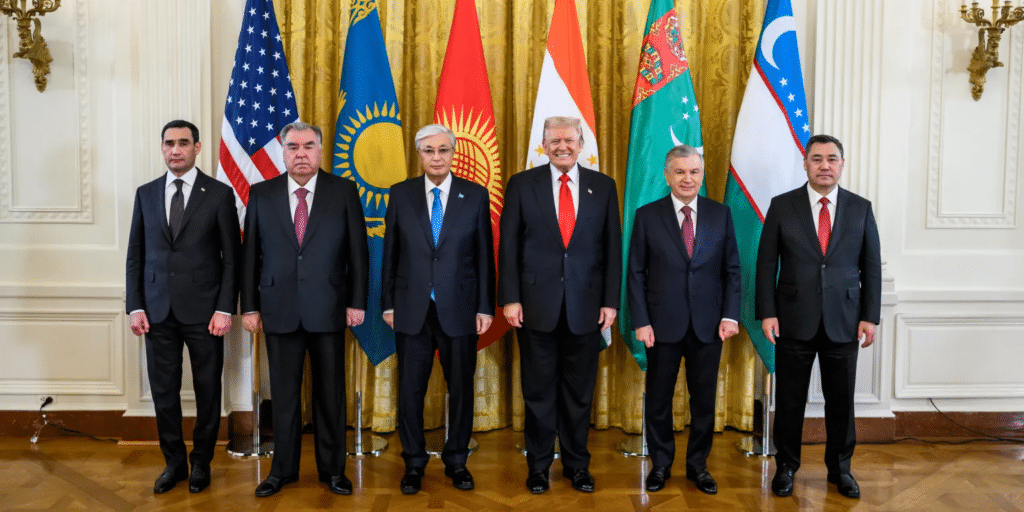
On September 16, Seoul hosted the first Korea–Central Asia Summit, bringing President Lee Jae Myung together with the heads of all five Central Asian states. The meeting elevated a dialogue that has run at a ministerial level since 2007 to the level of heads of state. The leaders adopted a Seoul Declaration setting the terms for future engagement and agreed to hold summits every two years.
On September 14, trade and industry ministers from South Korea and the five Central Asian states met in Seoul for the first C5+Korea Industry Ministers’ Meeting. They signed a joint statement launching a standing platform for industrial cooperation. Uzbekistan’s Ministry of Investment, Industry and Trade used the occasion to push for a shift away from raw-material trade toward joint production and localization.
Behind the diplomatic choreography sits a practical problem: the minerals both sides keep discussing cannot move without a route to carry them.
A Minerals Agenda with Separate Tracks
South Korea relies heavily on imported minerals for its manufacturing industries. Seoul has been developing separate plans with each country. With Tajikistan, discussions have focused on gold and silver, alongside antimony. With Kyrgyzstan, Seoul has been discussing antimony and tungsten. Cooperation with Uzbekistan covers minerals and digital manufacturing. With Kazakhstan, a central issue is moving beyond raw exports toward processing inside the country, as The Times of Central Asia reported ahead of the summit.
South Korean firms are pursuing supply diversification independently. POSCO International and LX International have been expanding overseas mineral investments, including graphite and nickel projects, amid Chinese export restrictions.
The Transport Connection
Consider the Bolashak chrome mine in Kazakhstan, which Eurasian Resources Group launched in late 2024. The company plans to ramp it up to a design capacity of 7.5 million metric tons of chrome ore a year. Production on that scale makes reliable transport an essential part of the commercial equation.
An Atlantic Council analysis identifies limited processing capacity and underdeveloped westward routes as obstacles to U.S. mineral partnerships with Central Asia. It presents the Trans-Caspian Middle Corridor as a route to Western markets that avoids Russian and Iranian territory.
That argument needs a distinction when applied to Korea. The corridor runs westward toward Europe; it is not a prerequisite for minerals to reach South Korea. Its relevance is the wider choice of buyers it could offer Central Asian producers, including potential Korean-backed processing ventures serving those markets.
That corridor is being built out. The Aktau container hub has a planned capacity of 240,000 twenty-foot equivalent units. The World Bank-backed Mointy–Kyzylzhar railway is meant to remove a 149-kilometer detour and accommodate 30 train pairs a day, against roughly ten on the existing constrained route. Traffic is already rising: 125 container trains crossed Kazakhstan on the Trans-Caspian route in the first quarter of 2026, up 34.4% year-on-year.
Japan has also become involved, pledging in August 2025 to help modernize customs operations at the port of Aktau.
The Seoul Declaration also backs Korean participation in transport infrastructure, including modernization and digitalization. In talks with Turkmenistan, the Korean side proposed expanding cooperation from cargo ship construction into Caspian port modernization and logistics. The question is how such cooperation will connect to the industrial projects now being discussed.
Kazakhstan Institute for Strategic Studies analyst Aidar Kurmashev has pointed to Korea’s $310 million Kia assembly plant in Kostanai, northern Kazakhstan, as a model for connecting Korean investment to local production. He told The Astana Times that the next step is to build supplier networks and technical training around such plants.
The same production model depends on how materials physically reach a factory floor or an export terminal. Kurmashev also emphasized reliable transport. For mineral ventures, that means establishing which buyers a plant will serve and whether the route can deliver at a competitive cost.
The Middle Corridor’s Narrowing Window
The corridor also faces environmental limits. A Carnegie commentary published in April warns that reduced water levels have already cut rail tank-car ferry transport on the Baku–Kuryk route by 22%. It cites a projected sea level drop of up to 6.5 meters that could leave Kazakhstan’s current Aktau and Kuryk berths landlocked by 2045, requiring costly dredging or new offshore terminals.
The commentary argues that these risks, alongside unresolved bottlenecks in the South Caucasus, limit the corridor’s long-term prospects. For mineral-processing projects expected to operate for decades, the cost of maintaining an export route belongs in the investment calculation.
What the Experts are Saying
Kazakh analyst Timur Serikuly, writing for The Times of Central Asia ahead of the summit, argued that its outcome would depend on how many announced areas of cooperation translated into financed projects with implementation timelines.
South Korea’s ambassador to Kazakhstan, Jung Ki-Hong, told The Astana Times in August that the creation of a leaders’ multilateral platform was itself the most important outcome of the summit process, more consequential than any single deal expected to be signed.
Professor German Kim of the Institute for Asian Studies has cautioned, also in The Times of Central Asia, that Kazakhstan has more to learn from Korea’s contemporary venture-capital and startup ecosystem than from its past state-led industrial model. The original conditions cannot simply be reproduced today. It is a reminder that not every part of the Korean development story travels well.
What to Watch after Seoul
The new ministerial platform offers a place to connect minerals diplomacy with transport planning. Its follow-up work will show whether processing proposals are linked to practical arrangements for moving their output across borders.
For Uzbekistan and its neighbors, the commercial question is whether Korean-backed ventures can secure reliable access to their intended customers. The Middle Corridor could widen that choice for projects serving Western markets. Other destinations will require different routes.
The summit has produced a framework for cooperation. Whether it leads to durable industrial partnerships will depend partly on how the products of Central Asian processing plants reach the buyers who need them.