• KGS/USD = 0.01144 0%
  • KZT/USD = 0.00208 0%
  • TJS/USD = 0.10439 0%
  • UZS/USD = 0.00008 0%
  • TMT/USD = 0.28571 0%
  • KGS/USD = 0.01144 0%
  • KZT/USD = 0.00208 0%
  • TJS/USD = 0.10439 0%
  • UZS/USD = 0.00008 0%
  • TMT/USD = 0.28571 0%
  • KGS/USD = 0.01144 0%
  • KZT/USD = 0.00208 0%
  • TJS/USD = 0.10439 0%
  • UZS/USD = 0.00008 0%
  • TMT/USD = 0.28571 0%
  • KGS/USD = 0.01144 0%
  • KZT/USD = 0.00208 0%
  • TJS/USD = 0.10439 0%
  • UZS/USD = 0.00008 0%
  • TMT/USD = 0.28571 0%
  • KGS/USD = 0.01144 0%
  • KZT/USD = 0.00208 0%
  • TJS/USD = 0.10439 0%
  • UZS/USD = 0.00008 0%
  • TMT/USD = 0.28571 0%
  • KGS/USD = 0.01144 0%
  • KZT/USD = 0.00208 0%
  • TJS/USD = 0.10439 0%
  • UZS/USD = 0.00008 0%
  • TMT/USD = 0.28571 0%
  • KGS/USD = 0.01144 0%
  • KZT/USD = 0.00208 0%
  • TJS/USD = 0.10439 0%
  • UZS/USD = 0.00008 0%
  • TMT/USD = 0.28571 0%
  • KGS/USD = 0.01144 0%
  • KZT/USD = 0.00208 0%
  • TJS/USD = 0.10439 0%
  • UZS/USD = 0.00008 0%
  • TMT/USD = 0.28571 0%

Viewing results 79 - 84 of 319

ADB Approves $75M Loan to Boost Nursing Sector in Turkmenistan

The Asian Development Bank (ADB) has approved a $75 million loan and an additional $2 million grant from the Japan Fund for Prosperous and Resilient Asia and the Pacific to expand and improve the nursing and midwifery workforce in Turkmenistan. According to an ADB statement, this marks the bank’s first health sector project in the country. “The project aims to provide high-quality health services based on people’s needs and ensure equitable access to health care through strengthening the nursing profession and education,” said ADB Country Director for Turkmenistan Artur Andrysiak. He noted that this is ADB’s third project in Turkmenistan, reflecting a growing partnership as the Bank and the country celebrate 25 years of cooperation. The Turkmen government has prioritized healthcare reform, with a focus on improving the education and qualifications of health workers. Nurses, often the first point of contact in the health system, will be empowered to deliver both essential care and preventive services under the new initiative. Plans include the design and construction of a climate-resilient nursing school in Ashgabat, featuring state-of-the-art facilities such as clinical simulation labs, dormitories, a mother-friendly room, and an edible garden to promote nutrition. The project will also provide new medical and educational equipment and update curricula, teaching methods, and faculty training in line with international standards. The total project cost is estimated at $98 million, with the Turkmen government contributing $23 million in counterpart financing. The initiative builds on ADB’s growing cooperation with Turkmenistan in recent years. In August 2024, ADB adopted a new country partnership strategy for Turkmenistan covering 2024-2028. The strategy focuses on supporting the transition to a climate-resilient and sustainable economy, enhancing competitiveness through diversification and human capital development, and advancing structural reforms and institutional capacity.

After Berdimuhamedov Sr.’s Visit, Azerbaijan to Gift Oil Tanker to Turkmenistan

On the sidelines of an investment forum in the Turkmen resort of Awaza, Azerbaijan’s Deputy Minister of Economy, Sahib Alekperov, announced that Baku will gift an 8,000-ton oil tanker to Turkmenistan. The gesture is intended as a symbol of goodwill and a marker of deepening relations between the two Caspian neighbors. From Symbolism to Infrastructure According to Alekperov, the tanker project is expected to be completed by the end of this year or early next. He emphasized that bilateral ties are increasingly rooted in practical cooperation. In August, Azerbaijan and Turkmenistan signed a memorandum to expand international air services, aiming to establish a reliable “air bridge” across the Caspian Sea. “This route will be in high demand among passengers,” said Alekperov, noting that better connectivity will benefit not only Azerbaijan and Turkmenistan but the broader Caspian region. Drawing a historical parallel, he added, “As it was once said that all roads lead to Rome, we can now claim that all roads lead through Turkmenistan, the shortest path between Europe and Asia.” He also noted that growing transport cooperation will enhance the investment climate and produce tangible outcomes, especially in light of the warm political ties at the highest level. Broadening Turkmen-Azerbaijani Cooperation The goodwill gestures extend beyond the tanker handover. On September 12, Turkmenistan announced plans to construct a mosque in the Azerbaijani city of Fuzuli. The Ministry of Construction and Architecture has since opened a tender for the project. Political dialogue has also intensified in recent months. In July, Gurbanguly Berdimuhamedov, Chairman of Turkmenistan’s Halk Maslahaty, paid an official visit to Azerbaijan, accompanied by his daughter Oguljahan Atabaeva, Vice President of the charitable foundation bearing his name. During meetings with Azerbaijan's President Ilham Aliyev, both sides discussed expanding transport and infrastructure cooperation, as well as boosting bilateral trade. Humanitarian collaboration was also a key topic. Atabaeva met with Leyla Aliyeva, Vice President of the Heydar Aliyev Foundation. At the conclusion of the visit, Berdimuhamedov delivered an official invitation from his son, President Serdar Berdimuhamedov, for Aliyev to visit Turkmenistan. In a statement, Aliyev’s office reaffirmed the strategic nature of the partnership: “Our nations are united by deep traditions of brotherhood, and these ties have grown even stronger during the years of independence. We are successfully cooperating in many areas,” said the Azerbaijani president.

Turkmenistan Expands Educational Partnership with UK’s AQA

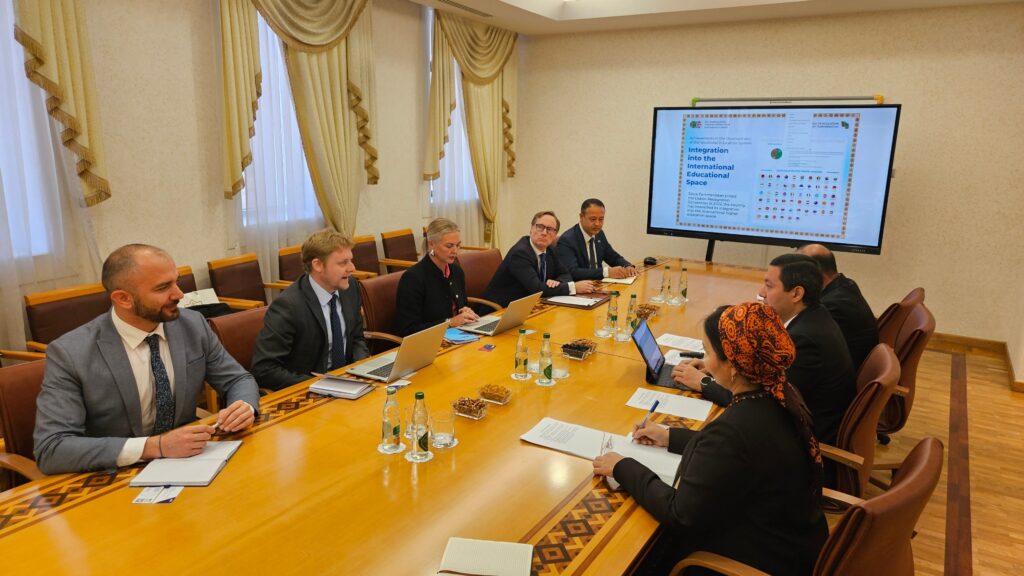
The Ministry of Education of Turkmenistan has held an official meeting with representatives of AQA Global Assessment Services, a leading UK-based organization specializing in educational assessment. The AQA delegation included Sean Crowley, Director of International Business Development; Anna Green, Director of Assessment Systems; and regional consultant Vali Huseyn. Deputy Minister of Education Azat Ataev emphasized Turkmenistan’s interest in deepening strategic cooperation with AQA, particularly in introducing modern methods of academic evaluation. “Our key task is to improve the quality of education and ensure it fully meets the needs of the labor market,” Ataev said. Regional Experience AQA has led numerous educational reform initiatives globally, including across Central Asia. In Uzbekistan, the organization contributed to the development of a new model for senior school graduation exams, aligning national assessments with international standards. In Kazakhstan, AQA supported the transition to a criteria-based assessment system, which formed the basis for updated qualification requirements. Experts note that such reforms increase trust in national diplomas, improve transparency, and make education systems more competitive and aligned with labor market demands. Prospects for Cooperation During the meeting in Ashgabat, both sides discussed several areas for collaboration, including: the introduction of modern examination platforms digital analytics of learning outcomes development of qualification standards training of teachers and administrators in examination processes Particular emphasis was placed on methodological support and establishing a systematic approach to educational planning. According to participants, the adoption of international best practices will help Turkmenistan build a sustainable, data-driven model of educational development.

Prestige or Coercion? Turkmen Police Questioned Over Costly Leader Watches

Turkmenistan’s Ministry of Internal Affairs has launched an internal investigation after reports emerged that police officers were purchasing high-priced watches featuring images of President Serdar Berdimuhamedov, his father and former president Gurbanguly Berdimuhamedov, and state symbols. According to an internal directive sent to regional departments, police personnel must submit written explanations detailing whether they bought the watches voluntarily or under pressure from superiors. The ministry also announced inspections of police uniforms to ensure compliance with official standards. The directive reminds officers that wearing rings, medallions, or signet rings, aside from wedding bands, is strictly prohibited while on duty. Internal security units have been tasked with monitoring adherence. Prestige or Coercion? The Times of Central Asia previously reported that such watches have become a status symbol within law enforcement circles. Manufactured by Sagat Turkmenistan, the watches feature silver cases with gold plating, gemstone embellishments, and insignias of state agencies. They retail for between 3,000 and 5,000 TMT ($870-1,450). However, many residents allege the watches are frequently used as informal bribes. “If you are told that a criminal case will be brought against you, it means you need to buy such a watch and go to the investigator. This does not mean that the case will be closed. But it’s the first installment,” said a resident of Bayramali with experience of dealing with the police. Watches with white straps are seen as particularly prestigious. Sources say that investigators often request the strap be replaced, at the giver’s expense, to enhance the watch’s appearance. Mandatory Purchases for Civil Servants This phenomenon extends beyond law enforcement. In May 2024, The Times of Central Asia reported that heads of state institutions in the Balkan region were required to purchase similar watches. Prices ranged from 1,500 to 3,000 TMT ($435-870 at the official rate; $75-150 on the black market). High-end models featured portraits of both Berdimuhamedovs, each in differently colored ties, alongside the Turkmen flag and map. Less expensive variants depicted only the president, or a simplified combination of national symbols. The purchase requirement applied to all budget-funded institutions, including schools, hospitals, and transportation agencies. Different “rates” were imposed based on the official’s seniority: lower-level managers paid 1,500 manats, while higher-level administrators paid up to 3,000. The tradition of producing watches featuring national leaders dates back to the rule of Saparmurat Niyazov, under whom such accessories were distributed to schoolchildren and state employees. Serdar Berdimuhamedov has continued this legacy with his own line of commemorative timepieces.

Turkmenistan and Qatar Build Closer Ties at Doha Summit

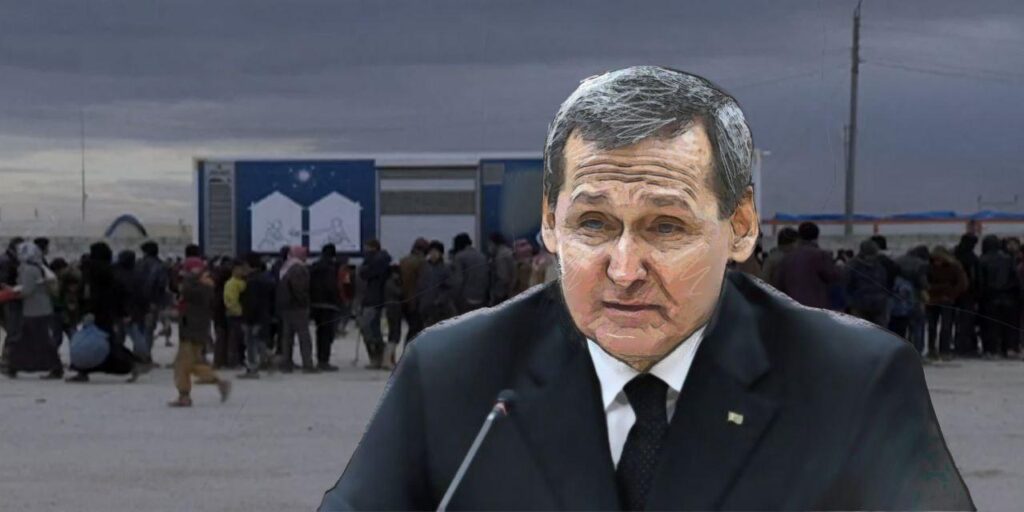
As Doha readies an emergency Arab-Islamic Summit, Turkmenistan and Qatar have moved to underscore a steadily warming relationship. On Sunday, Turkmenistan’s Deputy Prime Minister and Foreign Minister Rashid Meredov met Qatar’s Prime Minister and Foreign Minister Sheikh Mohammed bin Abdulrahman Al-Thani on the sidelines of the summit, a show of solidarity with Qatar after this month’s attack attributed to Israel. Qatar’s Foreign Ministry also reported a separate meeting between Meredov and Minister of State for International Cooperation Maryam Al-Misnad during the ministerial preparations, where both sides discussed ways to deepen ties. Indeed, Ashgabat’s presence in Doha on the eve of the summit offers political cover for expanded cooperation, and adds a Central Asian voice to backing Qatar’s mediation role in the war in the Middle East. The relationship is not new. Doha and Ashgabat established diplomatic ties in 1996, opened a Qatari embassy in Ashgabat in 2014, and upgraded political contact with a state visit by President Serdar Berdimuhamedov to Qatar in March 2023. Turkmenistan also inaugurated its embassy in Doha. The Qatari side later highlighted that 17 agreements and memorandums of understanding were signed across economic, cultural and sporting fields. Momentum has built through 2025. On March 16, Meredov met Sheikh Mohammed bin Abdulrahman Al-Thani in Doha to prioritise energy, investment and transport, and to brief on the Serhetabat–Herat section of the TAPI gas pipeline inside Afghanistan. Turkmen statements said Qatar “highly appraised” cooperation on the project, while the Turkmen Foreign Ministry framed the visit as a step forward. Qatar’s visibility in Turkmenistan also rose in August when Doha sent a delegation to the UN’s Third Conference on Landlocked Developing Countries, hosted in the Awaza coastal zone -- the Turkmen government's marquee venue for foreign investors. That forum dovetails with Turkmenistan’s pitch that logistics, energy and tourism can be built out with Gulf capital and know-how. For Turkmenistan, cooperation with Qatar matters for three reasons. The first is energy strategy. Turkmenistan sits on the world’s fourth-largest proven gas reserves, yet remains constrained by export routes and customer concentration. The World Bank and regional energy think tanks have long flagged Ashgabat’s reliance on pipeline gas to China, and the need to diversify destinations and modalities. Pairing with Qatar -- currently the world’s third-largest LNG exporter -- offers access to market expertise, contract structuring and investment models that could help Turkmenistan de-risk projects like TAPI and swaps via Iran. The second reason is capital. The Qatar Investment Authority (QIA) has been signalling a more aggressive deployment cycle, buoyed by anticipated LNG windfalls and new programmes to crowd in venture funds and international managers to Doha. While no Turkmen-specific commitments have been announced, Ashgabat’s priority sectors -- transport links to Afghanistan and the Caspian, petrochemicals, and hospitality at Awaza -- fit the kind of long-dated infrastructure and real-asset plays that Gulf sovereigns favor. Third is private-sector linkage. Since 2023, business councils and chambers have stepped up exchanges, including a March 2025 Qatar Chamber event for a Turkmen trade delegation and the creation of...

Central Asia’s Cotton Harvest: Between Reform, Coercion, and Economic Strain

The 2025 cotton harvest is underway across Central Asia, revealing the region’s ongoing struggle to reconcile long-promised reforms with persistent coercion and deepening economic pressure. Once the crown jewel of Soviet central planning, cotton, long dubbed “white gold”, remains a politically sensitive and economically vital crop from Turkmenistan to Tajikistan. Turkmenistan: Forced Mobilization Persists In Turkmenistan, mass mobilization for the cotton harvest continues largely unchanged. Chronicles of Turkmenistan reported that during a September cabinet meeting, President Serdar Berdimuhamedov ordered all regions to begin picking on September 10. Just two days earlier, the Ministry of Health had instructed medical institutions to send doctors, nurses, orderlies, and even technical staff to the fields, each assigned a daily quota of 45 kilograms. In the town of Turkmenabat, hospital workers said doctors were expected to go to the fields immediately after overnight shifts. Those who refuse must hire substitutes at their own expense, paying about 50 manats ($14) per day. As a result, up to two-thirds of monthly salaries are spent covering these unofficial harvest duties. While younger staff are dispatched to the fields, older employees are left to maintain hospital operations with minimal support. Uzbekistan: Reform, but Lingering Coercion Uzbekistan, by contrast, has officially ended Soviet-style forced labor. The government abolished child and public-sector mobilization, scrapped state cotton quotas in 2020, and partnered with the International Labour Organization (ILO) to monitor the transition. In March 2022, the Cotton Campaign, a global coalition of rights groups, unions, and apparel brands, lifted its boycott of Uzbek cotton, citing the end of systemic forced labor. The campaign, which began in 2011, had gained the support of more than 330 global brands, including H&M and Zara. Yet coercion has not entirely disappeared. In a recent video published by Kun.uz, Dilfuza Tashmatova, deputy hokim (governor) for family and women’s affairs in the Surkhandarya region's Sariosiyo district, was seen berating mahalla (local governance body) employees for failing to recruit enough pickers. She demanded that each “women’s activist” find five to ten additional laborers, totaling 150 people, and threatened dismissal for non-compliance. “Are you even a woman? Shameless! Unscrupulous! If you don’t want to work, then leave!” she shouted from a cotton field. According to the U.S. Department of Agriculture, approximately 70% of Uzbekistan’s cotton is still harvested by hand, despite recent gains in mechanization. Labor shortages have plagued the past two harvests as fewer people are willing to take on the physically demanding work for low wages. Mahalla councils are often pressured to mobilize unemployed or low-income residents. Following public backlash, Uzbekistan’s Ministry of Poverty Reduction and Employment fined Tashmatova 20.6 million UZS (about $1,660) under Article 51 of the Administrative Code, which prohibits forced labor. From Soviet Monoculture to Market Reforms Uzbekistan’s long history of forced cotton labor dates back to its designation as the Soviet Union’s cotton monoculture. For decades, students, teachers, and medical staff were sent into the fields to meet state quotas. After independence, the system endured until international scrutiny spurred reforms. The ILO hailed...