• KGS/USD = 0.01143 0%
  • KZT/USD = 0.00205 0%
  • TJS/USD = 0.10433 0%
  • UZS/USD = 0.00008 0%
  • TMT/USD = 0.28577 0%
  • KGS/USD = 0.01143 0%
  • KZT/USD = 0.00205 0%
  • TJS/USD = 0.10433 0%
  • UZS/USD = 0.00008 0%
  • TMT/USD = 0.28577 0%
  • KGS/USD = 0.01143 0%
  • KZT/USD = 0.00205 0%
  • TJS/USD = 0.10433 0%
  • UZS/USD = 0.00008 0%
  • TMT/USD = 0.28577 0%
  • KGS/USD = 0.01143 0%
  • KZT/USD = 0.00205 0%
  • TJS/USD = 0.10433 0%
  • UZS/USD = 0.00008 0%
  • TMT/USD = 0.28577 0%
  • KGS/USD = 0.01143 0%
  • KZT/USD = 0.00205 0%
  • TJS/USD = 0.10433 0%
  • UZS/USD = 0.00008 0%
  • TMT/USD = 0.28577 0%
  • KGS/USD = 0.01143 0%
  • KZT/USD = 0.00205 0%
  • TJS/USD = 0.10433 0%
  • UZS/USD = 0.00008 0%
  • TMT/USD = 0.28577 0%
  • KGS/USD = 0.01143 0%
  • KZT/USD = 0.00205 0%
  • TJS/USD = 0.10433 0%
  • UZS/USD = 0.00008 0%
  • TMT/USD = 0.28577 0%
  • KGS/USD = 0.01143 0%
  • KZT/USD = 0.00205 0%
  • TJS/USD = 0.10433 0%
  • UZS/USD = 0.00008 0%
  • TMT/USD = 0.28577 0%

Viewing results 91 - 96 of 307

The Rise of Regionalism in Central Asia: From Divisions to Dialogue

In recent years, Central Asia has undergone a remarkable transformation — from a region historically marked by political divisions and competing national interests, to one increasingly characterised by cooperation and dialogue. Today, Central Asian countries are exploring the idea of strategic autonomy and greater regional solidarity, not as an abstract ambition, but as a practical response to the shared challenges and opportunities they have. A key institutional vehicle for this evolving cooperation is the Consultative Meeting of Central Asian Leaders. Unlike formal international summits, this forum allows for open and informal dialogue between heads of state. It is valued precisely because it enables leaders to discuss sensitive regional matters candidly, without the constraints of protocol. The momentum for regional cooperation is clearly growing, and this forum has become a symbol of Central Asia’s desire to take its future into its own hands. Beyond this, the countries of Central Asia cooperate through platforms such as the Shanghai Cooperation Organization (SCO) and the Organisation of Turkic States, both of which offer multilateral mechanisms for addressing regional security, economic integration, and cultural exchange. Importantly, what was once a region of competing national agendas is now evolving into a space of shared strategic vision, including coordinated positions in international forums such as the United Nations. Additionally, in recent years, the foreign policies of Central Asian countries have demonstrated more and more coordination and regional alignment, especially in their engagement with external partners. This shift is reflected in the emergence of multilateral dialogue formats between Central Asia and key global actors. Notably, the European Union–Central Asia Summit, most recently held in Samarkand in 2025, underlined a shared commitment to regional connectivity, sustainable development, and mutual security. Similar formats have been institutionalised with other global players, such as the C5+1 format with the United States, focusing on green transition, economic reforms, and regional security. Germany has also advanced a Central Asia–Germany high-level dialogue, including the “Berlin Initiative,” aimed at promoting green energy, vocational training, and the rule of law. Meanwhile, Italy has launched its Central Asia + Italy format as part of its strategy to diversify partnerships in Eurasia and promote economic diplomacy. These platforms reflect a common approach, where Central Asian countries are increasingly choosing to engage as a bloc, rather than solely through bilateral channels. This enhances their negotiating capacity, visibility, and strategic coherence on the global stage. While each country maintains its sovereignty and specific foreign policy priorities, there is a growing recognition that regional solidarity amplifies voices and leverage in an increasingly complex geopolitical landscape. This shift aligns with the broader regional identity-building efforts under the Consultative Meetings of Central Asian Leaders, and reflects a pragmatic understanding that shared challenges — such as water management, climate adaptation, and migration — are better addressed collectively and in concert with international partners. Common regional challenges also drive this growing convergence. Climate change, water scarcity, and labor migration are issues that transcend borders. One of the most pressing concerns is the region’s vulnerability due to...
UN’s Guterres Back in Central Asia for Meetings About Development

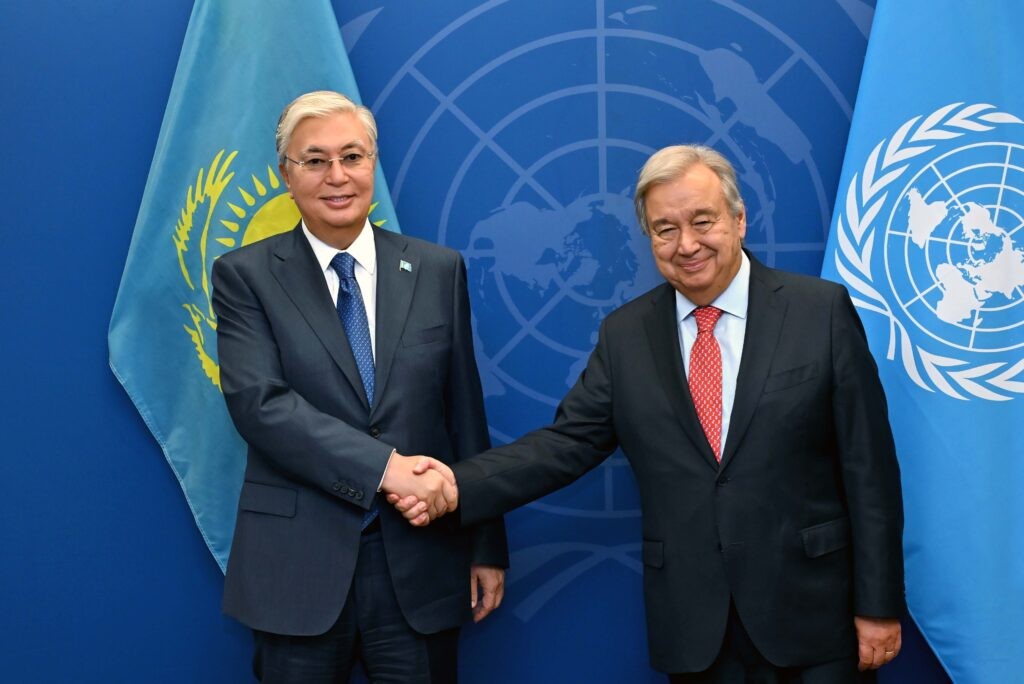
United Nations Secretary-General António Guterres is traveling to Central Asia this weekend to help promote stability and transformation in the region, his office says.  Guterres will be in Kazakhstan on Sunday to witness, alongside President Kassym-Jomart Tokayev, the signing of a host country agreement for a U.N. regional center for sustainable development goals for Central Asia and Afghanistan. Kazakhstan’s envoy to the U.N., Kairat Umarov, has said that the initiative aims to strengthen regional economies and trade networks, create jobs and cut migration flows.   “We are confident that over time, economic stability will pave the way for a gradual political transformation of Afghanistan, including progress in the field of women’s rights,” Umarov has said.  Trade between Central Asia and Afghanistan is increasing, but there are international concerns about Taliban-ruled Afghanistan’s humanitarian crisis, the threat of terrorism and human rights violations, particularly toward women and girls.  After the stop in Kazakhstan, Guterres will go to Awaza, Turkmenistan, to attend a U.N. conference on landlocked, developing countries.  “He will reaffirm the need to help the landlocked developing countries overcome physical barriers and connect to global markets, including by leveraging artificial intelligence to strengthen early warning systems,” said Farhan Haq, deputy spokesman for Guterres.  The August 5-8 conference will explore ways to expand the economic potential of countries that lack direct ocean access and rely on transit nations, thereby facing obstacles to trade and development. Countries that are classified as landlocked and developing by the conference include Afghanistan, ​Kazakhstan, Kyrgyzstan, Tajikistan, Turkmenistan and Uzbekistan.

The Caspian Sea Hits Historic Low

The Caspian Sea has dropped to its lowest recorded level, now sitting at less than 29 meters below sea level. The northern basin, bordering Russia and Kazakhstan, is shrinking particularly rapidly. As the water recedes, the exposed seabed is threatening key marine ecosystems. Experts warn the decline is already causing serious disruption to biodiversity in the region. Declining Volga Flow and Climate Change The downward trend in sea levels began in the 1990s and has accelerated since 2020, with a nearly 80-centimeter drop in the past four years. The primary factor is a decrease in the annual flow of the Volga River, which supplies approximately 80% of the Caspian's inflow and contributes 64% to the lake's total water balance. In recent years, the Volga’s annual discharge has ranged between 210 and 232 cubic kilometers, well below the historical average of around 250 cubic kilometers. At the same time, rising air temperatures are increasing evaporation rates, further depleting water levels. Scientists link these changes to global climate change and the ongoing rise in greenhouse gas emissions. Ecological and Economic Impact Human activity is compounding the problem. Significant water extraction from rivers for agriculture, industry, and municipal use is reducing the volume of water reaching the sea. Russia’s Ministry of Natural Resources is currently developing a comprehensive program to adapt to these shifting environmental conditions. The initiative aims to enhance forecasting, mitigate the consequences of shallowing, and adjust economic activities to reflect the new hydrological realities. Experts suggest that only a sustained annual inflow of around 270 cubic kilometers, comparable to levels recorded in the 1970s and 1990s, can halt the lake's ongoing decline. Changing Coastlines and Public Concern A recent video by Kazakh filmmaker Adai Myrzatay has stirred widespread attention on social media. The footage juxtaposes images of the Caspian coastline in 2013 and 2025. Twelve years ago, the pier was surrounded by open water and untouched shoreline. Today, the water has receded dramatically. Bushes now encircle the pier, and high-rise buildings stand where the shoreline once lay. The video has been viewed over 1.5 million times. The falling water level is leading to the loss of biological diversity and shrinking spawning grounds for species such as the Caspian seal and sturgeon. The shallowing is also disrupting shipping and fishing operations and raising the risk of international disputes over increasingly scarce water resources. A Shared Challenge for Five Nations The Caspian Sea, the world’s largest enclosed inland body of water, receives inflow from more than 130 rivers, including the Volga, Ural, Terek, Sulak, and Samur. Its coastline is shared by five countries: Russia, Kazakhstan, Turkmenistan, Azerbaijan, and Iran. While the Volga's inflow increased slightly to 232 cubic kilometers in 2024, it remains insufficient to reverse or even stabilize the sea’s decline. Experts agree that regional cooperation and a coordinated, long-term strategy for water resource management are essential to confronting this environmental crisis.

World Bank Report: Central Asia Faces Rising Risks from Extreme Heat

Cities across Central Asia are becoming increasingly vulnerable to extreme heat, posing significant risks to public health, economic productivity, and infrastructure, according to a new report by the World Bank. The study, which covers 70 urban areas in Europe and Central Asia, including Astana, Bishkek, Ashgabat, Tashkent, and several smaller cities in Tajikistan and Turkmenistan, highlights the urgent need for heat adaptation strategies. Rising Mortality and Economic Losses The report finds that heat-related mortality is already a serious concern. In Ashgabat, an estimated 25-28 people per 100,000 die annually due to extreme heat. In Astana, Bishkek, and Tashkent, the toll is slightly lower, at approximately 19-21 deaths per 100,000. Without intervention, annual heat-related deaths in cities like Astana and Tashkent could rise dramatically, reaching between 10,000 and 23,000 by 2090. Economic impacts are also mounting. In 2023, higher temperatures resulted in the loss of over 87,000 full-time jobs across the region. Uzbekistan alone saw more than 22,000 job losses, while nearly 18,000 were reported in Azerbaijan. By 2050, heat-related economic losses could exceed 2% of GDP in some urban centers, such as Ashgabat. Infrastructure Under Strain Rising temperatures are damaging infrastructure across Central Asia. In Kyrgyzstan, extreme heat causes deterioration to nearly 200 kilometers of road annually, driving up repair costs and disrupting transportation. Kazakhstan is facing similar challenges: recent heatwaves have warped asphalt and concrete surfaces in the southern and northeastern regions of the country. Adaptation Measures and Challenges Despite these threats, the report outlines viable solutions. Urban greening, such as planting trees and creating shaded areas, can help cool city streets. Retrofitting buildings to improve thermal insulation without increasing energy use, establishing early warning systems, and creating cooling centers are also recommended. Urban planning strategies should incorporate climate resilience by using heat-tolerant materials and factoring climate risks into infrastructure design. Investment in parks and green spaces, alongside the use of heat vulnerability maps, can guide targeted interventions. However, the report warns that a lack of funding may hinder progress. Without innovative financing mechanisms, many adaptation plans could be stalled despite their potential to mitigate long-term risks. The World Bank concludes that while the impacts of rising temperatures are already being felt across Central Asia, timely action can prevent far more serious consequences. Policymakers are urged to prioritize heat adaptation to safeguard lives, livelihoods, and infrastructure in an increasingly warming world.

Steel Diplomacy: Central Asia’s Southern Push via Afghanistan

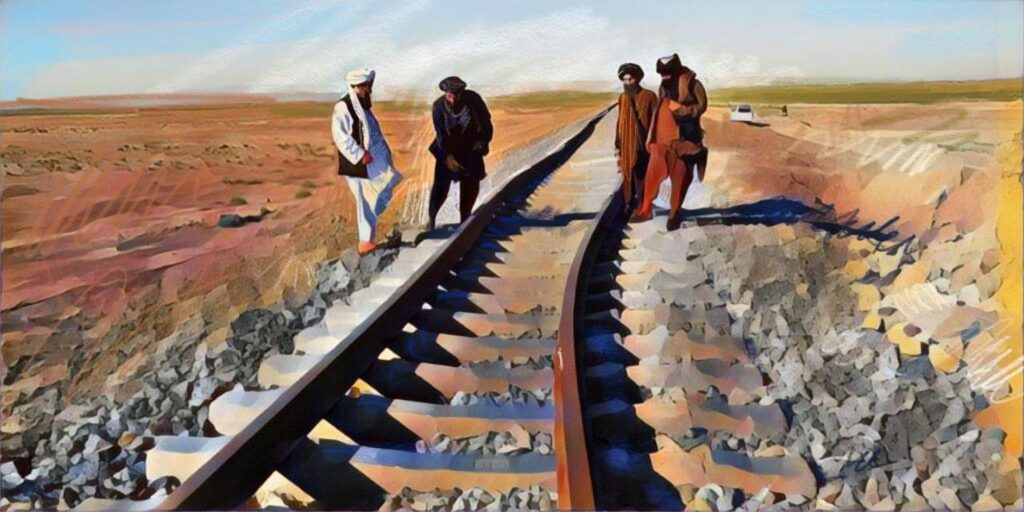
The United States and its allies may be uneasy about the Taliban’s return to power, given their extremist history, continued repression, and the collapse of decades-long Western efforts in Afghanistan. Nevertheless, the Taliban is strengthening ties with the Global South—particularly Central Asia—in search of investment for railway infrastructure. For landlocked Central Asian nations, Afghanistan is a key transit point on the shortest route to the Arabian Sea, offering an alternative to routes through Russia, China, or westward via the Caspian. The war-torn country – located at the crossroads of Central and South Asia – serves as a land bridge between the former Soviet republics and the major markets of the region, including India and Pakistan. This strategic position is why regional actors are eager to invest in the construction of the railway network in Afghanistan, fully aware that the new route would help them achieve at least some of their geopolitical and geoeconomics interest. Kazakhstani Foreign Minister Murat Nurtleu’s recent visit to Kabul was, according to reports, primarily focused on Afghan railway infrastructure. The largest Central Asian nation economy is reportedly ready to invest $500 million in the construction of the 115km (71 miles) railway from Towrgondi on Afghanistan’s border with Turkmenistan to the city of Herat. As Taliban railway officials told The Times of Central Asia, the Afghan and Kazakh delegations, who signed a memorandum of understanding on the project, are expected to finalize new agreements and contracts in the coming months. A detailed construction study is expected to be completed by winter, and Afghan authorities anticipate that construction will begin by the end of the year.  Meanwhile, Kabul hopes to reach similar deals with neighboring Uzbekistan and Turkmenistan, as well as with Russia and Pakistan. According to Taliban railway experts, these four nations – along with Kazakhstan – are expected to play a major role in the development of the 700-kilometer (approximately 435-mile) railway network in Afghanistan. The Taliban political officials, on the other hand, see the project as an opportunity for Afghanistan to increase its geopolitical importance. “It will help us reduce economic dependence and isolation, allowing Afghanistan to integrate more actively into the regional economy,” Muhammad Rehman, the Taliban-appointed Chargé d’Affaires of the Islamic Emirate of Afghanistan to Kazakhstan, told The Times of Central Asia, From his perspective, nations investing in Afghan railway infrastructure will become advocates for Afghanistan’s stability. Projects like the construction of the railway, in his view, can transform Afghanistan into a transit hub for regional countries through railway corridors. “Through the railway, Afghanistan can also import goods at a significantly lower cost, making essential commodities more affordable for its people,” Rahman stressed. More importantly, the railway opens a route for Central Asian natural resources to reach global markets via the ocean and further enhances the viability of the westward-flowing Middle Corridor. In short, the Afghan rail projects are important for connecting Eurasia. It is, therefore, no coincidence that Kazakhstan – being the richest country in terms of mineral wealth in Central Asia...

Turkmenistan Tightens Internet Blocks to Promote State-Controlled VPNs

Internet restrictions in Turkmenistan have intensified sharply in recent weeks, according to sources who spoke with turkmen.news. Authorities have reportedly expanded the national IP blacklist by adding numerous /16 subnets, each covering over 65,000 IP addresses. While such sweeping blocks might appear politically motivated, insiders claim the real motive is commercial: corrupt officials are using the restrictions to market and sell VPN services and “whitelist” access they control themselves. In July 2024, Turkmen authorities briefly restored access to around 3 billion previously blocked IP addresses, raising hopes of a more open digital environment and a boost to the stagnant online economy. However, that reprieve proved temporary. The blocks soon returned, initially targeting smaller /24 subnets (255 IP addresses each). This summer, the government's cybersecurity department escalated efforts by blocking entire /16 subnets, cutting off hundreds of thousands of websites in a matter of weeks. Restrictions Without Justification Turkmenistan already ranks among the most digitally isolated nations. Independent media, global social networks, and any platforms perceived to host criticism of the government have long been inaccessible. However, the latest wave of blocks is not driven by political considerations, as most politically sensitive platforms were already restricted. Instead, the scale and targets of the new blocks suggest other motivations. According to turkmen.news, even benign and essential online services, such as update servers for antivirus software like Bitdefender and some Google utilities, have been caught in the dragnet. Experts warn that this poses a growing cybersecurity risk in a country with limited digital literacy and inadequate access to software updates. Selling Access in a Closed System Sources allege that Turkmen officials are using the crackdown to corner the market for virtual private networks. VPN keys now cost around 1,000 manats (roughly $50) per month, while access to a whitelist, ensuring uninterrupted connectivity, can run up to $2,000 monthly. The officials reportedly behind the scheme are said to be deliberately blocking alternatives to force users into purchasing their products. Last year, turkmen.news identified several figures allegedly involved in this scheme: Maksat Geldyev, Allanazar Kulnazarov, and Didar Seyidov. While these individuals reportedly profit from the artificial scarcity they create, the broader economy suffers. Analysts estimate that Turkmenistan loses millions of dollars daily due to the constraints on digital development, which is a key factor in modern GDP growth. Official Denials Amid International Scrutiny Despite mounting evidence, the Turkmen government continues to deny the severity of the situation. The Foreign Ministry recently issued a statement condemning Ukrainian television channel FreeDom for what it described as “biased and false” coverage of the country’s internet restrictions. Nonetheless, experts warn that unless the government reverses course, Turkmenistan’s digital isolation will continue to hinder economic development, deepen cybersecurity vulnerabilities, and further disconnect its population from the global information space.