
• KGS/USD = 0.01144 0%
  • KZT/USD = 0.00204 0%
  • TJS/USD = 0.10429 0.29%
  • UZS/USD = 0.00008 0%
  • TMT/USD = 0.28490 0%
  • KGS/USD = 0.01144 0%
  • KZT/USD = 0.00204 0%
  • TJS/USD = 0.10429 0.29%
  • UZS/USD = 0.00008 0%
  • TMT/USD = 0.28490 0%
  • KGS/USD = 0.01144 0%
  • KZT/USD = 0.00204 0%
  • TJS/USD = 0.10429 0.29%
  • UZS/USD = 0.00008 0%
  • TMT/USD = 0.28490 0%
  • KGS/USD = 0.01144 0%
  • KZT/USD = 0.00204 0%
  • TJS/USD = 0.10429 0.29%
  • UZS/USD = 0.00008 0%
  • TMT/USD = 0.28490 0%
  • KGS/USD = 0.01144 0%
  • KZT/USD = 0.00204 0%
  • TJS/USD = 0.10429 0.29%
  • UZS/USD = 0.00008 0%
  • TMT/USD = 0.28490 0%
  • KGS/USD = 0.01144 0%
  • KZT/USD = 0.00204 0%
  • TJS/USD = 0.10429 0.29%
  • UZS/USD = 0.00008 0%
  • TMT/USD = 0.28490 0%
  • KGS/USD = 0.01144 0%
  • KZT/USD = 0.00204 0%
  • TJS/USD = 0.10429 0.29%
  • UZS/USD = 0.00008 0%
  • TMT/USD = 0.28490 0%
  • KGS/USD = 0.01144 0%
  • KZT/USD = 0.00204 0%
  • TJS/USD = 0.10429 0.29%
  • UZS/USD = 0.00008 0%
  • TMT/USD = 0.28490 0%

Viewing results 109 - 114 of 307

Forced and Child Labor Persist in Turkmen Cotton Harvest, UN Experts Say

The International Labour Organization (ILO), a United Nations agency focused on labor rights, has confirmed cases of forced labor involving public sector employees and children during Turkmenistan’s 2024 cotton harvest, despite a formal government ban introduced in July of that year. Public Sector Employees and Children Sent to the Fields According to the ILO’s findings, employees of state institutions, including kindergartens, schools, and hospitals, were mobilized for cotton picking alongside children. These violations occurred even after the official prohibition on such practices was enacted​. During a visit to Turkmenistan in autumn 2024, ILO experts found that around 20% of surveyed farmers admitted to employing public sector workers. This included both technical staff, such as cleaners, and professionals like nurses, doctors, and educators. Over one-third of public sector employees reported facing pressure from management to participate in the harvest, with threats of wage cuts or dismissal. The ILO categorized these practices as a form of “psychological coercion.” Minors in the Fields, Women Dominate the Labor Force Despite the legal ban on child labor, 14% of surveyed government workers and 11% of farmers confirmed the involvement of minors in cotton picking. The report links this to poor socio-economic conditions in rural areas, low-income levels, unemployment, and prevailing cultural expectations. Women accounted for over 90% of all cotton pickers in 2024. The average working day lasted 8.5 hours, often extending beyond that. Approximately 80% of pickers had no written employment contracts, exposing them to potential exploitation. Many reported being forced to accept whatever terms their employers offered. While in 2023 only 12% of pickers earned more than one Turkmen manat per kilogram of cotton, this figure rose to over 70% in 2024. Nevertheless, experts noted that pay remained unstable, with widespread delays and opaque compensation practices. Obstacles for Observers, Risk of Sanctions The ILO conducted monitoring at 472 cotton plantations across Turkmenistan, interviewing 1,762 pickers, 472 farmers, and 2,500 public officials. However, the report notes that in some instances, officials and farmers attempted to obstruct monitoring efforts, interfering with observers and misrepresenting facts. While the ILO acknowledged government efforts to ban child labor and reduce coercion, it warned that the absence of effective oversight mechanisms continues to enable violations. “Risks remain, especially when there are threats of dismissal or fines for refusing to go into the field,” the report states. International Repercussions Loom Under newly adopted European Union regulations banning imports of goods produced using forced labor, Turkmen cotton exports could face restrictions. In November 2024, EU officials discussed a potential ban on imports of Turkmen cotton for this reason. The ILO report underscores that sustainable reform is only achievable through transparent oversight, full respect for human rights, and the complete elimination of coercive labor practices for both adults and children.
EU’s Kaja Kallas: Russia Must Not Use Central Asia to Bypass Sanctions

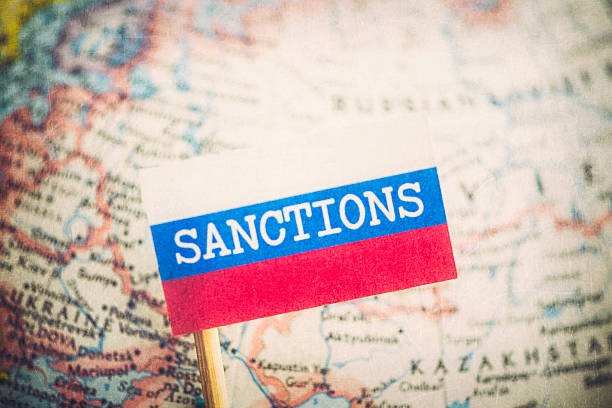
European Union sanctions against Russia are affecting Central Asian economies, but the EU remains determined to prevent the region from being used to circumvent those measures. This was emphasized by EU High Representative for Foreign Affairs Kaja Kallas during the 20th EU-Central Asia Ministerial Meeting held in Turkmenistan's capital, Ashgabat. “The EU has introduced 16 sanctions packages to weaken Russia’s military machine, and we are working on the 17th,” Kallas stated. “I understand these sanctions impact your economy, but we all want this war to end. Russian companies must not use Central Asia to bypass these restrictions.” The ministerial meeting on March 27 brought together the foreign ministers of Kazakhstan, Kyrgyzstan, Tajikistan, Turkmenistan, and Uzbekistan. Discussions centered on preparations for the upcoming EU-Central Asia Summit, scheduled for April 2025 in Samarkand. Strengthening U.S.-Uzbekistan Ties In a parallel development, U.S.-Uzbekistan relations are showing signs of deeper engagement. On March 26, Ambassador Furkat Sidikov hosted a Congressional Breakfast with U.S. Representative Trent Kelly, focused on trade and investment opportunities. Congressman Kelly praised Uzbekistan’s ongoing reforms and expressed support for lifting the Jackson-Vanik Amendment, a Cold War-era restriction on trade. A Shift in U.S. Strategy Toward Kazakhstan Meanwhile, experts are calling for a more nuanced U.S. approach to Kazakhstan. Dr. Robert M. Cutler, Times of Central Asia correspondent, noted that Kazakhstan’s close ties with Russia and China stem from geopolitical necessity rather than ideological alignment. He urged Washington to maintain consistent engagement with Kazakhstan and prioritize economic and strategic cooperation over political pressure.

Power Shifts in Central Asia: The Unpredictable Path of Leadership

European Union Commissioner for International Partnerships Josef Sikela has concluded his tour of Central Asia, a visit conducted against the backdrop of global geopolitical turbulence. Unlike previous engagements, where European officials often criticized the region’s leadership for a lack of democratic progress, Sikela refrained from making demands on local governments. Historically, Europe has accused Central Asian states of authoritarianism and the entrenchment of long-serving leaders. However, the idea that power is uniquely permanent in the region is increasingly questioned. Critics point to Western examples, such as Angela Merkel’s 16-year tenure as Germany’s chancellor, and alleged electoral manipulation within the EU, such as in Romania, where elections were annulled after an undesired candidate’s victory. Meanwhile, in Central Asia, even presidents once considered “eternal” have eventually left office, sometimes peacefully, sometimes under turbulent conditions. Kyrgyzstan: The Unpredictable Outlier Kyrgyzstan is often described as a "democratic exception" within Central Asia, yet its history is marked by political instability and frequent leadership changes, arguably more so than in many of the world’s most conflict-prone regions. The country’s first president, Askar Akayev, held power from 1990 to 2005. Though re-elected three times, his rule ended in March 2005 when protests erupted over parliamentary election results that heavily favored pro-government candidates. Demonstrators stormed the Government House in Bishkek, prompting Akayev to flee. Reports, though unverified, claimed he was smuggled out wrapped in a carpet. Following Akayev’s ouster, Kurmanbek Bakiyev took power, but his rule ended in 2010 after violent unrest. His downfall was allegedly facilitated by Kazakhstan’s intelligence services, and he later found political asylum in Belarus under President Alexander Lukashenko. Since Bakiyev’s departure, Kyrgyzstan has continued to experience political turbulence. Presidents Almazbek Atambayev (2010-2017) and Sooronbai Jeenbekov (2017-2020) both left office under pressure. Atambayev’s tenure saw a diplomatic fallout with Kazakhstan, while Jeenbekov resigned in 2020 amid protests over parliamentary elections. His successor, Sadyr Japarov, remains in office, but whether he will complete his term is an open question. Uzbekistan: Reform Within Limits Islam Karimov, Uzbekistan’s first post-Soviet leader, ruled for over 26 years before his death in 2016. While he maintained a strictly centralized government, his tenure was also marked by violent crackdowns, most notably the Andijan uprising in 2005, which resulted in a Western diplomatic fallout​. His successor, Shavkat Mirziyoyev, has introduced some reforms, loosening restrictions on civil liberties and the economy. However, the fundamental structure of state control remains intact, with opposition movements still tightly monitored. Kazakhstan: From Nazarbayev to Tokayev Kazakhstan’s transition from Nursultan Nazarbayev to Kassym-Jomart Tokayev is often described as managed succession rather than a genuine power shift. Nazarbayev, who led Kazakhstan for nearly three decades, officially stepped down in 2019, yet retained significant influence until the January 2022 unrest, which forced him to relinquish much of his remaining power. These protests, initially sparked by fuel price hikes, rapidly escalated into anti-government riots. While official accounts describe the unrest as an attempted coup orchestrated by figures within Nazarbayev’s inner circle, critics suggest Tokayev used the crisis to consolidate power....

Turkmenistan Government Monitoring Former Law Enforcers and Imposing Travel Restrictions

Turkmenistan’s Ministry of Justice has launched an initiative to collect data on former Interior Ministry officials to track those who have left the country. This move is the latest in a series of efforts by the government to monitor and restrict its citizens’ ability to travel abroad. Tracking Former Law Enforcement Officers Since February 2025, the Ministry of Justice has been compiling information on former law enforcement officers who held ranks of major or higher and served between 1991 and 2024. The Ministry of Internal Affairs, the Ministry of National Security (MNS), the Migration Service, and the Prosecutor’s Office have been instructed to assist in the campaign, which is expected to conclude by the end of April. The main objective is to identify retired officers who have relocated abroad. Several theories have emerged regarding the authorities' motives. One explanation is that routine inspections revealed cases of former officers settling in other countries after retirement. Another theory links the initiative to the recent controversy surrounding Rustam Inoyatov, the former head of Uzbekistan’s National Security Service, who, along with his family, acquired Vanuatu citizenship through a “golden passport” program. Turkmen security services suspect that similar schemes may have been used by their own former colleagues. Particular scrutiny is being placed on those who had professional ties with Inoyatov during his tenure. Law enforcement veterans are now required to submit reports detailing their current residence and occupation. In cases where an ex-officer has passed away, their relatives must provide official documentation, including death certificates and burial site information. New Restrictions on Travel Abroad Retired law enforcement officers have been informed that they may only leave the country for medical reasons and must obtain official authorization from the Ministry of Health. This is not the first instance of the government tightening travel restrictions. In September 2024, reports surfaced that public sector employees were being compelled to surrender their biometric passports or provide proof that they did not possess one.  While officials have not commented on these measures, observers believe they are linked to the increasing number of citizens emigrating in search of work or permanent residency. Additionally, recent reports indicate that some Turkmen nationals have participated in Russia’s war against Ukraine, with some receiving Russian citizenship in return for their military service. Confiscation of Student Passports Travel restrictions have also been extended to students. In the fall of 2024, media reports revealed that students enrolling in Turkmen universities were required to surrender their passports to prevent them from traveling abroad.  Students who refuse to comply and sign a receipt acknowledging the surrender of their passports face the risk of being denied admission. According to sources, this policy has been in place for two years, with passports held by faculty deans for the duration of students’ studies. Although officials have not provided explanations for these measures, university professors suggest that they aim to curb mass youth migration. Previously, students were only required to sign receipts, but authorities have now escalated their efforts by confiscating passports...

Visit by EU’s Sikela Strengthens Global Gateway Partnership with Turkmenistan

On March 12, European Commissioner for International Partnerships Jozef Síkela visited Turkmenistan, as part of the European Union’s work to expand cooperation under the Global Gateway strategy. The visit focused on transport connectivity, renewable energy, and trade facilitation, aiming to integrate Turkmenistan into regional and global economic networks, according to the EU Delegation to Turkmenistan. Global Gateway and the Trans-Caspian Transport Corridor The Global Gateway strategy is the EU’s initiative to bridge global investment gaps by promoting sustainable connectivity in digital, energy, and transport sectors, while strengthening education and research systems. The initiative seeks to mobilize €300 billion in public and private investments between 2021 and 2027, fostering sustainable growth and resilient partnerships worldwide. A key topic during Síkela’s meetings with Turkmenistan’s President Serdar Berdimuhamedov and Foreign Minister Rashid Meredov was the Trans-Caspian Transport Corridor, a strategic route enhancing connectivity between Central Asia and Europe. Síkela reaffirmed the EU’s support for Turkmenistan’s role in this corridor, emphasizing its potential to create faster, more secure trade routes. “We see Turkmenistan as a key partner for building stronger connections between Europe and Central Asia. By working together under the Global Gateway, especially through the Trans-Caspian Transport Corridor, we are creating faster, more secure trade routes that will open new opportunities for businesses, attract investments, and create jobs. Our joint efforts aim to cut trade times between Europe and Asia to only 15 days, while helping Turkmenistan become an important hub for commerce between Asia and Europe.” According to the Turkmen Foreign Ministry, Berdimuhamedov highlighted the Turkmenbashi Port as a vital transit hub on the Caspian coast, offering a direct link to the Black Sea, Europe, the Middle East, South Asia, and the Asia-Pacific region. While in Turkmenistan, Síkela visited the Turkmenbashi Port, where he met with Mammethan Chakyev, Director General of the Agency for Transport and Communications under the Cabinet of Ministers. He reaffirmed the EU’s commitment to supporting infrastructure modernization and regulatory alignment to international standards. Energy and Climate Cooperation As part of the visit, two key initiatives were launched under the EU-Turkmenistan bilateral cooperation facility: A €6 million project, implemented by the International Trade Centre (ITC), will support Turkmenistan’s accession to the World Trade Organization (WTO) and promote economic modernization. A €4.5 million initiative, implemented by GIZ, aims to advance renewable energy development, reduce methane emissions, and improve energy efficiency. Síkela also welcomed Turkmenistan’s accession to the Global Methane Pledge, stressing the importance of emissions reduction and sustainable energy solutions for fostering a greener economy. The EU’s technical and financial assistance will further support Turkmenistan’s efforts to align with international trade and environmental standards.

Opinion: How Central Asia Has Strengthened Ties with the West Since 2022

The Russian invasion of Ukraine has changed the relationship between Russia and Central Asia. Russia’s decision to invade a neighboring country, and the devastation and destruction that followed, has forced Central Asia to reconsider its relationship with the Russian Federation.  Russia is no longer seen as an “invincible superpower,” meaning it cannot be relied on to protect other members of the CSTO (Collective Security Treaty Organization). In addition, the U.S. and European countries have levied heavy sanctions on Russia for its invasion of Ukraine. Russia has attempted to evade these sanctions by conducting business with third parties, but the international community has warned several organizations and countries not to partake in these relations. Otherwise, should these businesses and countries opt to help Russia, then the international community has said that it will impose stiff penalties on these Russian intermediaries as well. Given these events, the Central Asian states have now been actively pursuing new relationships beyond Russia to bolster national, economic, and energy security within the region. During this process, China has attempted to assert itself as Central Asia’s new ally. Like Russia, China already has a significant trade relationship with Central Asia. In addition, China is Central Asia’s largest gas consumer, meaning the Chinese have attempted to force Central Asia into an economic and energy partnership. Despite this relationship, the countries of Central Asia have opted not to increase their reliance on China. Instead, recent developments have led them to improve their relations with the United States, the United Kingdom, and the European Union. But how has the West strengthened its relationship with Central Asia since 2022? Take, for example, the United States. When Russia’s invasion began in February 2022, the then U.S. Secretary of State Antony Blinken met with foreign ministers from Kazakhstan, Kyrgyzstan, Tajikistan, and Uzbekistan to discuss the war. During their meeting, Secretary Blinken stated that the United States supports Central Asia’s “sovereignty, independence, and territorial integrity.” He also said that the United States will continue to strengthen its relationship with the region. Since this meeting, Blinken has met with foreign ministers from Central Asia on several occasions in 2023 and 2024, where they further discussed how Central Asia can “develop the strongest possible capacities for their own security, their growing economic prosperity, and the strength and resilience of their societies.” Furthermore, U.S. President Joe Biden met with senior officials from Central Asia. During his meeting with his Central Asian counterparts in September 2023, Biden said that the United States would help “invest in and develop Central Asia’s energy infrastructure.” The United States also established a new business initiative with Central Asia, where the United States has provided hundreds of millions of dollars in assistance to the region. Then, during the United States-Central Asia Trade Investment Framework Council in June 2024, the United States and the Central Asian states discussed new investment opportunities and how they could diversify trade. These discussions were well received, and the United States called for future engagements between it and Central...
