• KGS/USD = 0.01144 0%
  • KZT/USD = 0.00205 0%
  • TJS/USD = 0.10429 0.29%
  • UZS/USD = 0.00008 0%
  • TMT/USD = 0.28571 0.28%
  • KGS/USD = 0.01144 0%
  • KZT/USD = 0.00205 0%
  • TJS/USD = 0.10429 0.29%
  • UZS/USD = 0.00008 0%
  • TMT/USD = 0.28571 0.28%
  • KGS/USD = 0.01144 0%
  • KZT/USD = 0.00205 0%
  • TJS/USD = 0.10429 0.29%
  • UZS/USD = 0.00008 0%
  • TMT/USD = 0.28571 0.28%
  • KGS/USD = 0.01144 0%
  • KZT/USD = 0.00205 0%
  • TJS/USD = 0.10429 0.29%
  • UZS/USD = 0.00008 0%
  • TMT/USD = 0.28571 0.28%
  • KGS/USD = 0.01144 0%
  • KZT/USD = 0.00205 0%
  • TJS/USD = 0.10429 0.29%
  • UZS/USD = 0.00008 0%
  • TMT/USD = 0.28571 0.28%
  • KGS/USD = 0.01144 0%
  • KZT/USD = 0.00205 0%
  • TJS/USD = 0.10429 0.29%
  • UZS/USD = 0.00008 0%
  • TMT/USD = 0.28571 0.28%
  • KGS/USD = 0.01144 0%
  • KZT/USD = 0.00205 0%
  • TJS/USD = 0.10429 0.29%
  • UZS/USD = 0.00008 0%
  • TMT/USD = 0.28571 0.28%
  • KGS/USD = 0.01144 0%
  • KZT/USD = 0.00205 0%
  • TJS/USD = 0.10429 0.29%
  • UZS/USD = 0.00008 0%
  • TMT/USD = 0.28571 0.28%

Viewing results 37 - 42 of 307

Turkmen Scientists Develop Plan to Extinguish the Darvaza Gas Crater

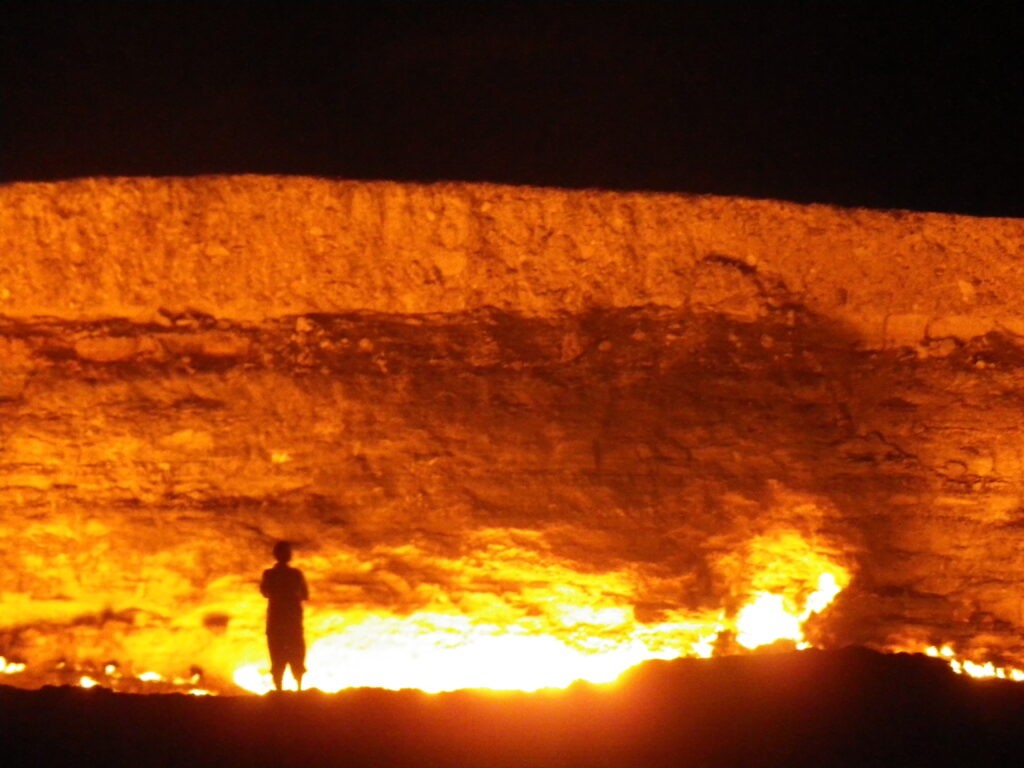
Scientists from the Scientific Research Institute of Natural Gas, under the state concern Turkmengaz, have proposed a method to extinguish the Darvaza gas crater, an uncontrolled fire that has been burning for decades in Turkmenistan’s Karakum Desert. The development was reported by Nebit-Gaz. The proposed solution involves drilling a new well to divert natural gas away from the crater. Researchers believe this strategy could significantly reduce, and eventually halt, the gas flow fueling the fire. If successful, the plan would allow Turkmenistan to mitigate environmental damage and conserve valuable energy resources. Turkmen officials have increasingly framed the Darvaza fire as both an environmental liability and an economic loss. Burning methane contributes to greenhouse gas emissions, while the continuous flare represents wasted natural gas in a country heavily dependent on energy exports for revenue. Located roughly 270 kilometers north of Ashgabat, the crater, officially named the “Glow of the Karakum”, sits atop the Chaljulba structure of the Zeagli-Darvaza group of gas fields. It measures approximately 60 meters in diameter and is 20 meters deep. The formation resulted from the collapse of an exploratory gas well. To prevent methane from harming local populations and wildlife, scientists ignited the gas, expecting the fire to burn out within days. However, the blaze has continued uninterrupted. Gas has been burning at the site since 1971, making the crater one of Central Asia’s most unusual natural and industrial spectacles. Researchers at the institute have conducted in-depth studies of the region’s geological structure, identifying a complex network of thin gas-bearing layers between 200 and 950 meters underground. These layers are interspersed with water-bearing and dense rock formations and are often hydrodynamically connected, enabling gas migration between them. Experts caution that extinguishing the fire has never been straightforward. The crater is fed not by a single reservoir but by multiple interconnected gas pockets, complicating efforts to isolate and shut off the fuel source. This interconnectivity explains why the fire persists despite the initial reservoir being relatively modest. Previous attempts to extinguish the fire included examining the crater floor to locate the original wellbore. Turkmengaz safety teams descended into the crater in hopes of installing flow-control equipment, but gas was found to be leaking from multiple surface outlets, rendering those efforts ineffective. Engineers found that sealing individual outlets risked increasing pressure elsewhere in the field, raising concerns that poorly planned interventions could trigger new leaks rather than resolve the problem. Now, using updated geological and production data, scientists have proposed drilling an operational and appraisal well in the Chaljulba field. By intensively extracting gas from the most productive reservoir, they aim to alter subsurface pressure conditions and redirect the gas away from the crater. According to Nebit-Gaz, this scientifically grounded approach offers a realistic path toward halting the fire and minimizing its environmental impact. If successful, the strategy could also allow some of the diverted gas to be captured for industrial use, potentially turning a long-standing liability into a limited economic resource. The Darvaza fire has drawn global attention...

Japan and Central Asia Enter a New Era of Strategic Partnership

On December 20, the first summit of Central Asian and Japanese leaders (CA+JAD) was held in Tokyo. The Tokyo Declaration, an ambitious roadmap for future cooperation, was adopted during the summit. It aims to transform relations between Japan and the five Central Asian countries into a deep and multifaceted strategic partnership.  New Paths for the Region Japan intends to invest about $20 billion in business projects across Central Asia over the next five years. Priority areas for cooperation include environmental initiatives, and the transition to carbon neutrality in the energy sector. Additional areas include developing supply chains for key minerals, disaster risk reduction, and earthquake preparedness. Projects in agriculture and logistics, particularly improvements along the Trans-Caspian International Transport Route, were also discussed. Other topics covered included launching direct flights between Japan and Central Asia, advancing cooperation in digital technologies and artificial intelligence, and expanding scholarships and training programs.  Attendees included Japanese Prime Minister Sanae Takaichi; Kazakh President Kassym-Jomart Tokayev; Kyrgyz President Sadyr Japarov; Tajik President Emomali Rahmon; Turkmen President Serdar Berdimuhamedov; and Uzbek President Shavkat Mirziyoyev. The second Central Asia-Japan summit is scheduled to take place in Kazakhstan, in line with the agreed English alphabetical rotation. Turkmenistan: Petrochemical Cooperation President Serdar Berdymuhamedov met with representatives of major Japanese corporations, including Sumitomo, Toyo Engineering, Muroosystems, Itochu, Argonavt, Mitsubishi, Kawasaki Heavy Industries, and Tokyo Boeki Eurasia.  He cited several successful Japanese-led projects in Turkmenistan, such as waste processing plants, a wastewater treatment initiative for industrial reuse, PET plastic recycling, and e-waste processing to reduce hazardous materials. New memorandums were signed between Turkmen and Japanese entities. Key among them: an agreement involving the state-owned concern Turkmenhimiya, Mitsubishi Heavy Industries, Mitsubishi Corporation, and Gap Inşaat on building a urea plant in the Balkan region with a capacity of 1.155 million tons per year. Turkmenhimiya also signed an agreement with Kawasaki Heavy Industries to extend maintenance for the Akhal gas-to-gasoline plant. In addition, a cooperation deal was reached with Toyo Engineering and Turkey’s Rönesans Endüstri for the second phase of the Kiyanly polymer plant. Other memoranda included partnerships between the Ministry of Automobile Transport of Turkmenistan and Sumitomo Corporation, TurkmenGas and Sumitomo Europe, and the Ministry of Communications and Mitsubishi Corporation Machinery, focusing on artificial intelligence and digital technologies. Agreements were also signed with media outlets, banks, and universities. Diplomatic ties between Japan and Turkmenistan were established in 1992. The Japanese Embassy opened in Ashgabat in 2005, and the Turkmen Embassy in Tokyo followed in 2013. Japan also plays a vital role in Turkmenistan’s export of polypropylene. Japanese firms Kawasaki and Sojits helped construct a fertilizer complex in the town of Mary, while Itochu and Day Nippon were involved in modernizing the national railway’s IT systems. Kyrgyzstan: Energy and Education Ties President Sadyr Japarov oversaw the signing of bilateral agreements spanning exports, energy, healthcare, education, tourism, agribusiness, and digital development.  Agreements included a roadmap between Kyrgyzstan’s Ministry of Energy and MurooSystems for a small hydropower plant on the Chon-Kemin River and various education-related memorandums with...

U.S. Eases Restrictions on Entry of Turkmenistan Nationals

The United States has lifted a suspension on the entry of citizens of Turkmenistan with nonimmigrant visas into the U.S. The suspension had been imposed under an order signed in June by President Donald Trump that banned or curbed the entry of nationals from 19 countries. On Tuesday, Trump issued another order that expanded entry restrictions on people from countries deemed to have what the White House called “demonstrated, persistent, and severe deficiencies” in screening and vetting. However, in contrast to other countries that were mentioned, the new order had good things to say about Turkmenistan, one of the most isolated, tightly controlled countries in the world. Since the suspension announced in June, “Turkmenistan has engaged productively with the United States and demonstrated significant progress in improving its identity-management and information-sharing procedures,” the new order said. “The suspension of entry into the United States of nationals of Turkmenistan as nonimmigrants on B-1, B-2, B-1/B-2, F, M, and J visas is lifted. Because some concerns remain, the entry into the United States of nationals of Turkmenistan as immigrants remains suspended.” B-1 (business) and B-2 (tourism) refer to non-immigrant visas for people who want to stay temporarily in the U.S. F, M, and J visas are for non-immigrant visas used by students and other visitors enrolled in exchange programs. Relatively few people from Turkmenistan seek entry into the United States, possibly because of the tight controls on emigration in their own country. President Serdar Berdymuhamedov joined other leaders from Central Asia for a summit with Trump in Washington in November.

Turkmenistan Considers Cotton Exports to Kyrgyzstan

Turkmenistan is exploring the possibility of exporting cotton to Kyrgyzstan as part of a broader effort to jointly develop the textile industry, according to Danil Ibrayev, a member of the presidium of the Eurasian Economic Union (EAEU) Business Council and President of the Kyrgyz Union of Industrialists and Entrepreneurs. He shared the update during an interview with Birinchi Radio. Ibrayev noted that both countries are currently discussing practical mechanisms for supplying Turkmen cotton to Kyrgyz enterprises, where it would be processed into finished textile products. These products could then be sold domestically or exported, including to other EAEU member states. “Turkmenistan produces large volumes of cotton. We are now discussing how to organize its delivery to Kyrgyzstan and develop textile production here,” Ibrayev said. The initiative aligns with Kyrgyzstan’s strategy to revitalize its light industry by securing stable sources of raw materials. Turkmenistan, meanwhile, is seeking to diversify export routes for its agricultural commodities, with cotton remaining a vital component of its economy. Experts cited by local media suggest that such cooperation could deepen industrial integration within Central Asia and reduce dependence on textile imports from outside the region. With growing demand for locally produced goods and the expansion of import substitution policies, regional partnerships are gaining strategic significance. Last year, Kyrgyz officials emphasized the government's commitment to expanding domestic textile production and actively sourcing raw materials from neighboring states. Cotton processing was identified as one of the quickest pathways to job creation and increased exports through value-added manufacturing.

In Turkmenistan, Government Offices Charge Citizens for Blank Sheets of Paper

In government offices across Turkmenistan, the provision of routine documents is increasingly accompanied not only by official service fees but also by unofficial, unrecorded charges. While these corrupt schemes are nominally presented as “paper fees,” in practice they have become an expected and often unavoidable part of the process. The practice of bribery is not new to Turkmenistan’s public sector. Citizens seeking almost any type of certificate typically pay not only the state-mandated fee but also an unofficial surcharge, money that is not documented on receipts or in public accounts. A particularly telling example is the issuance of marital status certificates at the Ashgabat Registry Office. Just a few years ago, such a certificate cost the equivalent of $2.90 and could be processed in two days. Today, the official fee has increased to $4.20. But the total cost is often higher due to what staff describe as a payment for the sheet of paper used in the application process. The process typically unfolds as follows: visitors are directed by an employee to one of three service windows. There, they are informed of the official fee and instructed where to make the payment. After paying, they return to the same window, where they are handed a blank sheet of paper and asked to sign it, along with a request for an additional $2.90 to cover the application preparation. Sample application forms are posted on the office walls, and, in theory, visitors could fill out their own forms. However, blank sheets are not made freely available. Those who bring their own paper in advance can complete the process at no extra cost. But most visitors, assuming their official payment covers all necessary services, arrive empty-handed. At that point, they are left with few choices: pay the extra fee, leave the office to find a single sheet of paper, or purchase an entire pack, which can cost up to $26.10, an unreasonable expense for a one-time need. Given the long queues at the registry office, most citizens choose convenience over principle and pay the additional $2.90. Over time, this has turned informal paper charges into a de facto component of the bureaucratic process. The total revenue generated through these payments remains unknown and unaccounted for. But for many visitors, the priority is obtaining their documents without further delay. What was once seen as irregular has become normalized, a silent, systemic practice that continues to operate in plain sight, without raising eyebrows.

Organization of Turkic States Discusses Key Eurasian Energy Projects

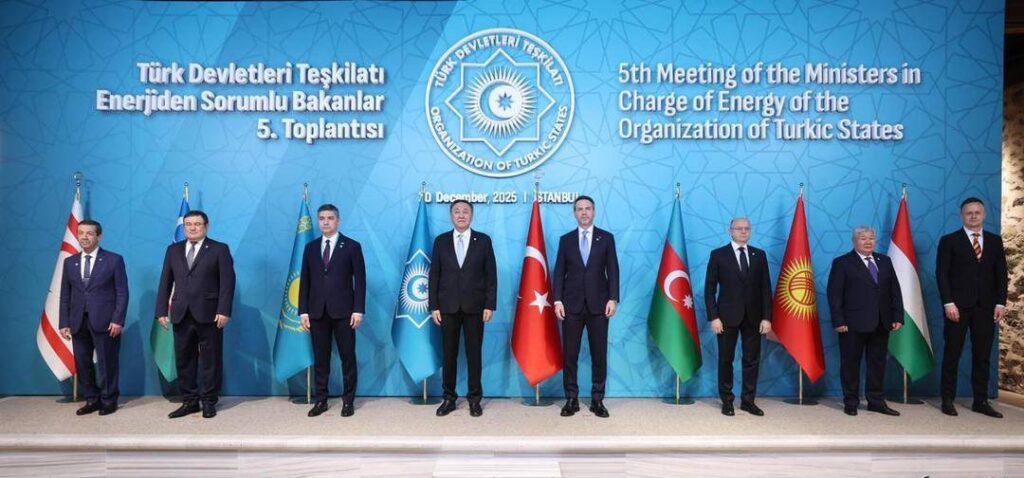
At the 5th meeting of ministers responsible for energy within the Organization of Turkic States (OTS), held on December 10 in Istanbul, OTS Secretary General Kubanychbek Omuraliev outlined major joint energy initiatives underway among member states. Founded in 2009, the OTS comprises Azerbaijan, Kazakhstan, Kyrgyzstan, Turkey, Uzbekistan, and Turkmenistan. Hungary and Northern Cyprus participate as observer states. Omuraliev touched upon the following projects: Major oil and gas routes such as the Baku-Tbilisi-Ceyhan (BTC) oil pipeline, Baku-Tbilisi-Erzurum (BTE) gas pipeline, South Caucasus Pipeline, Trans-Anatolian Natural Gas Pipeline (TANAP), Trans Adriatic Pipeline (TAP), and the Iğdır-Nakhchivan gas pipeline; A strategic partnership between Azerbaijan, Kazakhstan, and Uzbekistan to develop and transmit green energy; The Azerbaijan-Georgia-Turkey-Bulgaria Green Energy Corridor, which extends the Central Asia-Azerbaijan corridor and opens new avenues for energy exports to Europe; Construction of the Kambarata-1 Hydropower Plant in Kyrgyzstan, a project jointly developed with Kazakhstan and Uzbekistan; and A planned Black Sea submarine cable to transmit renewable energy. Omuraliev emphasized that enhanced intra-OTS cooperation bolsters both the economic potential of member states and regional energy security. Ministers at the meeting noted the significant fossil fuel and clean energy resources held by OTS members and observers, describing the region as a strategic energy bridge between Asia and Europe. They stressed that advancing practical cooperation is essential amid growing global energy demand and the accelerating energy transition. Participants agreed to move forward with joint projects under the OTS framework, including the establishment of a Regional Center for Technologies and Green Initiatives. As previously reported by The Times of Central Asia, on December 5, the Board of Governors of the Turkic Investment Fund announced in Bishkek that the fund will begin operations in the first quarter of 2026. The Turkic Investment Fund is the first dedicated financial institution jointly established by OTS member states. Headquartered in Istanbul, its mandate is to promote economic cooperation, boost intra-regional trade, and support sustainable development by financing major joint initiatives across the region.