• KGS/USD = 0.01143 0%
  • KZT/USD = 0.00216 0%
  • TJS/USD = 0.10684 -0.28%
  • UZS/USD = 0.00008 0%
  • TMT/USD = 0.28571 0%
  • KGS/USD = 0.01143 0%
  • KZT/USD = 0.00216 0%
  • TJS/USD = 0.10684 -0.28%
  • UZS/USD = 0.00008 0%
  • TMT/USD = 0.28571 0%
  • KGS/USD = 0.01143 0%
  • KZT/USD = 0.00216 0%
  • TJS/USD = 0.10684 -0.28%
  • UZS/USD = 0.00008 0%
  • TMT/USD = 0.28571 0%
  • KGS/USD = 0.01143 0%
  • KZT/USD = 0.00216 0%
  • TJS/USD = 0.10684 -0.28%
  • UZS/USD = 0.00008 0%
  • TMT/USD = 0.28571 0%
  • KGS/USD = 0.01143 0%
  • KZT/USD = 0.00216 0%
  • TJS/USD = 0.10684 -0.28%
  • UZS/USD = 0.00008 0%
  • TMT/USD = 0.28571 0%
  • KGS/USD = 0.01143 0%
  • KZT/USD = 0.00216 0%
  • TJS/USD = 0.10684 -0.28%
  • UZS/USD = 0.00008 0%
  • TMT/USD = 0.28571 0%
  • KGS/USD = 0.01143 0%
  • KZT/USD = 0.00216 0%
  • TJS/USD = 0.10684 -0.28%
  • UZS/USD = 0.00008 0%
  • TMT/USD = 0.28571 0%
  • KGS/USD = 0.01143 0%
  • KZT/USD = 0.00216 0%
  • TJS/USD = 0.10684 -0.28%
  • UZS/USD = 0.00008 0%
  • TMT/USD = 0.28571 0%

Viewing results 7 - 12 of 68

Turkmenistan Included as Trump Tightens U.S. Immigration Ban After D.C. Shooting

President Donald Trump has announced a sweeping crackdown on immigration following a deadly shooting near the White House this week, placing new scrutiny on immigrants from certain countries – including Turkmenistan. Trump vowed to “permanently pause migration” from what he called “Third World” countries after two National Guard members were shot in Washington, D.C., one of them fatally. In response, U.S. immigration authorities are re-examining green cards and visa approvals for people from 19 countries deemed “countries of concern,” a list that features Turkmenistan alongside nations in Asia, Africa, and the Middle East. New Immigration Review Follows D.C. Attack The policy shift comes in the wake of an ambush-style attack on Wednesday in which an Afghan national allegedly opened fire on U.S. service members outside the White House. Army Specialist Sarah Beckstrom, 20, died from her injuries, and another Guardsman was critically wounded. Authorities arrested Rahmanullah Lakanwal, a 29-year-old Afghan man who arrived in the U.S. in 2021, as the suspect. Trump condemned the shooting as “an act of terror” and highlighted that the suspect entered under a Biden-era Afghan resettlement program. By Thursday, Trump directed U.S. Citizenship and Immigration Services (USCIS) to conduct a “full-scale, rigorous reexamination” of all current green card holders from every “country of concern.” USCIS Director Joseph Edlow said the review was ordered “at the direction of the President” and stressed that “American lives come first.” When pressed on which nations fall under the “countries of concern,” USCIS officials pointed to Trump’s June 4, 2025, presidential proclamation on foreign entry restrictions, which identified 19 countries with deficient security vetting or high visa overstay rates. It imposed a full travel ban on 12 nations and partial visa bans on 7 others. Turkmenistan’s Status in Trump’s Travel Ban Turkmenistan is one of seven countries under partial U.S. travel restrictions, meaning certain visa categories for Turkmen nationals have currently been suspended or tightened. According to the Trump administration, Turkmenistan was flagged due to security screening gaps and a high rate of U.S. visa overstays by its citizens. U.S. officials noted that about 15.35% of Turkmen visitors on tourist visas overstayed their permitted time in recent years. Turkmenistan has also been cited for limited cooperation on repatriating its citizens who are deported from the U.S. Under the June proclamation, Turkmen nationals were barred from obtaining immigrant visas or tourist and student visas for the U.S., though other travel may be allowed on a case-by-case basis. By invoking what he called a “permanent pause” on migration, Trump signaled that even more sweeping immigration restrictions could be ahead. He wrote on social media that anyone who is “not a net asset to the United States, or is incapable of loving our Country” will be removed. For Turkmenistan, inclusion in the U.S. ban list marks a rare spotlight on the country in American immigration policy. Turkmenistan, where emigration is tightly controlled, sees low numbers of its citizens entering the U.S. Department of Homeland Security data for Fiscal Year 2023 indicates that the...

Ashgabat Police Reportedly Crack Down on Non-Resident Workers

In Turkmenistan, police raids targeting non-resident laborers seeking short-term work in the capital are intensifying, according to Turkmen.News, placing additional pressure on citizens from regions that face chronic unemployment at home. Day Laborers Targeted Police in Ashgabat have reportedly been extorting money from non-resident day laborers, threatening them with detention and forced removal from the city. These raids are concentrated near the newly opened transport hub in the Gurtly district, which recently replaced the former central interchange near the Tekin Bazaar, a long-established site for informal employment. For many from Turkmenistan’s regions, Ashgabat offers the only opportunity to earn a daily wage of $2.50 to $3.50. But this marginal lifeline is vanishing as police expel day laborers from Gurtly and threaten to drive non-residents out of the capital entirely. The area has developed its own informal employment system. Several women operate as unofficial coordinators, posing as passengers at the bus stop. They maintain notebooks filled with phone numbers, service prices, and available workers. Locals approach them with tasks, such as moving furniture or doing basic repairs, and are promptly matched with laborers who remain discreetly nearby. Raids and Intimidation Authorities appear intent on dismantling this system. Eyewitnesses say police conduct daily patrols in Gurtly, stopping young men, checking residency documents, and confiscating their earnings. The money is allegedly pocketed by officers, with no official record kept. Victims report being insulted, intimidated, and threatened with deportation to their home provinces before being released following brief “educational conversations.” Such operations are not new. In late October, Ashgabat police issued mass fines to non-resident taxi drivers. During the summer’s UN forum in Avaza, day laborers in Turkmenbashi were reportedly detained en masse, held in temporary facilities, and then forcibly returned to their home region. These actions are part of what appears to be an ongoing, unofficial campaign of pressure against internal migrants. Erasing Poverty from the Capital’s Image Some Ashgabat residents believe the relocation of the main bus hub to the outskirts is part of a broader strategy to conceal poverty behind the capital’s polished facade. “This is an attempt to cleanse the capital of any hints of the real, unsightly side of life,” one resident remarked. Income levels outside the capital remain significantly lower. For many families, irregular work in Ashgabat is their only source of supplemental income. Yet instead of addressing inequality, observers argue that authorities are reinforcing regional discrimination, further marginalizing non-resident workers.

State Workers in Turkmenistan Once Again Forced to Fund Cotton Harvest

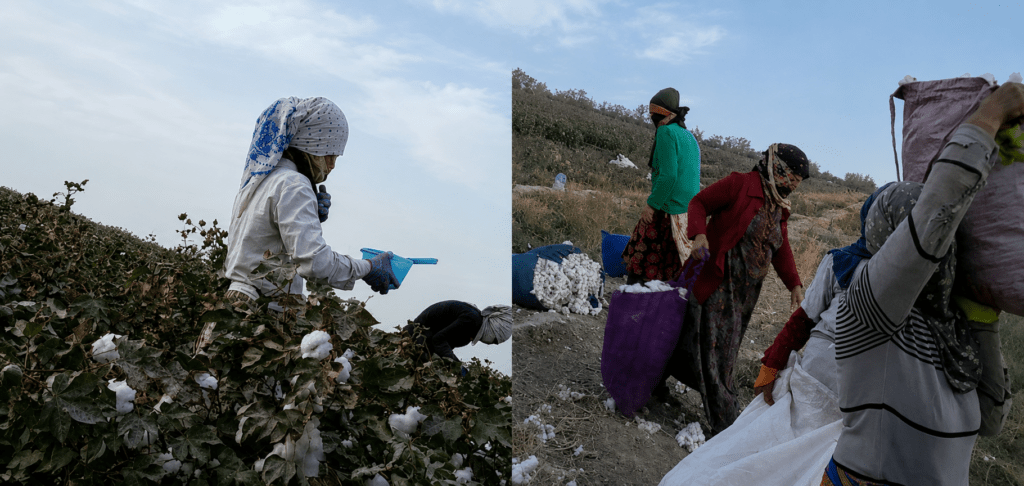
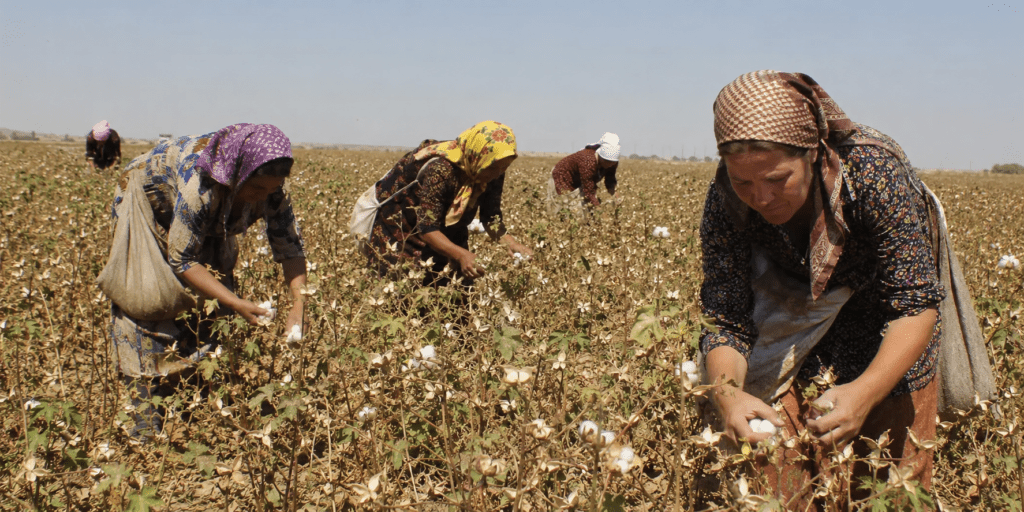
As the cotton harvest begins in Turkmenistan, reports from the independent outlet turkmen.news indicates that the annual season is once again marred by forced labor practices. Pay or Work the Fields In Lebap and Mary provinces, state employees, including teachers, doctors, and workers from the Turkmenabat silk production association and a local knitwear factory, are being compelled to contribute financially toward the harvest. The daily levy stands at 30 manats (approximately $1.50). Since August 3, similar demands have reportedly extended to medical and educational staff in Mary province. As in previous years, state workers are frequently presented with a coercive “choice”: pay for a replacement harvester or work in the fields themselves. Some avoid field labor by sending their children in their place. Reform Promises Fall Short In 2024, the Turkmen government, in cooperation with the International Labour Organization, unveiled a roadmap for eradicating forced labor in the cotton industry. The plan outlined key measures to safeguard workers’ rights and address systemic abuses. Despite this, rights groups, including the Turkmen Initiative for Human Rights, the Progres Foundation, and the Cotton Campaign, warn that little can change while the state maintains total control over the cotton supply chain, from seed distribution to raw cotton procurement. These organizations argue that genuine reform requires guarantees of free speech and the right to organize, allowing citizens to report abuses and form independent trade unions. In reality, however, workplace union leaders are reportedly tasked with collecting money from employees and organizing labor schedules. Experts note that this top-down mobilization underscores the state-driven nature of the system, perpetuating a cycle of coercion rather than addressing its root causes.

UN Special Rapporteur Urges Turkmenistan to Release Activist Murat Dushemov

Mary Lawlor, the United Nations Special Rapporteur on the situation of human rights defenders, has called for the immediate release of Turkmen civil activist Murat Dushemov, who was recently re-imprisoned under disputed circumstances. Lawlor stated that the new charges against Dushemov are fabricated and appear to be retaliation for his peaceful activism and exercise of free expression. “I will closely monitor the trial of civil activist Murat Dushemov, who has been in prison since 2021 and is now facing new criminal charges in apparent retaliation for his peaceful activism and for exercising his freedom of expression in Turkmenistan. I call for his immediate release,” Lawlor posted on X. Her call was echoed by the Regional Office for Central Asia of the UN High Commissioner for Human Rights, which reaffirmed support for Dushemov’s release. Renewed Persecution As previously reported by The Times of Central Asia, Dushemov was originally scheduled for release on June 14, after serving a four-year sentence. However, just days before his expected release, he was transferred to a pre-trial detention facility in Turkmenabat. Authorities have accused him of participating in a prison altercation, an allegation he claims is entirely fabricated. "The person who wrote the statement against me started banging his head against the wall, injuring himself and staining the wall with his blood. They want to slander me again to prolong my stay here," Dushemov reportedly said. Despite assurances from Prosecutor Agajan Nuryev that a hearing would take place in mid-July, no trial date has been announced. Details remain withheld even from Dushemov’s family, in clear violation of Turkmenistan’s judicial transparency laws. Background and First Conviction Dushemov was first detained in 2021. He was convicted of extortion and causing bodily harm and sentenced to four years in prison. Human rights groups say the trial was politically motivated, noting that Dushemov had openly criticized the government’s pandemic response, including mandatory mask policies and vaccination campaigns, which he considered unlawful. The initial charges centered on two incidents: an alleged extortion attempt involving a chief doctor, and accusations of assault made by fellow inmates, claims that mirrored the current allegations against him. Widening International Support Several human rights organizations have joined the campaign to secure Dushemov’s release. These include the Norwegian Helsinki Committee, Turkmen.News, the Turkmen Human Rights Initiative, the International Partnership for Human Rights, and the Association for Human Rights in Central Asia. “The authorities must drop the new criminal charges brought against civil activist Murat Dushemov as clear retaliation for his activities and release him immediately,” the organizations said in a joint statement. They also urged Turkmenistan’s international partners to pressure Ashgabat to cease persecution of activists, journalists, and dissenters. Human Rights Watch has also issued a statement supporting Dushemov, calling for his “immediate and unconditional” release and demanding an end to abuses prolonging his detention. Lawlor has previously highlighted rights violations in Turkmenistan. In April, she called for an investigation into the alleged poisoning of independent journalist Soltan Achilova. She is also monitoring the case of Baloch...

U.S. Senator Says Epstein Targeted Women, Girls in Turkmenistan, Other Countries

Is there a Central Asia connection to the Jeffrey Epstein sex trafficking investigation? U.S. Senator Ron Wyden, a Democrat, is urging the U.S. Department of Justice to trace financial transactions that he says show Epstein used Russian banks to process payments in a sex trafficking scheme that targeted women from Turkmenistan and other countries. Wyden, the top Democrat on the Republican-controlled Senate Finance Committee, said in a statement this month that committee investigators were allowed to look at some Epstein records in the Treasury Department building while President Joe Biden was in office last year. The files detail several thousand wire transfers totaling more than $1 billion going in and out of just one of Epstein’s bank accounts, he said. “The file shows Epstein used multiple Russian banks, which are now under sanctions, to process payments related to sex trafficking,” Wyden said. “A lot of the women and girls he targeted came from Russia, Belarus, Turkey, and Turkmenistan. You shudder to think about the kinds of people who must have been involved in trafficking these women and girls out of those countries and into Epstein’s web of abuse.” The administration of President Donald Trump had promised openness in the Epstein case but has since angered some supporters by declining to release more documents about the disgraced financier, who died in jail in 2019 while awaiting trial after being charged with the sex trafficking of minors. The official cause of death was suicide. Conspiracy theories have swirled over the circumstances of Epstein’s death, his relationships with wealthy and influential people, and how he was able to avoid scrutiny for so long. Investigative journalist Julie K. Brown, who conducted key reporting on the Epstein case, noted Wyden’s efforts as well as what she described as “some resistance” from justice and treasury officials. She spoke in an interview with The Daily Beast podcast this week. “Senator Ron Wyden is looking into the financial aspect of Epstein’s crimes and there’s some evidence that he was doing business overseas and I think that’s the next front that we have to look at, is to follow the money – how he made his money, who he was paying, who he was getting money from,” said Brown, author of Perversion of Justice: The Jeffrey Epstein Story. Turkmenistan has not made significant efforts to meet basic standards for the elimination of human trafficking but has taken some steps to address the problem, according to a U.S. Department of State report in 2024.

Travel Ban Overturned: Turkmen Woman and Her Daughter Rejoin Family in Turkey

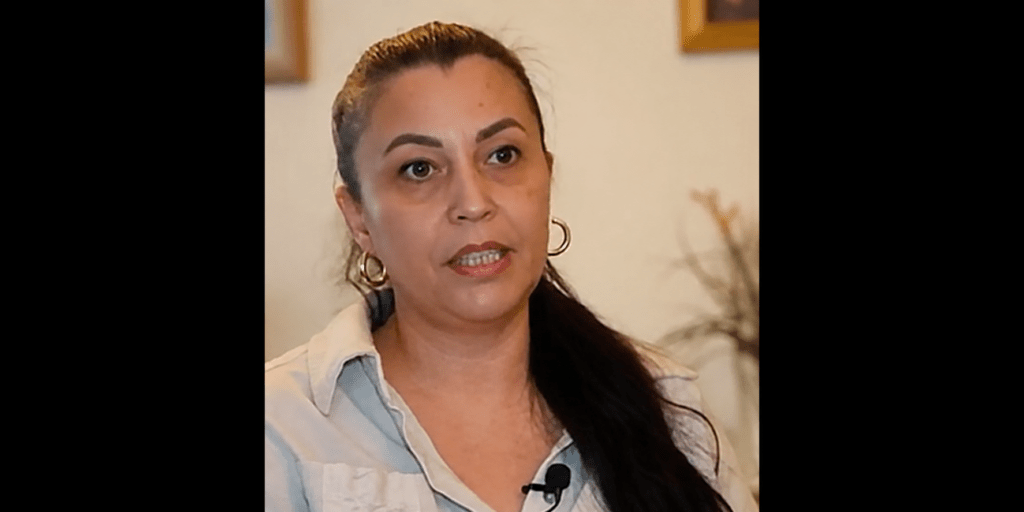
After nearly a year of separation, Zulfiya Kazhir and her six-year-old daughter Sena have finally been allowed to leave Turkmenistan and reunite with their family in Turkey. The case drew widespread public attention after the pair, Zulfiya, a Turkmen citizen, and Sena, a Turkish citizen, were detained while attempting to leave the country in September 2024. The long-awaited reunion took place on July 15, and a video capturing the emotional moment was shared on TikTok by Zulfiya’s husband, Turkish national Ahmed Sefa Kacir.   A Sudden Separation In the summer of 2024, Zulfiya traveled to Turkmenistan with Sena to renew her documents. However, their scheduled return flight on September 18 was abruptly halted when Zulfiya was denied boarding at Ashgabat airport. Authorities cited her temporary placement on a no-fly list, though no further explanation was provided at the time. Only later did Turkmenistan’s migration service inform her that she was subject to a travel ban. Despite numerous appeals to both Turkmen and Turkish authorities, the family’s efforts to lift the restriction proved unsuccessful for many months. The situation was especially dire due to Sena’s medical and developmental needs. Diagnosed with gluten intolerance and autism spectrum disorder, she requires a specific diet, regular hygiene protocols, and access to developmental therapy, services largely unavailable in Turkmenistan. Collective Punishment After nearly ten months of legal and diplomatic stalemate, Zulfiya learned that the travel ban was linked to her brother’s alleged involvement in armed conflicts in Syria. Although he had not lived in Turkmenistan for over 20 years and Zulfiya had no contact with him, her name was included on a restricted travel list alongside other relatives, a practice critics describe as a form of collective punishment. A Direct Plea to the President As previously reported by The Times of Central Asia, frustrated by the lack of progress, Zulfiya recorded a video appeal to President Serdar Berdimuhamedov, calling for an end to the restriction on her freedom of movement. In the message, she identified her family as ethnic Tatars and explained that her mother and sister also hoped to leave for Tatarstan, their ancestral homeland. “Let me and my daughter return home,” she pleaded in the video, which was widely circulated online. Shortly afterward, the travel ban was lifted. On July 15, her husband posted a video from the airport showing the family’s emotional reunion, filled with hugs, tears, and relief, marking the conclusion of their nearly year-long ordeal.