• KZT/USD = 0.00218
  • TJS/USD = 0.10810
  • UZS/USD = 0.00009
  • TMT/USD = 0.29850
  • KZT/USD = 0.00218
  • TJS/USD = 0.10810
  • UZS/USD = 0.00009
  • TMT/USD = 0.29850
  • KZT/USD = 0.00218
  • TJS/USD = 0.10810
  • UZS/USD = 0.00009
  • TMT/USD = 0.29850
  • KZT/USD = 0.00218
  • TJS/USD = 0.10810
  • UZS/USD = 0.00009
  • TMT/USD = 0.29850
  • KZT/USD = 0.00218
  • TJS/USD = 0.10810
  • UZS/USD = 0.00009
  • TMT/USD = 0.29850
  • KZT/USD = 0.00218
  • TJS/USD = 0.10810
  • UZS/USD = 0.00009
  • TMT/USD = 0.29850
  • KZT/USD = 0.00218
  • TJS/USD = 0.10810
  • UZS/USD = 0.00009
  • TMT/USD = 0.29850
  • KZT/USD = 0.00218
  • TJS/USD = 0.10810
  • UZS/USD = 0.00009
  • TMT/USD = 0.29850
26 August 2026

Viewing results 25 - 30 of 150

An Early European View of Nomadic Central Asia

During a period when Central Asia remained largely unknown to European audiences, Among Kirghiz and Turkimans offered Western readers a rare first-hand account of the vast steppe and desert regions. The book was written in the late nineteenth century by Richard Karutz, a German traveler whose work belongs to the broader tradition of European exploratory travel literature. I first encountered this book while studying in the United States and later incorporated it into my research. A copy preserved in the library of the Catholic University of America in Washington, D.C., was published in Leipzig in 1911. Since then, it has been regarded as one of the more noteworthy works in early European writing on Central Asia. Who Was Richard Karutz? Richard Karutz was a late nineteenth-century German traveler and writer who journeyed through parts of the Russian Empire’s Central Asian territories. Though not widely known today compared to some British or Russian explorers, Karutz represents a generation of European intellectuals fascinated by the perceived “frontier zones” of empire, regions seen as remote, exotic, and culturally distinct. [caption id="attachment_44400" align="aligncenter" width="312"] Richard Karutz[/caption] He was neither a colonial administrator nor a military officer; rather, he traveled as an independent observer. His writings reflect the curiosity of an educated European shaped by the intellectual currents of his era, including Orientalism and the growing interest in ethnography. Like many travelers of his time, Karutz sought to document ways of life he believed were on the verge of transformation under imperial modernization. Across the Steppe and Desert In Among Kirghiz and Turkimans, Karutz traveled among communities then commonly referred to in Russian and European sources as “Kirghiz”, a historical term often applied to Kazakhs, as well as Turkmen tribes. His route took him across vast grasslands, caravan routes, and oasis settlements shaped by pastoral migration, tribal organization, and Islamic traditions. Rather than producing an official report or military survey, Karutz wrote in a personal and descriptive style typical of travel literature. His narrative often reads as impressionistic reflection rather than systematic analysis. He documents everyday life, including nomadic encampments and felt yurts, equestrian culture and elaborate codes of hospitality, tribal leadership and clan loyalty, as well as desert trade routes and caravan movement. Mangyshlak, a peninsula on the eastern coast of the Caspian Sea in present-day Kazakhstan, features prominently in his descriptions. Significant mineral deposits were later discovered there, leading to its designation as a “peninsula of treasures.” Mangyshlak is characterized by stark desert landscapes and was once described as a barren land consisting largely of sand and stone. In the Middle Ages, it served as a gateway for trade between East and West. The region also played a role in the early history of Turkmen communities. Karutz’s writing attempts to capture both the hardship and the quiet grandeur of steppe existence. Depicting Nomadic Society A central strength of the book lies in its attention to social organization. Karutz was particularly struck by the mobility of Kazakh life, seasonal migrations, a livestock-based economy, and...

Storms and Abnormal Heat: Turkmenistan Experiences Severe Weather

From February 20 to 22, dust storms with storm-force winds swept across Turkmenistan. The storm damaged greenhouses and crops in a number of regions, and the week was memorable not only for the destruction it caused but also for the historic temperature records it set. Strong winds hit the country on February 20. In the Akhal region, gusts reached 18-23 m/s, and in the Mary region, 17-22 m/s. On the Beaufort scale, these readings are classified as storm force. In other regions, the wind was also very strong. Dust storms broke out in the east of the country and in some parts of the Ahal region. In the town of Turkmenabat, wind speeds reached 23 m/s, and visibility was reduced to 500 meters. Similar readings were recorded in the towns of Serkhetabat and Bayramali. In the town of Mary, visibility dropped to 300 meters, and in the village of Tagta-Bazar to only 200 meters. The storm knocked down trees, damaged road signs, and affected some buildings. The most significant damage occurred in rural areas. In the Mary and Lebap region, private farms and plots were affected. The wind blew away greenhouses, and their frames collapsed directly onto the beds, destroying cucumbers, tomatoes, and other crops. Flower growers also suffered serious losses. Many had expanded their acreage and hired additional workers to prepare for the peak sales period around March 8, but the storm deprived them of their harvest and any chance of compensating for months of low demand. The region has previously faced the devastating effects of natural disasters. In 2020, a hurricane caused extensive damage in the Mary and Lebap regions, knocking down buildings and trees and claiming dozens of lives. Some families have still not recovered from those events. At the same time, despite the regular occurrence of strong winds, no effective system has been created to protect farms and the population from such phenomena. As noted by Meteozhurnal, the current weather situation is due to the northwestern intrusion of air masses. High wind speeds continued on February 23, prolonging the period of adverse conditions. The week was marked not only by storms but also by unprecedented heat. For several days, temperatures were more typical of April or May. The peak occurred on February 19, 2026.  In the city of Esenguly in the Balkan region, located in the southwest of the country on the coast of the Caspian Sea, the temperature reached 36.2°C. This is the absolute maximum in the history of meteorological observations in Turkmenistan. The previous record of 32.9°C was set in 1946 in Serakhs, Akhal region. On the same day, temperatures above 30°C were recorded in several regions. In the Balkan region, the thermometer rose to 33.4°C in the town of Etrek and 30.6°C in Makhtumkuli. In Baharden, Akhal region, it reached 33°C. Records were also broken in other cities, albeit with lower values.

The Language Nobody Wants to Speak About: Russian’s Uneasy Place in Central Asia’s Cultural Conversation

Rhetoric in segments of the Russian media has sharpened debates over sovereignty and influence across Central Asia, pushing these concerns beyond policy circles and into everyday conversations. The region is reassessing not only pipelines and alliances, but language itself. In politics, this shift is visible and symbolic. In culture, it is more difficult to discern. The Russian language still shapes how Central Asian art is funded, circulated, and institutionally processed, even as institutions distance themselves from Moscow’s influence. This contradiction sits at the heart of contemporary cultural life in the region. Artists produce work rooted in Kazakh, Uzbek, Kyrgyz, Tajik, or Turkmen histories. They title exhibitions in local languages. They speak passionately about decolonial futures and cultural sovereignty. But when the catalogue is written, the grant application submitted, or the curatorial text sent abroad, the language quietly shifts. First to Russian, sometimes to English, and only occasionally does it remain in the local language. This is not nostalgia, but a structural inheritance. Russian remains the shared professional language of much of the urban cultural sector. Edward Lemon, President of the Oxus Society for Central Asian Affairs, argues that the language’s endurance reflects both ideology and pragmatism. “While local languages have become much more widespread as the Central Asian republics have strengthened their nationhood and as there has been an increase in anti-Russian sentiments since the invasion of Ukraine, Russian language use remains widespread,” Lemon told TCA. “Despite the ideological imperative to reduce reliance on Russian, there are some pragmatic reasons why it remains prominent. High levels of migration to Russia, particularly from Uzbekistan, Kyrgyzstan, and Kazakhstan, mean that a basic competence in the language is essential to survival for many Central Asians. Russian remains a language of interethnic communication, particularly in Kazakhstan, where ethnic Russians, for the most part, are reluctant to speak Kazakh. While English has become more widespread and some of the Central Asian languages are mutually intelligible, Russian retains a status as a diplomatic, business, and civil society language for those working in multiple countries. Russia also remains a language of education. Over 200,000 Central Asians study in Russia, by far the largest destination in the world. Russian-language schools remain prominent at every level in Central Asia, from kindergarten to graduate schools. In short, while the usage of Russian is in slow decline, its position is relatively entrenched.” For cultural institutions, this reality means that distancing from Moscow politically does not automatically sever the linguistic infrastructure through which grants are written, exhibitions travel, and contracts are signed. Naima Morelli, an arts writer focused on contemporary art across Asia-Pacific and the Middle East, argues that the issue is less about elimination than coexistence. “For me, it makes sense that Russian continues to function as a practical operating language across Central Asia’s cultural infrastructure, as an inherited connective tissue of sorts. In the hypothesis of getting rid of it, the most obvious alternative for a shared language for exchanges across countries in Central Asia is English, which the global...

On the Eve of Valentine’s Day: Customs of Love and Marriage in Central Asia

On the eve of Valentine’s Day, Central Asia is once again debating whether to celebrate the holiday or regard it as a symbol of foreign influence. Yet the region has its own rich and diverse customs related to love, matchmaking, and marriage. Accusations of Alien Influence and “Corruption” Valentine’s Day, like Halloween, spread to the former Soviet republics after the collapse of the USSR. In the first decades, young people embraced the new holidays. In recent years, however, critics have increasingly argued that commemorating a Catholic saint in a format centered on romantic love contradicts the traditions of the region’s peoples. For example, in Kazakhstan last year, deputies of the Mazhilis, the lower house of parliament, sharply criticized Valentine’s Day. Some deputies argued that it corrupts young people, promotes “free love,” and even carries “homosexual overtones.”  It is worth noting that Kazakhstan recently adopted legislation prohibiting so-called “propaganda of non-traditional sexual relations.” The Spiritual Administration of Muslims of Kazakhstan has also stated that Valentine’s Day promotes alien values and encourages promiscuity. Gratitude for Raising a Daughter Many matchmaking and marriage customs remain common across Central Asia, particularly the significant role of the bride’s and groom’s parents in ceremonies and celebrations. While traditions have evolved, many are still practiced in modern engagements and weddings. The well-known custom of paying bride price, kalym, has been preserved, though it has undergone significant change. Today, kalym varies depending on the wealth of the families. It may include apartments or cars, or it may amount to several hundred dollars. Importantly, kalym is now generally regarded as financial support for the young family and, as a rule, remains at the disposal of the bride and groom. Historically, in Kazakhstan and Kyrgyzstan, kalym was paid in livestock, and wedding celebrations could last more than a month.  One of the main Kazakh wedding rituals is the groom’s visit to the bride’s village or, in modern practice, her home. Before his first visit, the groom sends gifts to the bride’s family, known as Ilu,  an expression of gratitude for raising their daughter. In some regions of Kazakhstan, this ritual is called ana suty (“mother’s milk payment”). In the past, it included horses, camels, sheep, and riding equipment for the bride’s father. Today, it may consist of any valuable gift, and jewelry is often presented to the women in the bride’s family. The bride traditionally gives the groom a scarf as a symbol of her purity. Festivities then begin, with singing and dancing. Kazakh traditions often involve two weddings: one at the bride’s home and one at the groom’s. The bride’s farewell from her family home remains especially significant, reflecting her relatives’ wishes for her future life. Today, this ceremony is often held in a restaurant. The bride does not wear a white wedding dress at the farewell celebration but appears in an elegant outfit and a traditional headdress known as a saukele. During the farewell, the groom and his friends are subjected to playful pranks, for which they must...

Turkmen Football Fans Moved to Worse Seats for Match with Cristiano Ronaldo’s Al-Nassr

Fans who have bought tickets to the upcoming Asian Champions League match between Turkmenistan's Arkadag and Saudi Arabia’s Al-Nassr on February 11 have been informed, sometimes repeatedly, that their seats are being changed to make room for “organized support” groups. According to a source in Ashgabat, notifications are being sent via users’ personal accounts on ticketing platforms. The vacated sections, the source said, are being allocated to students who are reportedly being trained in advance to provide choreographed support for the home team. Affected spectators are often offered seats with worse visibility, and in many cases, fans, especially families and groups, are being split across different sectors of the stadium, making it nearly impossible to watch the match together. Public frustration has grown as a result. “A 45,000-seat stadium was specifically allocated for this match. If officials had plans for some sections, they could have decided in advance and sold tickets accordingly. If they can’t even organize one match properly, how can we expect them to handle more serious events?” the source said. Some fans have opted not to attend the match at all, despite having already paid for tickets. Others are seeking to resell their tickets, though doing so is complicated. Ticket purchases required passport details, and it is believed that ID checks may be enforced at the gates, making resale risky. Adding to the discontent is the asymmetry in ticketing policy: the Ashgabat city administration’s ticket regulations prohibit buyers from exchanging or returning tickets, while allowing organizers to unilaterally reassign seats. According to reports, the most prominent seating sections will not be occupied by club supporters, but by students compelled to rehearse chants and routines for the game. Arkadag will host Al-Nassr in the last 32 round of the AFC Champions League. The Saudi club’s lineup includes global football star Cristiano Ronaldo. The return leg is scheduled to take place in Saudi Arabia on February 17 or 18.

Between Statistics and Reality: What the UNICEF Report Reveals About Children in Turkmenistan

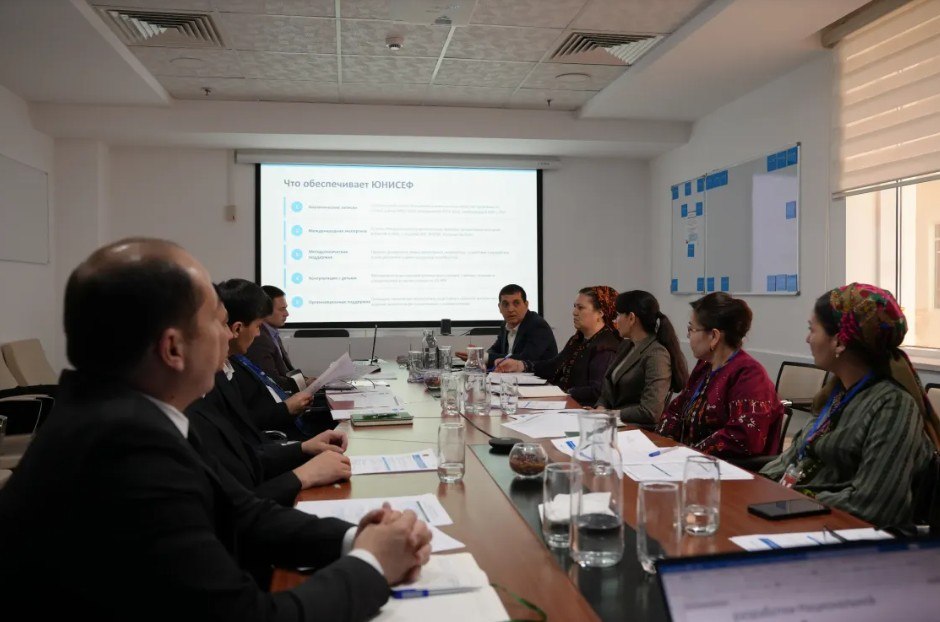
The State Committee on Statistics of Turkmenistan, in partnership with UNICEF, has released the report “Census 2022 - The Situation of Children in Turkmenistan”. However, as noted by independent outlet turkmen.news, the report is based on official census data that many experts consider unreliable or inflated, potentially skewing the findings. Despite these concerns, the report offers insight into the country’s demographic and social trends. According to the report, Turkmenistan has a notably “young” population: children aged 0-14 make up 30.7% of the total. In total, 2,463,258 individuals under the age of 17 account for more than one-third of the population. However, a decline in the birth rate is evident: there are 1.2 times fewer children in the 0-4 age group compared to those aged 5-9. Household composition data reveals that families with three or more children are the most common, comprising 43% of all households nationally and 48.9% in rural areas. Families with two children account for 31.1%, and those with one child, 25.9%. This distribution correlates with a broader demographic pattern, 57.8% of all children in Turkmenistan live in rural areas. The demographic dependency ratio remains high: there are 755 dependents per 1,000 working-age individuals. Notably, the child dependency rate is 4.3 times higher than that of the elderly, suggesting a sizable future labor force. The urban-rural divide is also apparent here: in rural areas, the child dependency ratio is 698, compared to 525 in urban centers. The report addresses early marriage and childbirth: among 15-17-year-olds, 1,349 boys (0.9%) and 1,770 girls (1.2%) were in either registered or de facto marriages. Within the same age group, 339 girls had already given birth. The highest rate of teenage births was recorded in Akhal region (4.2 per 1,000), while Ashgabat reported the lowest (1.2 per 1,000). Childhood disability statistics show mobility and stair-climbing difficulties are the most prevalent, affecting 3,106 children aged 5-17. Other reported issues include concentration and memory problems (1,989 cases), hearing impairments (1,791), and visual impairments (1,784). In all categories, boys outnumber girls. One of the most striking disparities is in preschool access. Only 23.8% of children in rural areas attend preschool, compared to 64.7% in urban areas, a rural-urban equity index of just 0.37. Given that the majority of children live in rural areas, the gap reflects systemic challenges, including insufficient infrastructure, transportation issues, and household dynamics where caregiving typically falls to women. Enrollment rates improve significantly for older children. Nearly all children aged 6-15 are in school, with only 0.3-0.4% not attending. However, the dropout rate increases in older age groups, with 5.4% of adolescents not enrolled in school or vocational institutions. No significant gender disparities were observed in this regard. Despite the insights the report offers, it is underpinned by 2022 census data that many independent experts argue is inflated. While Turkmenistan's official population stands at around 7 million, alternative estimates range between 2.7 and 5.7 million. Nevertheless, the release of this report marks a step toward a more open dialogue about the country’s social...