• KZT/USD = 0.00220
  • TJS/USD = 0.10860
  • UZS/USD = 0.00008
  • TMT/USD = 0.29850
  • KZT/USD = 0.00220
  • TJS/USD = 0.10860
  • UZS/USD = 0.00008
  • TMT/USD = 0.29850
  • KZT/USD = 0.00220
  • TJS/USD = 0.10860
  • UZS/USD = 0.00008
  • TMT/USD = 0.29850
  • KZT/USD = 0.00220
  • TJS/USD = 0.10860
  • UZS/USD = 0.00008
  • TMT/USD = 0.29850
  • KZT/USD = 0.00220
  • TJS/USD = 0.10860
  • UZS/USD = 0.00008
  • TMT/USD = 0.29850
  • KZT/USD = 0.00220
  • TJS/USD = 0.10860
  • UZS/USD = 0.00008
  • TMT/USD = 0.29850
  • KZT/USD = 0.00220
  • TJS/USD = 0.10860
  • UZS/USD = 0.00008
  • TMT/USD = 0.29850
  • KZT/USD = 0.00220
  • TJS/USD = 0.10860
  • UZS/USD = 0.00008
  • TMT/USD = 0.29850
03 November 2026

Viewing results 19 - 24 of 52

Opinion: Trump Has Golden Opportunity to Launch C6+1 on Sidelines of UN

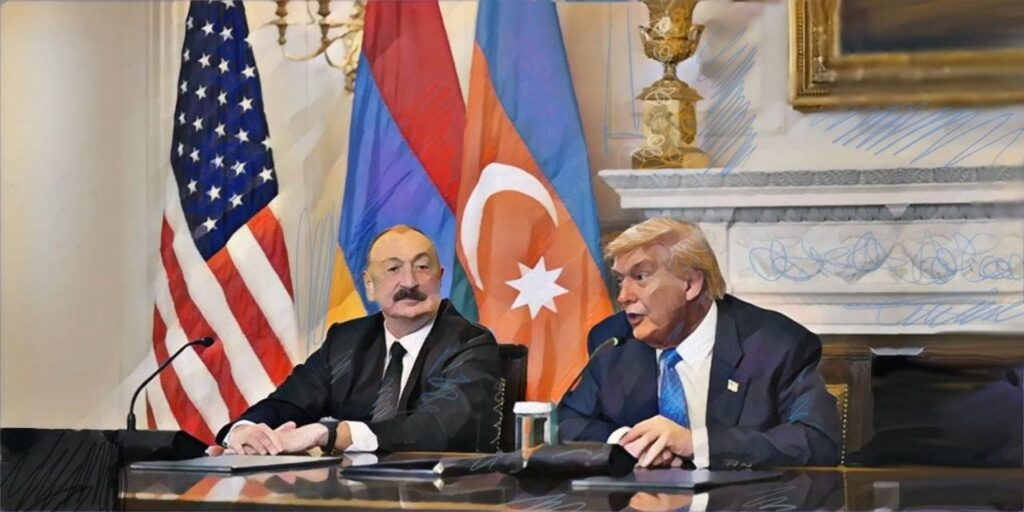
Representatives of the five Central Asian states — Kazakhstan, Uzbekistan, Kyrgyzstan, Tajikistan, and Turkmenistan — along with Azerbaijan, are expected in New York for the United Nations General Assembly in September. Historically, meetings between the Central Asian states and the United States – the C5+1 – have taken place on the sidelines of the United Nations. It is the most natural and logistically efficient venue for President Donald Trump to re-engage with the C5 partners he hosted at the White House last November. As of now, only foreign ministers are expected to attend the UNGA. But this could change if Trump extends an invitation to the leaders, according to a Central Asian diplomatic source. This time, however, he has the opportunity to add Azerbaijan, transforming the format into a C6+1. Baku has already been invited to participate as a full member in Central Asian gatherings, and Washington should build on that momentum. Azerbaijan is uniquely positioned: close to both Israel and Turkey – two of America’s most important regional partners – it sits astride one of the most important connectivity corridors linking Europe and Asia. Its inclusion would turn the C5+1 into a genuinely trans‑Caspian framework that reflects the emerging realities of Eurasian integration. The move would also link two major diplomatic achievements of Trump’s second term: the launch of the Trump Route for International Peace and Prosperity (TRIPP), a 43-km strategic transit corridor connecting mainland Azerbaijan to its Nakhchivan exclave through Armenia, and Trump’s elevation of the C5+1 to a White House-level summit. While TRIPP was discussed at the C5+1 meeting in November, bringing Azerbaijan into the next gathering would allow the administration to present itself as the architect of a new Eurasian trade and energy map. Strategically, a C6+1 format carries significant implications for great-power competition with China. This is because Central Asia is so crucial to Beijing’s grand strategy. In its recently adopted 15th five-year plan, neighborhood diplomacy is listed as the top priority — ahead of relations with major powers or developing countries. Beijing seeks to build a “community with a shared future” with 17 neighboring states, including all five in Central Asia, to “create a favorable external environment” for national rejuvenation, as Foreign Minister Wang Yi has stated. For China, Central Asia is a vital “hinterland” for energy and resource security, and a buffer against maritime disruptions. The United States does not need to dominate the Eurasian Heartland or force Central Asian states to choose between Washington and Beijing. It simply needs to ensure that any Chinese westward access runs through a vast landmass of countries that maintain constructive relations with the United States. A C6+1 format helps shape that environment without confrontation. A stable Middle Corridor – the energy and trade route running through Central Asia, across the Caspian Sea and through Azerbaijan to Turkey and the Mediterranean – also benefits America's energy-hungry allies in Asia, such as Japan and South Korea. Both increasingly look to Kazakhstan as an alternative oil supplier as they...
Opinion: Islamic State Khorasan Province and the Strategic Risks for Central Asia

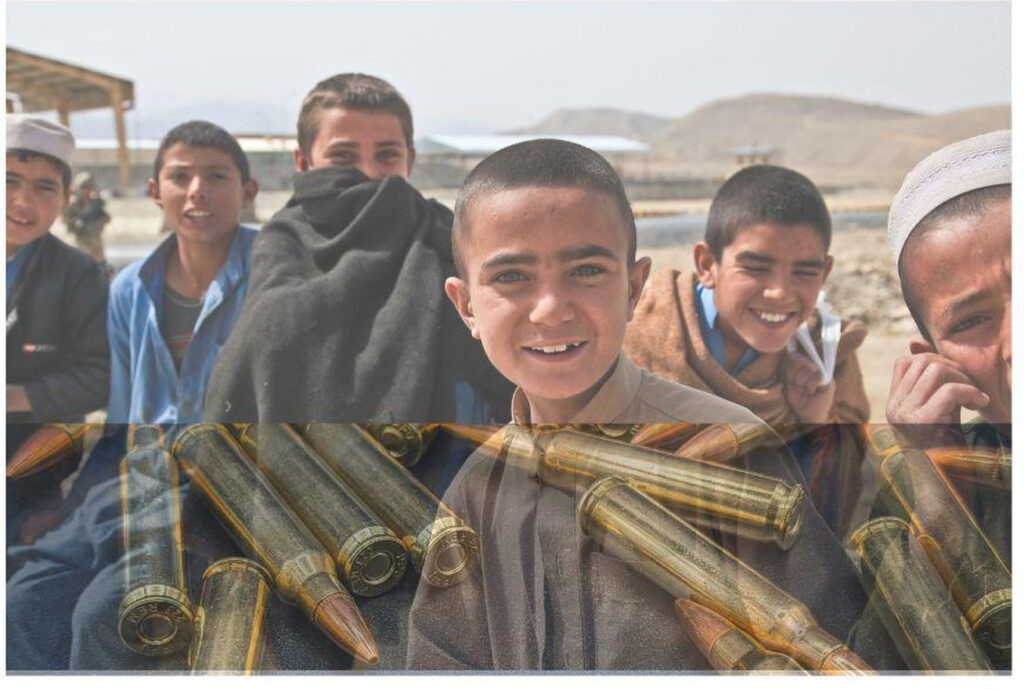
In modern Eurasia, threats are increasingly becoming part of the strategic environment. At times, they even turn into political instruments. When discussing terrorism, analysis usually focuses on the level of danger it poses. Far less attention is given to whether such threats are assumed to be manageable. The problem lies not only in the existence of radical groups, but also in the illusion that they can be controlled or used to serve someone’s strategic interests. Iranian analyst Nozar Shafiee, writing for the Tehran-based Institute for East Strategic Studies, describes ISKP as a decentralized and transnational network that can continue operating even after losing territorial control. This perspective is rarely discussed in public analysis of the region, which is precisely why it deserves attention. Islamic State Khorasan Province (ISKP), the Afghan branch of the Islamic State group operating in Afghanistan and Pakistan, with demonstrated intent for external operations, has long ceased to depend on localized footholds. Even after losing territorial control, the organization did not disappear. Instead, it transformed. Today, it functions as a flexible network of small cells. It no longer needs to control a city or province to remain dangerous. It relies on the internet for recruitment and propaganda, operates through autonomous groups, and conducts high-profile attacks designed to attract attention and create an atmosphere of instability. However, there is another aspect that receives far less attention. In the context of regional competition, there is sometimes a temptation to view such structures as potential proxy forces, instruments of pressure that could theoretically be restrained or directed in a desired direction. The logic is simple: as long as the threat is not directed at us, it can be treated as part of a broader geopolitical game. History, however, demonstrates that this is a dangerous illusion. Radical networks do not function as controllable instruments. They operate according to their own logic and eventually move beyond the limits within which they were meant to be contained. There are numerous historical examples in which support for radical groups as a temporary strategic tool has “backfired.” Organizations created or supported for tactical purposes eventually began acting autonomously and turned their weapons against their former patrons. As Western analysts often note, supporting proxies who do not share your ideological legitimacy inevitably carries the risk that they will eventually turn against you. This represents a key risk for neighboring regions. Unlike traditional conflicts, networked extremist structures are not confined to a single territory. Their influence spreads through digital platforms, ideological narratives, and transnational connections. Even if attempts to instrumentalize such groups occur far from the region’s borders, the consequences can still affect it directly. This discussion is particularly relevant for Central Asia. First, modern terrorism no longer depends on physically crossing borders. In the mid-2010s, several thousand individuals from Central Asian countries became involved in conflicts in Syria and Iraq. Recruitment did not take place primarily through physical training camps but through online networks. Geographic distance offered little protection. Second, ISKP propaganda materials are distributed in Central...

Opinion: Afghanistan and Central Asia – Security Without Illusions

Over the past year, Afghanistan has become neither markedly more stable nor dramatically more dangerous, despite how it is often portrayed in public discourse. There has been neither the collapse that many feared, nor the breakthrough that some had hoped for. Instead, a relatively unchanged but fragile status quo has persisted, one that Central Asian countries confront daily. For the C5 countries, Afghanistan is increasingly less a topic of speculative discussion and more a persistent factor in their immediate reality. It is no longer just an object of foreign policy, but a constant variable impacting security, trade, humanitarian issues, and regional stability. As such, many of last year’s forecasts have become outdated, based as they were on assumptions of dramatic change, whereas the reality has proven far more inertial. Illusion #1: Afghanistan Can Be Ignored The belief that Afghanistan can be temporarily “put on the back burner” is rooted in the assumption that a lack of public dialogue or political statements equates to a lack of interaction. But the actions of Central Asian states show that ignoring Afghanistan is not a viable option, even when countries intentionally avoid politicizing relations. Turkmenistan offers a clear example. Ashgabat has maintained stable trade, economic, and infrastructure ties with Afghanistan for years, all with minimal foreign policy rhetoric. Energy supplies, cross-border trade, and logistical cooperation have continued despite political and financial constraints, and regardless of international debates over the legitimacy of the Afghan authorities. This quiet pragmatism stands in contrast to both isolationist strategies and symbolic or ideological engagement. Turkmenistan may avoid making public declarations about its relationship with Afghanistan, but it nonetheless maintains robust cooperation. This calculated calmness reduces risks without signaling disengagement. Importantly, this approach does not eliminate structural asymmetries or deeper vulnerabilities. But it dispels the illusion that distancing reduces risk. On the contrary, sustained economic and logistical ties foster predictability, without which attempts to “ignore” a neighboring country become a form of strategic blindness. In this sense, Turkmenistan’s experience affirms a broader regional truth: Afghanistan cannot be removed from Central Asia’s geopolitical equation by simply looking away. It must be engaged pragmatically or dealt with later, in potentially more destabilizing forms. Illusion #2: Security Is Achieved Through Isolation Closely related to the first is the illusion that security can be ensured by building walls. Security in Afghanistan, and in the broader Afghan-Pakistani zone, is often seen as an external issue, something that can be kept out by sealing borders or minimizing engagement. Yet in practice, security is determined less by geography and more by the nature of involvement. This is reflected in the recent decision by Uzbekistan and Kazakhstan to participate in U.S. President Donald Trump's “Board of Peace” initiative. While the initiative focuses on resolving crises outside Central Asia, both countries have framed their participation as essential to their own national and regional security interests. As Abdulaziz Kamilov, advisor to the President of Uzbekistan, explained, Tashkent’s involvement stems from three factors: its own security needs, its foreign policy principles,...

Opinion – Qosh Tepa Canal: Transboundary Impacts Without a Transboundary Mechanism

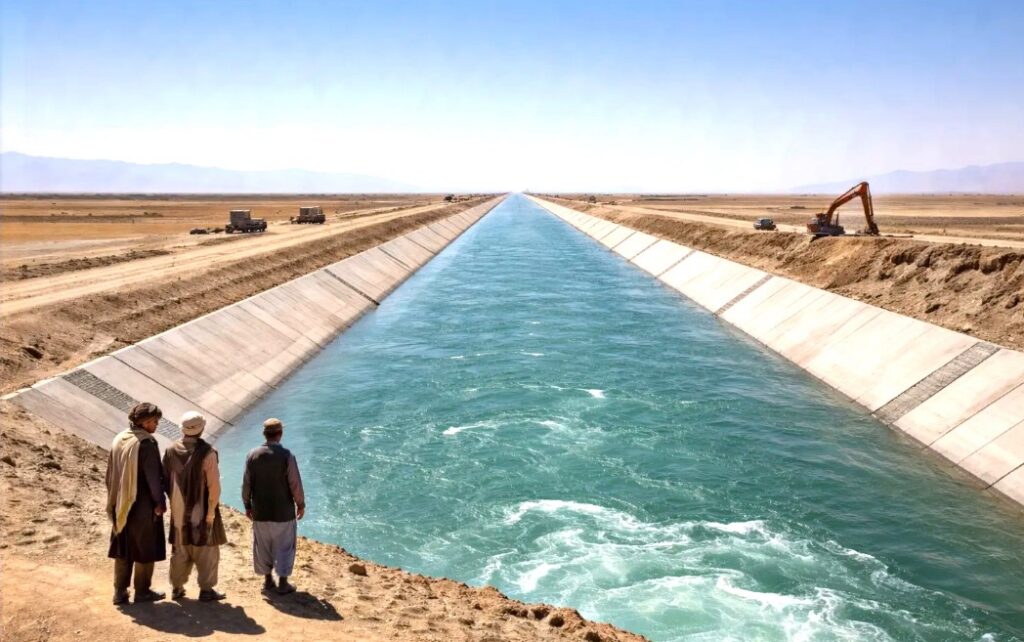
In recent months, media attention has increasingly focused on infrastructure projects underway in Afghanistan. Chief among them is the Qosh Tepa Canal, widely seen not only as an irrigation initiative but as a development with significant transboundary implications for the Amu Darya River basin. The canal draws water from one of Central Asia’s most critical transboundary rivers. For downstream countries, primarily Uzbekistan and Turkmenistan, the Amu Darya is a vital water source, directly linked to agricultural output and the sustainability of rural communities. As such, the conversation surrounding Qosh Tepa extends well beyond Afghanistan’s domestic agenda. Concerns voiced by experts and analysts stem from both the scale of the project and the absence of an inclusive, basin-wide mechanism that includes Afghanistan, which is not a party to the main post-Soviet Amu Darya allocation frameworks. As a result, discussions regarding the canal’s potential impacts are taking place largely outside formal multilateral frameworks. One positive development is the increasing presentation of Qosh Tepa within a broader context, where water flow management is recognized as a factor shaping regional political and economic relations. However, these assessments often highlight not the canal’s stated purpose, but rather the absence of a sustainable mechanism for coordinating discussion of its cross-border effects. [caption id="attachment_43173" align="aligncenter" width="1280"] Image: TCATCA[/caption] A recurring concern among experts is the lack of a structured multilateral platform that enables early-stage evaluation of such projects before they are perceived as risks. Infrastructure development in the region frequently outpaces the establishment of mechanisms for joint impact assessment and management. In this light, Kazakhstan’s initiative to establish a specialized structure within the UN system, the International Water Organization, acquires particular relevance. This proposal is not about building a theoretical global agenda but about addressing a specific institutional gap: the lack of a neutral forum for technical and expert discussion of transboundary water projects at an early stage. The Qosh Tepa Canal, currently a unilateral infrastructure undertaking rather than the result of an international agreement, could serve as a test case for such a preventive mandate. While the project is already underway and its transboundary implications are actively being discussed among experts, it has not yet escalated into a regional dispute. This creates an opportunity for professional dialogue, without entanglement in political or status-related debates. The present situation can be summarized as one of “transboundary implications without a transboundary mechanism.” The project, while entirely within Afghan territory, objectively affects the interests of downstream states, yet it remains disconnected from any multilateral framework for consultation or agreement. Is it in Afghanistan’s interest to engage in multilateral formats? Though the question is often left unanswered, the answer is a clear “yes.” Such engagement would help dispel suspicion not only among Central Asian states, but also in Iran and Pakistan, both of which have voiced concerns over shared water resources. First, it would reduce negative external rhetoric. Currently, Qosh Tepa is largely discussed via external media with alarmist scenarios and with little to no Afghan participation. This reinforces the image...

Opinion: Central Asia–Japan Summit Signals Shift in Eurasian Geoeconomics — and Russia’s Waning Role

In December 2025, Tokyo hosted the first leaders-level Central Asia + Japan summit — a watershed moment for Eurasian diplomacy that quietly reshapes the region’s strategic architecture. The declaration adopted at the summit lays out a clear economic-geostrategic vision: Japan is no longer a peripheral partner, but a central engine of multi-vector engagement with Central Asia. In the process, it exposes a growing gap in Russia’s regional influence — not because of rhetoric, but because of substance. Japan’s Agenda: Economy, Connectivity, Human Capital The Tokyo Declaration pivots on three pragmatic pillars that align tightly with Central Asian development priorities: Green growth and sustainability - decarbonization, energy security, and climate resilience; Connectivity - transport, logistics, customs facilitation, and digital corridors; Human resource development - education, training, exchanges, and technology transfer. This is not diplomatic abstraction. It reflects Japan’s long-term model of engagement: concessional finance, technology cooperation, and capacity building rather than quick geopolitical wins. In practical terms, there is now a numerical investment target - a combined public-private cooperation envelope of three trillion yen (approximately $20 billion) over five years -marking a shift from consultative dialogue to project delivery at scale. Importantly, the summit also reinforced cooperation in emerging domains such as artificial intelligence, digital transformation, and resilient supply chains - areas where Central Asia aims to leap ahead rather than merely catch up. This underscores how cooperation is being framed: not as charity, but as co-production of future-oriented infrastructure and capabilities. The significance of the summit lies not only in the declaration itself, but in the trajectory it has set for Japan–Central Asia engagement in the months ahead. What This Means for Russia: Substance Trumps Symbolism At first glance, Russia’s absence from explicit mention in the declaration may seem benign; after all, engagement with external partners often requires diplomatic balance. Yet silence in this case is meaningful. For decades, Russia’s influence in Central Asia was rooted in security ties, historical institutions, and energy networks. These were powerful structural levers in the twentieth century, but they are increasingly less relevant in an era defined by diversified markets and technological competition. The Tokyo summit highlights several structural realities: Russia does not offer a comparable economic agenda, particularly in green technologies, digital infrastructure, or human capital development. Russia’s model remains reactive, centered on existing corridors and legacy links rather than on new corridors of integration connecting Central Asia with Asian and European value chains. Russia is overweighted in traditional domains such as security and media presence, yet underweighted in economic agency suited to the twenty-first century. By contrast, Japan’s approach addresses precisely the gaps Central Asian states prioritize: employment, logistics, energy transition, and technological self-sufficiency. Even more strikingly, this shift is occurring without anti-Russian rhetoric. The summit was framed as an exercise in cooperation and development, not rivalry. Nevertheless, the outcomes effectively relegate Russia to the background — a clear indicator of the structural erosion of Moscow’s regional primacy. Multi-Vector Policy in Practice: Central Asia’s Agency For Central Asian states, the Tokyo summit...

Opinion: Prospects for Central Asia’s Access to Persian Gulf Infrastructure

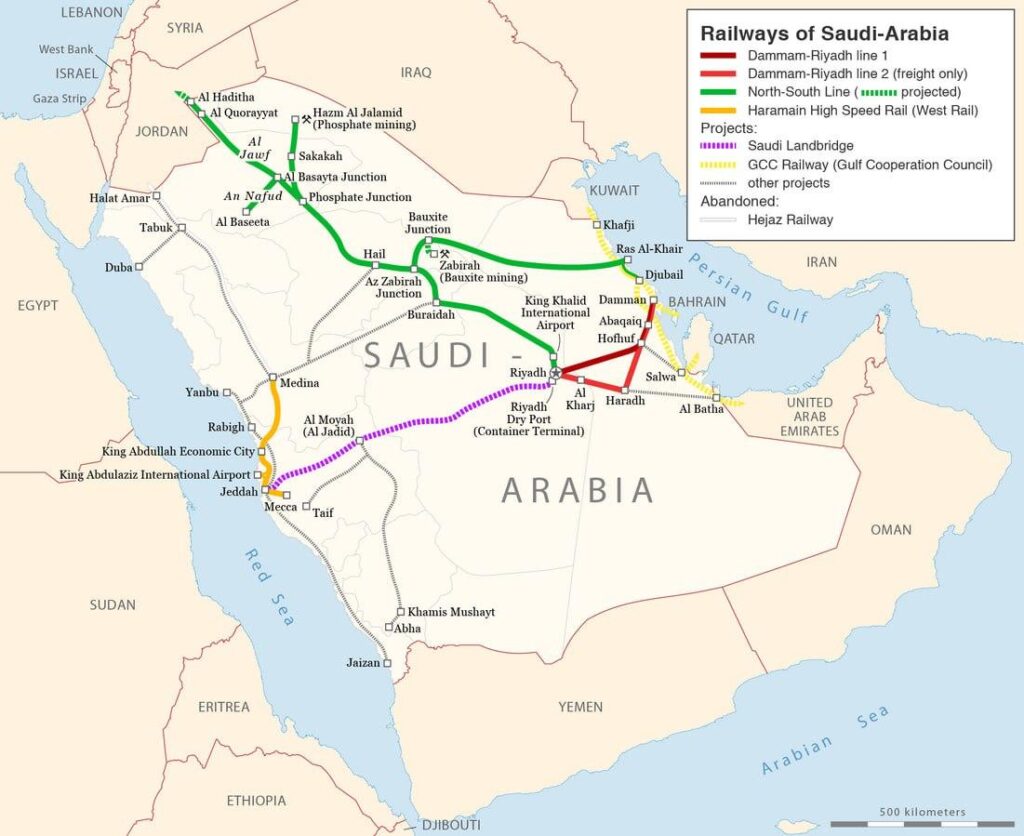
The agreement signed on December 8, 2025, between Saudi Arabia and Qatar to construct a high-speed railway linking Riyadh and Doha marks a pivotal development in transport connectivity across the Persian Gulf. Beyond its bilateral implications, the project could have broader consequences for transregional logistics, particularly for Central Asia and Kazakhstan. The 785-km railway will pass through key cities in Saudi Arabia’s Eastern Province, including Dammam and Al-Hufuf, and will connect King Salman and Hamad International Airports. Trains are expected to reach speeds exceeding 300 km/h, reducing travel time between the two capitals to approximately two hours. The six-year project is projected by officials to boost the combined GDP of both countries by around $30 billion and create up to 30,000 jobs. The Gulf Railway and New Regional Connectivity The Riyadh-Doha line is a central element of the Gulf Railway initiative, which is seeking to establish a unified railway network among Gulf Cooperation Council (GCC) member states, Saudi Arabia, Qatar, the UAE, Bahrain, Kuwait, and Oman, with a target date of around 2030. Originally envisioned primarily as a freight system, the Gulf Railway is increasingly incorporating high-speed passenger services alongside freight, reflecting the region’s push for greater internal integration and reduced dependence on air travel. The Riyadh-Doha segment forms a vital axis between the Gulf’s political and financial hubs and is expected to link with Saudi, Emirati, and Omani infrastructure, laying the groundwork for a more integrated regional transport system. Beyond the Peninsula While the Gulf Railway’s scope is geographically confined to the Arabian Peninsula, meaningful integration with Eurasia would require additional connectivity, particularly via land and multimodal routes through Iran, Turkey, and the Caspian region. Among these, the overland corridor through Iran is especially significant, though constrained by sanctions, financing risks, and political uncertainty. Kazakhstan-Turkmenistan-Iran Corridor Unlike many conceptual infrastructure proposals, the Kazakhstan-Turkmenistan-Iran railway, operational since 2014, is already a functioning freight corridor. It provides Central Asian nations with direct access to Persian Gulf ports and Middle Eastern markets. For Kazakhstan, the route offers strategic diversification away from traditional corridors. While no formal plans exist to link GCC rail infrastructure directly with Central Asia, the emergence of high-capacity Gulf rail corridors reshapes the long-term connectivity landscape. A future interface could allow Astana overland access to Gulf markets, while enabling reciprocal flows from the Gulf into Central Asia, China, and Europe. President Kassym-Jomart Tokayev has previously described Iran as a “gateway” to Southeast Asia and Africa. Kazakhstan has also outlined plans to establish its own logistics terminal in the Iranian port of Shahid Rajai in Bandar Abbas, further enhancing its position in Gulf-Eurasia trade flows. Iran’s Evolving Role Historically, Iran’s role as a transit state has been hampered by international sanctions and regional tensions. However, the 2023 normalization of relations between Saudi Arabia and Iran, brokered by China, has altered the regional calculus. Although still fragile, this diplomatic thaw improves prospects for long-term infrastructure projects involving Iran as a critical transit link between the Persian Gulf and Eurasia. Alternatives and Their...