• KZT/USD = 0.00210
  • TJS/USD = 0.10810
  • UZS/USD = 0.00008
  • TMT/USD = 0.29760
  • KZT/USD = 0.00210
  • TJS/USD = 0.10810
  • UZS/USD = 0.00008
  • TMT/USD = 0.29760
  • KZT/USD = 0.00210
  • TJS/USD = 0.10810
  • UZS/USD = 0.00008
  • TMT/USD = 0.29760
  • KZT/USD = 0.00210
  • TJS/USD = 0.10810
  • UZS/USD = 0.00008
  • TMT/USD = 0.29760
  • KZT/USD = 0.00210
  • TJS/USD = 0.10810
  • UZS/USD = 0.00008
  • TMT/USD = 0.29760
  • KZT/USD = 0.00210
  • TJS/USD = 0.10810
  • UZS/USD = 0.00008
  • TMT/USD = 0.29760
  • KZT/USD = 0.00210
  • TJS/USD = 0.10810
  • UZS/USD = 0.00008
  • TMT/USD = 0.29760
  • KZT/USD = 0.00210
  • TJS/USD = 0.10810
  • UZS/USD = 0.00008
  • TMT/USD = 0.29760

Viewing results 25 - 30 of 46

The Rise of Regionalism in Central Asia: From Divisions to Dialogue

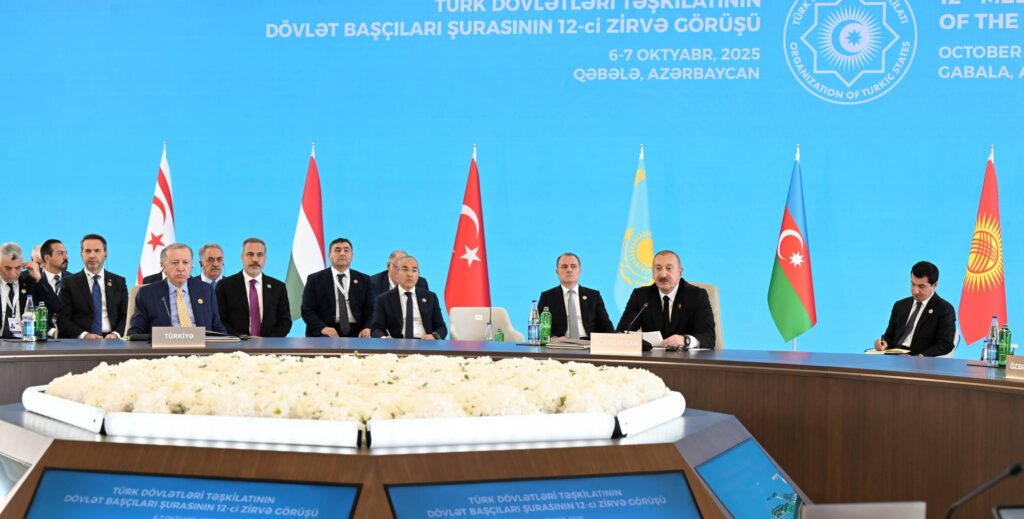
In recent years, Central Asia has undergone a remarkable transformation — from a region historically marked by political divisions and competing national interests, to one increasingly characterised by cooperation and dialogue. Today, Central Asian countries are exploring the idea of strategic autonomy and greater regional solidarity, not as an abstract ambition, but as a practical response to the shared challenges and opportunities they have. A key institutional vehicle for this evolving cooperation is the Consultative Meeting of Central Asian Leaders. Unlike formal international summits, this forum allows for open and informal dialogue between heads of state. It is valued precisely because it enables leaders to discuss sensitive regional matters candidly, without the constraints of protocol. The momentum for regional cooperation is clearly growing, and this forum has become a symbol of Central Asia’s desire to take its future into its own hands. Beyond this, the countries of Central Asia cooperate through platforms such as the Shanghai Cooperation Organization (SCO) and the Organisation of Turkic States, both of which offer multilateral mechanisms for addressing regional security, economic integration, and cultural exchange. Importantly, what was once a region of competing national agendas is now evolving into a space of shared strategic vision, including coordinated positions in international forums such as the United Nations. Additionally, in recent years, the foreign policies of Central Asian countries have demonstrated more and more coordination and regional alignment, especially in their engagement with external partners. This shift is reflected in the emergence of multilateral dialogue formats between Central Asia and key global actors. Notably, the European Union–Central Asia Summit, most recently held in Samarkand in 2025, underlined a shared commitment to regional connectivity, sustainable development, and mutual security. Similar formats have been institutionalised with other global players, such as the C5+1 format with the United States, focusing on green transition, economic reforms, and regional security. Germany has also advanced a Central Asia–Germany high-level dialogue, including the “Berlin Initiative,” aimed at promoting green energy, vocational training, and the rule of law. Meanwhile, Italy has launched its Central Asia + Italy format as part of its strategy to diversify partnerships in Eurasia and promote economic diplomacy. These platforms reflect a common approach, where Central Asian countries are increasingly choosing to engage as a bloc, rather than solely through bilateral channels. This enhances their negotiating capacity, visibility, and strategic coherence on the global stage. While each country maintains its sovereignty and specific foreign policy priorities, there is a growing recognition that regional solidarity amplifies voices and leverage in an increasingly complex geopolitical landscape. This shift aligns with the broader regional identity-building efforts under the Consultative Meetings of Central Asian Leaders, and reflects a pragmatic understanding that shared challenges — such as water management, climate adaptation, and migration — are better addressed collectively and in concert with international partners. Common regional challenges also drive this growing convergence. Climate change, water scarcity, and labor migration are issues that transcend borders. One of the most pressing concerns is the region’s vulnerability due to...

Opinion: From Xi’an to Astana – Elevating China–Central Asia Cooperation to a New Height

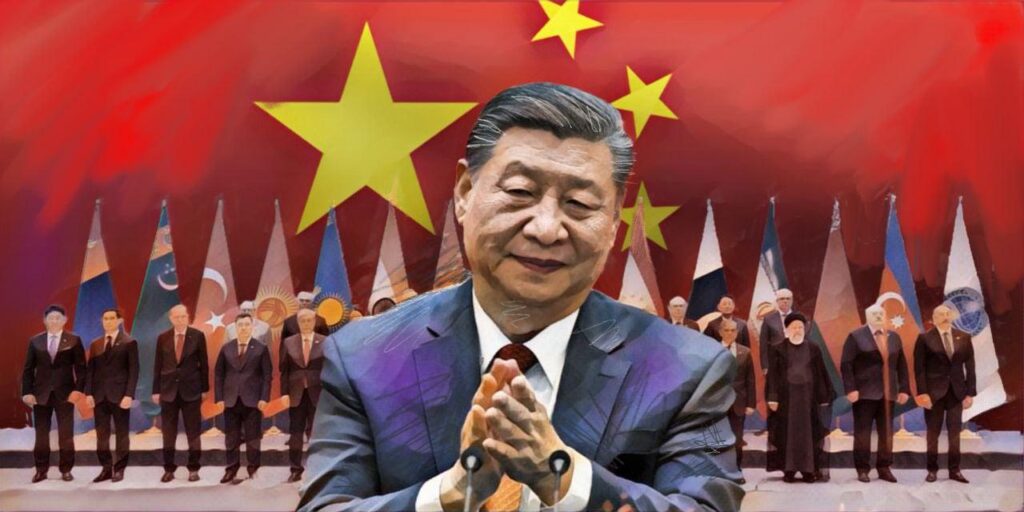
As summer awakens the vibrant landscapes of Kazakhstan, with lilac blossoms aglow and the Ishim River meandering through the capital, Astana is once again at the center of regional diplomacy. From June 16 to 18, Chinese President Xi Jinping will visit Kazakhstan to attend the Second China–Central Asia Summit — an event of both symbolic weight and strategic substance. This year’s summit marks more than a diplomatic gathering — it signifies the maturing of a young but increasingly impactful multilateral framework born from centuries-old ties. From the ancient Silk Road to today’s modern infrastructure corridors, the five Central Asian nations and China are deepening a relationship rooted in trust, driven by mutual benefit, and destined to shape the region’s collective future. Ancient Friendship, Strategic Renewal More than 2,100 years ago, Chinese envoy Zhang Qian opened the first pathway to Central Asia, laying the groundwork for millennia of exchange. In 2013, standing in Kazakhstan, President Xi unveiled the Silk Road Economic Belt, the founding vision of what would become the Belt and Road Initiative (BRI), reviving the spirit of the ancient Silk Road for a new era. Since then, cooperation between China and Central Asia has grown from historical affinity into a full-spectrum partnership. Over the past decade, this partnership has reached “three completions”: the full establishment of comprehensive strategic partnerships between China and all five Central Asian countries, full coverage of BRI cooperation documents, and full alignment with the concept of a shared future for humanity. These milestones demonstrate not just diplomatic intent but a shared strategic outlook that has withstood global uncertainties. As Xi noted, the decision to deepen China–Central Asia cooperation is not a product of convenience, but a generational choice made by leaders with long-term vision, responding to the will of their peoples and the imperatives of regional stability. Tangible Results: A Shared Path to Modernization Since the launch of the China–Central Asia mechanism in 2020, progress has accelerated. The elevation of this platform to the leaders’ level in 2023 during the Xi’an Summit underscored its growing relevance. From the Xi’an Declaration to the establishment of a permanent secretariat, institutional foundations are now firmly in place. More importantly, the mechanism is delivering real results. Trade between China and the five Central Asian states reached a record $94.8 billion in 2024, a $5.4 billion increase from the previous year. New cooperation structures in transport, agriculture, customs, and emergency management are enabling efficient multilateral coordination. A flagship example is the China–Kyrgyzstan–Uzbekistan railway, now under active construction, marking a milestone in physical connectivity. This long-anticipated project, personally championed by the three heads of state, will reshape regional logistics and unlock new trade routes across Eurasia. Beyond rail, a web of cooperation is forming: the high-functioning Khorgos Gateway and the newly launched Kazakhstan Xi’an Terminal, increased Caspian Sea corridor traffic, and regularized freight trains between China and Central Asia. These are not mere infrastructure projects — they are lifelines of mutual development. Kazakhstan, in particular, is actively reinforcing its role as...

Opinion: Strengthening the Silk Bonds — India’s Renewed Push Towards Central Asia

The velvet-draped tables of New Delhi’s 4th India-Central Asia Dialogue convened under the stewardship of External Affairs Minister Dr. S. Jaishankar on June 6, 2025, radiated congeniality, with history and strategy converging. This high-level engagement, attended by foreign ministers from Kazakhstan, Kyrgyzstan, Tajikistan, Turkmenistan, and Uzbekistan, marked more than a diplomatic ritual — it signaled India's deepening resolve to recalibrate its strategic posture in a region too long shaped by other powers. Yet beneath pledges of shared civilizational futures and energy corridors, an uncomfortable truth lingered as India remains a guest, not a player, in Central Asia’s great power theatre. Further, India’s internal socio-political landscape presents notable challenges that inadvertently shape its foreign policy credibility, particularly in the eyes of Central Asian nations. Persistent communal tensions — most visibly manifested in the Hindu-Muslim divide, the controversial demolition of the Babri Masjid in 1992, and the politically charged construction of the Ram Mandir — have deepened perceptions of religious polarization. Such domestic developments, while largely internal, resonate beyond India’s borders, especially in the Muslim-majority Central Asian republics, raising concerns about inclusivity and pluralism in India’s governance model. Simultaneously, India’s strained relations with key neighbors — Pakistan, and China, and increasingly volatile dynamics with Nepal, Bangladesh, and Sri Lanka — have reinforced a regional image of discord and inconsistency. These internal and regional complexities contribute to a trust deficit, making Central Asian countries cautious in placing long-term strategic confidence in India. For New Delhi to emerge as a dependable partner in the region, addressing internal fissures and presenting a coherent, inclusive national vision is as vital as economic or diplomatic outreach. Central Asia sits at the center of ancient trade routes and modern geopolitical competition. For India, its importance is twofold: the region is a bridge to Eurasia and a repository of energy resources critical to India’s growing economy. But India’s historical connectivity to Central Asia — through the Silk Road, shared cultural legacies, and spiritual exchanges — has, for decades, been overshadowed by geographic and political barriers, notably the lack of direct overland access due to Pakistan. Recognizing these constraints, the dialogue showcased a strategic pivot. India reaffirmed its commitment to enhancing regional connectivity through the International North-South Transport Corridor (INSTC) and the Chabahar Port in Iran. While geopolitical instability in Iran and Afghanistan poses challenges, India's emphasis on multimodal routes demonstrates pragmatic flexibility. In an era defined by supply chain resilience and multipolar geopolitics, connectivity is no longer just an infrastructure question — it is a currency of influence. The dialogue also addressed the evolving regional security architecture. India’s proposal for counter-terrorism cooperation, capacity building, and intelligence sharing was timely and necessary. However, the dialogue echoed with familiar refrains, viz. civilizational bonds, shared destiny, and multipolar cooperation. Yet beneath the diplomatic choreography lies a haunting question. Can India transcend its historical role as Central Asia’s cultural cousin to become its strategic confidant? History whispers caution. The Burden of History: From Silk Roads to Shadow Roads For centuries, the Silk Road...

Victory Day Diplomacy: Central Asia’s Balancing Act and Putin’s Diminished Spotlight

Every year, Moscow’s Red Square transforms into a stage for one of Russia's most celebrated traditions: Victory Day, an event which marks the Soviet Union’s triumph over Nazi Germany in World War II. Yet, as tanks roll through the cobblestone streets and military bands echo under the Kremlin walls, the occasion feels more heavily laden with geopolitical undertones than historical reminiscence these days. Against the backdrop of ongoing conflicts and shifting alliances, the presence of Central Asian leaders at this year’s event speaks to the region’s delicate relationship with the Russian Federation. But the question remains: amidst the pomp and circumstance, is there much for Vladimir Putin to celebrate? Central Asia’s Careful Balancing Act The attendance of Central Asian leaders at the Victory Day parade is a striking show of diplomatic choreography. On the surface, their presence will underscore the shared historical legacy of the Soviet era, when the sacrifices of the Central Asian republics contributed to the Allied victory in the Second World War. However, a more pragmatic lens reveals a balancing act that defines the region’s foreign policy. The region finds itself at the crossroads of global powers vying for influence in Central Asia. While Moscow leans on historical ties and cultural commonalities to retain its sway, Beijing’s economic clout continues to reshape the region’s trade networks and infrastructure projects. Meanwhile, as the inaugural EU-Central Asia Summit attests to, the European Union is eager to expand its reach, whilst hungry for Rare Earth Elements in which the region is rich, the U.S. is waiting in the wings. For Central Asian leaders, participating in Victory Day celebrations signals a nod to Russia’s historic role but also keeps the door open for economic and security cooperation. Amidst the shifting architecture of global politics, their diplomatic strategy remains one of pragmatism, seeking benefits from multiple partners while avoiding any over-alignment. What Does Russia Gain from the Optics? The presence of 29 leaders from across the globe – including Chinese President Xi Jinping - offers Moscow valuable optics at a time when its international relationships face significant strain. Last year, only nine attended. Isolated by Western sanctions over the invasion of Ukraine and with much of the world’s media painting Russia as cut off from the global stage, the impression of a united front with Central Asia helps the Kremlin portray the opposite. Victory Day, therefore, becomes a geopolitical tool, with the attendance of Central Asian leaders enabling Putin to send a message of shared unity within Russia’s historical sphere of influence. It tells both domestic and international audiences that Moscow retains significant allies, reinforcing the image of resilience despite ongoing challenges. How Much Does Moscow Truly Celebrate? The Victory Day parade is an event that is watched by an estimated three-quarters of the Russian public, drumming up patriotism as the state seeks to become the custodian of collective memory. Behind the spectacle, however, signs of disquiet are proving hard to ignore. Russia’s invasion of Ukraine has disrupted trade and migration flows...

Opinion – Central Asia’s Looming Water Crisis: A Ticking Time Bomb

When people think of Central Asia, they often picture vast deserts, ancient Silk Road cities, and oil pipelines stretching to distant markets. Yet the region’s most urgent and combustible resource is not buried underground — it flows above it. Water, or more precisely the lack of it, is rapidly becoming the defining fault line of Central Asia’s future. For decades, the five Central Asian republics have tiptoed around a growing water crisis. The two major rivers that sustain life in this arid region, the Amu Darya and the Syr Darya, are now so contested and depleted that what was once a technical issue has metastasized into a geopolitical threat. The region's major rivers, the Amu Darya and the Syr Darya are under immense pressure, threatening agriculture, livelihoods, and regional stability. At the heart of the crisis is a tragic irony. The upstream countries, Kyrgyzstan and Tajikistan, are rich in water but poor in energy and cash. They need to release water in winter to generate hydropower. Downstream nations, particularly Uzbekistan and Turkmenistan, want water stored until the summer to irrigate vast cotton and wheat fields. The result? Mutual distrust, occasional diplomatic spats, and an accelerating race to dam, divert, and hoard water in a region already gasping under the weight of climate change. A Region Parched Central Asia annually utilizes over 60 billion cubic meters of water for irrigation from the Amu Darya and Syr Darya basins. However, recent years have seen a decline in river flows, with the actual flow of the Syr Darya being 20–23% less than the norm. Further, the ghost of the Aral Sea — a once-thriving inland lake that has now shrunk by over 90% in its volume and 74 % in surface area — serves as a haunting reminder of the cost of mismanagement. The Soviet legacy of excessive irrigation has morphed into a post-Soviet scramble for control, where water is not just a tool of survival but a lever of power. This desiccation has transformed the region, leading to the emergence of the Aralkum Desert and causing severe ecological and health issues. Climate Change Intensifies the Crisis Climate change is exacerbating water scarcity in Central Asia. A recent study revealed that an extreme heatwave in March 2025, with temperatures soaring 5 to 10°C above pre-industrial levels, was significantly amplified by global warming. Such temperature surges accelerate glacier melt and increase evaporation rates, further reducing water availability. By some estimates, Central Asia could lose over 30% of its freshwater resources by 2050. Yet, rather than galvanize cooperation, this existential threat has sparked more competition. International efforts have largely fallen flat. The International Fund for Saving the Aral Sea (IFAS), the region’s main water cooperation body, is riddled with inefficiencies and lacks enforcement power. External actors like China and Russia have their own interests, often deepening the regional divide rather than healing it. Inefficient Water Management Inefficient agricultural practices remain one of the most profound and persistent contributors to water mismanagement across Central Asia. In...

Opinion: In Central Asia, the EU Defies Its “Geopolitical Dwarf” Label

As the United States and Russia reportedly aim to create a new global security architecture, other major actors in the international arena are working to improve their positions in the redefined world order. Often underestimated in terms of its geopolitical influence, the European Union has actively focused its attention on the post-Soviet space, particularly the strategically important Central Asian region. The EU, despite Russia’s and the United States' attempts to undermine its role in the settlement of the Ukraine War and to portray it as a “geopolitical dwarf”, is seeking to increase its presence in global affairs. In Central Asia, the 27-nation bloc is often viewed as a key actor that Kazakhstan, Uzbekistan, Kyrgyzstan, Tajikistan, and Turkmenistan can rely on to balance China’s growing dominance, as well as their security and dependence on Moscow. The EU's desire to strengthen cooperation with Central Asia can be seen as Brussels’ attempt to reduce Russia's influence in the region. Indeed, bogged down in Ukraine, Moscow is slowly but surely being pushed out of Central Asia – a region that has traditionally been within the Kremlin’s geopolitical orbit. As a result, China has managed to significantly increase its economic presence in all five Central Asian nations. The EU is now attempting to do the same. The recent visit of the European Commissioner for International Partnerships Jozef Síkela to Central Asia, as well as the upcoming EU-Central Asia summit scheduled for April 3-4, 2025 in Samarkand, clearly indicates the intensifying geopolitical competition between the EU and China over the region. One of Síkela’s major goals was to expand the scope of the EU's investment strategy, Global Gateway, in Central Asia. The project, launched in 2021, is often viewed as the EU’s version of China’s Belt and Road Initiative (BRI). As part of its strategy to increase its economic presence in Central Asia, the European Union seems to have four priorities: the development of transport infrastructure (particularly the Trans-Caspian International Transport Route, also known as the Middle Corridor), cooperation in raw materials, digital connectivity, and the development of the water resources, energy, and climate sectors. The problem for Brussels is that China, due to its proximity to Central Asia and the lack of bureaucratic procedures, is ahead of the EU in most, if not all of these areas. Beijing has had 12 years to strengthen economic ties with the region through the BRI. As a result, in 2024, China’s overall turnover with Central Asia reached $94.8 billion, nearly double the EU's trade volume with the region in 2022, which stood at $47 billion. Last year, the world’s second-largest economy replaced Russia as Kazakhstan's biggest trade partner. In neighboring Uzbekistan, it remains the top trading partner, while in Tajikistan, over the past 18 years, China has become the major investor in the landlocked nation’s economy. The same applies to Tajikistan and China’s neighbor Kyrgyzstan. The European Union, however, is now intensifying its efforts to position itself as a major foreign power operating in Central Asia. According to...