• KGS/USD = 0.01144 0%
  • KZT/USD = 0.00209 0%
  • TJS/USD = 0.10528 0%
  • UZS/USD = 0.00008 0%
  • TMT/USD = 0.28571 0%
  • KGS/USD = 0.01144 0%
  • KZT/USD = 0.00209 0%
  • TJS/USD = 0.10528 0%
  • UZS/USD = 0.00008 0%
  • TMT/USD = 0.28571 0%
  • KGS/USD = 0.01144 0%
  • KZT/USD = 0.00209 0%
  • TJS/USD = 0.10528 0%
  • UZS/USD = 0.00008 0%
  • TMT/USD = 0.28571 0%
  • KGS/USD = 0.01144 0%
  • KZT/USD = 0.00209 0%
  • TJS/USD = 0.10528 0%
  • UZS/USD = 0.00008 0%
  • TMT/USD = 0.28571 0%
  • KGS/USD = 0.01144 0%
  • KZT/USD = 0.00209 0%
  • TJS/USD = 0.10528 0%
  • UZS/USD = 0.00008 0%
  • TMT/USD = 0.28571 0%
  • KGS/USD = 0.01144 0%
  • KZT/USD = 0.00209 0%
  • TJS/USD = 0.10528 0%
  • UZS/USD = 0.00008 0%
  • TMT/USD = 0.28571 0%
  • KGS/USD = 0.01144 0%
  • KZT/USD = 0.00209 0%
  • TJS/USD = 0.10528 0%
  • UZS/USD = 0.00008 0%
  • TMT/USD = 0.28571 0%
  • KGS/USD = 0.01144 0%
  • KZT/USD = 0.00209 0%
  • TJS/USD = 0.10528 0%
  • UZS/USD = 0.00008 0%
  • TMT/USD = 0.28571 0%

Viewing results 673 - 678 of 2913

UNDP and Japan Launch Initiative in Uzbekistan to Reduce Emissions and Boost Energy Efficiency

Uzbekistan has launched a new international initiative aimed at cutting greenhouse gas emissions and improving energy efficiency in public infrastructure. Spearheaded by the United Nations Development Programme (UNDP) in partnership with the Government of Japan and Uzbekistan’s Ministry of Economy and Finance, the project targets key sectors including schools, hospitals, kindergartens, and public transportation.z According to UNDP Uzbekistan, the initiative seeks to bolster the country’s resilience to energy-related challenges driven by increasingly extreme weather conditions. Many public buildings in Uzbekistan suffer from outdated infrastructure and significant energy loss, resulting in elevated emissions and burdensome utility expenses. The project will focus on upgrading facilities with thermal insulation, energy-efficient windows, heat pumps, and solar panels to address these inefficiencies. A central objective is to enhance indoor comfort throughout the year, particularly in regions experiencing extreme seasonal temperatures. The installation of modern heating and cooling systems is expected to make classrooms and hospital wards more sustainable and livable. The initiative will also extend to green mobility, supporting the introduction of electric buses, the development of charging infrastructure, and the deployment of air pollution monitoring systems along urban transport routes. A distinctive feature of the program is its use of the Joint Credit Mechanism (JCM), which provides Uzbekistan with access to advanced Japanese technology and investment. This mechanism facilitates international collaboration on carbon reduction and supports the country's transition toward cleaner technologies. The initiative aligns with Uzbekistan’s climate commitments under the Paris Agreement. The government has pledged to cut greenhouse gas emissions by 35 percent and raise the share of clean energy to 25 percent by 2030. According to UNDP representatives and officials from the National Agency for Energy Efficiency, the project is not only designed to meet environmental targets but also to improve public health and alleviate the financial strain caused by inefficient energy systems. This latest endeavor builds on previous sustainable development projects in Uzbekistan. Notably, a European Union and UNDP-backed program has supported the country’s fish farming industry by providing eco-friendly equipment to enhance water quality and reduce energy consumption.

From Reform to Roadblocks: The Uneven Evolution of Motor Insurance in Central Asia

Motor insurance markets across Central Asia exhibit contrasting levels of development, from Kazakhstan’s expanding, digitized sector to Kyrgyzstan and Turkmenistan, where the system remains largely ineffective. Beyond compensating for damages, motor insurance is increasingly viewed as a tool for strengthening financial markets, promoting road safety, and easing the fiscal burden during emergencies. Kazakhstan Kazakhstan leads the region in insurance market volume. According to the Agency for Regulation and Development of the Financial Market (ARDFM), compulsory third-party motor insurance (OSGPO) premiums totaled more than KZT 106 billion ($205 million) in 2023, an 18% increase from the previous year. Since 2019, Kazakhstan has operated an electronic OSGPO registration system, streamlining policy purchases and reducing fraud. Integration with the Ministry of Internal Affairs databases now enables more effective monitoring of compliance. In April 2025, the country introduced a revised bonus-malus system with 18 risk classes, ranging from M2 (highest risk, coefficient 3.5) to Class 13 (lowest risk, coefficient 0.5). New drivers are assigned Class A with a coefficient of 1.8. The updated system accounts for accident history, traffic violations, and the duration of accident-free driving. Despite this progress, voluntary comprehensive insurance (CASCO) remains underutilized; fewer than 5% of car owners hold such policies. Barriers include high costs, limited public understanding, and the persistent mistrust of insurers. Nevertheless, demand for CASCO is growing amid rising accident rates and vehicle costs. Once considered a luxury for owners of new cars, CASCO is increasingly popular among middle-income drivers, particularly those buying vehicles on credit or lease. According to Ranking.kz, CASCO premiums reached KZT 13.4 billion ($26 million) in January-February 2025, slightly below the same period in 2024 ($29 million) but still well above pre-pandemic levels. CASCO now covers a broad range of risks, including accidents, theft, vandalism, fire, and natural disasters. For many Kazakhstani drivers, comprehensive coverage is becoming a central part of their financial strategy rather than a discretionary purchase. Kyrgyzstan In Kyrgyzstan, however, the motor insurance system is largely dormant. Although a compulsory insurance law was passed in 2015, only 8-10% of the vehicle fleet is insured. The absence of a unified digital platform, weak interagency coordination, and low public confidence hinder progress. The authorities intend to relaunch reforms in 2025, focusing on digital integration between the Ministry of Internal Affairs and the National Bank. Beginning July 1, 2025, fines will be imposed on uninsured drivers: 3,000 KGS (around $35) for individuals and 13,000 KGS (about $150) for foreign nationals and legal entities. The new penalties are expected to promote compliance and foster a stronger insurance culture. Uzbekistan Uzbekistan, in contrast, has made substantial strides since 2019. Restrictions on foreign insurers have been lifted, and the Insurance Market Development Agency has spearheaded a digital transformation of the sector. In 2023, motor insurance premiums surpassed 250 billion som, largely from OSGPO policies. The government has expanded policy coverage and supports online issuance to increase accessibility and competition. As of September 1, 2024, all compulsory motor insurance policies will be digitized and issued through a centralized...

Turkmenistan’s Gas Swap Deals Could Be Collateral Damage from Israeli-Iran Conflict

Turkmenistan has the fourth largest reserves of natural gas in the world, but the country has found it difficult to export substantial volumes. Lack of export pipelines are one of the problems and it seemed Turkmenistan had partially solved this dilemma by arranging gas swap deals. Unfortunately for Turkmenistan, these deals involve Iran as the key country, and the Israeli-Iran conflict sheds new doubt on the ability of Iran to fulfill its part in the swap arrangements. So Close Turkmenistan signed a deal to supply 10 billion cubic meters (bcm) of gas annually to Iraq in late October 2024. It was the first major gas export deal Turkmenistan had signed in nearly two decades. That last big agreement was signed with China in 2006. It involved building four gas pipelines from Turkmenistan to China to eventually carry a combined 85 bcm of gas, 65 bcm of which would be Turkmen gas. Since the pipelines cross through Uzbekistan and Kazakhstan, both of those countries are allotted 10 bcm each of the capacity for their gas exports. The fourth branch that would have carried 30 bcm of Turkmen gas has not been built, leaving Turkmen gas exports to China averaging 35 bcm per year. At the moment, China is the only major customer for Turkmen gas. The second largest buyer of Turkmen gas is Uzbekistan, which only purchases about 2 bcm. Not even 20 years ago, Russia was purchasing more than 40 bcm of Turkmen gas, but by 2023 that had dwindled to 5.5 bcm, still leaving Russia as the second largest buyer of Turkmen gas. In July 2024, after negotiations over price broke down, the two parties chose not to renew that contract. That made the agreement with Iraq all the more important for Turkmenistan. However, there are no pipelines connecting the two countries. Yet So Far The Turkmen-Iraqi agreement calls for Turkmenistan to ship 10 bcm of gas to Iran, with Iran then sending 10 bcm of its gas to Iraq. Iran needs gas for its northern regions that are not connected to the domestic pipeline network that sources gas from the fields of in the south of the country. Turkmenistan has two pipelines to export gas to Iran. Both were built after independence in 1991, and could carry up to a combined 20 bcm. Since January 2017, when the Turkmen government made good on a threat to cut off Iran over unpaid bills for gas, almost no gas has been shipped through these pipelines. The first task is to perform maintenance, repairs, and upgrades on these pipelines so that Turkmenistan can physically send 10 bcm of gas to Iran. The Iranian pipeline to Iraq is functional. Iran was exporting gas to Iraq, but international sanctions on Iran hindered Iraq’s ability to pay for that gas. Prior to the agreement with Iraq, Turkmenistan signed a contract in early July 2024 with Iranian officials for the transfer of gas. It is unclear how far along Turkmenistan is in performing its pipeline...

UK Organization to Launch Social-Emotional Education Programs for Uzbek Children

The UK-based non-profit organization Think Equal is preparing to launch social-emotional education programs for young children in Uzbekistan, according to a report from the Dunyo Information Agency. The initiative was announced following a meeting at the Uzbek Embassy with Think Equal founder and executive director, Leslee Udwin. During the discussion, Udwin presented the organization’s educational model, which is designed to foster empathy, emotional literacy, self-regulation, critical thinking, and peaceful conflict resolution skills in early childhood. The program targets children aged 3 to 6 and is already in use in several countries, including India, Kenya, Canada, Australia, South Africa, Mexico, Singapore, and the United Kingdom. The 30-week curriculum features three 30-minute lessons per week and employs illustrated books, activity guides, and interactive games to teach emotional and relational skills. At the conclusion of the meeting, attendees expressed support for holding a follow-up session with Uzbekistan’s Ministry of Preschool and School Education to explore a potential partnership. Regional Focus on Child Wellbeing The announcement comes amid broader efforts to improve child welfare across Central Asia. Last month, the “Dialogue for Children: Central Asia and UNICEF” conference in Tashkent spotlighted regional cooperation in pediatric care. Health ministers from Kazakhstan and Uzbekistan discussed initiatives to expand collaboration, with Kazakhstan proposing the establishment of an international academic hub for childhood cancer treatment and announcing the opening of a new Proton Therapy Center in Astana. The facility is expected to treat up to 800 patients annually and will be accessible to children from Uzbekistan, including those from the autonomous Republic of Karakalpakstan.

XI Jinping’s Five Points: How China Is Looking To Reshape Central Asia

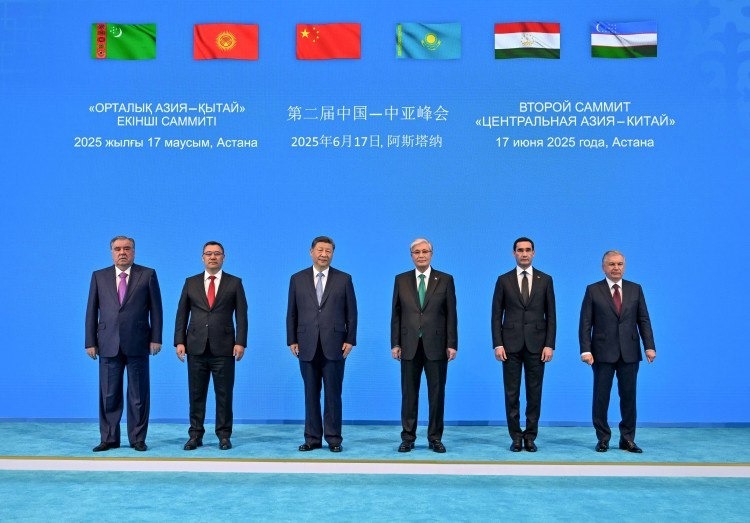
The second China-Central Asia summit on June 17, held in Astana, Kazakhstan, underscored the strengthening ties between China and the region. This event marked a significant milestone in solidifying the China-Central Asia cooperation framework with the signing of the Treaty on Eternal Good-Neighborliness, Friendship, and Cooperation. Experts note that Central Asian countries, once unable to adopt an intra-regional treaty, collectively reached this broader agreement with China. The summit also featured a range of side events, including the Energy Forum “Energy of Central Asia - China,” the Forum on Humanitarian Exchange, the Second Forum on Industrial and Investment Cooperation, and the Central Asia-China Business Council meeting, among others. These gatherings highlighted cooperation in energy, trade, and cultural exchange, reflecting China’s deepening influence in the region. Kazakh President Kassym-Jomart Tokayev praised China’s approach to equal partnership, stating that relations between the two nations are “stable and free from the negative impacts of geopolitical challenges and shocks as well as the international circumstances. China has never imposed any political conditions regarding cooperation with Kazakhstan.” “This is a very important point, Kazakhstani Sinologist Adil Kaukenov explained, “as the head of state, being at the forefront of Kazakhstan's foreign and domestic policies, faces political games, manipulation, and pressure at various levels, which require considerable restraint, experience as a statesman, and popular support to overcome.” During the summit, the heads of the Central Asian states articulated their priorities for cooperation with China. Kazakhstan emphasized projects like the creation of a joint cargo terminal in the port of Kuryk on the Caspian Sea, cooperation in the fields of nuclear energy and artificial intelligence, and counteracting international cybercrime. Kyrgyzstan focused on security, transport, e-commerce, energy, and tourism. Tajikistan prioritized industrial development, trade, food security, and green economy initiatives. Uzbekistan, meanwhile, sought the further integration of Afghanistan into the region, and proposed an “Electronic Silk Road” trade platform, and the development of a long-term strategy called the “Central Asia-China Industrial and Infrastructure Belt.” Chinese President Xi Jinping used his address to outline five key points that shape China’s vision for the future of its relationship with Central Asia. “Our cooperation is rooted in more than two thousand years of friendly relations, consolidated by the solidarity and mutual trust that has been established for 30 years since the establishment of diplomatic relations, and has made great progress thanks to mutually beneficial cooperation in the new era,” Xi stated in his keynote speech. According to Xi, China considers Central Asia one of the priorities of its foreign policy, and this building of peaceful, inclusive partnerships was marked by the historical milestone of the signing of the treaty at the summit. “We will improve the architecture of cooperation, which is characterized by pragmatism, efficiency, and deep integration,” the Chinese president said, adding that 2025–2026 have been declared the Years of High-Quality Development of China-Central Asia Cooperation. This initiative will focus on trade, transport connectivity, green energy, agriculture, and technology. Notably, China pledged 1.5 billion yuan ($208 million) in grants for projects aimed...

Citizens of Central Asia Face New Entry Restrictions To Russia and the U.S.

Citizens of Central Asian countries are encountering a wave of new travel restrictions from two major global powers, Russia and the United States. In recent weeks, Moscow and Washington have both introduced or expanded measures that complicate entry for citizens of the region, raising concerns about migration rights, bilateral relations, and regional security. Russia Tightens Border Rules Starting June 30, 2025, citizens from visa-free countries, including Kazakhstan, will be required to obtain a special QR code to enter Russia. The code must be secured in advance via the Gosuslugi RuID app, at least 72 hours before travel, or four hours in emergency cases. The app is not yet operational, but Russian Prime Minister Mikhail Mishustin has confirmed its planned launch on the same date. While Russia maintains visa-free arrangements with over 30 countries, including Argentina, Brazil, Israel, and all CIS members, these new digital entry requirements apply broadly. Exceptions include citizens of countries already subject to visa regimes, diplomats, and citizens of Belarus, a Union State member. Additionally, as of January 1, 2025, the allowable visa-free stay in Russia for citizens of these countries has been reduced from 90 days per half-year to 90 days per calendar year. Many Kazakhstani travelers fear that the new rules will result in long queues and technical delays at border crossings. More broadly, critics point out that the move undermines the spirit of the Eurasian Economic Union (EAEU), whose member states, Kazakhstan, Kyrgyzstan, Armenia, Belarus, and Russia, are supposed to enjoy facilitated mobility. Response to the Crocus City Hall Attack The changes come in the wake of the March 22, 2024 terrorist attack at Moscow’s Crocus City Hall, which left at least 145 dead and more than 500 injured. The suspects in the attack were reportedly citizens of Tajikistan, sparking a wave of anti-migrant sentiment in Russia. According to Temur Umarov, a Berlin-based political analyst at the Carnegie Center, Russian authorities are prioritizing security over economic necessity. "Russia is doing everything possible to reduce the number of migrants from Central Asia," he said, noting the vital role these workers play in several Russian industries. Regional Backlash Public figures and officials in Kyrgyzstan, Uzbekistan, and Tajikistan have expressed frustration over Russia’s tightened migration policy. In Kyrgyzstan, the Ministry of Foreign Affairs lodged a formal protest with the Russian ambassador following a widely publicized incident in which Kyrgyz citizens were forcibly removed from a Moscow bathhouse. Member of Parliament Zhana Akayev strongly condemned the treatment of Kyrgyz nationals: “Partners and allies do not behave like this. They are humiliating our citizens,” he said. Tajik Foreign Minister Sirojiddin Muhriddin criticized Russia’s approach as inhumane and called for migration policies that respect mutual interests and fundamental rights. In Uzbekistan, several bloggers have gone further, calling for entry bans on Russian public figures, including Foreign Ministry spokeswoman Maria Zakharova, for alleged chauvinistic remarks. Kazakhstan has taken a more measured stance. Aibek Smadiyarov, a spokesman for the Kazakh Foreign Ministry, emphasized that the QR code system does not constitute a...