• KGS/USD = 0.01144 0%
  • KZT/USD = 0.00210 0%
  • TJS/USD = 0.10523 0%
  • UZS/USD = 0.00008 0%
  • TMT/USD = 0.28571 0%
  • KGS/USD = 0.01144 0%
  • KZT/USD = 0.00210 0%
  • TJS/USD = 0.10523 0%
  • UZS/USD = 0.00008 0%
  • TMT/USD = 0.28571 0%
  • KGS/USD = 0.01144 0%
  • KZT/USD = 0.00210 0%
  • TJS/USD = 0.10523 0%
  • UZS/USD = 0.00008 0%
  • TMT/USD = 0.28571 0%
  • KGS/USD = 0.01144 0%
  • KZT/USD = 0.00210 0%
  • TJS/USD = 0.10523 0%
  • UZS/USD = 0.00008 0%
  • TMT/USD = 0.28571 0%
  • KGS/USD = 0.01144 0%
  • KZT/USD = 0.00210 0%
  • TJS/USD = 0.10523 0%
  • UZS/USD = 0.00008 0%
  • TMT/USD = 0.28571 0%
  • KGS/USD = 0.01144 0%
  • KZT/USD = 0.00210 0%
  • TJS/USD = 0.10523 0%
  • UZS/USD = 0.00008 0%
  • TMT/USD = 0.28571 0%
  • KGS/USD = 0.01144 0%
  • KZT/USD = 0.00210 0%
  • TJS/USD = 0.10523 0%
  • UZS/USD = 0.00008 0%
  • TMT/USD = 0.28571 0%
  • KGS/USD = 0.01144 0%
  • KZT/USD = 0.00210 0%
  • TJS/USD = 0.10523 0%
  • UZS/USD = 0.00008 0%
  • TMT/USD = 0.28571 0%

Viewing results 85 - 90 of 2922

Wallet in Telegram Launches Crypto Stocks Pilot for 27 Million Users in Uzbekistan

A new digital investment service allowing users to trade tokenized U.S. stocks directly within Telegram has been launched in Uzbekistan as part of a pilot program overseen by the country’s National Agency for Prospective Projects. On March 5, a new “Crypto Stocks” section was introduced within the Wallet feature in Telegram, giving users access to more than 60 tokenized shares and exchange-traded funds (ETFs). The one-month pilot program began in March 2026 and is being implemented with support from Asterium, described as Uzbekistan’s largest cryptocurrency exchange. The service allows users to buy, sell, store, and transfer tokenized versions of shares in major U.S. companies such as Apple, Tesla, Netflix, and Amazon, as well as ETFs tracking the broader U.S. market, including funds linked to the S&P 500 index. These assets can be sent directly to other Telegram users within the app without requiring them to open accounts on traditional brokerage platforms. According to the developers, the system is designed to make global investment tools easier to access for everyday users. Investments can start from as little as $1, allowing users to purchase fractional shares rather than full stocks. According to Global Findex 2025 data cited in the release, more than 60% of Uzbekistan’s population now has an account with a bank or other financial institution. However, barriers such as limited funds, the distance to bank branches, and the cost of financial services continue to prevent many people from accessing traditional financial products. Andrew Rogozov, founder and CEO of The Open Platform and Wallet in Telegram, said the new service aims to make global financial markets accessible through familiar digital platforms. “By bringing tokenized equities into Telegram, we’re giving millions of people their first opportunity to participate in global financial markets directly where they communicate and use digital services,” he said. Diyorbek Mukhammedov, Wallet’s regional director in Uzbekistan, said the initiative responds to growing interest in investing while addressing the complexity that often discourages new investors. Integrating the service into Telegram, he said, helps make financial tools more understandable and accessible. The system operates through integration with the xStocks platform and a partnership with the Kraken cryptocurrency exchange. Tokenized assets are issued by Backed and are designed to maintain one-to-one backing with underlying U.S. stocks and ETFs. Trading on the platform is available 24 hours a day on weekdays. Wallet in Telegram, backed by The Open Platform, reports more than 150 million registered users globally. The service became available in Uzbekistan in December 2025 after receiving a license from the National Agency for Prospective Projects.

Calls and Meetings: Central Asia’s Diplomats Seek Balance in Mideast War

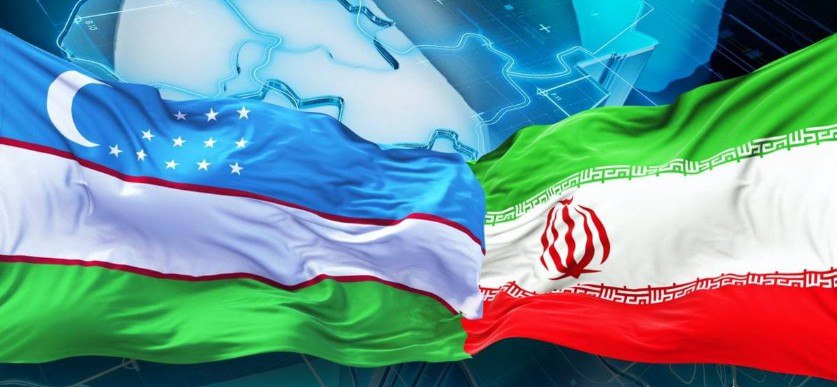
Central Asian countries are being careful not to criticize any actors during the Mideast war, maintaining ties with the Iranian government while expressing support for Gulf Arab countries that have been targeted by Iranian missiles and drones. The diplomacy on both sides of a war that began with U.S. and Israeli air strikes on Iran reflects a longstanding approach in Central Asia, where leaders have sought to project neutrality and maintain amicable relations with major powers including Russia, China and the United States. Increasingly, those leaders are taking coordinated positions on conflicts such as the one now convulsing the Mideast region, partly in order to preserve trade routes and strengthen a call for regional stability. It all means that Central Asian diplomats are busy these days. A lot of calls and meetings. Alibek Bakaev, Kazakhstan’s deputy foreign minister, discussed the situation in the Middle East with Iranian ambassador Ali Akbar Joukar in Astana on Wednesday. The two sides “reaffirmed their commitment to the implementation of the agreements reached following high-level negotiations,” the Kazakh government said, in an apparent reference to deals, probably related to trade, that were made before the massive strikes on Iran and ensuing upheaval that could affect the global economy. Like Kazakhstan, Uzbekistan has reached out to Gulf Arab countries during the crisis and thanked them for helping with the evacuation of Central Asian nationals, including Muslim pilgrims. On Wednesday, Uzbek President Shavkat Mirziyoyev spoke to Qatari Emir Sheikh Tamim bin Hamad Al Thani about the importance of bringing the war to a quick end, Uzbekistan’s Ministry of Foreign Affairs said. “Deep concern was expressed over unacceptable actions that exacerbate divisions within the Muslim ummah during the holy month of Ramadan,” said the ministry, without specifying who was responsible for the “unacceptable actions.” Just a day earlier, Foreign Minister Bakhtiyor Saidov of Uzbekistan spoke by telephone to his Iranian counterpart, Seyed Abbas Araghchi. Saidov expressed condolences over the loss of civilian lives in the war and the pair agreed on the need for dialogue. Among Central Asian countries, Uzbekistan and Kazakhstan in particular have been growing closer to the United States, signing trade deals and joining President Donald Trump’s Board of Peace initiative. Trump has described the Iranian leadership as “a vicious group of very hard, terrible people.” Nations in Central Asia aren’t the only ones looking for a balance in the current crisis. China, which relies heavily on Iranian oil but also values its ties to the wealthy Gulf Arab states, has called for an end to the war. Russia, which has received help from Iran for its war in Ukraine, has condemned the strikes, but Moscow has been developing ties with the Gulf states as well. Among traditional U.S. allies, Canadian Prime Minister Mark Carney has said he supports the strikes in Iran “with regret” because they reflect a further breakdown of the international order, even though Iran is a threat. French President Emmanuel Macron has expressed similar concerns about the strikes, while denouncing the...

Central Asia and Britain Launch CA5+UK Ministerial Track

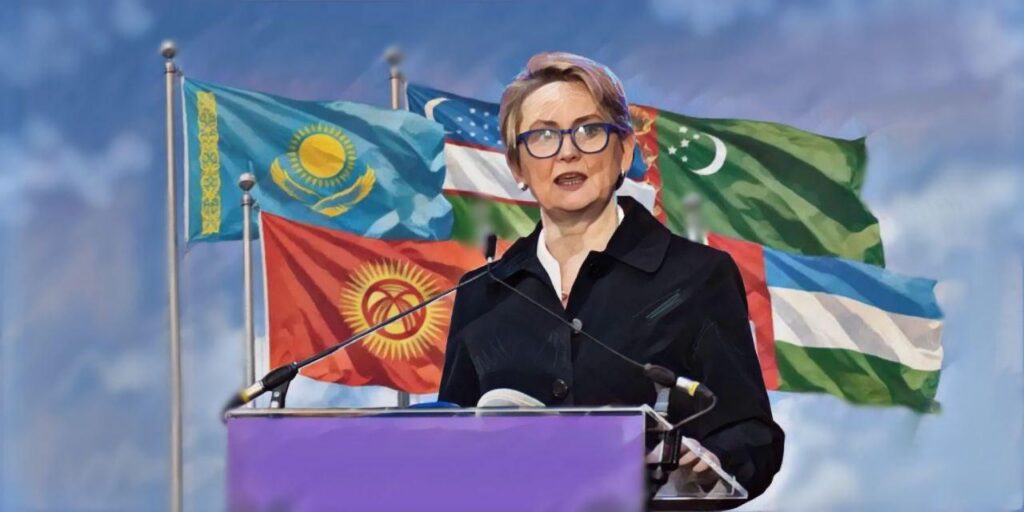
On February 26, 2026, the foreign ministers of Kazakhstan, Kyrgyzstan, Tajikistan, Turkmenistan, and Uzbekistan met in London with United Kingdom Foreign Secretary Yvette Cooper at Lancaster House for the inaugural “Central Asia–UK” (CA5+UK) ministerial. Official statements described it as the first time since independence that all five Central Asian foreign ministers have met jointly with a UK foreign secretary in a single forum. They also presented the meeting as the start of a structured ministerial channel, intended to convene regularly, that can carry regional priorities while leaving bilateral agendas in place. The United Kingdom is framing the new CA5+UK channel as a replacement for scattered bilateral visits: a single ministerial venue can set shared priorities and route them into investment and services work. For the five Central Asian states, it adds another external track, widening options without forcing institutional choices. Public statements point to a practical agenda focused on trade and investment, transport connectivity, energy transition, and critical minerals, with security present chiefly as background context. The enabling layer of finance, standards, education, and professional services is also included. How the London Program Unrolled On February 25, meetings took place at the British Parliament as part of the London schedule. The five ministers met with House of Commons Speaker Sir Lindsay Hoyle and held a session with the All-Party Parliamentary Group for Central Asia, chaired by Pam Cox.  The meetings in Parliament complemented the ministerial session at Lancaster House by widening contact beyond foreign ministries. The discussion emphasized committee-to-committee contacts, visits, and exchange of legislative practice as a complement to intergovernmental diplomacy. Parliamentary relationships and staff channels can carry attention between ministerial sessions, assisting with follow-up after cooperative contacts have been publicly established. They represent a second continuity layer: implementation often turns on routine access and working familiarity rather than on formal statements alone. Between the parliamentary program and the ministerial delegations, they also met with the United Kingdom business community at a reception in London. This was a practical companion to the new format, aiming at the conversion of diplomatic intent into projects that can be financed and executed. Kazakhstan’s Foreign Minister Yermek Kosherbayev cogently highlighted the Astana International Financial Centre (AIFC), which operates under English common law with an independent court and arbitration system and British judges in the AIFC Court. Beyond the plenary session, a ministerial working lunch provided a venue to follow up on such initiatives. Early deliverables were not multilateral but bilateral. Kazakhstan and the United Kingdom signed a strategic roadmap on critical minerals through 2027 and paired it with education moves, including a licensed Coventry University campus in Almaty and plans involving British secondary and higher education institutions. Uzbekistan reported a Memorandum of Understanding on healthcare services that it presented as a platform for building pharmaceutical manufacturing capacity, alongside separate discussions with investment and finance counterparts in London. Turkmenistan cited a 2026–2027 cooperation program between foreign ministries, and Tajikistan continued to emphasize investment and cooperation in science and education. CA5+UK Launches with Bilateral Packages...

Middle East Conflict Tests Central Asia’s Trade Routes and Energy Security

The escalating conflict between Iran, the United States, and their regional partners is raising economic concerns across Central Asia. Turkmenistan shares a long border with Iran, while other Central Asian economies depend on energy markets and trade routes that pass through or around the Persian Gulf. A wider conflict there could ripple across Central Asia through higher fuel prices, disrupted logistics, and pressure on key transport corridors. For countries such as Kyrgyzstan and Tajikistan, the most immediate risk is rising fuel prices. Both depend heavily on imported fuel. Kyrgyz security expert Taalaibek Jumadylov has warned that Kyrgyzstan could face rising prices for food, clothing, and other essential goods. For Tajikistan, the closure of the Strait of Hormuz would significantly increase import costs. Tajik media reports that trade between Tajikistan and Iran has grown rapidly over the past five years. Tajik-Iranian trade turnover increased from $377.7 million in 2024 to approximately $484 million in 2025, a rise of around 28%. Tajikistan’s exports totaled about $113 million, while imports from Iran exceeded $371 million, giving Iran a 4.5% share of Tajikistan’s total foreign trade turnover. If global oil prices rise significantly, Tajikistan could also face additional pressure on its budget. There are indirect risks as well: a slowdown in the economies of Russia, China, or other major partners could affect Tajikistan through trade, investment flows, and remittances. In Uzbekistan, analysts note that in recent years Iran has actively pursued transport diplomacy with Central Asia, seeking to strengthen its position as a regional logistics hub. Uzbek analyst Nargiza Umarova says this trend aligns with China’s Belt and Road Initiative. Iran and China signed a 25-year cooperation agreement in March 2021, a deal widely described as deepening Iran’s role in Belt and Road-linked connectivity. Kazakh economist Almas Chukin highlighted the logistical advantages of transport routes through Iran. “If we take the point where the Turkmenistan railway connects with Iran and the route to the Persian Gulf, it is about 1,200-1,500 kilometers. This is comparable to the distance from Astana to Almaty. Once you cover this distance, you reach the Persian Gulf and its major ports, where you can handle anything from oil transshipment to grain shipments. From there, sea transport to Rotterdam takes about three to four weeks,” he stated. Chukin added that such routes could simplify exports compared with transporting oil through Russia to Novorossiysk and then via the Black Sea, the Bosphorus Strait, and the Mediterranean. According to his estimates, a rail route to Europe through Iran would be about 3,500 kilometers from the Turkmen border. The economist suggested that if Iran’s political system changes and sanctions are lifted, Central Asia could benefit significantly. “This would be a huge shift for Central Asia: a region with a population of 80 million, abundant resources, and a young workforce, but constrained by geography, suddenly gaining direct access to global markets,” Chukin argued. Some analysts also point to emerging competition among regional transport corridors. In the South Caucasus, a proposed Zangezur corridor has been promoted...

Turkmenistan Opens Additional Crossings as Uzbekistan Evacuates Citizens from Iran

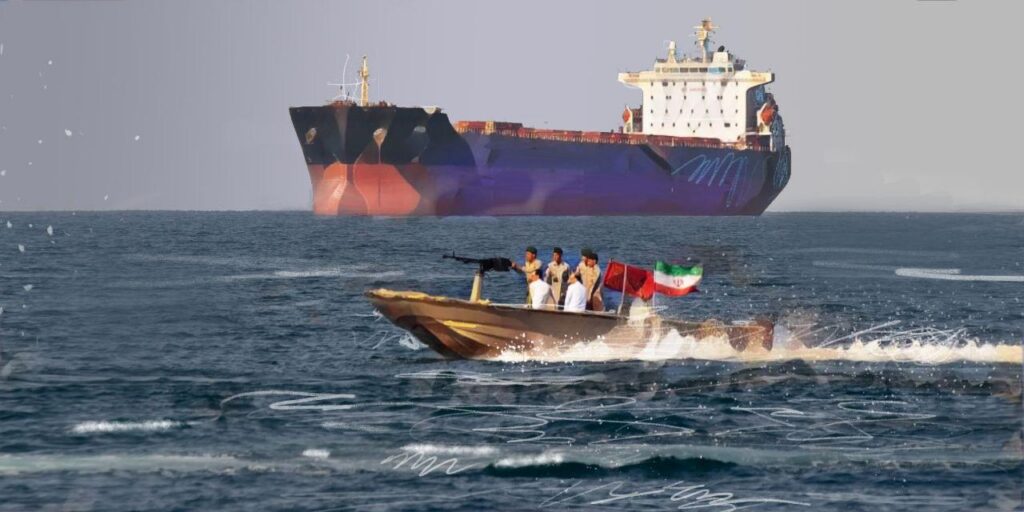
Turkmenistan has opened several additional checkpoints on its border with Iran to allow foreign citizens to leave the country as fighting in the Middle East continues. The Russian Embassy in Ashgabat said the Turkmen authorities have opened four additional crossings along the Turkmen-Iranian frontier: Artyk–Lutfabad, Gaudan–Bajgiran, Akyayla–Incheburun, and Altyn Asyr–Incheburun. These operate alongside the Sarakhs crossing, which had already been used for evacuation transit. The move expands an overland route through Central Asia for foreigners seeking to leave Iran while air travel across parts of the Middle East remains disrupted. Uzbekistan has begun using this corridor to assist its citizens. The country’s Ministry of Foreign Affairs said diplomatic staff and official vehicles have been deployed to the Sarakhs crossing to receive Uzbek nationals arriving from Iran and organize their onward transport across Turkmenistan toward Uzbekistan. Uzbek outlet Daryo reported on March 4 that Uzbekistan had already repatriated 13 citizens from Iran via Turkmenistan. Russia has also pointed citizens toward the Turkmen route. The Russian Embassy in Ashgabat said its citizens unable to leave Iran by air could exit through Turkmenistan and should register with the Russian Embassy in Tehran, which is coordinating assistance for citizens inside Iran. The embassy noted that Turkmenistan maintains strict entry rules and normally requires special permits for foreign visitors. Despite those restrictions, the country has previously allowed evacuation transit from Iran during earlier regional crises. The additional crossings create another evacuation corridor alongside the route from Iran into Azerbaijan through the Astara border crossing on the Caspian coast. Foreign nationals have already used that crossing to leave Iran in recent days, including citizens from Central Asia. The Turkmenistan route provides a more direct path back into the region for evacuees traveling toward Uzbekistan and other Central Asian countries. Turkmenistan shares a 1,148-kilometer border with Iran. Ashgabat, the Turkmen capital, sits only about 25 kilometers north of the frontier, and several transport links connect the two countries. Sarakhs functions as an established rail and road gateway used for trade and freight movement between the two countries. In recent years, Turkmenistan and Iran have also discussed expanding rail and freight transit through the Sarakhs crossing as part of broader regional transport corridors linking Central Asia to southern markets. Turkmenistan also exports natural gas to northern Iran under swap arrangements in which Tehran delivers equivalent volumes to Azerbaijan, which could disrupt regional logistics and energy flows. The expansion of border crossings increases the capacity for organized departures from Iran and provides foreign governments with an additional land route when other exit corridors become congested. For Central Asian governments, the immediate priority remains the safe movement of their nationals out of the conflict zone. The opening of additional Turkmen checkpoints provides another corridor linking Iran to Central Asia and may ease pressure on evacuation routes through the South Caucasus.

Middle East Conflict May Slow Growth, but Gold and Oil Dynamics Could Cushion Impact

The escalating conflict in the Middle East could weigh on Uzbekistan’s economic growth if it persists, though higher gold prices and oil-driven gains in key partner economies may soften the impact, according to Uzbek economist Mirkomil Kholboyev. Kholboyev shared his analysis on his Telegram channel, examining both the direct and indirect channels through which the crisis could affect Central Asia’s largest economy. “Several days of geopolitical tensions in the Middle East have already turned into open military confrontation,” he wrote. “It is still difficult to say how long this situation will last. If it is short-term and the previous status quo is restored, the impact on our economy will likely be limited and temporary. But if the war continues for a longer period, the consequences could be more significant.” Direct trade exposure appears limited. According to data from Uzbekistan’s national statistics portal, the country exported $157 million worth of goods to Iran in 2025, accounting for just 0.5% of total exports. Imports from Iran totaled $421 million, or 0.9% of overall imports. Trade with Israel was even smaller, with exports of $33 million and imports of $22 million. “Even a complete halt in trade with these countries would not significantly affect total exports,” Kholboyev wrote, though he noted that export and import growth could slow. Iran also plays a role as a transit hub. Its ports are part of broader regional logistics networks, including the Central Asia-India corridor via Chabahar and the International North-South Transport Corridor (INSTC). According to a regional analytical report, Uzbekistan accounts for 5.5% of total traffic along this route, compared with 61.1% for Kazakhstan and 29.4% for Turkmenistan. Kholboyev pointed out that while some of Uzbekistan’s trade passes through Iranian ports, the country is less dependent on them than other Central Asian countries. Still, he cautioned that prolonged fighting would inevitably disrupt both direct trade and transit flows. “I do not have precise data on how much of our total foreign trade passes specifically through Iranian ports,” he wrote. “That makes it difficult to assess the full effect. But if the war continues, both direct trade and transit through Iran will suffer serious damage.” Even if trade with the wider region, including Iran and other countries affected by hostilities, were to stop entirely, Kholboyev estimates the impact would remain moderate. The region accounts for about 2.4% of Uzbekistan’s exports and 1.5% of imports. A complete halt could slow export growth by roughly 3% and imports by about 2.5%, reducing overall GDP growth by around 0.6 percentage points. A 50% reduction in trade with the region would shave an estimated 0.2-0.3 percentage points off GDP growth. Energy markets represent a more significant risk channel. As trading resumed after the latest escalation, global oil prices rose by about 9%, driven by concerns over potential disruptions in the Strait of Hormuz, through which roughly one-fifth of global oil consumption passes. “If tensions escalate further and oil flows are restricted, or if prices continue rising amid uncertainty, this could slow...