• KGS/USD = 0.01144 0%
  • KZT/USD = 0.00210 0%
  • TJS/USD = 0.10563 0%
  • UZS/USD = 0.00008 0%
  • TMT/USD = 0.28530 0%
  • KGS/USD = 0.01144 0%
  • KZT/USD = 0.00210 0%
  • TJS/USD = 0.10563 0%
  • UZS/USD = 0.00008 0%
  • TMT/USD = 0.28530 0%
  • KGS/USD = 0.01144 0%
  • KZT/USD = 0.00210 0%
  • TJS/USD = 0.10563 0%
  • UZS/USD = 0.00008 0%
  • TMT/USD = 0.28530 0%
  • KGS/USD = 0.01144 0%
  • KZT/USD = 0.00210 0%
  • TJS/USD = 0.10563 0%
  • UZS/USD = 0.00008 0%
  • TMT/USD = 0.28530 0%
  • KGS/USD = 0.01144 0%
  • KZT/USD = 0.00210 0%
  • TJS/USD = 0.10563 0%
  • UZS/USD = 0.00008 0%
  • TMT/USD = 0.28530 0%
  • KGS/USD = 0.01144 0%
  • KZT/USD = 0.00210 0%
  • TJS/USD = 0.10563 0%
  • UZS/USD = 0.00008 0%
  • TMT/USD = 0.28530 0%
  • KGS/USD = 0.01144 0%
  • KZT/USD = 0.00210 0%
  • TJS/USD = 0.10563 0%
  • UZS/USD = 0.00008 0%
  • TMT/USD = 0.28530 0%
  • KGS/USD = 0.01144 0%
  • KZT/USD = 0.00210 0%
  • TJS/USD = 0.10563 0%
  • UZS/USD = 0.00008 0%
  • TMT/USD = 0.28530 0%

Viewing results 19 - 24 of 2952

The American-Uzbek Business Council Launches in Washington

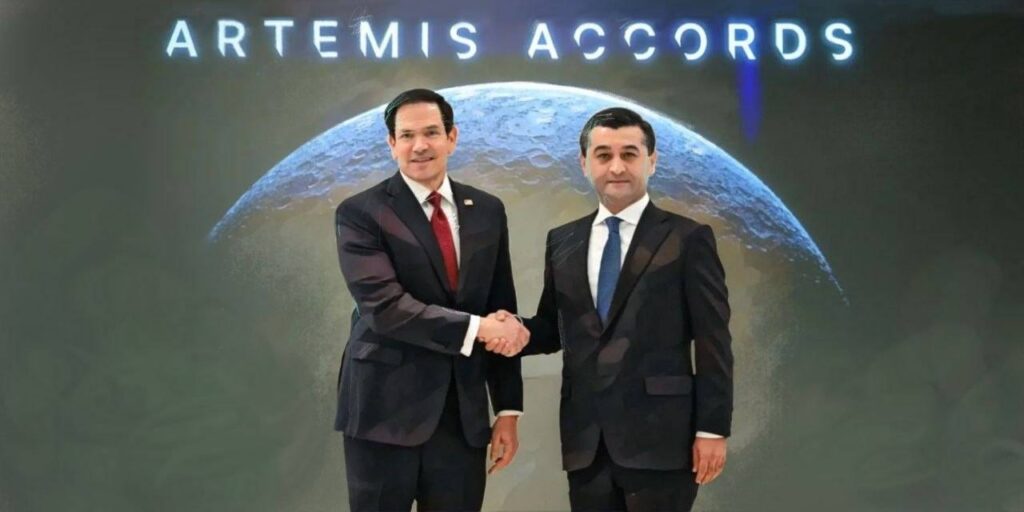
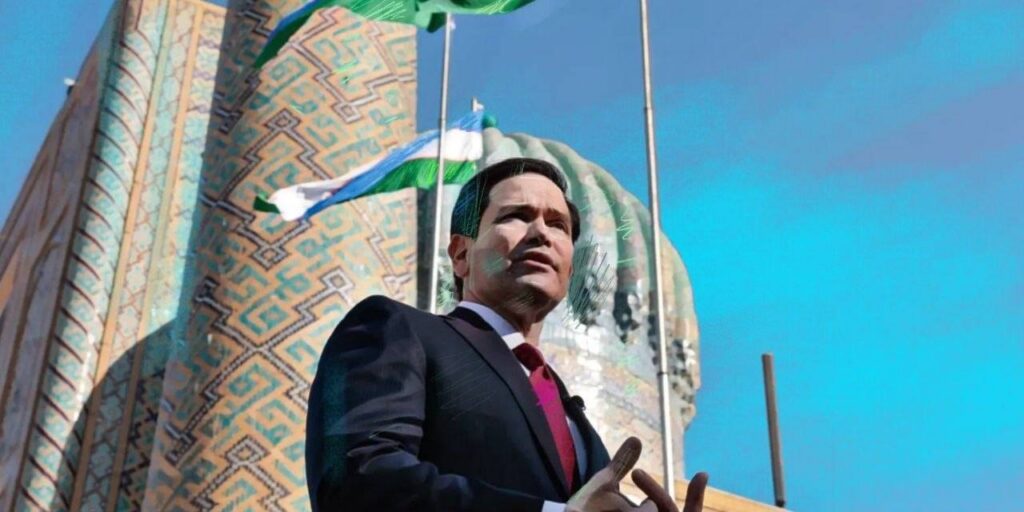
Washington D.C. - At the launch of the American-Uzbek Business and Investment Council in Washington on April 6, the most revealing line came early. Ambassador Sergio Gor, the White House’s special envoy for South and Central Asia, and Co-Chair of the Council, did not begin with trade statistics or a list of deliverables. He began with a blunt assessment of how the region has been treated in Washington. “For too long, this region has not found the attention that it deserves,” he said. That observation is hardly novel to anyone who follows Central Asia. What made it notable was the speaker and the setting. U.S. policy toward the region has often been episodic, driven at different times by Afghanistan, by Russia, by sanctions enforcement, or by concern over Chinese influence rather than sustained by a coherent regional economic strategy. Gor’s remarks suggested an attempt, at least by the current administration, to correct for that pattern. He was equally clear, however, that this was a political opening, not yet a settled doctrine. “Take this opportunity that the next two and a half years present,” he told the room, an unusually candid acknowledgment that Washington’s attention may be real without yet being durable. His other key formulation explained how the administration wants to make that attention count. “Never before in the history of the U.S. government has commercial diplomacy been such a major pillar of U.S. foreign policy,” Gor said. Whatever the phrasing, the intended shift was clear. Washington is signaling that in Central Asia, economic statecraft will not be treated as a side channel to politics, but as a primary instrument of policy. In that sense, the new council is less a ceremonial bilateral upgrade than a mechanism for turning political attention into projects, financing, and institutional follow-through. [caption id="attachment_46673" align="aligncenter" width="1600"] Image: TCA[/caption] Saida Mirziyoyeva, head of Uzbekistan’s presidential administration and the Uzbek co-chair of the council, answered that shift with a line that was just as pointed. “We are no longer at the stage where we speak about potential,” she said. “We are at the stage where we must deliver.” For a government that has spent years presenting Uzbekistan as a reforming economy open to outside capital, that was a significant change of emphasis. The argument is no longer that Uzbekistan deserves credit for opening up but that it now expects to be judged by execution. Her most substantive remarks were about institutions rather than ambition. The council matters, she said, because it should help “solve problems quickly, without unnecessary bureaucracy” and ensure that “no project is lost along the way.” That is a more serious claim than the language of partnership that usually fills these forums. Mirziyoyeva was effectively acknowledging the gap that often opens between political endorsement and project delivery. Uzbekistan’s challenge is no longer simply attracting attention from foreign partners but getting projects through financing, approvals, and implementation without losing momentum inside the state apparatus. That urgency reflects the scale of the opportunity. Uzbekistan, with a...

Uzbekistan Officials Intervene Over Wage Delays for Migrant Workers in Russia

Uzbek diplomats and migration officials have intervened to resolve wage disputes affecting dozens of Uzbek citizens working in Russia’s Tyumen region, according to a report by Dunyo Information Agency. Representatives of Uzbekistan’s Consulate General in Yekaterinburg, together with officials from the Migration Agency, traveled to the city of Tobolsk, where they met with more than 100 Uzbek citizens working temporarily for local companies. The delegation organized an on-site reception, providing legal and consular assistance and clarifying issues related to passport processing and compliance with migration laws. During the meetings, officials also warned workers about the risks of engaging with illegal or extremist groups and reminded them that joining private military companies could lead to criminal liability. A key issue raised during the visit was delayed wage payments. Authorities found that a subcontractor had failed to pay salaries for February and March to 26 Uzbek workers. Following negotiations involving the main contractor and the employer, the companies acknowledged the debt and agreed to settle it. As a result, approximately 2 million rubles (about $24,945) in wages have been accrued and are expected to be transferred to the workers’ bank accounts in the coming days. In addition, the employers committed to repaying outstanding wages to around 80 other Uzbek citizens who had previously left the company without receiving full payment. Officials also inspected living and working conditions and held discussions with employers aimed at preventing similar cases in the future. According to Dunyo, Uzbekistan’s government considers the protection of its citizens abroad and ensuring fair pay for their work a priority. Such outreach visits and rapid interventions are seen as an important tool for strengthening legal protections for Uzbek migrant workers in Russia and addressing their concerns directly on the ground. As previously reported by The Times of Central Asia, Russia expressed its readiness to facilitate the transfer of more than 3,000 Uzbek prisoners to serve their sentences in Uzbekistan, although the process remains constrained by legal limitations.

Saryagash Bypass Road to Improve Kazakhstan–Uzbekistan Transport Links

Kazakhstan has begun construction of a new highway bypassing the city of Saryagash in the Turkistan region. The project is expected to improve transport links in southern Kazakhstan and support transit along international routes. Saryagash is located in southern Kazakhstan near the Kazakh-Uzbek border, approximately 20 km from Tashkent, the capital of Uzbekistan. The Saryagash Bypass Road is designed to redirect transit traffic away from urban areas, reduce congestion within the city, shorten travel times, and facilitate faster passenger and cargo movement toward Uzbekistan. The project involves the construction of a 102.6 km modern four-lane highway, aimed at supporting cross-border trade and reinforcing the Turkistan region’s role as a key transport hub on international corridors. In September 2025, the Asian Development Bank (ADB) approved a sovereign-guaranteed loan of $400 million to KazAvtoZhol National Company for the construction of the bypass road. “The Saryagash Bypass Road will strengthen Kazakhstan’s trade and transport links within the region and with external markets in East Asia and Western Europe, helping unlock the country’s potential as a key transit hub,” said Utsav Kumar, ADB Country Director for Kazakhstan. “The project will contribute to the economic development of the Turkistan region by improving access to larger markets, reducing congestion, creating jobs, and promoting tourism.” The highway will improve links between Central Asia Regional Economic Cooperation (CAREC) Corridors 3 and 6, key trade routes connecting Kazakhstan with neighboring countries. The CAREC Program, supported by the Asian Development Bank, brings together regional countries and development partners to promote economic growth and sustainable development. In addition to the bypass project, road network modernization is ongoing in the Turkistan region, according to the Ministry of Transport. Five road repair projects with a combined length of 99.2 km are currently underway, including the reconstruction of interchanges and bridges on key routes connecting Kazakhstan with neighboring states. These initiatives are expected to increase transit capacity and improve cross-border transport flows.

Central Asian Startups See Investment Surge

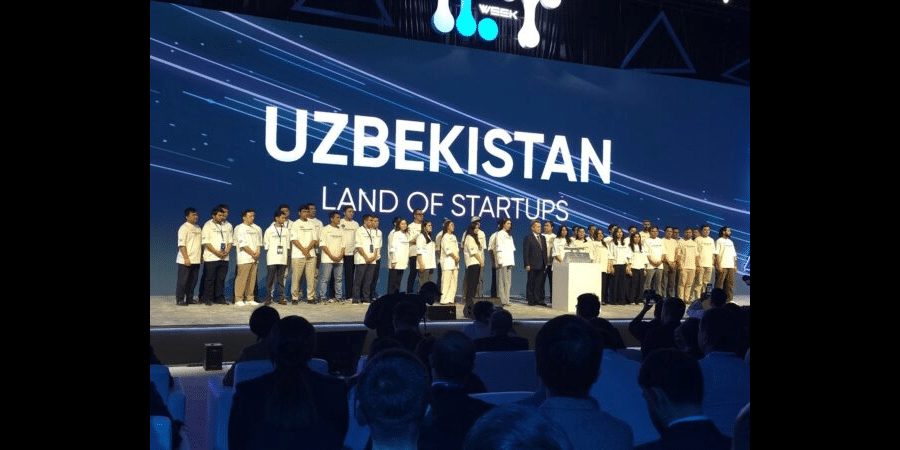
The fifth Central Eurasian Venture Forum (CEVF 2026) opened in Uzbekistan for the first time, drawing around 800 investors, startups, and technology companies from Central Asia, Europe, the U.S., Southeast Asia, and the Middle East and North Africa. Minister of Digital Technologies Sherzod Shermatov attended the opening ceremony. The event was organized by MOST Holding and IT Park Uzbekistan with government support. Partners included Astana Hub, the European Bank for Reconstruction and Development, the International Finance Corporation, Visa, and others. During the forum, the report Startups and Venture Capital in Central Asia 2026, prepared by RISE Research, was presented. According to the study, total venture capital investment in the region reached $320 million in 2025. The two largest deals, $130 million for Higgsfield and $65.5 million for Uzum, accounted for 61% of the total. Excluding these deals, the market reached $124.5 million, marking a 31% increase compared to 2024 and indicating steady organic growth. At the forum, the analytical agency RISE Research presented a study of the Central Asian venture capital market for 2025. According to the study, the volume of venture capital investments in Kazakhstan nearly tripled, reaching $209 million, with artificial intelligence being the main driver, accounting for approximately half of the total investment.  In Uzbekistan, funding reached $33.8 million, an increase of more than eleven times compared to 2022. Including major deals, the Uzbek market is estimated at $99.3 million, with 85% of investment coming from domestic investors. The forum also hosted the CEVF Awards ceremony, recognizing key players in the regional venture ecosystem. In addition, the European Bank for Reconstruction and Development announced 13 finalists for its Star Venture program for Central Asia, aimed at supporting high-tech startups. During the forum, cooperation agreements were signed with international partners, including companies from South Korea and the Middle East, to support the development of the startup ecosystem and attract investment. The second cohort of the Investment Readiness Accelerator (IRA) Tashkent program, focused on early-stage startups, was also launched.

Opinion: Trump Has Golden Opportunity to Launch C6+1 on Sidelines of UN

Representatives of the five Central Asian states — Kazakhstan, Uzbekistan, Kyrgyzstan, Tajikistan, and Turkmenistan — along with Azerbaijan, are expected in New York for the United Nations General Assembly in September. Historically, meetings between the Central Asian states and the United States – the C5+1 – have taken place on the sidelines of the United Nations. It is the most natural and logistically efficient venue for President Donald Trump to re-engage with the C5 partners he hosted at the White House last November. As of now, only foreign ministers are expected to attend the UNGA. But this could change if Trump extends an invitation to the leaders, according to a Central Asian diplomatic source. This time, however, he has the opportunity to add Azerbaijan, transforming the format into a C6+1. Baku has already been invited to participate as a full member in Central Asian gatherings, and Washington should build on that momentum. Azerbaijan is uniquely positioned: close to both Israel and Turkey – two of America’s most important regional partners – it sits astride one of the most important connectivity corridors linking Europe and Asia. Its inclusion would turn the C5+1 into a genuinely trans‑Caspian framework that reflects the emerging realities of Eurasian integration. The move would also link two major diplomatic achievements of Trump’s second term: the launch of the Trump Route for International Peace and Prosperity (TRIPP), a 43-km strategic transit corridor connecting mainland Azerbaijan to its Nakhchivan exclave through Armenia, and Trump’s elevation of the C5+1 to a White House-level summit. While TRIPP was discussed at the C5+1 meeting in November, bringing Azerbaijan into the next gathering would allow the administration to present itself as the architect of a new Eurasian trade and energy map. Strategically, a C6+1 format carries significant implications for great-power competition with China. This is because Central Asia is so crucial to Beijing’s grand strategy. In its recently adopted 15th five-year plan, neighborhood diplomacy is listed as the top priority — ahead of relations with major powers or developing countries. Beijing seeks to build a “community with a shared future” with 17 neighboring states, including all five in Central Asia, to “create a favorable external environment” for national rejuvenation, as Foreign Minister Wang Yi has stated. For China, Central Asia is a vital “hinterland” for energy and resource security, and a buffer against maritime disruptions. The United States does not need to dominate the Eurasian Heartland or force Central Asian states to choose between Washington and Beijing. It simply needs to ensure that any Chinese westward access runs through a vast landmass of countries that maintain constructive relations with the United States. A C6+1 format helps shape that environment without confrontation. A stable Middle Corridor – the energy and trade route running through Central Asia, across the Caspian Sea and through Azerbaijan to Turkey and the Mediterranean – also benefits America's energy-hungry allies in Asia, such as Japan and South Korea. Both increasingly look to Kazakhstan as an alternative oil supplier as they...

Big Names in Chess Praise Sindarov, Now Candidates Frontrunner

The chess world knew Javokhir Sindarov was dangerous heading into the FIDE Candidates Tournament this year, even though he was making his debut at the prestigious event and, at 20 years old, is the youngest of the eight elite contenders. But few people expected the Uzbekistani phenomenon to tear through the field in the first week of the event, racking up five wins and two draws so far in the 14-round tournament. Sindarov has six points out of a possible total of seven, and a 1.5 point lead over second-placed Fabiano Caruana of the United States. He is the strong frontrunner to win the event and earn the right to challenge the current world champion, India’s Gukesh Dommaraju, later this year. Monday was a rest day and there are still seven games to go at the candidates tournament being played this year in Cyprus. But some of the biggest names in chess are in awe over Sindarov’s aggressive, resourceful performance. “Incredible result so far!” former world champion Garry Kasparov said on X on April 3 after Sindarov’s wins over second-ranked Caruana and third-ranked Hikaru Nakamura. “Do not underestimate the boost that confidence plays after a strong start. You trust your instincts more, a positive cycle of intuition and performance. Meanwhile, your opponents doubt themselves against you.” Judit Polgár, often described as the best female chess player of all time, said that Sindarov will be at the top of the game for many years regardless of what happens at this year’s candidates tournament. “He is 20 years old, a fearless player, a genius in management,” said Polgár, who is the subject of a Netflix documentary titled Queen of Chess. “Can he keep calm and stay focused until the very end of the tournament? Will he be able to handle the pressure of being so close to becoming the next World Championship challenger?” Nigel Short of Britain, who rose to third in the world in the late 1980s and is currently FIDE director of chess development, compared Sindarov to a young Boris Spassky, the former world champion from Russia who died in 2025. Sindarov, Short said on Facebook, is “a classical player with an excellent feeling for the initiative, who stays calm and trusts his own judgement in dynamic positions.” Sindarov, who won the 2025 World Cup in Goa, India, was one of Uzbekistan’s youngest national champions in history, achieving that goal at the age of 13. Still, right now, compatriot Nodirbek Abdusattorov is the higher-ranked player. Abdusattorov didn’t qualify for this year’s candidates tournament, though he recently won several consecutive tournaments. Magnus Carlsen of Norway currently doesn’t play in the candidates tournament format even though he is the top-ranked classical chess player in the world. But he is also keeping an eye on Sindarov, saying “nobody” expected such a strong start to the event.