• KGS/USD = 0.01144 0%
  • KZT/USD = 0.00215 0%
  • TJS/USD = 0.10456 0%
  • UZS/USD = 0.00008 0%
  • TMT/USD = 0.28490 0%
  • KGS/USD = 0.01144 0%
  • KZT/USD = 0.00215 0%
  • TJS/USD = 0.10456 0%
  • UZS/USD = 0.00008 0%
  • TMT/USD = 0.28490 0%
  • KGS/USD = 0.01144 0%
  • KZT/USD = 0.00215 0%
  • TJS/USD = 0.10456 0%
  • UZS/USD = 0.00008 0%
  • TMT/USD = 0.28490 0%
  • KGS/USD = 0.01144 0%
  • KZT/USD = 0.00215 0%
  • TJS/USD = 0.10456 0%
  • UZS/USD = 0.00008 0%
  • TMT/USD = 0.28490 0%
  • KGS/USD = 0.01144 0%
  • KZT/USD = 0.00215 0%
  • TJS/USD = 0.10456 0%
  • UZS/USD = 0.00008 0%
  • TMT/USD = 0.28490 0%
  • KGS/USD = 0.01144 0%
  • KZT/USD = 0.00215 0%
  • TJS/USD = 0.10456 0%
  • UZS/USD = 0.00008 0%
  • TMT/USD = 0.28490 0%
  • KGS/USD = 0.01144 0%
  • KZT/USD = 0.00215 0%
  • TJS/USD = 0.10456 0%
  • UZS/USD = 0.00008 0%
  • TMT/USD = 0.28490 0%
  • KGS/USD = 0.01144 0%
  • KZT/USD = 0.00215 0%
  • TJS/USD = 0.10456 0%
  • UZS/USD = 0.00008 0%
  • TMT/USD = 0.28490 0%

Viewing results 445 - 450 of 2871

Electronic Queue System Launched at Key Kyrgyz-Uzbek Border Crossing

An Electronic Queue Management System (e-QMS) has been launched at the Dostuk border crossing, the primary checkpoint between Kyrgyzstan and Uzbekistan along the Osh-Andijon road. The initiative, developed through cooperation between the Kyrgyz government, the European Union, and the International Trade Centre (ITC), is part of the “Ready4Trade Central Asia” project (2024-2028), which aims to streamline trade procedures and boost economic competitiveness across the Trans-Caspian Transport Corridor. Funded by the European Union, the project is designed to simplify cross-border operations and improve conditions for small and medium-sized enterprises. The e-QMS platform, developed by the ITC in collaboration with Kyrgyzstan’s State Customs Service and Ministry of Economy and Commerce, allows transport operators to pre-book border crossing times online or via a mobile app. The system is expected to reduce waiting times, ease congestion, and improve the predictability of border transit, benefiting both carriers and customs authorities through greater transparency, efficiency, and safety. “For Kyrgyzstan, the implementation of e-QMS is a cornerstone in creating a business-friendly environment for exporters. The new system simplifies procedures, reduces costs for exporters and carriers, and makes trade more transparent and efficient,” said Iskender Asylkulov, Kyrgyzstan's Deputy Minister of Economy and Commerce. The system was initially piloted at the Kyzyl-Kiya border crossing in November 2024, where it processed more than 12,000 vehicles in its first six months. Following positive feedback from transport operators and significant reductions in wait times, the system has now been expanded to Dostuk, one of the region’s busiest crossings. In 2024 alone, over 87,000 vehicles passed through Dostuk, including more than 21,000 import consignments, nearly 8,000 export shipments, and over 58,000 transit movements. The deployment of the e-QMS is expected to further boost trade between Kyrgyzstan and Uzbekistan, which reached $846 million in 2024. From January to June 2025, bilateral trade turnover totaled $430.2 million, $50 million more than during the same period in 2024, according to data from Uzbekistan’s National Statistics Committee.

Uzbekistan Airways Refutes Near-Collision Reports in Russian Airspace

Uzbekistan Airways has denied claims that one of its aircraft was involved in a near-collision with a private jet in Russian airspace, describing the reports inaccurate and misleading. The airline issued a statement in response to tabloid coverage in Russia alleging a serious aviation incident near Moscow’s Vnukovo International Airport. As previously reported by The Times of Central Asia, the incident allegedly occurred shortly after midnight on September 29 near Serpukhov, south of Moscow. Early accounts indicated that an Uzbekistan Airways Airbus A320 en route from Samarkand and an Embraer Legacy 650 business jet flying from Bodrum came within three kilometers horizontally and 700 feet vertically of each other—below international safety thresholds—due to a miscommunication over altitude clearance. Uzbekistan Airways has firmly rejected this version of events. In a statement from its press service, the airline stressed that its crew fully complied with all instructions from Moscow air traffic control and did not breach any flight regulations. “All altitude levels were maintained in accordance with the established rules and procedures, and the required separation between aircraft was preserved,” the statement read. The airline also clarified that the flight in question occurred on September 28, not September 29 as initially reported. It added that the aircraft’s onboard safety systems did not issue any alerts, and Moscow’s air traffic controllers made no objections or complaints about the crew’s actions. Uzbekistan Airways criticized several Russian media outlets for publishing what it described as unverified information, which was later reprinted by some Uzbek outlets without proper verification. “This created a misleading impression among readers,” the airline said. Reaffirming its commitment to international aviation standards, the company stated that flight safety remains its highest priority and that all crews operate in strict compliance with air traffic control instructions.

Uzbek Authorities Investigate Mass Food Poisoning at Some Kindergartens

Uzbekistan’s Ministry of Health says almost all children who were hospitalized after suffering food poisoning at several state kindergartens in the Tashkent region have recovered and are back with their families.  Hundreds of children had been affected by the preschool health crisis, which prompted an emergency response from medical institutions when the first cases of fever, nausea and diarrhea were reported a week ago. Lab workers conducted tests on outsourced food being served at the kindergartens. Prosecutors opened a criminal case and an investigation is underway.  Media outlet UzDaily.com reported that authorities had arrested seven people, including executives of food companies that supplied the kindergartens. It said children got sick with gastroentiritis at schools in seven districts across the Tashkent region. Estimates of the number of affected children varied, with some reports saying more than 1,000 received medical treatment. Nurmat Atabekov, first deputy chairman of the ministry’s sanitary-epidemiological welfare and public health committee, said on Tuesday that three children remain under medical supervision because of other diseases but are in stable condition and expected to return home in the coming days.  Authorities will tighten control of food catering for all educational institutions in Uzbekistan, according to Atabekov.  “In cooperation with law enforcement agencies and the Ministry of Health, all details of the incident are being thoroughly investigated,” the Ministry of Preschool and School Education said. “If deficiencies are found, the relevant contracts will be reviewed or canceled.”  The kindergartens where children fell ill plan to reopen on Thursday.

Uzbekistan Airways Plane in Near Miss with Business Jet Over Moscow

An Uzbekistan Airways passenger jet and a private business aircraft came dangerously close to colliding in Russian airspace near Serpukhov, south of Moscow, due to a radio miscommunication, according to reports from the Telegram channel Aviatorshina. The incident occurred shortly after midnight on September 29, as both planes were descending toward Moscow’s Vnukovo Airport. The aircraft involved were an Embraer Legacy 650 business jet flying from Bodrum (registration RA-02753) and an Uzbekistan Airways Airbus A320 inbound from Samarkand (registration UK-32018). According to Aviatorshina, the Embraer was cruising at 9,000 feet when air traffic controllers instructed the Airbus to descend to 10,000 feet. However, the A320 crew mistakenly read back the clearance as 9,000 feet and the error went unnoticed by both of the controllers on duty, despite overseeing only six aircraft at the time. As a result, the Uzbekistan Airways jet descended below its assigned altitude, breaching minimum separation standards. The two aircraft reportedly passed each other with a horizontal gap of about three kilometers, less than the required five and a vertical distance of only 700 feet instead of the mandated 1,000 feet. Although the ground-based conflict alert system was triggered, there were no reports that the onboard Traffic Collision Avoidance System (TCAS) was activated. Both aircraft landed safely without further incident. Russia’s Federal Air Transport Agency (Rosaviatsiya) has classified the occurrence as an aviation incident and launched an investigation. The event marks the eighth reported safety-related incident in Moscow’s airspace this year, with two occurring in the past week alone, including another near-collision at Sheremetyevo Airport. In response, the State Corporation for Air Traffic Management (GK ORVD) has demoted the entire management team of the Moscow Air Traffic Control Center for the month of September. Officials have warned that continued lapses in safety performance could lead to a complete overhaul of the branch’s leadership.

Mirziyoyev Secures Spotlight During U.S. Visit

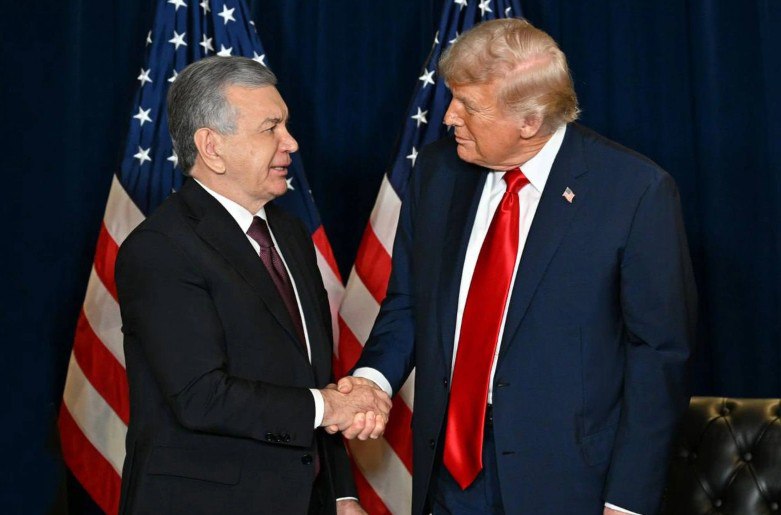
In a significant diplomatic breakthrough, Uzbekistan emerged as a standout player during this year’s United Nations General Assembly events in New York. President Shavkat Mirziyoyev not only secured a high-profile meeting with U.S. President Donald Trump, but also signed a landmark $8 billion deal with Boeing to purchase Dreamliner jets, a move that drew praise from Trump and captured the attention of the international business community. Trump publicly endorsed the agreement on social media, calling Mirziyoyev “a man of his word” and noting the deal would create “over 35,000 jobs” in the United States. Mirziyoyev’s visit included a high-level investment roundtable with executives from leading U.S. corporations and financial institutions. According to Forbes, trade between the two countries has quadrupled under Mirziyoyev’s leadership, with more than 300 American companies now active in Uzbekistan. Strategic sectors such as rare-earth metals and critical minerals took center stage during the discussions. Among the key meetings was one with the vice president of the Colorado School of Mines, who expressed support for establishing a research center in Uzbekistan. Other topics included joint initiatives in banking, information technology, transportation, and energy infrastructure. The scale of the Boeing deal served as a symbolic anchor to broader efforts: positioning Uzbekistan as a key connector between Central Asia and the Western economy. This aligns with a larger strategic pivot that analysts have long advocated. As U.S. engagement in Central Asia expands, countries like Uzbekistan are increasingly looking to diversify away from dependence on Russia and China. Forbes noted that the Trump administration is building on foundations laid by its predecessor by promoting regional initiatives such as the Zangezur Corridor, referred to as the “Trump Corridor”, aimed at linking Central Asia to global markets without passing through Russian territory. Mirziyoyev’s face-to-face meeting with Trump, followed by the public endorsement, also plays into shifting domestic narratives. It signals growing diplomatic credibility and a willingness to operate as an equal on the global stage. The convergence of political recognition and commercial investment may mark a turning point in Uzbekistan’s foreign policy, not just as a recipient of aid, but as a proactive economic actor. With the Boeing order and growing support from U.S. business leaders, Uzbekistan is staking its future on deepening ties with the West. Coupled with ongoing domestic reforms, the country is making a strategic bet that modernization and diversified partnerships will yield long-term dividends.

Silk Road Shipwrecks: Virtual Museum Opens Maritime Section

One of Central Asia’s most engaging new cultural projects took on a new dimension last month. The Silk Road Virtual Museum, an online collection of over 20 exhibitions of pre-16th-century Eurasian life and art, has recently opened a section for the ancient trade route’s maritime history. An initiative by the Institute of Asian Studies at Leiden University in the Netherlands, the site allows visitors to move through themed rooms, just as they would wander through a physical museum. Beginning on a map of the world on the museum’s homepage, visitors click on the Silk Road locations that they wish to discover. Each pin on the map takes them to a video replicating a guided tour of art and artefacts from that place at a certain historical era. Just as in a real museum, each exhibit has an information panel explaining what the object is. Life on the Central Asian parts of the Silk Road is shown in exhibitions to Sogdian traders in Samarkand (6th-8th centuries), with camels often featuring in their ceramic art, and a room dedicated to ancient caravanserais (inns that provided lodging for travellers), including at Tash Rabat in Kyrgyzstan. Launched in 2024, the Silk Road Virtual Museum already displays over 1,300 objects in total. Their geographical reach mainly stretches from Venice to China, as the Silk Road is often imagined today – but there are collections from places as unexpected as Sweden and Indonesia.  With the launch of the maritime section on 16 September, their scope now spans seas as well as deserts. Virtual visitors can travel along the coasts of the Indian Ocean, where there are already seven shipwreck exhibitions, each with its own unique story. The project is managed by VirtualMuseum360 and supported by an international network of scholars, who aim to make the Silk Road’s many eras and strands accessible to people wherever they are in the world. The web pages have two advantages over traditional museums, in that they are free to access and open 24/7.  Leading the Silk Road Virtual Museum (SRVM) is Professor Richard Griffiths, the director of Leiden University’s ‘New Silk Roads’ programme. A distinguished economic historian who has specialised in the history of trade, during a spell teaching in the Chinese city of Chengdu, Griffiths took an interest in China’s Belt and Road Initiative. When he began to trace the policy’s history, he realised that the origins of China’s modern trade with the West can be found in the myths and realities of the ancient Silk Roads. The key to making SRVM work, he says, is collaboration. Griffiths tells The Times of Central Asia: “We’re not replacing real museums – we’re working alongside them. Everything we do depends on the knowledge of academics, archaeologists, and conservators. Together we can make heritage accessible to anyone, anywhere, without losing its depth or integrity.” “Our visitors are a real mix,” he adds. “Often people tell me they use SRVM before a trip, so that when they see objects in a real museum,...