• KGS/USD = 0.01144 0%
  • KZT/USD = 0.00216 0%
  • TJS/USD = 0.10616 -0.19%
  • UZS/USD = 0.00008 0%
  • TMT/USD = 0.28530 0%
  • KGS/USD = 0.01144 0%
  • KZT/USD = 0.00216 0%
  • TJS/USD = 0.10616 -0.19%
  • UZS/USD = 0.00008 0%
  • TMT/USD = 0.28530 0%
  • KGS/USD = 0.01144 0%
  • KZT/USD = 0.00216 0%
  • TJS/USD = 0.10616 -0.19%
  • UZS/USD = 0.00008 0%
  • TMT/USD = 0.28530 0%
  • KGS/USD = 0.01144 0%
  • KZT/USD = 0.00216 0%
  • TJS/USD = 0.10616 -0.19%
  • UZS/USD = 0.00008 0%
  • TMT/USD = 0.28530 0%
  • KGS/USD = 0.01144 0%
  • KZT/USD = 0.00216 0%
  • TJS/USD = 0.10616 -0.19%
  • UZS/USD = 0.00008 0%
  • TMT/USD = 0.28530 0%
  • KGS/USD = 0.01144 0%
  • KZT/USD = 0.00216 0%
  • TJS/USD = 0.10616 -0.19%
  • UZS/USD = 0.00008 0%
  • TMT/USD = 0.28530 0%
  • KGS/USD = 0.01144 0%
  • KZT/USD = 0.00216 0%
  • TJS/USD = 0.10616 -0.19%
  • UZS/USD = 0.00008 0%
  • TMT/USD = 0.28530 0%
  • KGS/USD = 0.01144 0%
  • KZT/USD = 0.00216 0%
  • TJS/USD = 0.10616 -0.19%
  • UZS/USD = 0.00008 0%
  • TMT/USD = 0.28530 0%

Viewing results 193 - 198 of 1211

How the Ferghana Valley Might Become Central Asia’s Laboratory of Peace

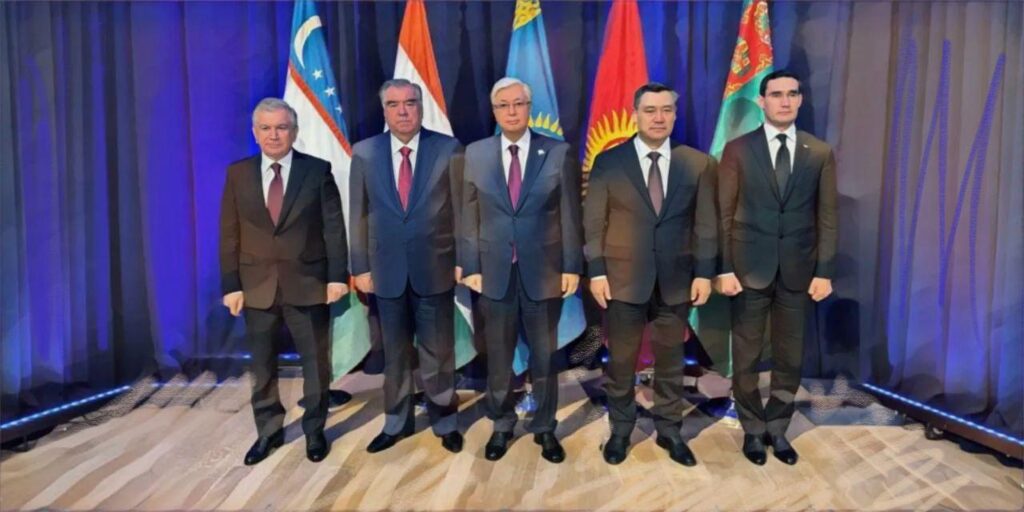
On October 15-16, in the heart of the Ferghana valley, which for decades has been associated with border conflicts, mistrust, and unresolved issues, the heads of Ferghana (Uzbekistan), Batken (Kyrgyzstan), and Sughd (Tajikistan) gathered to discuss the further peaceful development of the region. The forum brought together not just officials but also experts, diplomats, civil society, and international organization representatives from Central Asia, Europe, and other regions. The first Ferghana Peace Forum, entitled “Ferghana Valley: Joining Forces for Peace and Progress”, was not simply another gathering behind closed doors but a table where everyone was offered a seat. The valley, with territory of roughly 20,000-22,000 km² shared by three countries, was one of the main routes for the ancient Silk Road. It embodies diverse cultures and fertile lands, but also, until recently, the unresolved problems and deep contradictions of Central Asia. Complex issues, including water management, border demarcation, and conflicting national narratives. People's connections were severed by visa regimes and land mines. It was, until recently, impossible to imagine today's reality where people are crossing borders without long lines or bureaucratic barriers. The Khujand Declaration, signed in early 2025 by the presidents of Kyrgyzstan, Tajikistan, and Uzbekistan, paved the way for the forum. The document marked a historic shift, reflecting the countries' desire for dialogue, open borders, economic cooperation, and cultural exchange. However, it remained only a vision without an implementation mechanism that would turn the declaration into sustainable interaction. The Ferghana Peace Forum promises to fill this gap by becoming the first peacebuilding platform designed specifically for the territory, and managed by the three countries themselves with support from external organisations, rather than by external intermediaries or actors. The Forum's founding communiqué defines its goal as creating a permanent platform for building trust, developing a common development strategy, attracting investment, and forming a new political climate in Central Asia. It is a rare occasion when Central Asian countries organize inclusive platforms for open discussions and the participation of civil society, academia, and business. With more than  300 participants, including officials from the UN, EU, and OSCE, as well as leading international NGOs, the forum promises to become a truly historical event. As one of the Forum participants noted, “If peace is possible in Ferghana, it is possible anywhere in Central Asia, and perhaps anywhere in the world.” Discussions were focused on the practical implementation of regional cooperation. Participants addressed issues that have long fueled tensions in the valley: border procedures, joint water management, trade facilitation, labor migration, and crisis prevention. At the same time, the platform created a space for exploring new areas of cooperation, such as digitalization, education, renewable energy, and tourism. There was a shared understanding that peace cannot be sustainable without economic opportunities and social integration. The timing of the forum could not have been better. With the flow of current geopolitical events, Central Asian countries have a narrow window of opportunity to strengthen the internal cooperation and to institutionalize it, while Russia is distracted by...
Trump–Xi Meeting Reshapes Stakes Ahead of C5+1 Summit

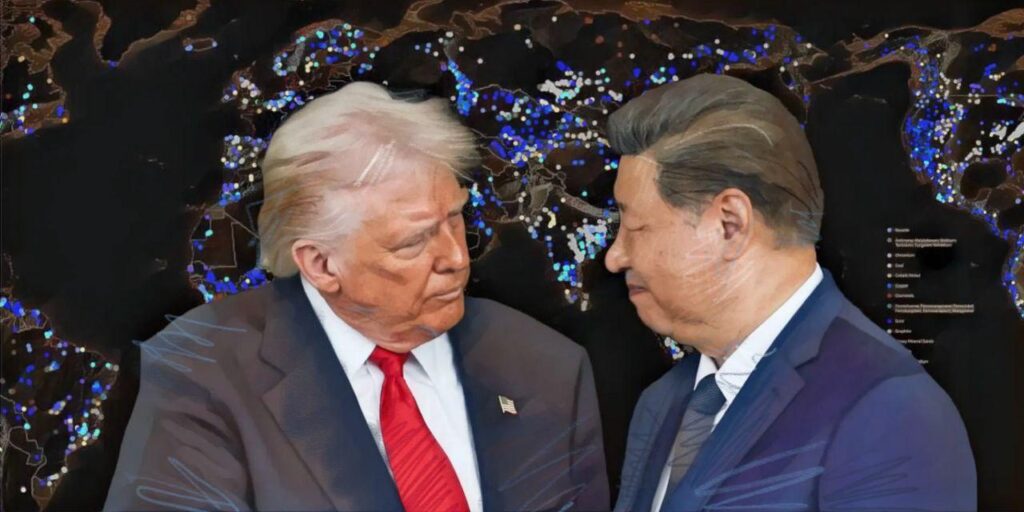
The October 30, 2025, meeting between U.S. President Donald Trump and Chinese President Xi Jinping in Busan, South Korea, marked their first in-person contact since 2019. While framed as a limited reset or tactical pause, the talks carry deeper strategic implications. They occurred just days before the forthcoming C5+1 Leaders’ Summit in Washington on November 6, a gathering with direct consequences for Central Asia’s role in the future of critical mineral supply chains. South Korea Talks: Reset or Recalibration? At the meeting in Busan, Trump and Xi discussed supply chains, tariffs, rare earth trade, and broader trade issues. The U.S. announced that China had agreed to pause certain rare-earth export curbs for a year, with Trump describing the talks as “amazing.” China currently processes roughly 90% of the world’s rare-earth elements and mines around 70%, which are indispensable in the production of electric vehicles, wind turbines, defense technologies, and high-tech manufacturing. Analysts characterized the Busan accord not as a strategic realignment but as a “tactical pause” or a “temporary lull to escalation” between the U.S. and China. For emerging potential U.S. partners in Central Asia, however, the optics matter, as any perceived U.S.–China trade thaw could diminish the urgency behind diversifying rare earth supply chains. Central Asia’s Rare Earth Opportunity As previously reported by The Times of Central Asia, the upcoming C5+1 summit is likely to focus on critical minerals, energy logistics, and investment infrastructure as the U.S. seeks to reduce its reliance on China. Kazakhstan has emerged as a major player in rare earths, with geological surveys in 2024 and 2025 identifying 38 promising solid mineral deposits, including the Kuyrektykol site in the Karaganda region, which contains substantial reserves. Uzbekistan, meanwhile, signed a memorandum of understanding with the U.S. on critical minerals cooperation in September 2024, which represented a major step toward deepening bilateral cooperation on this front. The U.S. International Development Finance Corporation (DFC) has signaled its interest in co-financing midstream mining and processing infrastructure in Central Asia, though projects remain at formative stages. Logistics routes such as the Middle Corridor via Central Asia and the Caspian remain strategically attractive to Western-aligned supply chains seeking to bypass Russia. Trump–Xi Reset Could Blur U.S. Commitments, But the Case for Diversification Remains Strong Should the Trump-Xi meeting diminish the immediate urgency of supply chain diversification, this will be of concern to countries looking to balance their economies with geopolitical neutrality. Kazakhstan has long positioned itself as a multi-vector neutral broker between major powers, meaning fluctuating U.S. policy signals could cause complications. Despite the reset, however, most analysts contend that little has fundamentally changed, with the Busan meeting seen as a temporary rather than a genuine strategic pivot. While structural competition between Washington and Beijing endures, diversification of critical mineral supply chains remains as essential as ever. For Central Asia, this dynamic reinforces the need to continue developing regional value chains and its mid-stream processing capacity. What to Expect in Washington The November 6 C5+1 Leaders’ Summit in Washington will test whether the...

World Happiness Index: Central Asian Countries Stand Out With “Warm Social Climate”

Kazakhstan has been named the happiest country in Central Asia, according to the World Happiness Report 2025 published by the Oxford Wellbeing Centre. Ranking 43rd globally, Kazakhstan outperformed its regional neighbors in metrics such as social support, trust, and freedom of choice.  The report evaluates national well-being based on six key indicators: GDP per capita Social support (help from family, friends, and society) Healthy life expectancy Freedom to make life choices Generosity (willingness to help others) Perceived absence of corruption Kazakhstan scored 6.38 out of 10, demonstrating especially strong performance in trust and honesty. The country ranked 30th globally for the likelihood of returning a wallet to a neighbor and 42nd for returning it to a stranger. Uzbekistan followed at 53rd place with a score of 6.2. The country stood out for its high levels of charitable giving (29th) and public trust in law enforcement (19th). Kyrgyzstan ranked 75th with 5.9 points and was recognized as the regional leader in helping strangers. Tajikistan placed 90th with a score of 5.4 but made the global top four in volunteering, an indicator linked to longstanding traditions of mutual aid. Turkmenistan was excluded from the ranking due to insufficient data. The report highlights that Central Asian countries exhibit some of the world’s highest levels of kindness. The region's mutual aid index ranges from 0.30 to 0.36, compared to the global average of 0.33. “Despite economic differences, the region maintains strong social ties and a culture of collectivism, where helping others and participating in community life remain important values,” the report notes. According to the authors, happiness is influenced less by income than by trust, stability, and personal freedom. Central Asia, they conclude, fosters a “warm social climate,” where interpersonal kindness often offsets institutional shortcomings and economic hardship. Globally, Finland topped the 2025 rankings, followed by Denmark, Iceland, Sweden, and the Netherlands. At the bottom of the list were Sierra Leone (146th) and Afghanistan (147th), where happiness levels remain the lowest worldwide.

C5+1 at 10: Washington Seeks Concrete Outcomes With Central Asia

A leaders’ summit between Central Asia and the United States is scheduled for 6 November in Washington, D.C. Kazakhstan’s presidency has said the meeting will take place on that date, and President Kassym-Jomart Tokayev has confirmed his attendance. Others have confirmed as well. The meeting would bring the heads of state of Kazakhstan, the Kyrgyz Republic, Tajikistan, Turkmenistan, and Uzbekistan to Washington for only the second leaders’ level C5+1 meeting, after the first took place on the margins of the UN General Assembly in September 2023. The timing is notable as 2025 marks the C5+1’s tenth year. Since 2015, the C5+1 format, linking the five Central Asian states with the United States, has steadily become Washington’s primary channel for strategic diplomacy in the region. With Russia constrained by the war in Ukraine and China expanding Belt and Road finance and logistics, the U.S. is building a durable presence through programmatic work, published procedures, and predictable commitments. Public calls in the United States to mark the tenth year with a Washington meeting have focused on concrete results. Stakeholders such as U.S. and Central Asian ministries, regulators, banks, carriers, and investors now expect clear schedules for practical work on corridor performance, compliance guidance under evolving sanctions, critical minerals cooperation, grid reliability, aviation access, and investment risk-sharing. The success of the summit depends on more than words that have characterized prior summits. One metric of success could be the consummation of a final joint communiqué including 90-day and 180-day check-backs with a designated lead and co-lead for each item - identified by name, title, and agency - and a requirement to publish brief progress notes. The summit was preceded by a visit of U.S. officials to the region: on October 25, U.S. Special Representative for South and Central Asia Sergio Gor and Deputy Secretary of State Christopher Landau arrived in Tashkent, met senior officials and U.S. companies, continued to Samarkand, and then to Almaty. The trip was not publicly scheduled; initial confirmation came via embassy Telegram posts. Discussions reportedly covered rare-earth processing and other sensitive cooperation areas, signaling agenda-setting ahead of November 6. How Washington Can Regularize Intensified C5+1 Coordination This meeting would normalize leaders’ level C5+1 engagement after the first such gathering in September 2023. That shift matters. Since 2015, the format has moved from occasional ministerials to a steadier dialogue built around defined themes, even when leaders have met on the sidelines of larger events. With Washington now hosting, observers will compare outcomes to the 2023 joint-statement themes - security, economic resilience, sustainable development, climate, and sovereignty - and to readouts that set a precedent for presidential-level participation. In this sense, the Washington summit represents not only a procedural step but a test of whether the United States can institutionalize its Eurasia policy with a more proactive diplomacy. An annual leaders’ cycle, spring ministerials, and quarterly sherpa meetings pre-scheduled through Q4 2026 would signal a commitment to deepen the process. In Washington, there is bipartisan pressure to show continuity and delivery...

The Artistic Brilliance of Central Asia Takes Center Stage at Sotheby’s

On October 29, Sotheby’s will host its Arts of the Islamic World and India sale, featuring a dazzling selection of manuscripts, ceramics, metalwork, and jewelry that together trace the creative reach of Central Asia across six centuries. The auction highlights how the region’s artists shaped Islamic visual culture from the early medieval period to the Timurid age. Among the most important works is a rare page from the monumental Baysunghur Qur’an, produced around 1400 in Herat or Samarkand. Another piece connects to the earlier Samanid Dynasty, whose rule from Bukhara and Tashkent fostered a flourishing of calligraphic pottery in the ninth and tenth centuries. The Arab geographer al-Maqdisi once praised the “large bowls from Shash,” an early name for Tashkent, noting their reputation throughout the Islamic world. [caption id="attachment_38298" align="aligncenter" width="1797"] A line from the 'Baysunghur Qur'an', attributed to 'Umar al-Aqta, Herat or Samarkand, circa 1400; image: Sotheby's[/caption] Two colorful Timurid mosaic tiles from the fourteenth or fifteenth century illustrate the architectural splendor of Samarkand and Herat. Their glazed patterns in cobalt, turquoise, and white once formed part of vast decorative panels in mosques and mausoleums. The geometric interlace and stylized foliage that define them became a visual signature of Timurid architecture, a style that spread from Central Asia to Persia and India. [caption id="attachment_38301" align="aligncenter" width="1346"] A Golden Horde turquoise and pearl-set gold belt or necklace, Pontic-Caspian Steppe, 14th century; image: Sotheby's[/caption] The Times of Central Asia spoke with Frankie Keyworth, a specialist in Islamic and Indian Art at Sotheby’s, for a closer look. TCA: How did manuscripts like the Baysunghur Qur’an serve as symbols of power and faith in the Timurid court, and what does its immense scale - a Qur’an so vast it took two people to turn a page - reveal about the empire’s ambition, artistry, and self-image? Keyworth: The manuscript was a hugely ambitious and challenging project, even just by the tools it would take to create, with monumental sheets of paper measuring 177 by 101cm., and a large pen whose nib would have to measure over 1cm. Displayed on a magnificent marble stand, the manuscript would be a staggering visual representation of the patron’s wealth and piety. Their subsequent use during public recitation reinforced the elite’s religious aspirations. The fact that this manuscript is unsurpassed by any other medieval Qur’an and remains so valued centuries after it was produced at the turn of the 15th century reveals the key role manuscripts played in the establishment of the Timurid dynastic image. [caption id="attachment_38299" align="aligncenter" width="1346"] A Timurid brass jug (mashrabe), Herat, Afghanistan, 15th-early 16th century; image: Sotheby's[/caption] TCA: A brass jug from Herat shaped like a Chinese vase, a ceramic bowl from Tashkent inscribed in Arabic script - these objects tell of traders, scholars, and artists linking worlds from Samarkand to Beijing long before globalization had a name. What can you tell us about how this trade transpired, and are there similarities to modern transport corridors? Keyworth: Trade via the so-called Silk Road endured for...

Rare Earth Diplomacy: Critical Minerals Set to Top Agenda at C5+1 Summit

The announcement of an upcoming C5+1 summit in Washington between the United States and the Central Asian republics has taken much of the regional and U.S. political establishment by surprise. A swift visit by U.S. Special Envoy for South and Central Asia Sergio Gor and Deputy Secretary of State Christopher Landau to Uzbekistan and Kazakhstan was seemingly necessary to coordinate the summit’s agenda. Notably, Kazakhstan appears prepared to play a leading role on one of the summit’s most pressing issues. The summit, scheduled for November 6 in Washington, was first revealed through media channels before being confirmed through official correspondence between Kazakh President Kassym-Jomart Tokayev and U.S. President Donald Trump. Uzbek media later confirmed the meeting, citing sources within the administration of President Shavkat Mirziyoyev, and this was followed by Kyrgyzstan's President Sadyr Japarov. It is notable that shortly after Tokayev’s correspondence with Trump became public, the Kazakh president held a phone call with Russian President Vladimir Putin. Officially, the two discussed Tokayev’s upcoming visit to Moscow. This was their second such call in less than two weeks, the previous taking place on October 14. There is speculation that the Washington summit may have been a key topic of discussion. During meetings in Tashkent with Gor and Landau - Uzbekistan being the first stop on their tour - Mirziyoyev reportedly discussed a broad set of topics. However, the issue of “critical materials,” particularly rare earth metals, stood out. It is increasingly clear that rare earths will be a central focus of Trump’s engagement with Central Asian leaders. [caption id="attachment_38242" align="aligncenter" width="1600"] Sergio Gor and Christopher Landau at the Shymbulak ski resort in Almaty; image: Akorda[/caption] Trump has previously drawn attention for high-stakes diplomacy involving rare earth metals, including a controversial deal with Ukrainian President Volodymyr Zelensky and later discussions with Russian President Vladimir Putin in Anchorage. Most recently, during the first leg of his Asia tour, Trump met with Japanese Prime Minister Sanae Takaichi and concluded a rare earth metals agreement, despite the challenges associated with extracting these materials, which are often found underwater. Against this backdrop, Kazakhstan appears well-positioned to take the lead in terms of rare earth elements. President Tokayev first proposed developing rare earth metal deposits in his September 2023 address, “The Economic Course of Fair Kazakhstan.” In 2024, Kazakh geologists identified 38 promising solid mineral deposits, including the Kuyrektykol site in the Karaganda region, which contains substantial reserves. Tokayev returned to the issue in January 2025, during an extended government meeting, criticizing the cabinet for delays and emphasizing Kazakhstan’s untapped potential in rare earth extraction and processing. In April, during the Central Asia-European Union summit, Tokayev met with European Commission President Ursula von der Leyen, who congratulated him on the discovery of a major deposit in Kazakhstan. The topic also featured at the Central Asia-Italy summit in May, where Tokayev proposed creating a regional research center to consolidate data on rare earth deposits across Central Asia. “The creation of joint ventures, technology transfer, and the localization...