• KGS/USD = 0.01144 0%
  • KZT/USD = 0.00212 0%
  • TJS/USD = 0.10456 0.19%
  • UZS/USD = 0.00008 0%
  • TMT/USD = 0.28490 0%
  • KGS/USD = 0.01144 0%
  • KZT/USD = 0.00212 0%
  • TJS/USD = 0.10456 0.19%
  • UZS/USD = 0.00008 0%
  • TMT/USD = 0.28490 0%
  • KGS/USD = 0.01144 0%
  • KZT/USD = 0.00212 0%
  • TJS/USD = 0.10456 0.19%
  • UZS/USD = 0.00008 0%
  • TMT/USD = 0.28490 0%
  • KGS/USD = 0.01144 0%
  • KZT/USD = 0.00212 0%
  • TJS/USD = 0.10456 0.19%
  • UZS/USD = 0.00008 0%
  • TMT/USD = 0.28490 0%
  • KGS/USD = 0.01144 0%
  • KZT/USD = 0.00212 0%
  • TJS/USD = 0.10456 0.19%
  • UZS/USD = 0.00008 0%
  • TMT/USD = 0.28490 0%
  • KGS/USD = 0.01144 0%
  • KZT/USD = 0.00212 0%
  • TJS/USD = 0.10456 0.19%
  • UZS/USD = 0.00008 0%
  • TMT/USD = 0.28490 0%
  • KGS/USD = 0.01144 0%
  • KZT/USD = 0.00212 0%
  • TJS/USD = 0.10456 0.19%
  • UZS/USD = 0.00008 0%
  • TMT/USD = 0.28490 0%
  • KGS/USD = 0.01144 0%
  • KZT/USD = 0.00212 0%
  • TJS/USD = 0.10456 0.19%
  • UZS/USD = 0.00008 0%
  • TMT/USD = 0.28490 0%

Viewing results 109 - 114 of 855

Uzbekistan to Launch Islamic Finance Services in 2027

Uzbekistan plans to introduce Islamic finance services at a national level, with the first offerings set to launch in 2027. According to the updated draft of the Uzbekistan 2030 development strategy, at least three commercial banks are expected to provide Sharia-compliant financial services by the end of the decade. The strategy outlines the creation of a legal and institutional framework to support Islamic finance, beginning with one commercial bank in 2027 and expanding to three banks by 2029-2030. The initiative will be financed through the banks’ own resources, with the Central Bank designated as the lead regulatory authority. This initiative follows earlier legislative steps aimed at diversifying Uzbekistan’s financial system. In September 2023, the Legislative Chamber of the country's parliament, the Oliy Majlis, passed a draft law on Islamic banking in its first reading, a milestone in the country’s push toward financial innovation and inclusion. As previously reported by The Times of Central Asia, the draft legislation includes amendments to the Tax Code, Civil Code, and other legal statutes. It introduces formal definitions for Islamic banks, Sharia-compliant operations, investment deposits, and relevant regulatory standards. Central Bank Deputy Chairman Abrorkhuja Turdaliev has emphasized that the reforms go beyond removing legal obstacles. In comments to local media, he highlighted the need to establish institutional mechanisms, including specialized Sharia councils, audit and accounting frameworks, and a dedicated tax regime, to ensure the system functions in accordance with Islamic financial principles. In an interview with Spot, Turdaliev stated that the Central Bank expects up to ten Islamic banks to be operating in Uzbekistan by 2030. In addition, several traditional banks, including three state-owned institutions, are expected to launch Islamic “windows” to provide Sharia-compliant services alongside conventional products.


Nestlé Recalls Batches of Infant Formula in Uzbekistan and Kazakhstan

Nestlé has initiated a voluntary recall of limited batches of infant formula in Uzbekistan due to a potential contamination risk involving one of the product’s ingredients supplied by an external vendor. The decision, described as precautionary, was announced by Nestlé Food LLC, the company’s local subsidiary. The recall affects select batches of dry instant milk and fermented milk-based formulas, as well as certain amino acid-based products intended for infants on specialized medical diets. The affected items include NAN 1 OPTIPRO, NAN 2 OPTIPRO, NAN Kislomolochniy (for infants up to 12 months), NAN Supreme (same age group), and ALFARÉ Amino. Nestlé Food LLC clarified that the recall applies only to the specified batches and does not impact other infant nutrition products sold in Uzbekistan. The company said the action follows a global recall initiated after a potential contamination with cereulide toxin was identified in arachidonic acid sourced from an external supplier. Although the quantity of this ingredient is minimal and Uzbekistan does not impose regulatory limits for cereulide in food products, Nestlé opted for a voluntary recall to mitigate any possible risk. The recall process began in Uzbekistan on January 5, 2026. Nestlé Food LLC confirmed it has informed local regulators and is prepared to provide comprehensive information to authorities, consumers, and retail partners. Consumers who purchased products from the affected batches can return them according to company-issued procedures. Customer support services are available to assist with the process. Similar precautionary measures have been announced in Kazakhstan. There, Nestlé is also recalling a limited number of infant food products, including dry and sour-milk formulas, as well as amino acid-based dietary items. The company explained that cereulide is a toxin produced by the bacterium Bacillus cereus. It is particularly hazardous because it cannot be destroyed by boiling or reheating. Exposure to cereulide can cause acute food poisoning, with symptoms including nausea, vomiting, and abdominal pain. The issue is not confined to Central Asia. Reuters reported that Nestlé has also recalled certain batches of its SMA, BEBA, and NAN infant formulas across parts of Europe due to the same contamination risk. Nestlé emphasized that consumer health and safety remain its highest priority. The company stated that the recall is a precautionary step aligned with its global quality and safety standards, and that no confirmed cases of harm have been reported to date.

Uzbekistan Targets 85% Drinking Water Access by 2030

Uzbekistan aims to provide 85% of its population with access to drinking water services by 2030, according to a draft strategy prepared by the Agency for Strategic Reforms under the President of Uzbekistan. The proposal forms part of a broader development roadmap focused on sustaining reform momentum and advancing national priorities through the end of the decade. The document outlines a gradual increase in drinking water coverage: 82% by 2026, 83% in 2027, 84% in 2028 and 2029, and reaching 85% by 2030. Officials say the targets reflect a long-term effort to modernize water infrastructure and improve living conditions in both urban and rural communities. The strategy also prioritizes public institutions. Authorities plan to ensure that, by 2030, all preschools and general secondary schools will have access to clean drinking water and be equipped with modern sanitation and hygiene systems. The focus aligns with national concerns over public health and the learning environment for children. The draft includes measures to enhance the efficiency of water use nationwide. Uzbekistan aims to boost water-use efficiency by 25%, ensure 100% metering of drinking water consumers, and reduce critically affected groundwater areas to 773,400 hectares. The government is also pursuing major infrastructure and agricultural initiatives. A key component is the planned expansion of the Tuyamuyun water reservoir’s capacity by 1 billion cubic meters. The project is expected to secure water supply for 1.2 million hectares of land, build strategic reserves of drinking water, and improve resilience to drought and shortages. Additionally, the plan promotes the cultivation of drought-resistant crops and high-yield varieties of fruits and grapes tailored to Uzbekistan’s climate, with the goal of increasing agricultural productivity by 30-35%. The renewed emphasis on water management comes as Uzbekistan faces mounting pressure on its water resources. Earlier, Energy Minister Jurabek Mirzamahmudov informed lawmakers in the Legislative Chamber of the country's parliament, the Oliy Majlis, that electricity generation at the country’s hydropower plants had dropped sharply due to water scarcity. According to him, inflows to major hydropower facilities had fallen by 35% compared with the previous year, significantly impacting power output.

Taliban Remove Uzbek Language from Samangan University Sign

The Taliban have removed Uzbek and Persian inscriptions from the main signboard of Samangan University in northern Afghanistan, replacing them with a new sign written only in Pashto and English. The move, reported by Afghanistan International, has drawn criticism amid ongoing concerns about the marginalization of non-Pashtun languages and communities since the Taliban’s return to power in 2021. Sources told Afghanistan International that the change followed the appointment of a new university head. The previous sign, which featured the university’s name in four languages, Pashto, Persian, Uzbek, and English, was taken down and replaced approximately four days later with a version that excluded the Persian and Uzbek languages. Samangan province is home to a significant ethnic Uzbek population. The decision has provoked backlash from academics and former officials. Former Faryab governor Naqibullah Faiq condemned the move as “ethno-nationalist,” warning that such actions risk exacerbating ethnic and linguistic tensions in the country. In response, some Uzbek and Persian speakers have publicly called for the reinstatement of their languages on the university sign. Mohibullah Mohib, a lecturer at Samangan University, wrote on Facebook that the sign change coincided with the institution’s transition from an institute of higher education to a full-fledged university. According to Mohib, the Taliban’s Ministry of Higher Education ordered the new sign and formally rejected a request to include Uzbek. He added that the ministry's written response explicitly denied the inclusion of Uzbek alongside the other languages. This is not the first incident of its kind. In October, the Taliban removed Uzbek from the signboard of Jawzjan University, sparking widespread criticism. Following public outcry, Uzbek was later reinstated on that sign. Over the past four years, the Taliban have faced repeated accusations of sidelining minority languages such as Persian, Uzbek, and Turkmen, including by removing Persian-language signage from government buildings and erasing cultural symbols associated with Persian-speaking poets and writers. The latest incident has also drawn attention in Uzbekistan. Foreign Ministry spokesperson Akhror Burkhanov told Qalampir.uz that Tashkent is closely monitoring the situation. He emphasized that any potential restrictions on the Uzbek language are a serious concern for Uzbekistan. Burkhanov stated that Uzbekistan is maintaining an ongoing dialogue with Afghan authorities. According to him, Afghan officials have assured Tashkent that no restrictions on the Uzbek language are currently in place or planned. They have also reiterated their respect for Uzbekistan, the Uzbek language, and the Uzbek people.

Central Asia Can Depend on Azerbaijan for Path to West, Aliyev Says

Azerbaijan is the only “reliable country” that can geographically link Central Asia to the West because alternative routes face geopolitical turbulence, according to Azerbaijani President Ilham Aliyev. Aliyev spoke about Azerbaijan’s prospects as a key conduit for commerce across borders as well as its deepening relationship with Central Asia during a wide-ranging interview with local television channels in Baku on Monday. He acknowledged that there is still work to be done before Azerbaijan can approach its full potential as what he called a “living bridge” for international trade. The remarks followed a summit in Uzbekistan in November in which Central Asian leaders supported Azerbaijan’s accession to the region’s Consultative Meeting format as a full participant, even though Azerbaijan is in the South Caucasus. The Consultative Meeting format is a vehicle for high-level collaboration on trade, security, and other issues among Central Asian countries, which have taken steps to resolve border disputes and other sources of tension over the years. “So many projects have been implemented in recent years that these countries have unanimously elected us as a full member. We can also consider this a great political and diplomatic success,” Aliyev said during the interview. His remarks were published by the state Azerbaijani Press Agency, or APA. Referring to international connectivity, transport, and logistics, the president said, “Azerbaijan is the only reliable country that can geographically connect Central Asia with the West today,” and, without going into specifics, he alluded to the difficulties that some other trade channels face. Paths through Russia and Iran to the West, for example, are affected by sanctions and long-running political tensions. “Of course, from a geographical point of view, other routes can also be used. However, taking into account the current geopolitical situation, we can say with complete certainty that alternative routes for the West cannot be considered acceptable,” Aliyev said. He mentioned developing projects such as a November 2024 agreement involving Azerbaijan, Kazakhstan, and Uzbekistan to lay a fiber-optic cable along the Caspian seabed, as well as China’s large-scale funding for the construction of another railway to the Caspian Sea via Kyrgyzstan and Uzbekistan. “Freight traffic to the Caspian Sea, and therefore to Azerbaijan, will increase,” the Azerbaijani president said. “Along with Central Asian countries, additional freight from China will naturally increase the demand for the East–West route, the Middle Corridor.” A September analysis by the Washington-based Jamestown research group suggested that prospects are bright for Azerbaijan, which has actively positioned itself as a trade hub since Russia’s full-scale invasion of Ukraine in February 2022. “Amid disruptions in both the northern and southern corridors, Azerbaijan has emerged as a critical logistics hub, offering a sanction-free, resilient, and stable environment to facilitate overland trade between the PRC (China) and Europe through the Middle Corridor,” analyst Yunis Sharifli wrote. In addition, Azerbaijan expects cargo from China and Central Asia to travel along a proposed route that would link the main part of Azerbaijan to the separate Azerbaijani area of Nakhchivan, passing through Armenia and then...

Central Asia Watches as Venezuela Drama Unfolds  

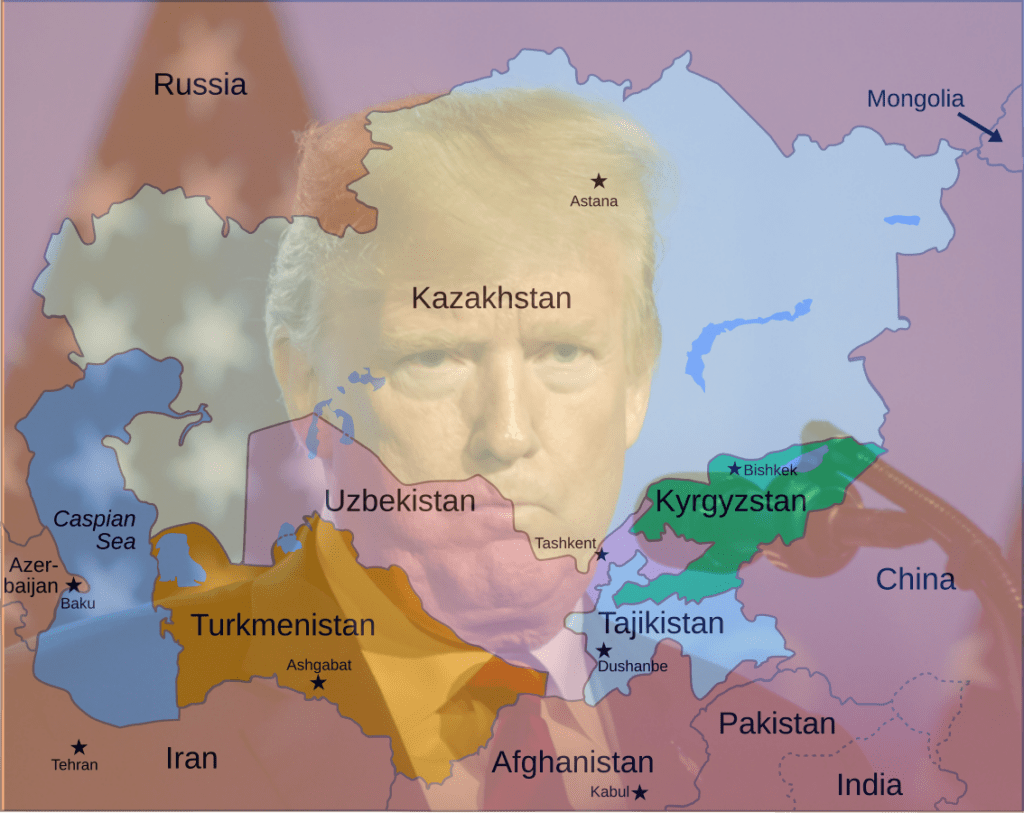
Governments in Central Asia have not made any public comment, so far, on the U.S. military operation that captured Venezuelan President Nicolás Maduro, at a time when relations between Central Asian countries and the administration of President Donald Trump are growing closer. The operation on Saturday involved more than 150 American aircraft and extracted Maduro and his wife, Cilia Flores, from their compound in Caracas, prompting celebrations from many Venezuelan expatriates who viewed Maduro as a dictator, criticism from countries including Russia and China, and concerns that the complex attack violated international law. Additional questions about Venezuela’s sovereignty emerged after Trump said the United States will “run” the country ahead of a transition and that American oil companies will help to rebuild its oil infrastructure. The U.S. has argued that Maduro himself effectively hijacked Venezuelan sovereignty through electoral fraud, repression and by allegedly funneling illegal drugs to the U.S. Maduro, who has been indicted on narco-terrorism and other charges, denies the allegations. Countries in Central Asia are more than 10,000 kilometers away from Venezuela and their trade with the Latin American country is minimal, suggesting the uncertain and evolving situation there lies far outside their immediate area of interest. In May, Tokayev met Maduro in Moscow and invited him to visit Kazakhstan after describing Venezuela as an important partner. “However, he acknowledged that, due to objective reasons, significant achievements in bilateral cooperation have yet to be realized,” Tokayev’s office said at the time. Still, Tokayev and other Central Asian leaders have spoken in general terms of their adherence to United Nations principles of sovereignty, an issue that is being vigorously debated in some international circles after the U.S. military operation. U.N. Secretary-General António Guterres, who visited Central Asia in 2024 and 2025, has said that the U.S. military operation that extracted Maduro to New York constitutes a "dangerous precedent" and that he was concerned that the rules of international law had not been respected. The U.S. capture of the leader of oil-rich Venezuela has not had a major impact for now on global oil prices, indicating that Central Asia’s oil and natural gas producers will not see any big fallout. Even so, at a time of ongoing geopolitical tension, a major shock or event in one region could influence distant regions in ways that are difficult to discern. Russia and China, which are close trading partners with Central Asia and nurtured trade and political ties with Maduro’s government, condemned the U.S. military operation in Venezuela. But the Central Asian countries – Kazakhstan, Uzbekistan, Kyrgyzstan, Tajikistan and Turkmenistan – have not joined in the criticism, much as they have refrained from publicly supporting any side over Russia’s invasion of Ukraine. Central Asia’s balancing act reflects efforts to maintain good ties with major powers even when they are in conflict, and comes during a period of increasing trade collaboration with the United States. The five leaders from Central Asia traveled to Washington in November for a summit with Trump, who later invited...