• KGS/USD = 0.01144 0%
  • KZT/USD = 0.00211 0%
  • TJS/USD = 0.10515 0.48%
  • UZS/USD = 0.00008 0%
  • TMT/USD = 0.28530 0%
  • KGS/USD = 0.01144 0%
  • KZT/USD = 0.00211 0%
  • TJS/USD = 0.10515 0.48%
  • UZS/USD = 0.00008 0%
  • TMT/USD = 0.28530 0%
  • KGS/USD = 0.01144 0%
  • KZT/USD = 0.00211 0%
  • TJS/USD = 0.10515 0.48%
  • UZS/USD = 0.00008 0%
  • TMT/USD = 0.28530 0%
  • KGS/USD = 0.01144 0%
  • KZT/USD = 0.00211 0%
  • TJS/USD = 0.10515 0.48%
  • UZS/USD = 0.00008 0%
  • TMT/USD = 0.28530 0%
  • KGS/USD = 0.01144 0%
  • KZT/USD = 0.00211 0%
  • TJS/USD = 0.10515 0.48%
  • UZS/USD = 0.00008 0%
  • TMT/USD = 0.28530 0%
  • KGS/USD = 0.01144 0%
  • KZT/USD = 0.00211 0%
  • TJS/USD = 0.10515 0.48%
  • UZS/USD = 0.00008 0%
  • TMT/USD = 0.28530 0%
  • KGS/USD = 0.01144 0%
  • KZT/USD = 0.00211 0%
  • TJS/USD = 0.10515 0.48%
  • UZS/USD = 0.00008 0%
  • TMT/USD = 0.28530 0%
  • KGS/USD = 0.01144 0%
  • KZT/USD = 0.00211 0%
  • TJS/USD = 0.10515 0.48%
  • UZS/USD = 0.00008 0%
  • TMT/USD = 0.28530 0%

Viewing results 487 - 492 of 1163

USAID Delivers Food Aid to Vulnerable Groups in Uzbekistan

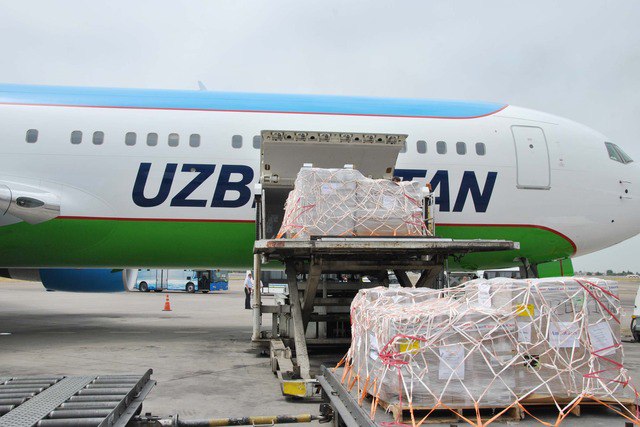
On October 9, the United States, through its Agency for International Development (USAID), announced it had sent 131 tons of food aid to Uzbekistan, worth over $435,000. The shipment includes a nutritious mix of vegetables and legumes for distribution to over 33,000 people in 145 facilities, including centers for long-term tuberculosis patients, orphanages, and psychiatric institutions. “At USAID, we collaborate with our partners to deliver life-saving food assistance to the most vulnerable communities in Uzbekistan. By addressing malnutrition and ensuring access to adequate, safe, and nutritious food, we are empowering individuals to lead healthy, productive lives and building a more stable and resilient world for everyone,” said Anjali Kaur, USAID’s Deputy Assistant Administrator of the Bureau for Asia. Since 2010, USAID’s International Food Relief Partnership program has provided 1,560 tons of food aid to Uzbekistan, worth about $4.5 million. The donated food will be distributed by the American non-profit organization Resource and Policy Exchange in collaboration with the international charitable foundation Sog’lom Avlod Uchun. USAID’s International Food Relief Partnership is part of a more extensive U.S. government program called 'Food for Peace'. Initiated in 1954 by President Dwight Eisenhower, the program illustrates USAID’s commitment to reducing hunger and malnutrition. In addition to providing food, USAID has allocated $6.1 million to expand educational programs in Uzbekistan.
New Report From World Bank Condemns Tashkent Air Quality

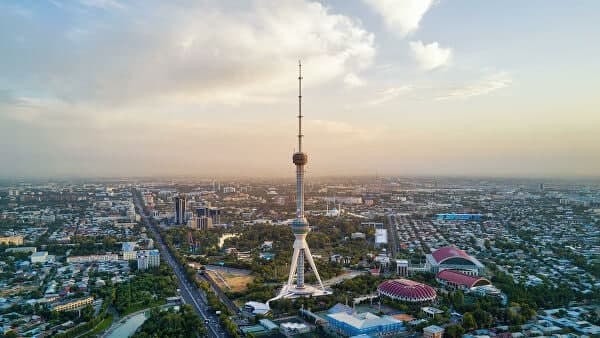
A new World Bank report entitled "Air Quality Assessment for Tashkent and the Roadmap for Air Quality Management Improvement in Uzbekistan" gives a frightening assessment of the air quality in the country’s capital. The report finds that ambient PM2.5 concentrations in Tashkent, which peak in winter, substantially exceed international air quality standards. The annual average concentration exceeds six times the WHO’s average yearly guideline of 5 µg/m3. In Tashkent, PM2.5 ambient air pollution has considerable health and economic costs. It can be linked to health costs equivalent to 0.7% of Uzbekistan’s gross domestic product (GDP). Most air quality-related diseases and premature deaths in Uzbekistan and worldwide are linked to PM2.5, which the World Health Organization (WHO) has identified as the pollutant with the gravest health risk. According to IQAir, Tashkent, like other Central Asian cities, frequently ranks among the world's most polluted urban areas. According to the report, the primary sources of human-caused PM2.5 pollution in Tashkent are the heating (28%), transport (16%), and industrial sectors (13%). Cross-boundary sources like windblown dust (36% PM2.5 pollution) dominate in the summer, while commercial and residential heating is the primary source of PM2.5 pollution in the winter. The report’s AQM roadmap for Uzbekistan formulates priority actions such as updating air quality standards and legislation, developing a national AQM strategy and coordination mechanism, and taking measures in the industrial, transport, and heating sectors, which are most responsible for air pollution. The AQM roadmap recommends investments in emission reduction measures. The roadmap suggests that emissions from the heating sector can be reduced by improving the quality of fuels used and the efficiency of heating appliances, implementing energy efficiency measures, and switching to cleaner heating alternatives. At a government meeting on October 9, Uzbekistan’s President Shavkat Mirziyoyev reviewed a draft master plan for the city of Tashkent until 2045. Today the population of Tashkent is more than 3 million people, and it keeps growing. Over the past ten years, the average air temperature in Tashkent has increased by 1 degree Celsius. The number of cars is rising, and traffic is becoming increasingly congested. The new master plan takes these aspects into account. It plans to increase green areas in Tashkent and its suburbs threefold to 25,000 hectares, which will increase per capita green area from the current 3 to 6 square meters. Mirziyoyev emphasized the need to turn Tashkent into a city where at least 7.5 million people can live and work.

Water Supply Plan to the Aral Sea is Almost 100% Complete

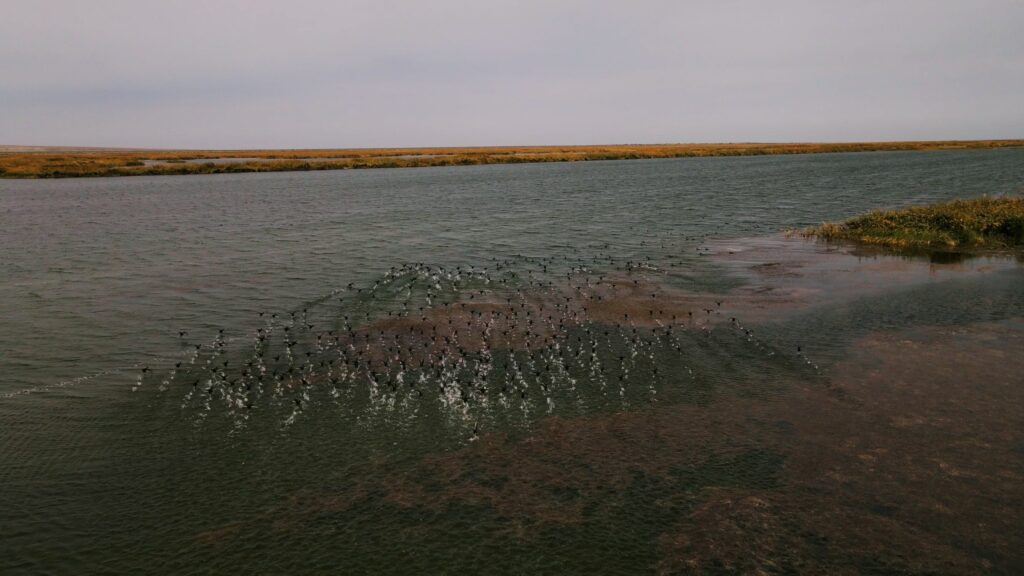
This year, the Aral Sea received 977 million cubic meters of water, which allowed it to fulfill the water supply plan by almost 100% during the irrigation period. This is the first time in the last five years it has got close to 100%. Deputy Head of Aral-Syrdarya Basin Inspection Zeinollah Kaztoganov noted that this year, the volume of water flowing into the Northern Aral increased to 60-70 cubic meters per second, ten times more than in previous years when the figure was 7-10 cubic meters per second. Now, the total volume of water in the Northern Aral is about 22 billion cubic meters. Additionally, more than 45 million cubic meters of water were directed to Akshatau, Sorgak, and Kamystybas lakes, which positively impacted fishing and tourism: water salinity decreased, and fish populations increased. If the catches of local fishermen earlier were only 400 tons a year, this year they reached over 7,500 tons. Kuntugan Turganbayev, a 76-year-old fisherman from the village of Karateren who has been fishing all his life, said that with the inflow of water into the Aral Sea, there is a prospect for the development of fisheries. He noted that this year, there are more fish than last year, and if the current water level in the Aral Sea is maintained, the fishery will continue to grow. Meanwhile, Uzbekistan's Ministry of Water Resources and Irrigation and the World Bank are developing the second phase of a program to conserve the Northern Aral Sea. This program is aimed at improving water supply, construction, and modernization of water infrastructure. The main objective is to support sustainable water use, which includes the development of agriculture, tourism, and fisheries in the region. The project also provides for the establishment of an automated water management system, which will help control water flows effectively and ensure stable water levels in the Northern Aral Sea.

Leading UAE Hotel Chain Explores Options in Uzbekistan

A world-famous chain of hotels in the UAE is exploring entering the Uzbekistan market. The announcement  follows talks between Uzbek diplomats and Phillip Crouse, vice president of the United Arab Emirates' Jumeirah Group, and an introduction of the company's team to the recent reforms implemented in Uzbekistan, as well as programs and regulations to increase the country's tourist attractiveness, existing tourist routes, flights between the two countries, and hotels. Representatives were also presented with options to privatize or reconstruct large hotel complexes in the country. The entry of the Jumeirah brand into the Uzbekistan market will further increase the country's number of luxury hotels and enhance its ever-expanding tourist market. Over the past seven years, the number of foreign tourists visiting Uzbekistan has tripled, the volume of tourism services has increased fivefold, and the number of hotels and accommodation facilities has increased tenfold. Last year, more than 6.6 million tourists visited the country, providing a revenue of some 2.1 billion dollars, and according to recent reports, Uzbekistan aims to increase the number of foreign tourists to 15 million by 2030. Jumeirah, part of Dubai Holding, is a global luxury hotel company with 26 properties, including resorts, city hotels, and serviced residences across the Middle East, Europe, and Asia.

Drop in Uzbekistan’s Exports to Central Asia

Local media has reported that from January - August, Uzbekistan's exports to its four neighboring countries decreased, compared to the same period in 2023. According to data from the  Statistical Agency data, exports to Kazakhstan dropped from 950 million USD to 872 million USD; to Kyrgyzstan, from 491 million USD to 365 million USD; to Tajikistan, from 389 million USD to 329 million USD, and to Turkmenistan, from 118 million USD to 78 million USD. The share of Central Asian countries in Uzbekistan's total foreign trade turnover (FTT) in the first nine months of 2023 was 11.5%. The total FTT was worth 40 billion 45 million USD, of which 4 billion 574.3 million USD were with Central Asian countries. This year, it has decreased to 10.3%, meaning 4 billion 400.6 million USD of FTT of 42 billion 703.3 million USD are with CA countries. The Ministry of Investments, Industry, and Trade attributed the drop to an increase Uzbekistan's exports to international markets with high purchasing power, especially Europe, Arab countries, Southeast Asia, and the Americas, and explained, " due to diversification, the volume of exports to neighboring countries, which are considered a traditional market, decreased. In particular, the volume of exports to Kazakhstan decreased by 8.3%, to Kyrgyzstan by 25.6%, to Tajikistan by 15.3%, and to Turkmenistan by 36.2%."

Uzbekistan Aims to Attract 15 Million Foreign Tourists by 2030

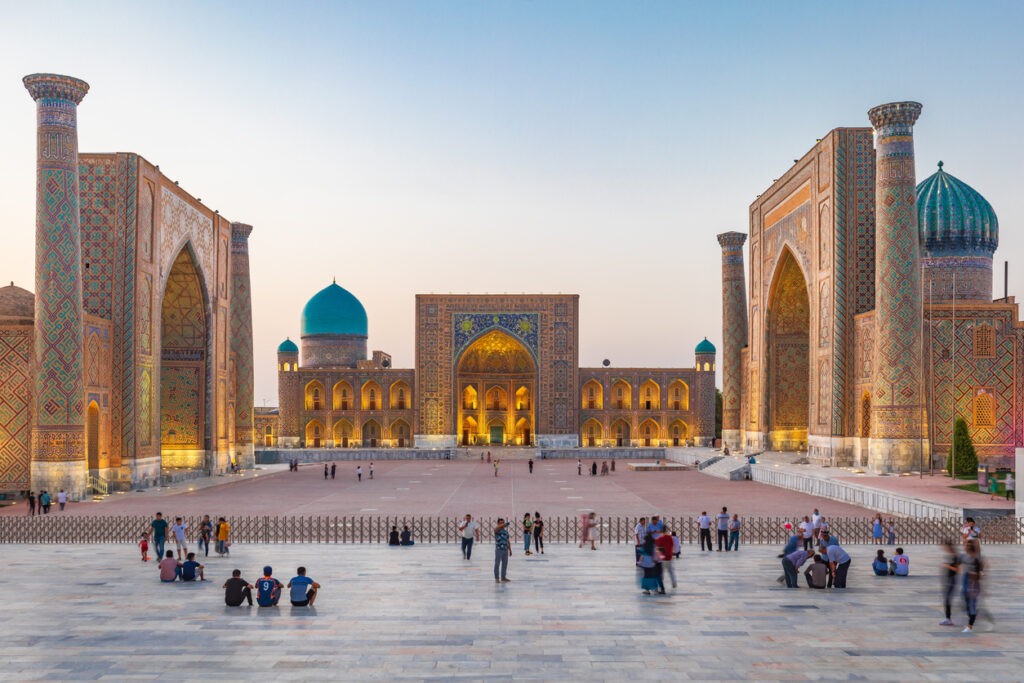
In an article, “Uzbekistan Attracts More and More Foreign Tourists to the Country”, published on the popular online portal Tiger’s Media in Poland, Dunyo reports that Uzbekistan plans to increase the number of foreign tourists to 15 million by 2030. As stated by Tiger's Media, “this number is twice as much as the 6.6 million tourists who came to the country in 2023. In 2023, tourism brought about $2.1 billion to the economy and created about 70 thousand new jobs." The portal adds that “to attract the attention of young travelers, Uzbekistan is also attracting bloggers and social network activists with more than 10 million subscribers,” Uzbekistan is located on an important part of the ancient Silk Road. Cities of the republic, such as Samarkand, Bukhara, and Khiva, important trade centers in ancient times, are UNESCO World Heritage Sites, known for their architecture, including madrasahs, mosques, and bazaars. The Times of Central Asia previously reported that tourism revenue made up 2.35% of Uzbekistan’s GDP last year. Other countries in Central Asia are likewise looking to boost their tourism industry. In June, Kazakh President Kassym-Jomart Tokayev spoke bluntly about infrastructure weaknesses that must be fixed. Kyrgyzstan, meanwhile, is focusing on its rugged, mountainous landscape, citing riding and hiking and “hunting with eagles” among its main attractions.