• KZT/USD = 0.00213
  • TJS/USD = 0.10800
  • UZS/USD = 0.00008
  • TMT/USD = 0.29850
  • KZT/USD = 0.00213
  • TJS/USD = 0.10800
  • UZS/USD = 0.00008
  • TMT/USD = 0.29850
  • KZT/USD = 0.00213
  • TJS/USD = 0.10800
  • UZS/USD = 0.00008
  • TMT/USD = 0.29850
  • KZT/USD = 0.00213
  • TJS/USD = 0.10800
  • UZS/USD = 0.00008
  • TMT/USD = 0.29850
  • KZT/USD = 0.00213
  • TJS/USD = 0.10800
  • UZS/USD = 0.00008
  • TMT/USD = 0.29850
  • KZT/USD = 0.00213
  • TJS/USD = 0.10800
  • UZS/USD = 0.00008
  • TMT/USD = 0.29850
  • KZT/USD = 0.00213
  • TJS/USD = 0.10800
  • UZS/USD = 0.00008
  • TMT/USD = 0.29850
  • KZT/USD = 0.00213
  • TJS/USD = 0.10800
  • UZS/USD = 0.00008
  • TMT/USD = 0.29850

Viewing results 37 - 42 of 179

German Court Restricts Media Claims About Russian-Uzbek Billionaire Alisher Usmanov

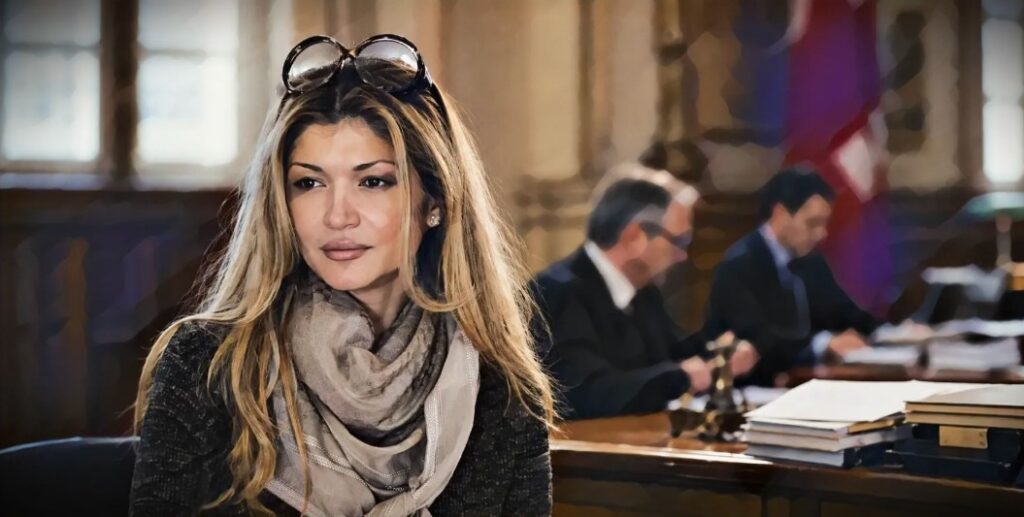
A German court has ruled in favor of Russian-Uzbek billionaire Alisher Usmanov, barring the publication of several contested statements made about him by the Frankfurter Allgemeine Zeitung (FAZ), according to court documents cited by Reuters. In a decision dated January 23, the Hamburg Regional Court prohibited FAZ from further disseminating specific sections of its April 2023 article titled On the Kremlin’s Instructions. The statements in question allegedly linked Usmanov to senior Russian officials. The court determined that these claims may no longer be repeated in their current form. Usmanov, who was born in Uzbekistan, has an estimated net worth of $18.8 billion, according to the Bloomberg Billionaires Index. He is subject to European Union and United States sanctions, including a travel ban, imposed following the start of the war in Ukraine. Over the past two years, he has launched multiple legal challenges in European courts, contesting media reports that he argues were used as justification for the sanctions. Reacting to the ruling, Usmanov’s lawyer, Joachim Steinhöfel, said the statements banned by the court “repeated essential parts of the reasoning behind the sanctions against Mr. Usmanov.” He added that the decision supports the argument that the sanctions were based on what he described as “defamatory and groundless allegations,” Reuters reported. FAZ said it is considering an appeal. A spokesperson for the newspaper warned that the court’s legal criteria could make it more difficult to report on individuals in authoritarian systems, raising broader concerns about press freedom. Separately, in 2024, another Hamburg court ruled against the German broadcaster ARD over a report that linked Usmanov to a scheme involving alleged bribes to judges at the International Fencing Federation. The court banned further distribution of the report, describing it as “news based on suspicion.” Violations of the order could lead to fines of up to €250,000 per incident or imprisonment. Reuters also reported that German authorities agreed last month to close a foreign trade law investigation involving Usmanov after he paid €10 million. A separate money laundering probe was dropped in 2024.

Killing of Uzbek Migrant Woman in Istanbul Sparks Protests in Turkey

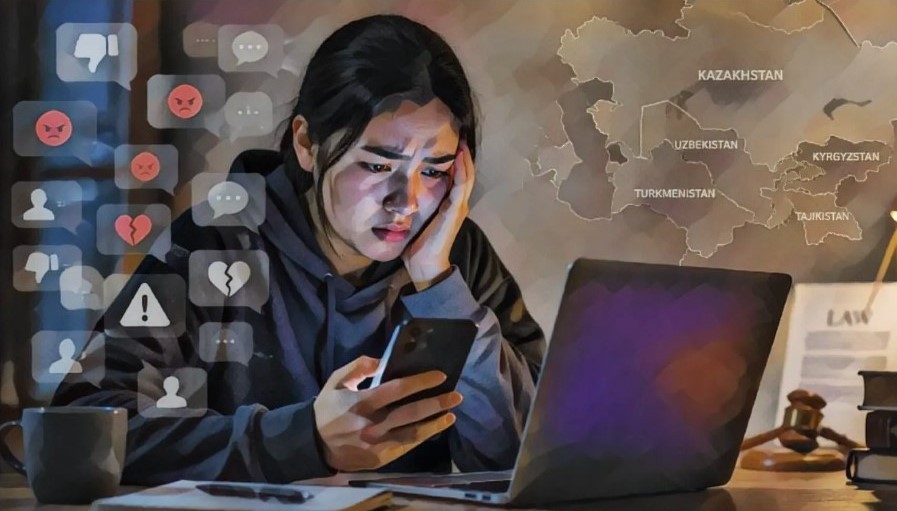
The killing of an Uzbek migrant woman in central Istanbul has sparked protests in Istanbul and Ankara, and reignited debate over violence against women, the safety of migrants, and the effectiveness of state protection mechanisms. The body of a 36-year-old Uzbek national was discovered on January 24 in a waste container in Istanbul’s Şişli district, one of the city’s busiest areas. According to Turkish media reports, the body was found by a person collecting recyclable materials, who immediately alerted the authorities. Police later confirmed that the victim had been wrapped in bedding material and that parts of her body were missing at the time of discovery. Initial searches failed to locate all of her remains. Turkey’s Interior Ministry and law enforcement agencies launched an immediate investigation. Surveillance footage reviewed by investigators showed two individuals leaving a suspicious suitcase near another container in the area. Turkish media outlets, including WELG and Cumhuriyet, reported that three men have been detained in connection with the crime, two of whom are citizens of Uzbekistan. Two suspects were apprehended at Istanbul Airport while allegedly attempting to flee the country. One suspect reportedly confessed during police questioning. However, the investigation remains ongoing, and judicial proceedings have not yet concluded. The victim was identified as Durdona H., an Uzbek citizen. This information was confirmed by the Consulate General of Uzbekistan in Istanbul, which issued an official statement expressing deep sorrow. Identification was made in coordination with Turkish law enforcement, forensic experts, and prosecutors. “The investigation into this case is under the close supervision of the Consulate General,” the statement read. Uzbek diplomats have contacted the victim’s family and are providing consular and legal assistance. The consulate also extended its condolences and stated that further updates would be shared through official channels. The killing provoked immediate public outrage. Large numbers of women took to the streets in Istanbul and Ankara to protest what they described as systemic violence against women, particularly migrant women. Feminist groups and women’s rights organizations organized a march in Şişli, starting near Osmanbey metro station and ending on the street where the body was found. Protesters carried banners and chanted slogans, stressing that the killing was not an isolated case but part of a broader pattern of gender-based violence. Demonstrators also highlighted the heightened vulnerability of migrant women and called for stronger protection and prevention mechanisms. Police briefly intervened in the protests, warning against the use of certain slogans deemed unlawful, according to Turkish media. Nevertheless, demonstrations proceeded peacefully, with participants demanding accountability and transparency. Similar protests took place in Ankara on the same day. Women’s organizations gathered near the Human Rights Monument on Yüksel Street, echoing calls for systemic reform. Activists argued that violence against women is not an individual problem but a structural one. Turkish women’s rights groups, including the We Will Stop Femicide Platform and the Federation of Turkish Women’s Associations, issued statements in response. They criticized the inadequate enforcement of protection orders and what they described as a culture of...

Uzbekistan Proposes Tougher Penalties for Violence Against Women and Children

Uzbekistan is preparing a comprehensive package of legal reforms aimed at eliminating violence against women and children and establishing a societal culture of zero tolerance toward abuse. The measures are outlined in a draft State Program tied to the implementation of the "Uzbekistan-2030" strategy and the national reform agenda for the Year of Mahalla Development and Community Advancement. Under the proposed reforms, criminal penalties for acts of violence against women and minors would be significantly increased. One of the most consequential provisions includes harsher sentencing for sexual crimes against children under 14, including the possibility of life imprisonment. The draft program also recommends transferring the investigation of sexual and violent crimes involving minors to the exclusive jurisdiction of the prosecutor’s office. Additionally, a specialized system of investigators and judges would be introduced, with dedicated training to handle sensitive cases involving abuse. These specialists would be responsible for both the investigation and adjudication of such cases, ensuring a more consistent and victim-centered approach. Another key component of the reform targets early and forced marriages. The program proposes administrative penalties for those who engage or betroth individuals below the legal marriage age. Sanctions could also apply to parents, guardians, or others who facilitate or promote underage unions, including those who publicly advocate for such practices. Officials say these steps are intended to entrench a culture of intolerance toward violence and to develop a more effective system for preventing early and forced marriages. The draft emphasizes the role of community-level engagement, with family and women's support centers expected to reach at least 40% of young couples through specialized educational programs. These initiatives will involve psychologists, legal professionals, and other experts to bolster domestic violence prevention efforts. If adopted, the measures are scheduled to take effect on April 1, 2026. In a related development, Kazakhstan’s Ministry of Health last year proposed tightening the application of chemical castration for individuals convicted of sexual offenses against children. According to draft amendments published on the Open NPA platform, Kazakhstan’s government-run portal for public discussion of draft legislation, the procedure would be administered six months prior to an inmate’s release, following a mandatory forensic psychiatric evaluation conducted up to a year in advance. Kazakhstan’s Health Ministry stated that this measure, regulated under Article 91 of the country’s Criminal Code, is designed to reduce the risk of recidivism during the immediate post-release period, which authorities view as particularly high-risk.

Uzbek Citizen Sentenced to Life in Russia Over Killing of Russian General Kirillov

A Russian military court has sentenced Uzbek citizen Ahmadjon Qurbonov to life imprisonment for his involvement in a bombing that killed Lieutenant General Igor Kirillov, head of Russia’s Radiation, Chemical and Biological Protection Troops, and his aide, Major Ilya Polikarpov. The verdict was issued by a panel of judges at the 2nd Western District Military Court, according to a report by Russian outlet RBK. Qurbonov, who admitted guilt and cooperated with investigators, was also fined one million rubles (approximately $13,100). Prosecutors accused him of carrying out an attack on December 17, 2024, near the entrance of Kirillov’s apartment building in Moscow. Investigators allege that Qurbonov planted a remote-controlled bomb on an electric scooter and detonated it as the general and his aide exited the building. Russia’s Investigative Committee claims Qurbonov acted under orders from Ukraine’s Security Service. The attack was reportedly filmed and streamed live to Ukraine. Qurbonov was allegedly promised $100,000, forged documents, and residency in a country in the European Union. He was arrested within hours of the explosion and, according to investigators, never received the promised compensation. Several other individuals were implicated in the case. Prosecutors said Vladimir Safaryan delivered the explosive device, which was reportedly brought into Russia from Poland. Batukhan Tochiev and Ramazan Padiev were accused of providing Qurbonov with an apartment where he attempted to hide after the attack. All three denied knowledge of the planned bombing. Russian authorities further alleged that the operation was financed using USDT stablecoins. Qurbonov reportedly received multiple cryptocurrency transfers, later converted into cash through cryptomats in Moscow. The total cost of preparing the attack was estimated at 842,000 rubles (approximately $10,936), while damage to surrounding apartments and vehicles was valued at 3.3 million rubles (around $42,863). The trial, which began in November 2025, was held behind closed doors. Prosecutors argued that open proceedings could be exploited by foreign-linked media to justify the attack.

Uzbek Migrants Face Growing Risks in Russia as Tashkent Seeks Probe Into Alleged Abuse

Russian security forces reportedly carried out a raid on a café in Khabarovsk in mid-December 2025, during which several Central Asian migrants were allegedly beaten. According to information circulated on social media, two Uzbek citizens fell into a coma following the incident, and one of them subsequently died. On January 2, Uzbekistan’s Ministry of Foreign Affairs announced it had sent a diplomatic note to Russia requesting an impartial and lawful investigation. The ministry also said steps were being taken to repatriate the deceased’s body. However, it noted that the cause of death has not been officially confirmed, and reports of a second Uzbek in a coma remain unverified. In response to the incident, Alisher Qodirov, member of parliament and leader of the Milliy Tiklanish (National Revival) Democratic Party, issued a stark warning to Uzbek migrants in Russia. “Believe me, the situation will only get worse month by month,” Qodirov wrote on Telegram. “Russian security services see Central Asians as potential participants in future unrest, and they have already given up on any benefit migrants may bring... Use your common sense and leave Russia as soon as possible,” he added. “No income is worth the tears of your parents and children.” As Russia’s war against Ukraine enters its fourth year, labor migrants remain among the most vulnerable and least protected groups affected by the conflict. Central Asian nationals,  particularly Uzbeks, face increasing risks of coercion, legal jeopardy, and systemic abuse. By July 2025, at least 902 Uzbek citizens were reported to have been recruited by Russia to fight in Ukraine. Independent monitors believe the true figure is considerably higher. In October 2025, the ‘I want to live’ project identified 2,715 Uzbek nationals who had participated in the conflict, including those recruited illegally, those who signed contracts, and ethnic Uzbeks already serving in the Russian military. Despite this, Russia remains heavily reliant on migrant labor. As of September 1, 2024, nearly four million citizens from Central Asia were living in Russia. Of these, 1.79 million were from Uzbekistan, followed by significant numbers from Tajikistan, Kazakhstan, Kyrgyzstan, and Turkmenistan. For Uzbekistan, the economic implications of growing pressure on migrants are profound. Remittances remain a cornerstone of the national economy. In the first half of 2025 alone, Uzbekistan received $8.2 billion in cross-border transfers, with 78% originating from Russia. Amid rising xenophobia and labor restrictions, economists warn that this dependence could have severe long-term consequences. Economist Abdulla Abdukadirov, Doctor of Economic Sciences, said total remittances by year-end are expected to approach $20 billion. “This is an extremely large sum,” Abdukadirov said at an offline session of the Fikrat analytical program, responding to a question from The Times of Central Asia. “If the state budget is around $28 billion, then nearly $20 billion in remittances reveals how dependent our economy is becoming on external sources.” Abdukadirov warned that Uzbekistan is developing a dangerous structural dependency. “First, we’re becoming more reliant on external investments and borrowing,” he said. “Second, our dependence on cross-border remittances is deepening.” According...

Uzbekistan Proposes Ban on Marriages Between Relatives

Uzbekistan’s Ministry of Justice has drafted legislation that would ban marriages between distant blood relatives, including unions between uncles and nieces, aunts and nephews, and cousins up to the third degree, UzNews.uz reported. The proposed penalties for violating the ban include fines or correctional labor of up to two years. Exceptions would apply only in cases where one of the prospective spouses is an adopted child and no biological relationship exists. Under current law, Uzbekistan’s Family Code prohibits marriages between close blood relatives in a direct ascending or descending line, as well as between full and half-siblings and between adoptive parents and adopted children. The proposal follows alarming findings from a recent study highlighting the genetic risks associated with consanguineous marriages. According to Zamin.uz, researchers from the Center for Advanced Technologies have identified dozens of new genetic mutations in Uzbek individuals. The study revealed that every second child tested carried a hereditary mutation, and nearly 86% of children were found to be carriers of at least one damaged gene, twice the international average. Researchers attribute this trend to the high prevalence of kinship marriages, which in some Uzbek regions account for roughly one-quarter of all unions. Experts warn that these genetic anomalies not only increase the likelihood of hereditary disorders but also elevate the risks of diabetes, cardiovascular conditions, and cancer. The study's authors strongly recommend introducing genetic testing for couples prior to marriage as a public health measure.